By Emerson Hough..
A Story of the Western Desperado by Emerson Hough. In the old American west there were many men and boys who chose to live by the gun...and die by the gun. Some died by the Vigilante's Rope. The stories of Billy the Kid, The James Boys, The Dalton Gang, Tom Pickett, Bill Chadwell and many, many others can be read in this wonderful, fact-filled book originally published in 1907. This book is part of the Historical Collection of Badgley Publishing Company and has been transcribed from the original. The original contents have been edited and corrections have been made to original printing, spelling and grammatical errors when not in conflict with the author?s intent to portray a particular event or interaction. Annotations have been made and additional contents have been added by Badgley Publishing Company in order to clarify certain historical events or interactions and to enhance the author?s content. Photos and illustrations from the original have been touched up, enhanced and sometimes enlarged for better viewing.
New York: Grosset and Dunlap, 1907. 426p.
By Mary Roberts Rinehart.
Often referred to as the "American Agatha Christie," Mary Roberts Rinehart did much to popularize and refine the mystery genre in the United States. The Street of Seven Stars follows an American musician, Harmony Wells, to Austria, where she has gone to hone her violin skills. Though the dashing doctor she meets there appears to want to protect her, there may be more to his motives than meets the eye.
New York: Houghton Mifflin, 1914. 390p.
By Mary Roberts Rinehart.
"THIS is the story of how a middle-aged spinster lost her mind, deserted her domestic gods in the city, took a furnished house for the summer out of town, and found herself involved in one of those mysterious crimes that keep our newspapers and detective agencies happy and prosperous."
New York: Grosset and Dunlap, 1908. 301p.
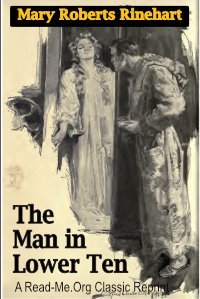
By Mary Roberts Rinehart.
What starts out at as a simple train ride for Lawrence Blakely soon turns disastrous. The attorney-at-law is hand delivering decisive documents in a criminal case, and finds himself on the other side of the law when he is mixed up in a murder. Someone is after Blakely and his papers, and the classic mystery style of Mary Roberts Rinehart guarantees there’s a good story behind the strange happenings.The Man in Lower Ten was the first detective novel to make it to the national bestseller list, and it hasn’t lost its edge. It has the romance and the suspense of today’s mystery novels and boasts the ability to stand the test of time.
New York: Grosset and Dunlap, 1909. 404p.
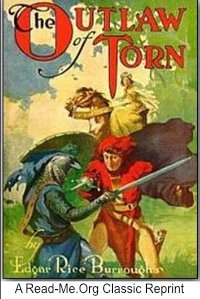
By Edgar Rice Burroughs.
The Most Feared Warrior In England. At 17 – The Greatest Swordsman in England — At 18 – A Price On His Head –At 19 – The Leader Of A Band Of A Thousand Who was this Norman of Tom? Where did he come from? All that anyone knew was that his blade was sharp, his arm strong. Then – As he was about to uncover the secret of his birth – he found himself in the greatest peril he’d ever known/
A. C. McClurg (1927) 170p.
By Wilkie Collins.
This book is a 19th-century novel by the master of sensation fiction, Wilkie Collins. A country gentleman is killed in an accident and his wife dies shortly after him. The blow is double for their daughters, who discover that they were born before their parents were married. Their sudden illegitimacy robs them of their inheritance and their accustomed place in society.
New York: Harper and Brothers, 1873. 622p.
By Wilkie Collins. .
A Novel . Two of the characters which appear in these pages -- "Rosamond," and "Uncle Joseph" -- had the good fortune to find friends everywhere who took a hearty liking to them. A more elaborately drawn personage in the story -- "Sarah Leeson" -- was, I think, less generally understood. The idea of tracing, in this character, the influence of a heavy responsibility on a naturally timid woman, whose mind was neither strong enough to bear it, nor bold enough to drop it altogether, was a favorite idea with me, at the time, and is so much a favorite still, that I privately give "Sarah Leeson" the place of honor in the little portrait-gallery which my story contains.
London: Bradbury and Evans, 1857. 322p.
By Wilkie Collins..
A Novel . When the elderly Allan Armadale makes a terrible confession on his death-bed, he has little idea of the repercussions to come, for the secret he reveals involves the mysterious Lydia Gwilt: flame-haired temptress, bigamist, laudanum addict and husband-poisoner. Her malicious intrigues fuel the plot of this gripping melodrama: a tale of confused identities, inherited curses, romantic rivalries, espionage, money—and murder. The character of Lydia Gwilt horrified contemporary critics, with one reviewer describing her as "One of the most hardened female villains whose devices and desires have ever blackened fiction.
New York: Harper and Brothers, 1874. 684p.
By George S. McWatters.
Or, Ways and By-ways in the Hidden Life of American Detectives. A Narrative of Marvellous Experiences Among All Classes of Society, Criminals in High Life, Swindlers, Bank Robbers, Thieves, Lottery Agents, Gamblers, Necromancers, Counterfeiters, Burglar, etc.
Hartford: J.B. Burr and Hyde, 1871. 684p.
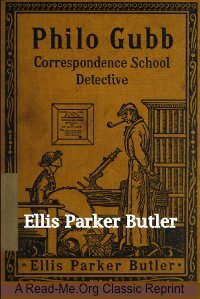
By Ellis Parker Butler.
Philo Gubb, not being content with his job as wallpaper-hanger, has higher aspirations: to become a detective, just like Sherlock Holmes. To that end, he enrolls in a correspondence course, where he gets lessons through the mail as well as the necessary disguises for a detective. Philo Gubb, not being really clever or intuitive, or even looking good in those disguises, gets involved in one case after the other - and sooner or later happens to stumble on and solve the crime..Each of these stories is a complete mystery unto itself so if you read just one, you will know it's beginning and the unorthodox methods by which Philo Gubb, Correspondence-School Detective solves it using his woeful 'deteckative' (as he puts it) skills.
Boston: Houghton Mifflin, 1918.412p.
By Wilkie Collins.
First published serially between 1859 and 1860, “The Woman in White” is Wilkie Collins’s epistolary novel that tells the tale of Walter Hartright, who encounters a woman all dressed in white on a moonlit road in Hampstead. Hartright helps the woman to find her way back to London. The woman warns him against an unnamed baronet and after they part he discovers that she may have escaped from an insane asylum. Hartright travels to Cumberland where he takes up a position as the art tutor of Laura Fairlie and her devoted half-sister, Marian Halcombe, who are somehow entangled with this mysterious “woman in white”. Wilkie Collins’s fifth published novel, “The Woman in White” is considered one of the earliest examples of the mystery genre, an early work of detective fiction, and one of the finest examples of sensationalist literature. While the novel was a commercial success when first published it was harshly reviewed by critics of the age. Since that time it has come to be regarded as a groundbreaking work of the mystery genre, one of Collins’s best.
London: Sampson Low, Son & Co., 1860. 336p.
By Joseph Conrad.
In the only novel Conrad set in London, The Secret Agent communicates a profoundly ironic view of human affairs. The story is woven around an attack on the Greenwich Observatory in 1894 masterminded by Verloc, a Russian spy working for the police, and ostensibly a member of an anarchist group in Soho. His masters instruct him to discredit the anarchists in a humiliating fashion, and when his evil plan goes horribly awry, Verloc must deal with the repercussions of his actions. While rooted in the Edwardian period, Conrad's tale remains strikingly contemporary, with its depiction of Londoners gripped by fear of the terrorists living in their midst.
Leipzig: Tauchnitz, 1907. 350p.
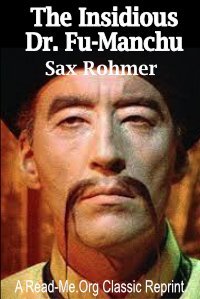
By Sax Rhomer.
The Mystery of Dr. Fu Manchu is the first novel in the Dr. Fu Manchu (sometimes "Fu-Manchu") series by Sax Rohmer. It collates various short stories published the preceding year. The novel was also published in US under the title The Insidious Dr. Fu Manchu.. We meet first Dr Petrie who is immediately surprised by a late night visitor, "a tall, lean ... square cut ... sun baked" man who turns out to be his good friend (Commissioner Sir Denis) Nayland Smith of Burma, formerly of Scotland Yard, who has come directly from Burma. We then learn that various men associated with India are the target of assassination by the Chinese Dr Fu Manchu, who seems to have been active in Burma (as distinct from India), in places such as Rangoon, Prome, Moulmein and the "Upper Irrawaddy" and who comes to England with dacoits and thuggees.
Collier (1913) 372p.
By E. Phillips Oppenheim.
A former defense attorney turned righteous crusader is the hero of this blockbuster novel from an early master of the thriller genreA businessman is found stabbed through the heart, the obvious suspect his partner: Oliver Hilditch, a cold-eyed fellow with a paper-thin alibi. Hilditch seems destined for the gallows, but he is saved by brilliant defense attorney Francis Ledsam, who uses every legal trick he knows to free his client. It is a defense to be proud of, but Ledsam’s joy vanishes when Hilditch’s wife informs him that her husband is guilty of crimes far more monstrous than murder. His faith in his career shaken, Ledsam vows never again to defend a guilty man. But when his newfound principles run up against the harsh reality of real-world justice, he finds himself trapped between his love for a beautiful woman and a powerful desire to do the right thing—no matter the cost.
Boston: Little, Brown and Co., 1922. 322p.
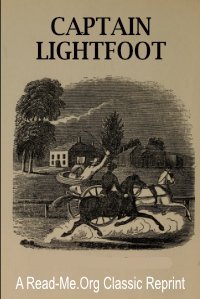
By Frederick W. Waldo..
The Last of the New England Highwaymen. A desperado in the shadow of the gallows recounts his life of crime in this rollicking seventeenth-century memoir. Michael Martin, better known as Captain Lightfoot, confessed his history of highway robbery to a Boston reporter shortly before his execution. Martin had cut a dashing figure as Captain Lightfoot, renowned for his courtly manners and his Robin Hood-like predilection for stealing only from well-to-do men. His tale of adventure and intrigue, punctuated by daring escapes and desperate shootouts, created a sensation upon its 1821 publication. Born into a respectable Irish family, Martin exhibited "bad habits and vicious propensities" from an early age. His preference for low company and debauchery soon led to an acquaintance with John Doherty, alias Captain Thunderbolt. The latter provided Martin with his nom de guerre and indoctrinated him into the business of burglaries, hold-ups, and gunfights. Pursued by sheriffs and king's men throughout Ireland and Scotland, the pair parted company, and Martin emigrated to New England, where he terrorized travelers from 1819 until his arrest and hanging in 1821.
Toppsfield, MA: The Wayside Press, 1926. 192p.
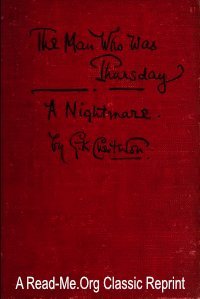
By G.K. Chesterton.
When two men decide to fight for their respective beliefs, they discover to their astonishment that an unbelieving world won’t let them, and they find themselves partners and fugitives from the law in this steampunk satire. Penned by G.K. Chesterton in 1909, this whimsical and biting novel eerily foreshadows a world in which “tolerance” is the only god and all those who believe ideas are worth dying for are forced to stand together to defend freedom of speech and belief.
New York: J. Lane, 1909. 436p.
By G.K. Chesterton.
It is very difficult to classify The Man Who Was Thursday. It is possible to say that it is a gripping adventure story of murderous criminals and brilliant policemen; but it was to be expected that the author of the Father Brown stories should tell a detective story like no-one else. On this level, therefore, The Man Who Was Thursday succeeds superbly; if nothing else, it is a magnificent tour-de-force of suspense-writing. However, the reader will soon discover that it is much more than that. Carried along on the boisterous rush of the narrative by Chesterton’s wonderful high-spirited style, he will soon see that he is being carried into much deeper waters than he had planned on; and the totally unforeseeable denouement will prove for the modern reader, as it has for thousands of others since 1908 when the book was first published, an inevitable and moving experience, as the investigators finally discover who Sunday is.
Bristol: J.W. Arrowsmith, 1908. 329p.
By Daniel Defoe.
Moll Flanders follows the life of its eponymous heroine through its many vicissitudes, which include her early seduction, careers in crime and prostitution, conviction for theft and transportation to the plantations of Virginia, and her ultimate redemption and prosperity in the new World. “When a woman debauched from her youth, nay, even being the offspring of debauchery and vice, comes to give an account of all her vicious practices, and even to descend to the particular occasions and circumstances by which she ran through in threescore years, an author must be hard put to it wrap it up so clean as not to give room, especially for vicious readers, to turn it to his disadvantage.”
NY. Harrow and Heston Classic Reprint. (1772) 502 pages.