
Open Access Publisher and Free Library
CRIMINAL JUSTICE.jpeg

CRIMINAL JUSTICE

CRIMINAL JUSTICE-CRIMINAL LAW-PROCDEDURE-SENTENCING-COURTS

Posts in Suicide
How people die inside: Fact patterns in civil litigation for in-custody deaths 

By Taleed El-Sabawi, Shelly Weizman, Regina LaBelle

Civil litigation provides a novel and underutilized source of information about deaths in U.S. jails, particularly when official data are incomplete. This study systematically analyzes verdicts, settlements and judgments to explore patterns in practices linked to preventable mortality in U.S jails. Results: Content analysis of facts alleged in 90 cases filed between 2015 and 2020 revealed thematic patterns related to inadequate or delayed medical care. Alleged facts routinely included observable signs of serious medical need—such as incoherence, convulsions, or pleas for help—followed by failures to provide timely or medically appropriate care. In cases of suicide, allegations commonly describe known mental health conditions, discontinued medication, and lapses in monitoring or suicide prevention protocols. Despite repeated warnings—by the individuals themselves, fellow incarcerated persons, or family members—jail staff frequently failed to act. A small subset of cases resulted in judgments for the defense, often where some care was provided or protocols were followed, even if outcomes were still fatal. Conclusion: These findings suggest that in cases resulting in reported settlements, verdicts or judgments incustody deaths in the U.S. could be prevented through improved intake screening, timely medical monitoring, care coordination, and adherence to established protocols. Litigation records offer important insight into how systemic failures contribute to jail mortality, with implications for policy, public health, and correctional practice.
The Science of Gun Policy - A Critical Synthesis of Research Evidence on the Effects of Gun Policies in the United States

By: Rosanna Smart, Andrew R. Morral, James P. Murphy, Rupa Jose, Amanda Charbonneau, Terry L. Schell

In this report, part of RAND's Gun Policy in America initiative, researchers systematically review the scientific literature that has examined the likely effects of various gun laws. In the fifth edition of this report, the authors incorporate more-recent research in their synthesis of the available scientific data regarding the effects of 18 state firearm policies on firearm injuries and deaths, violent crime, suicides, the gun industry, defensive gun use, and other outcomes. By highlighting where scientific evidence is accumulating, the authors hope to build consensus around a shared set of facts that have been established through a transparent, nonpartisan, and impartial review process. In so doing, they also illuminate areas in which more and better information could make important contributions to establishing fair and effective gun policies.

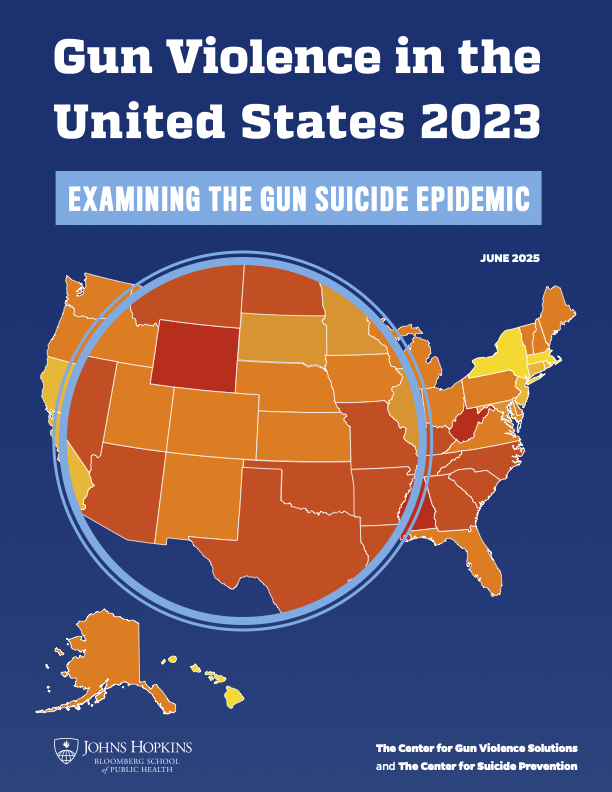
Gun Violence in the United States 2023: Examining the Gun Suicide Epidemic

By Rose Kim,  Elizabeth Wagner,  Paul Nestadt,  Nandita Somayaji,  Josh Horwitz,  Cassandra Crifasi,

  46,728 people died from gun violence in the U.S. in 2023. Each day, an average of 128 people died from gun violence—one death every 11 minutes. Disturbingly, gun suicides reached an all-time high in both the total number of deaths and the overallrate. Overall, firearms remained the leading cause of deathfor young people 1 to 17 for the past four years, accounting for more deaths thancar crashes, overdoses, or cancers. In 2023, there were 2,566 gun deaths among young people including 118 from ages 1–4, 116 from ages 5–9, 530 from ages 10–14, and 1,802 from ages 15–17. While firearms are the leading cause of death overall for young people ages 1 to 17, they are among the leading causes, but not always the top cause, for some individual youth age groups. Gun suicides have accounted for the majority of all gun deaths each year since 1995. Gun suicides have increased in the last three years, while gun homicides have declined. In this year’s report, we examined the rise of gun suicides, their disproportionate impact on vulnerable populations, and policy recommendations to address the gun suicide epidemic. For more information on public health interventions, please see the companion piece to this report, From Crisis to Action: Public Health Recommendations for Firearm Suicide Prevention. While the burden of gun violence in the U.S. remains high, there are evidence-based, equitable solutions to save lives. These solutions are supported by most people, including gun owners.1 Despite this broad support, many policymakers have been unwilling to heed the evidence and enact policies that will save lives. Each year, it is our missionto provide policymakers and the public accurate and up-to-date data on gun fatalities and illustrate the enormous toll gun violence has on our country.This report is an update to GunViolence in the United States 2022: Examining the Burden Among Children and Teens. It uses firearm mortality data listed on death certificates that are provided to the Centers for Disease Control and Prevention (CDC) and made available through the CDC WONDER Underlying Cause of Death database.The finalized data for 2023 was made available in January 2025.2 The lag in data availability makes it challenging to understand the burden of gun violence in real time; however, understanding the magnitude of this issue, even with the time lag, is essential to inform public health interventions to reduce violence. We recognize