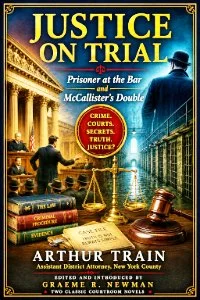
By Arthur Train (Author) and Graeme Newman (Editor and Introduction)
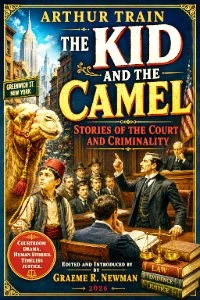
Arthur Train was not merely a novelist of crime and courtroom intrigue—he was an Assistant District Attorney in New York County who understood the hidden machinery of American justice from the inside. In Justice on Trial, two of his most compelling works—Prisoner at the Bar and McCallister’s Double—are brought together in a powerful new edition edited and introduced by Graeme R. Newman.
Part legal exposé, part philosophical inquiry, part classic crime fiction, this volume explores questions that remain disturbingly relevant today: How is guilt really determined? Do courts discover truth—or construct it? Why are prisons hidden from public view? Do criminals receive justice, or merely punishment? And what of the victims left behind by the machinery of law?
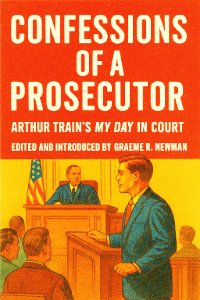
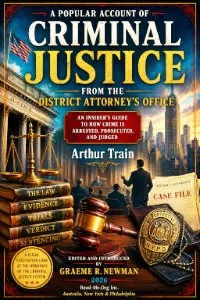
In Prisoner at the Bar, Train offers a rare insider’s account of the criminal justice system of early twentieth-century America. Drawing upon his own prosecutorial experience, he exposes the realities behind arrests, grand juries, trials, sentencing, police practices, courtroom performance, and the uneasy relationship between law and morality. The result is one of the earliest and most penetrating critiques of modern criminal justice ever written.
Complementing this work is McCallister’s Double, a brilliant collection of courtroom and criminal tales filled with deception, mistaken identity, legal maneuvering, and moral ambiguity. These stories reveal Train’s remarkable ability to combine suspense with sharp observations about the fictions upon which justice itself often depends.
Graeme R. Newman’s extensive new introduction places Train’s work within the larger history of crime, punishment, and legal power, comparing the courts and prisons of Train’s era with those of the twenty-first century. The introduction examines the secrecy of prisons, the hidden social functions of trials, the mythology of “justice,” and the enduring question of whether criminal justice systems truly deliver fairness—or merely preserve authority.
Blending classic legal writing, detective fiction, social criticism, and courtroom drama, Justice on Trial is both a fascinating historical document and a strikingly modern meditation on crime, punishment, truth, and power.
For readers of true crime, legal history, courtroom drama, criminology, and classic detective fiction, this volume offers a rare and unsettling look behind the curtain of justice itself.
Read-Me.Org Inc. New York-Philadelphia-Australia. 2026. p.362.