Open Access Publisher and Free Library
CRIMINAL JUSTICE.jpeg

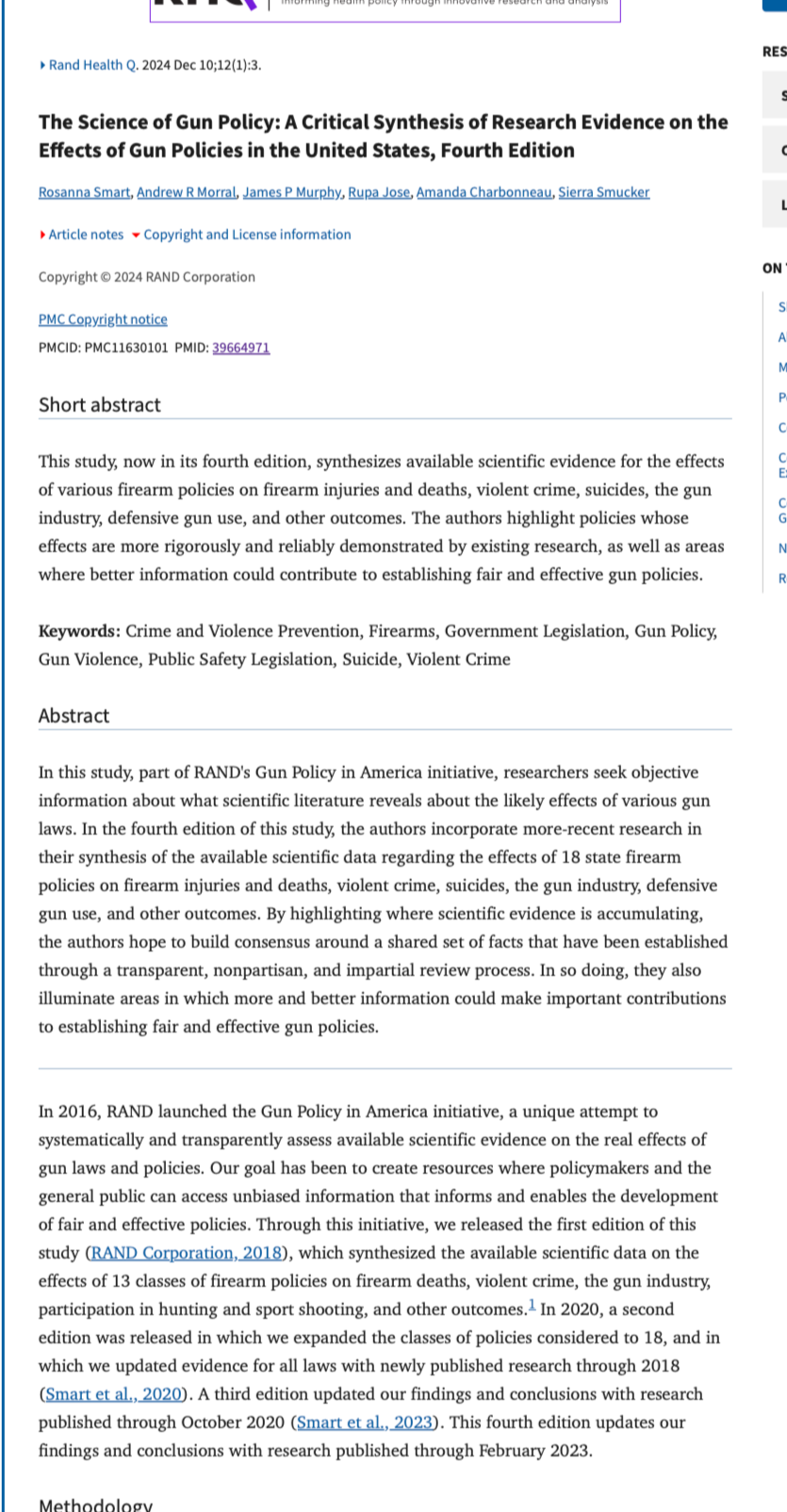
CRIMINAL JUSTICE

CRIMINAL JUSTICE-CRIMINAL LAW-PROCDEDURE-SENTENCING-COURTS

Posts in Gun Law
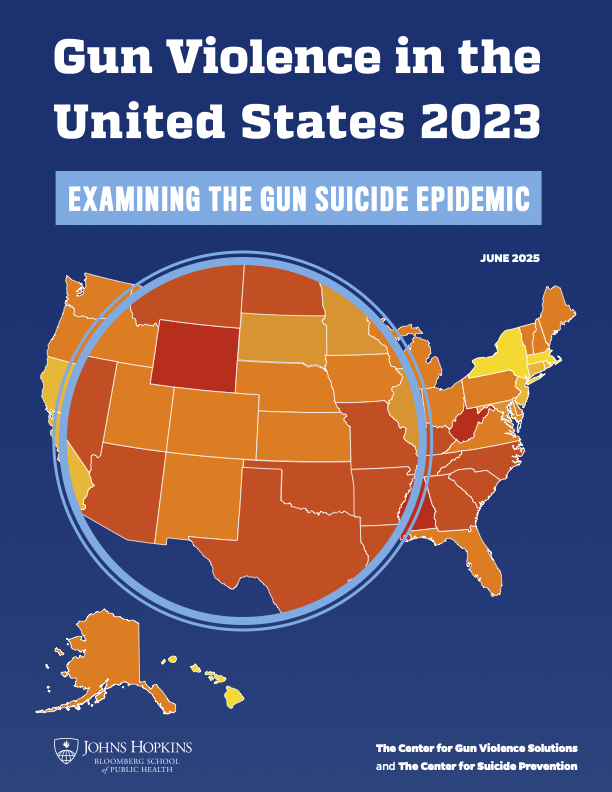
Gun Violence in the United States 2023: Examining the Gun Suicide Epidemic

By Rose Kim,  Elizabeth Wagner,  Paul Nestadt,  Nandita Somayaji,  Josh Horwitz,  Cassandra Crifasi,

  46,728 people died from gun violence in the U.S. in 2023. Each day, an average of 128 people died from gun violence—one death every 11 minutes. Disturbingly, gun suicides reached an all-time high in both the total number of deaths and the overallrate. Overall, firearms remained the leading cause of deathfor young people 1 to 17 for the past four years, accounting for more deaths thancar crashes, overdoses, or cancers. In 2023, there were 2,566 gun deaths among young people including 118 from ages 1–4, 116 from ages 5–9, 530 from ages 10–14, and 1,802 from ages 15–17. While firearms are the leading cause of death overall for young people ages 1 to 17, they are among the leading causes, but not always the top cause, for some individual youth age groups. Gun suicides have accounted for the majority of all gun deaths each year since 1995. Gun suicides have increased in the last three years, while gun homicides have declined. In this year’s report, we examined the rise of gun suicides, their disproportionate impact on vulnerable populations, and policy recommendations to address the gun suicide epidemic. For more information on public health interventions, please see the companion piece to this report, From Crisis to Action: Public Health Recommendations for Firearm Suicide Prevention. While the burden of gun violence in the U.S. remains high, there are evidence-based, equitable solutions to save lives. These solutions are supported by most people, including gun owners.1 Despite this broad support, many policymakers have been unwilling to heed the evidence and enact policies that will save lives. Each year, it is our missionto provide policymakers and the public accurate and up-to-date data on gun fatalities and illustrate the enormous toll gun violence has on our country.This report is an update to GunViolence in the United States 2022: Examining the Burden Among Children and Teens. It uses firearm mortality data listed on death certificates that are provided to the Centers for Disease Control and Prevention (CDC) and made available through the CDC WONDER Underlying Cause of Death database.The finalized data for 2023 was made available in January 2025.2 The lag in data availability makes it challenging to understand the burden of gun violence in real time; however, understanding the magnitude of this issue, even with the time lag, is essential to inform public health interventions to reduce violence. We recognize  

Printing Violence: Urgent Policy Actions Are Needed to Combat 3D-Printed Guns

By Everytown for Gun Safety, Everytown Research and Policy

  The shooting of UnitedHealthcare CEO Brian Thompson using a homemade firearm with a 3D-printed frame and silencer marked the first time many in the general public heard about 3D-printed guns. But this was not the first instance of criminal violence with this type of firearm, and as 3D-printing technology becomes more aordable, accessible, and advanced, it will not be the last. The proliferation of 3D-printed firearms (3DPFs) has emerged as a serious and accelerating public safety challenge. The current state of 3D-printing technology allows an individual to print all or key parts of a firearm at home. Like other kinds of ghost guns, 3DPFs lack serial numbers, so law enforcement is unable to trace them back to their owner when they are recovered in a crime. Because 3DPFs are untraceable and require no background check, they are particularly attractive to gun trackers who can print dozens of firearms and avoid raising alarms. 3DPFs have been linked to violent crimes, including everything from extremist plots to shootings involving teens. And the online community that produces and beta tests these designs includes alarming extremist elements, with many designers viewing 3D printing as a means to bypass or dismantle gun laws altogether. In the United States, as regulatory pressure in recent years has significantly reduced the availability of ghost gun “kits”—a way that online retailers routinely sold easily modified building blocks of firearms—the 3D printing of frames and accessories has accelerated among those looking to manufacture their own guns. Meanwhile, in Europe, new 3DPF designs allowing people to print functioning firearms threaten to undermine the gun safety laws that have long protected the continent from the degree of gun violence in the US. Policymakers, technology firms, and civil society must act urgently to address the dangers of 3DPFs. A multipronged strategy is essential. This includes 3D-printer manufacturers and software companies developing and implementing algorithms that detect and block the printing of firearms and accessories. In concert with the 3D-printing industry, lawmakers should take steps to regulate 3D-printing technology in a manner that makes it impossible to use a 3D printer to print a gun. Public institutions like schools, libraries, and community tech labs should implement clear policies and software restrictions to block the printing of firearm components on 3D printers. Further, social media and other online platforms should significantly improve their moderation of content that promotes or distributes 3Dprinted gun blueprints or features instructions and advice for building 3DPFs.

Short guide to firearms licensing

By Greg Oxley and William Downs

The UK has some of the strictest gun laws in the world. People who want to own guns for legitimate reasons (for sport or as part of the rural economy) must get a licence from the police. The use of firearms in crime is taken very seriously and firearms offences carry heavy penalties.The law on firearmsThe law governing firearms regulation in the UK is very complex. It includes several pieces of primary and secondary legislation. The legislative framework has been criticised for being incoherent and difficult to find.The Law Commission (the independent body responsible for reviewing the law) published a review of firearms law in 2015 and recommended it be codified so that the legislation is clear, consistent and can be understood by ordinary people. It also recommended several key terms be defined by new legislation. Part 6 of the Policing and Crime Act 2017 went some way to implementing the Law Commission’s recommendations to define key terms but stopped short of codifying the law.The Home Office maintains a collection of resources relating to firearms licensing, including the Statutory guidance for police on firearms licensing which helps police chiefs carry out checks when assessing someone’s suitability to own firearms or become a registered firearms dealer and the Home Office guide to firearms licensing law which is designed to educate the police, gun owners and the public about firearms law.