
Open Access Publisher and Free Library
CRIMINAL JUSTICE.jpeg

CRIMINAL JUSTICE

CRIMINAL JUSTICE-CRIMINAL LAW-PROCDEDURE-SENTENCING-COURTS

Command and Persuade: Crime, Law, and the State across History

By Peter Baldwin

Why, when we have been largely socialized into good behavior, are there more laws that govern our behavior than ever before?

Levels of violent crime have been in a steady decline for centuries—for millennia, even. Over the past five hundred years, homicide rates have decreased a hundred-fold. We live in a time that is more orderly and peaceful than ever before in human history. Why, then, does fear of crime dominate modern politics? Why, when we have been largely socialized into good behavior, are there more laws that govern our behavior than ever before? In Command and Persuade, Peter Baldwin examines the evolution of the state's role in crime and punishment over three thousand years.

Baldwin explains that the involvement of the state in law enforcement and crime prevention is relatively recent. In ancient Greece, those struck by lightning were assumed to have been punished by Zeus. In the Hebrew Bible, God was judge, jury, and prosecutor when Cain killed Abel. As the state's power as lawgiver grew, more laws governed behavior than ever before; the sum total of prohibited behavior has grown continuously. At the same time, as family, community, and church exerted their influences, we have become better behaved and more law-abiding. Even as the state stands as the socializer of last resort, it also defines through law the terrain on which we are schooled into acceptable behavior. 

Cambridge, MA: MIT Press, 2021

download
Getting Away with Murder Obstacles to Police Accountability

Edited by Wornie Reed

Despite the national attention police violence gained and the calls for police reform following the murder of George Floyd in 2020, police officers are killing more people each year.1 Police killed at least 1,173 people in 2024.2 Although half of the people shot and killed by police are white, black Americans are shot at a disproportionate rate. Hispanic people are also killed at a disproportionate rate. One reason this assault on citizens continues is that very few roadblocks have been put in the way of excessive violent policing. While any policing reform is beneficial, many reforms being discussed and enacted are unlikely to significantly reduce police use of excessive force. Many critical issues in policing affect African American people. This book addresses several of them. The Black Lives Matter protests in the United States and around the world were primarily about the excessive use of force by police against African American people. This excessive use of force includes homicides. In the U.S., police kill black people at more than twice the rate they kill white people, and black people are 30 percent more likely than white people to be unarmed when killed.3 Of all the police killings documented between 2013 and 2019, one data source, Mapping Police Violence, found only 1 percent of cases led to a conviction of a police officer.4 Many members of the public andsome elected officials have argued that the excessive use of force by the police could be curtailed if more officers were held accountable for their actions, primarily their actions against innocent citizens. The authors of the papers in this series subscribe to that view and discuss some significant reasons why and how police are not held accountable for their excessive use of force. 

Blacksburg, VA, Virginia Tech Publishing, 2025. 98p.
download
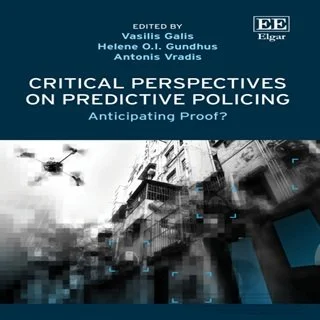
Critical Perspectives on Predictive Policing: Anticipating Proof?

Edited by Vasilis Galis, Helene O.I. Gundhus, and Antonis Vradis

Taking a critical approach, this book advances understanding of the social, legal and ethical aspects of digitalisation in law enforcement and the reliance on data-driven tools to predict and prevent crime. It shows how the proliferation of data analytics challenges citizens’ rights, at a time when what counts as ‘safety’ or ‘policing’ is being fundamentally transformed.

Cheltenham, UK · Northampton, MA; Edward Elgar, 2025.

download
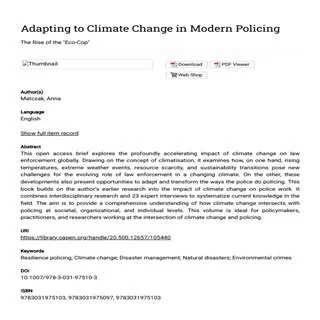
Adapting to Climate Change in Modern Policing: The Rise of the “Eco-Cop”

By Anna Matczak

This open access brief explores the profoundly accelerating impact of climate change on law enforcement globally. Drawing on the concept of climatisation, it examines how, on one hand, rising temperatures, extreme weather events, resource scarcity, and sustainability transitions pose new challenges for the evolving role of law enforcement in a changing climate. On the other, these developments also present opportunities to adapt and transform the ways the police do policing. This book builds on the author’s earlier research into the impact of climate change on police work. It combines interdisciplinary research and 23 expert interviews to systematize current knowledge in the field. The aim is to provide a comprehensive understanding of how climate change intersects with policing at societal, organizational, and individual levels. This volume is ideal for policymakers, practitioners, and researchers working at the intersection of climate change and policing.

Cham: Springer Nature, 2025

download
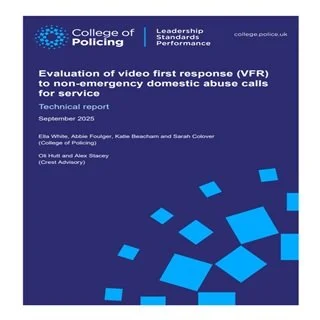
Evaluation of Video First Response (VFR) to Non-Emergency Domestic Abuse Calls for Service Technical Report September 2025 

By Ella White, Abbie Foulger, Katie Beacham and Sarah Colover. Oli Hutt and Alex Stacey 

Video first response (VFR) is a virtual police response to eligible non-emergency domestic abuse calls for service that uses video conferencing software. The evaluation of VFR aimed to understand the impact of the initial police response to domestic abuse calls being conducted via video. The quality and victim perceptions of the initial police VFR and criminal justice outcomes were compared with an in-person, business as usual response (BAU). The research involved two pilot forces, with a randomised control trial in one force and a quasi-experiment in the other. The research compared data from police systems, case file reviews, a victim survey, and interviews with officers and stakeholders. Meta-analysis The meta-analysis aimed to provide an aggregated assessment of the outcome measures from:  the two pilot forces in this evaluation  the evaluation of rapid video response (RVR) conducted in Kent Police in 2021 The meta-analysis found:  Time taken to both respond to and resolve a call for service was significantly faster for VFR, compared to BAU.  Differences in arrest rates between VFR and BAU cases were not statistically significant. However, the meta-analysis found a statistically significant difference between the pilot studies. This reflects the mixed results between pilot studies. The Kent pilot found a significantly higher arrest rate in VFR cases. The West Yorkshire pilot found a significantly higher arrest rate in BAU cases. The West Midlands pilot found that VFR cases had a similar arrest rate to BAU, with no statistical difference between them.  No statistically significant difference was found in victim satisfaction between the VFR cases and BAU overall.Findings from the VFR evaluation Impact on quality of initial police response  VFR response can speed up response times – response times increased significantly in both forces.  VFR may affect whether or not an incident is ‘crimed’. In one force, more BAU cases were reported as a crime than VFR cases, while the other force showed no difference. High levels of missing data may have affected these findings.  VFR may improve the quality of risk assessment. Appropriately detailed risk assessment forms were significantly more likely in VFR conditions in one of the pilot forces. The other force showed no difference between VFR and BAU.  The findings were mostly in favour of VFR victims having more positive safeguarding outcomes. In both forces, case file review data suggested that more safeguarding referrals were made in VFR cases, compared to BAU cases. In one force, the case file review found that information on support services was more likely to be shared with victims who had a VFR response compared to those who had a BAU response. In the other force, the victim survey found that more BAU victims said they were referred to an independent domestic violence adviser (IDVA) compared to VFR victims. However, the sample size was small for both the case file review and victim survey. Impact on criminal justice outcomes  Arrest rate and time taken to arrest differed in the pilot forces. For one force, VFR had a similar arrest rate to BAU cases, with VFR having a shorter time to arrest compared to BAU. In the other force, the arrest rate was higher for BAU, which also had a shorter time to arrest compared to VFR.  In both forces, VFR cases had a similar charge rate and outcome 16 rate (victim chooses not to support, or withdraws support for, further police action) to BAU.  

College of Policing. college.police.uk. September 2025

download
Community Solutions to Prevent Gun Violence Strengthening Research and Evaluation to Build Safer Neighborhoods

By Ileana Mendoza,and Cierren Edmondson

For far too long, law enforcement has been the primary response to the gun violence epidemic in the United States. However, an institution built and sustained through coercive control and violence cannot be expected to bring healing to communities, nor can it address the social conditions that lead people to choose gun violence as a means to an end. Addressing community-level gun violence requires a public health-based approach that centers the community and addresses the root causes of gun violence. Through evidence-based, public health strategies, Community Violence Intervention and Prevention Initiatives (CVIPI) provide a comprehensive and compassionate alternative for addressing and preventing gun violence. This issue brief highlights the need for community-driven strategies, examines the current challenges in evaluating CVIPI e orts and argues that e ective evaluation must involve community partnerships and focus on the experiences of program participants and violence intervention and prevention specialists (VIPs).This focus on CVIPI comes at a critical moment. Communities are still experiencing gun violence while simultaneously facing shrinking budgets for prevention and public health initiatives. Staggering cuts to Department of Justice (DOJ) funding, the looming expiration of American Rescue Plan Act (ARPA) funds in 2026 and the dismantling of the White House O ce of Gun Violence Prevention threaten the future of CVIPI. Without federal funding and a dedicated o ce to coordinate and champion CVIPI, these programs may be faced with the decision to scale-back operations or shut down. These converging realities make it clear that the time to rigorously evaluate, strengthen, and sustain CVIPI is now. Doing so can ensure these strategies not only survive current funding gaps, but also become a permanent fixture in the nation’s approach to prevent and intervene in gun violence.

West Hollywood, CA,: Center for Policing Equity, 2025. 17p.

download
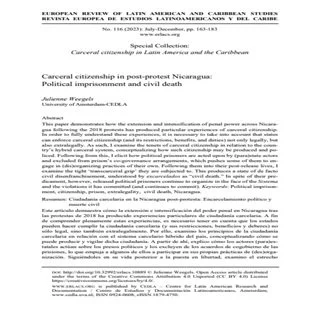
Carceral Citizenship in Post-Protest Nicaragua: Political Imprisonment and Civil Death

By Julienne Weegels University of Amsterdam

This paper demonstrates how the extension and intensification of penal power across Nicaragua following the 2018 protests has produced particular experiences of carceral citizenship. In order to fully understand these experiences, it is necessary to take into account that states can enforce carceral citizenship (and its restrictions, benefits, and duties) not only legally, but also extralegally. As such, I examine the tenets of carceral citizenship in relation to the country’s hybrid carceral system, conceptualizing how such citizenship may be produced and policed. Following from this, I elicit how political prisoners are acted upon by (para)state actors and excluded from prison’s co-governance arrangements, which pushes some of them to engage in (dis)organizing practices of their own. Following them into their post-release lives, I examine the tight ‘transcarceral grip’ they are subjected to. This produces a state of de facto civil disenfranchisement, understood by ex-carcelados as “civil death.” In spite of their predicament, however, released political prisoners continue to organize in the face of the Sistema and the violations it has committed (and continues to commit). 

EUROPEAN REVIEW OF LATIN AMERICAN AND CARIBBEAN STUDIES, No. 116 (2023): July-December, pp. 163-183

download
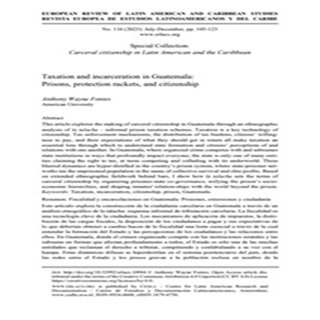
Taxation and Incarceration in Guatemala: Prisons, Protection Rackets, and Citizenship

By Anhony Wayne Fontes

This article explores the making of carceral citizenship in Guatemala through an ethnographic analysis of la talacha – informal prison taxation schemes. Taxation is a key technology of citizenship. Tax enforcement mechanisms, the distribution of tax burdens, citizens’ willingness to pay, and their expectations of what they should get in return all make taxation an essential lens through which to understand state formation and citizens’ perceptions of and relations with one another. In Guatemala, where organized crime competes with and subsumes state institutions in ways that profoundly impact everyone, the state is only one of many entities claiming the right to tax, at turns competing and colluding with its underworld. These blurred dynamics are hyper-distilled in the country’s prison system, where state-prisoner networks tax the imprisoned population in the name of collective survival and elite profits. Based on extended ethnographic fieldwork behind bars, I show how la talacha sets the terms of carceral citizenship by organizing prisoner-state co-governance, reifying the prison’s socioeconomic hierarchies, and shaping inmates' relationships with the world beyond the prison. 

EUROPEAN REVIEW OF LATIN AMERICAN AND CARIBBEAN STUDIES No. 116 (2023): July-December, pp. 105-123

download
The Transition from Prison to Community

By Alia Nahra, David Knight and Bruce Western

High US incarceration rates in the 1990s and early 2000s produced large cohorts of men and women who left prison and returned, disproportionately, to low-income communities of color. Called reentry, the transition from prison to community is a process of social integration where formerly incarcerated people establish, with variable success, a foundation of material security, and connections to major social institutions such as the family and the labor market. This literature review summarizes research on reentry, examining its demographic dimensions, the legal and policy environment, and research on families, housing, health, incomes, and criminal desistance. The review indicates that criminalization and punishment in the reentry process stymie social integration, while support from family and social policy is socially integrative. Research also indicates large racial inequalities where, besides the racial disparity in incarceration, the severity of incarceration and the obstacles to social integration are greater for Black men and women leaving prison

RSF: The Russell Sage Foundation Journal of the Social Sciences 11(3): 174–229.

download
The Fallout from Criminal Justice System Contact

By Hedwig Lee, Alexandra Gibbons, Garrett Baker and Christopher Wildeman

Twenty-five years ago, Bruce Western and Katherine Beckett (1999) provided the seed of what would come to be a novel area of inquiry: the consequences of the carceral state for inequality. In this article, we review in four stages the last twenty-five years of research on the fallout from criminal justice system contact. In the first stage, we describe the contours of the carceral state to highlight how prevalent each level of criminal justice contact is today relative to earlier historical eras and to each other and how unequally distributed these levels of criminal justice contact are by race, ethnicity, and class. In the second stage, we consider the questions often left unaddressed in prior work, including our own prior work: why might we expect racial differences in the effects of criminal justice contact, and are there racial differences in the effects of criminal justice contact? In the third stage, we provide a discussion of the datasets and methods used to consider these relationships. In the fourth stage, we consider the direct and vicarious effects of contact with the police, experiencing prison or jail incarceration, and being placed on community supervision using evidence spanning several disciplines. By providing a review that is exhaustive in terms of levels of criminal justice contact, limitations of data and methods, and the existence of race-specific effects, we offer a comprehensive description of the state of scientific research on the scope and scale of criminal justice contact and its collateral consequences for inequality in the United States. 

” RSF: The Russell Sage Foundation Journal of the Social Sciences 11(3): 174–229.

download
The Rise of the Carceral State: Foundations and Contours of a Rapidly Changing Criminal Legal System

By Sara Wakefield and Kristin Turney

A “carceral state” represents a critical definitional contrast to the more commonly invoked frames of “mass incarceration” or “mass criminalization.” Mass criminalization scholarship is typically focused on the most proximate causes and consequences of growth in the size of the criminal legal system. In contrast, conceptualizing mass incarceration as merely the most visible feature of a broader carceral state expands the analytical landscape but results in significant tradeoffs. In this article, we engage narratives of the development of carceral states, noting that they resist simple or widely agreed-upon definitions, and vary with respect to how they engage crime, race and racism, politics and the political economy, and the importation of carceral logics to seemingly unrelated institutions. We conclude by reflecting on what can be gained by understanding the United States as a carceral state, rather than simply a nation with persistently high crime and punishment rates. 

RSF: The Russell Sage Foundation Journal of the Social Sciences 11(3): 136–73.

download
Understanding Race Disparities in Criminal Court Outcomes

By Shawn Bushway, Andrew Jordan, Derek Neal and Steven Raphael

We construct a framework that defines optimal outcomes in criminal courts, and we use this framework to interpret and organize the existing literature on racial disparities in pretrial detention, sentencing, and community corrections outcomes. Existing research indicates that some actors within courts and within the agencies that implement the sentences that courts impose make decisions that are contaminated by racial animus or racially biased assessments of the recidivism risks posed by some offenders. However, the most important sources of racial disparities in case outcomes are numerous practices, regulations, and laws that are too punitive—that is, their social costs are likely greater than any derived social benefits. Since minorities, especially Blacks, face arrest at much higher rates than Whites, they bear large disparate impacts from such policies.

RSF: The Russell Sage Foundation Journal of the Social Sciences 11(3): 86–135.2025. 

download
Frontiers of Research on Racial Inequalities in Criminal Justice

By Robert J. Sampson

Racial disparities in contact with the criminal justice system remain a pressing concern for both scholars and the public, yet debate persists about how best to explain and reduce them. The articles in this special issue advance our understanding by evaluating research on racial bias in law enforcement, criminal justice processing, and incarceration. I highlight three unifying themes: the significance of time and place, especially how social change shapes racial inequalities; the connection between crime, criminal justice contact, and punishment, emphasizing social processes that influence both criminal behavior and legal outcomes; and structural racial inequalities that extend beyond individual bias and accumulate throughout people’s lives. Drawing from this conceptual framework and the issue’s comprehensive reviews, I outline a future research agenda to better understand—and potentially reduce—racial inequalities in criminal justice.

RSF: The Russell Sage Foundation Journal of the Social Sciences 11(3): 1–21.

download
Early Release via Parole and Recidivism

By Armando N. Meier, Jonathan Levav, Stephan Meier, Liora G. Avnaim:

Does early release decrease or increase the probability that ex-convicts will return to prison? We exploit unique data from Israeli courts, where appearance before the judge throughout the day has an arbitrary component. We first show that judges more often deny parole requests of prisoners appearing further from the judges' last break. We then use this arbitrary variation in early releases and find that early releases reduce the propensity of prisoners to return to prison. Robustness checks suggest that later and earlier cases are largely comparable and that potential selection is unlikely to explain the results.

IZA DP No. 18076 Bonn: IZA – Institute of Labor Economics, 2025. 107p.

download
Lexipol's Fight Against Police Reform

By Ingrid V. Eagly and Joanna C. Schwartz

We are in the midst of a critically important moment in police reform. National and local attention is fixed on how to reduce the number of people killed and injured by the police. One approach—which has been recognized for decades to reduce police killings—is to limit police power to use force. This Article is the first to uncover how an often-overlooked private company, Lexipol LLC, has become one of the most powerful voices pushing against reform of use-of-force standards. Founded in 2003, Lexipol now writes police policies and trainings for over one-fifth of American law enforcement agencies. As this Article documents, Lexipol has refused to incorporate common reform proposals into the policies it writes for its subscribers, including a use-of-force matrix, policies requiring de-escalation, or bright-line rules prohibiting chokeholds and shooting into cars. Lexipol has also taken an active advocacy role in opposition to proposed reforms of police use-of-force standards, pushing, instead, for departments to hew closely to Graham v. Connor’s “objectively reasonable” standard. Finally, when use-of-force reforms have been enacted, Lexipol has attempted to minimize their impact. Local governments, police departments, and insurers have long viewed Lexipol as a critically important partner in keeping policies lawful and up to date. This Article makes clear that they should take a closer look. Lexipol’s aggressive efforts to retain wide officer discretion to use force may ultimately expose officers and agencies to liability instead of shielding them from it. It is time for advocacy groups seeking policing improvements to train their sights on Lexipol. Unless and until Lexipol changes its approach, the company should be viewed as a barrier to reform.
 
Indiana Law Journal: Vol. 97: Iss. 1, Article 1. 2022.

download
Insurance as a Potential Tool to Reduce Firearm-Related Harms

By Kerri Raissian, Jennifer Necci Dineens

Insurance companies may be in a unique position to mitigate firearm-related deaths, injuries, and other harms in the United States. Insurers have played a prominent role in helping reduce injury and death in at least two other significant areas: automotive accidents and swimming pool drownings. In those cases, insurance firms were able to make meaningful societal change simply by compelling their customers to wear seatbelts and put fences around their pools. Firearms may be more difficult for insurance companies to detect than automobiles or swimming pools. For example, firearm owners are not required to declare their firearms (nor are we advocating for this), and so an insurer may not have accurate information regarding the presence of firearms. However, insurance companies face similar knowledge gaps with other behaviors, too (e.g., smoking or past drug-use behaviors). Insurance companies have a history of innovating with regard to risky behaviors to limit risk, and in many ways, firearms are no different. 

The National Institute for Health Care Management Foundation estimates gun injury had an economic cost of $557 billion in 2022.1 Meanwhile, there is mounting evidence that measures like secure storage and safety counseling significantly improve firearm safety in a cost-effective manner. So, why have insurance firms declined to act? It appears the insurance markets do not believe the proper incentives exist to bring about voluntary, preventive action. Yet if they did act, the societal benefits would likely outweigh the costs. Given this potential cost-benefit calculation, legislators, regulators, and insurance industry leaders should explore interventions to spur safety innovation. The range of actions could include: 

• Conducting research to better understand how firearms relate to insurer damages and the potential to mitigate those risks 

• Voluntarily encouraging policyholders to consider options such as secure storage or safety counseling 

• Taking legislative and regulatory steps to encourage or subsidize voluntary innovations and improve incentive structures 

• Potentially imposing mandates 

This paper explores the different types of firearm-related harms in America and the various opportunities and mechanisms by which insurance markets could potentially work to reduce those harms.

Washington, DC: Niskanen Center, 2025. 13p.

download
Seeing the State in Action: Public Preferences About and Judgments of Common Police–Civilian Interactions

By Paige E. Vaughn, Gregory A. Huber

New technologies allow unprecedented public visibility of routine police–civilian interactions, but we know little about how the public wants the police to behave during them. We examine public evaluations about preferred punishment and fair treatment using vignette experiments that randomize multiple features of police–civilian interactions. These causal estimates reveal that for the mass public, officer race does not affect public attitudes, while participant demeanor, markers of threat, and civilian race do. Police–civilian interactions are evaluated through a lens of reciprocity: Hostile officers are judged as less fair, while hostile and armed civilians are viewed as deserving of harsher punishment. When civilians remain polite and threat is low, there is little support for punitive outcomes, but poor civilian behavior warrants more punitive state action. Moreover, people prefer more punishment for White compared with Black civilians, as well as in interactions with White officers and civilians compared with those in which both parties are Black. Interactions with a White officer and a Black civilian are judged as less fair, as are the fairness of assigned punishments in them. Finally, views about fairness are not equivalent to views about appropriate sanctions. These results provide critical evidence about public attitudes regarding police punishment and fairness in order maintenance.

Criminology, Volume 63, Issue 2 May 2025 Pages 330-381

link
Examining Disparity in Police Behavior During the 2020 Social and Political Protests

By Iman Said

In 2020, the United States was gripped by three parallel social movements: an outrush of support for the Black Lives Matter (BLM) movement after the murder of George Floyd, discontent regarding state-mandated lockdowns to mitigate the coronavirus-19 pandemic, and allegations of voter fraud after the November elections. Together, these movements generated a historic spike in protest activity that garnered significant attention, leading some to argue that the police had behaved disparately at protests associated with BLM compared with the other two. A dense literature in the early 2000s developed protest policing theories that pointed to policing culture or to racial threat theory to account for variation in police behavior, but how these theories account for protest policing during 2020 is unclear. Drawing on quantitative and qualitative data and methods from the Armed Conflict Location & Event Data set, I first examine allegations of racial discrimination in police behavior at protests. Then, I explore how on-the-ground interactions between police and protestors account for any seeming disparity. I demonstrate distinct patterns of police behavior shaped by different protestor behaviors across these social movements, as well as racial animus. These findings extend and clarify current theories of protest policing.

Criminology, Volume 63, Issue 2 May 2025 Pages 303-329

link
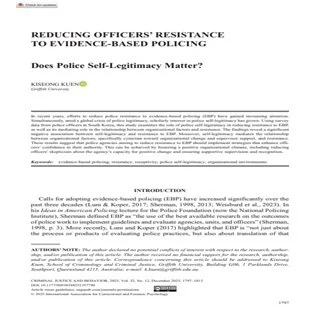
Reducing Officers’ Resistance to Evidence-Based Policing: Does Police Self-Legitimacy Matter? 

By Kiseong Kuen

In recent years, efforts to reduce police resistance to evidence-based policing (EBP) have gained increasing attention. Simultaneously, amid a global crisis of police legitimacy, scholarly interest in police self-legitimacy has grown. Using survey data from police officers in South Korea, this study examines the role of police self-legitimacy in reducing resistance to EBP, as well as its mediating role in the relationship between organizational factors and resistance. The findings reveal a significant negative association between self-legitimacy and resistance to EBP. Moreover, self-legitimacy mediates the relationship between organizational factors, specifically cynicism toward organizational change and supervisor support, and resistance. These results suggest that police agencies aiming to reduce resistance to EBP should implement strategies that enhance officers’ confidence in their authority. This can be achieved by fostering a positive organizational climate, including reducing officers’ skepticism about the agency’s capacity for positive change and ensuring supportive supervision and recognition.

CRIMINAL JUSTICE AND BEHAVIOR, 201X, Vol. XX, No. X, Month 2025, 1–19  

Link
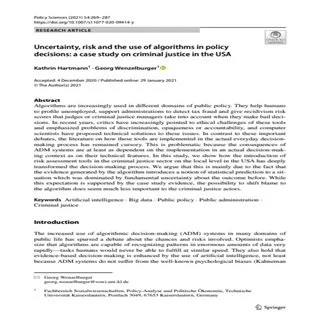
Uncertainty, Risk and the Use of Algorithms in Policy Decisions: A Case Study on Criminal Justice in the USA

By Kathrin Hartmann & Georg Wenzelburger

Algorithms are increasingly used in different domains of public policy. They help humans to profile unemployed, support administrations to detect tax fraud and give recidivism risk scores that judges or criminal justice managers take into account when they make bail decisions. In recent years, critics have increasingly pointed to ethical challenges of these tools and emphasized problems of discrimination, opaqueness or accountability, and computer scientists have proposed technical solutions to these issues. In contrast to these important debates, the literature on how these tools are implemented in the actual everyday decision-making process has remained cursory. This is problematic because the consequences of ADM systems are at least as dependent on the implementation in an actual decision-making context as on their technical features. In this study, we show how the introduction of risk assessment tools in the criminal justice sector on the local level in the USA has deeply transformed the decision-making process. We argue that this is mainly due to the fact that the evidence generated by the algorithm introduces a notion of statistical prediction to a situation which was dominated by fundamental uncertainty about the outcome before. While this expectation is supported by the case study evidence, the possibility to shift blame to the algorithm does seem much less important to the criminal justice actors.

Policy Sci 54, 269–287 (2021)

link