Open Access Publisher and Free Library
TERRORISM.jpeg

TERRORISM

Terrorism-Domestic-International-Radicalization-War-Weapons-Trafficking-Crime-Mass Shootings

Posts in Violence and Oppression
The Era of Gun Mortality: State Gun Regulations and Gun Deaths from 1991 to 2016

By Patrick Sharkey , Megan Kang

Background: The recent rise of gun violence may lead to the perception that the problem of gun mortality in the United States is intractable. This article provides evidence to counter this perception by bringing attention to the period spanning from 1991 to 2016 when most US states implemented more restrictive gun laws. Over this period, the United States experienced a decline in household gun ownership, and gun-related deaths fell sharply.

Methods: The main analysis examines the conditional association between the change in gun regulations at the state level and the change in gun mortality from 1991 to 2016. We include a range of robustness checks and two instrumental variable analyses to allow for stronger causal inferences.

Results: We find strong, consistent evidence supporting the hypothesis that restrictive state gun policies reduce overall gun deaths, homicides committed with a gun, and suicides committed with a gun. Each additional restrictive gun regulation a given state passed from 1991 to 2016 was associated with -0.21 (95% confidence interval = -0.33, -0.08) gun deaths per 100,000 residents. Further, we find that specific policies, such as background checks and waiting periods for gun purchases, were associated with lower overall gun death rates, gun homicide rates, and gun suicide rates.

Conclusion: State regulations passed from 1991 to 2016 were associated with substantial reductions in gun mortality. We estimate that restrictive state gun policies passed in 40 states from 1991 to 2016 averted 4297 gun deaths in 2016 alone, or roughly 11% of the total gun deaths that year.

Epidemiology. 2023 Nov 1;34(6):786-792. 2023 Sep 26.

download
Accelerating Hate: October 7 on Terrorism and Political Violence in the West

By CLARA BROEKAERT, COLIN P. CLARKE, MICHAELA MILLENDER, ANNIKA SCHARNAGL, AND JOSEPH SHELZI

The horrific attacks by Hamas on October 7, 2023, fundamentally shifted the security posture of the Middle East, while also having severe humanitarian consequences and ripple effects in countries throughout the globe, including many in the West. This TSC Special Report, generously sponsored by the Airey Neave Trust, aims to explore how October 7 impacted several Western countries, including the United States, the United Kingdom, France, Germany, and Italy. While the conflict remains ongoing – and indeed will reverberate long after the fighting actually ends — this report attempts to take the pulse of five Western countries just shy of the one-year anniversary marking the attack.

Perhaps unsurprisingly, and in line with trends that have been unfolding in recent years, there has been a spike in both Islamophobic and antisemitic incidents across all five countries — it is not an either/or phenomena. Still, the data underpinning these incidents remains challenging, limited, and frequently incomplete, often collected by civil society groups or non-profit organizations with different definitions of the terms. Government data varies on how it is collected, if it is recorded at all, across local, state, and federal levels. This makes it exceedingly difficult to compare the data rigorously and make generalizable conclusions with confidence. The data that is available, however, does suggest that extremist groups are leveraging the conflict to promulgate and amplify preexisting antisemitic and Islamophobic narratives. In other words, the terrorist attacks of October 7 and the Israeli response provide an opportunity to promote their hateful narratives and repackage them for the moment, often inciting their followers to wreak havoc and pushing their supporters to engage in violence.

New York: The Soufan Center, 2024.63p.

Download
Case Closing Report: Uvalde Texas School Shooting w/ Fatalities

By U.S. CUSTOMS AND BORDER PROTECTION OFFICE OF PROFESSIONAL RESPONSIBILITY

CBP OPR’s Investigative Operations Directorate (IOD) conducts thorough, impartial, and timely investigations into CBP use of force incidents involving death or serious bodily injury and other critical incidents. This review sought to examine the facts and circumstances surrounding this incident (including use of force by CBP personnel); evaluate whether all personnel complied with relevant rules, regulations, and laws; and determine whether any actions could be taken to improve CBP’s performance in similar situations in the future. On May 24, 2022, at 11:33:02 AM (CDT), a lone assailant, , entered Robb Elementary School through an unsecured exterior side door. Upon entering the school, the assailant quickly moved down the hallway and pulled open one of the doors to adjoining Classrooms 111 and 112, both fourth-grade classrooms full of students and their teachers. An internal doorway connected Classroom 111 and Classroom 112. By entering through either classroom door, the assailant had access to both classrooms. Upon entering the classroom, the assailant began firing a semi-automatic rifle at the children and their teachers in both classrooms. Approximately 77 minutes after the assailant entered the classroom, CBP personnel consisting of Border Patrol Agents (BPAs) assigned to the Border Patrol Tactical Unit (BORTAC), along with state and local law enforcement officials, entered the classroom and, after an exchange of gunfire, shot and killed the assailant. By the time the incident at Robb Elementary was over, the assailant had killed 19 children and 2 teachers. An additional 16 students, teachers, and law enforcement officers were wounded. A total of 188 CBP personnel, along with law enforcement officers from more than 20 other federal, state, and local agencies, responded or provided support during or following the incident. The incident created immense logistical and tactical challenges that severely tested the resources and capabilities of responding officers and agencies. OPR reached the following conclusions based on this review: Involved CBP personnel at all levels had an inconsistent understanding of their authority to respond to non-federal incidents including active shooter situations. None of the responders whom OPR interviewed could cite a specific authority for being at Robb Elementary School on May 24, 2022. The failure of arriving law enforcement personnel to establish identifiable incident management or command and control protocols led to a disorganized response to the Robb Elementary School shooting. No law enforcement official ever clearly established command at the school during the incident, leading to delays, inaction, and potentially further loss of life. CBP personnel responding to the incident did not establish a command and control framework for their own responding personnel, which resulted in responders taking on tasks on an ad-hoc basis as requested by local law enforcement or at their own initiative.

OPR determined existing CBP training on active shooter response procedures did not adequately prepare responding personnel to deal with this situation. The current training and curriculum did not include the proper application of National Incident Management System (NIMS) or Incident Command System (ICS) protocols and did not prepare them for a number of factors, including the need to address an active shooter behind a locked door. None of the first responders from state, local, or federal law enforcement agencies in a position to take action against the assailant had access to an accurate school layout or knew how to obtain the correct keys to gain access to critical areas of the school. Additionally, none of the first responders from law enforcement agencies had the necessary tools to adequately breach the outwardly opening metal doors to Classrooms 111 and 112. Only one CBP law enforcement officer who arrived on scene had access to a Halligan tool (used for forcibly opening a locked door). CBP personnel established a medical triage area in the hallway of the west building and provided lifesaving care for multiple victims. However, the overall chaotic response caused by the lack of command and control led to the breakdown of adherence to established medical protocols for a mass-casualty incident. This led to some victims with gunshot wounds being inadvertently placed on a school bus without receiving immediate medical treatment. In the immediate aftermath of this incident, numerous investigative agencies, including the Texas Rangers and the Federal Bureau of Investigation (FBI), began to independently interview personnel and recover evidence, leading to fragmented crime scene processing and evidence collection. Text messages and other records from cellular devices used by CBP personnel during the incident were not obtained until OPR identified this deficiency and collected most of these materials months following the incident. Coordination with other investigative entities could prevent this oversight in the future. CBP lacked procedures for establishing a centralized point from which to disseminate all information pertaining to the incident. A centralized point of dissemination would have helped to ensure accurate and timely distribution of information while preserving the integrity of ongoing investigations. OPR made the following recommendations based on its review: CBP must ensure its officers, agents, and managers understand and properly work within the confines of their authority. To the extent CBP intends for its personnel to continue to respond to mass violence incidents in a non-federal setting, policy or law must be generated to ensure they have proper authority to do so. All CBP personnel tasked with responding to incidents such as the one at Robb Elementary School should be familiar with NIMS or ICS protocols. CBP should make NIMS or ICS protocols a facet of CBP’s response protocols. CBP’s active shooter training and doctrine should be revised to align with continuously emerging best practices, including lessons learned from this incident. Once the training is revised, all first responders within CBP should receive comprehensive training and the tools necessary to deal with the management of and response to active shooter events. CBP should establish procedures for following medical best practices during critical events and ensure that all CBP personnel are trained to properly assess people requiring medical care, especially because CBP personnel might arrive on scene before emergency medical technicians (EMTs) and paramedics. Responding to critical incidents can overwhelm both an organization’s and individuals’ ability to cope. The mental health needs of first responders must be addressed through comprehensive and universally established protocols. CBP should continue to invest in best practices for responding to critical incidents of all types, including mass violence events, focusing on the healing involved.

Washington, DC: U.S. CUSTOMS AND BORDER PROTECTION OFFICE OF PROFESSIONAL RESPONSIBILITY 2024. 203p.

Download
Trafficking in human beings: Psychological coercion and investigative interviewing

By Julia Korkman

Traffickers often use manipulation to tie their victims with what is sometimes called “invisible chains”. These, often subtle and large ly psychological means of controlling and manipulating victims are hard to detect and prove by the criminal justice system. The terms used for this phenomenon in the scientific literature are psychological coercion, psychological control and coercive control. IN THIS POLICY brief, we use the term psychological coercion, as it is widely used in the human trafficking literature. This policy brief pro vides a brief insight into psychological coercion as a phenomenon, what is known about the use of such coercion in the context of trafficking in human beings and how investigators can strive to address the issue of psychological coercion within criminal investigation

Helsinki: HEUNI, 2023. 4p.

Download
Labor Trafficking: Strategies to Uncover this Hidden Crime

By The Little Hoover Commision

California must improve and expand efforts to identify labor trafficking, the state’s independent government watchdog recommends in a new report.

In Labor Trafficking: Strategies to Uncover this Hidden Crime, the Little Hoover Commission calls for increased efforts to identify labor trafficking through better training, data collection, and public awareness. This is the Commission’s second report studying California’s response to human trafficking and builds upon the recommendation from its first report on the topic, released in June 2020, to create a statewide Anti-Human Trafficking Council.

“Too often, this heinous crime goes undetected, and those who have been preyed upon have nowhere to turn,” said Commission Chair Pedro Nava. “This horrible crime demands an aggressive response, and our recommendations will help California do just that.”

Labor trafficking occurs when employers use force, fraud or coercion to exert a level of control over workers that leaves them trapped in oppressive situations. It can occur in a variety of workplaces, including restaurants, construction sites, farm fields, and households, and is often very difficult to detect. Widespread unemployment due to the COVID-19 pandemic may contribute to the conditions necessary for labor trafficking to flourish.

The Commission’s report focuses on the obstacles that make it difficult to identify labor trafficking, including a lack of enforcement of anti-trafficking laws and a lack of familiarity about the issue among government officials and the public. The report also notes that the state’s primary focus has been on combatting sex trafficking, a focus that must continue but be expanded to include labor trafficking as well.

“We need to know where labor trafficking is occurring in California and who is being affected so we can direct resources to help victims and bring traffickers to justice,” explained Commissioner Cynthia Buiza, chair of the Commission’s subcommittee for the labor trafficking studies. “More information will mean a stronger state response.”

The report also notes the strides taken by state officials to combat and deter child sex trafficking and calls for similar investment in protections for child victims of labor trafficking.

“It is crucial that all children are protected,” said Commissioner Dion Aroner, a member of the study’s subcommittee. “Nothing is more important than ensuring that California’s youngest and most vulnerable residents do not fall prey to the evil of human trafficking.”

Report #251, September 2020; Sacramento: Little Hoover Commission, 2020. 30p.

Download
Implementation Review: California’s Response to Labor Trafficking Report #278 | February 2024

By The Little Hoover Commission

The Commission assessed California’s efforts to combat labor trafficking in 2020 and produced three reports that included recommendations to strengthen the state’s stance against this horrific crime. Together, in these reports, the Commission offers recommendations to help California coordinate its response to human trafficking, detect labor trafficking, help victims, and bring traffickers to justice. In 2023, the Commission held a public hearing and sought additional input from five state agencies to learn about progress made towards implementing its recommendations. As part of this follow-up review, the Commission found a growing need for support of labor trafficking survivors. Yet, barriers—such as insufficient resources to identify and prosecute this crime—continue to undermine the state’s efforts. These challenges are exacerbated by gaps in state and local leadership that hinder continuity of effort in anti-trafficking work. Coordinating Leadership Around Anti-Trafficking Activities In its initial study, the Commission found that California’s response to human trafficking focuses principally on combatting sex trafficking. Additionally, the state lacks a coordinated strategy to target human trafficking statewide. In its report, Human Trafficking: Coordinating a California Response, the Commission recommended the creation of an antihuman trafficking council to build and enhance collaboration among communities throughout the state, study and improve services for survivors of both sex and labor trafficking, and assist in the successful prosecution of human traffickers. While there have been several legislative attempts to create such a coordinating body, none have been successful thus far. Nonetheless, representatives from regional human trafficking task forces told the Commission that such an entity would elevate trafficking as an explicit statewide priority, help them to implement strategies to identify labor trafficking, share best practices, and access published case law. California must institutionalize its response to human trafficking through the creation of a state-level centralized hub. Uncovering Labor Trafficking Combatting labor trafficking within California must begin with effectively detecting this crime— whenever and wherever it occurs. Yet, uncovering labor trafficking can be particularly challenging, as few understand the nature of the crime and to the untrained observer, the work itself may appear legitimate. In its report, Labor Trafficking: Strategies to Uncover this Hidden Crime, the Commission identified several strategies to help California better detect labor trafficking, including through increased worker training, public education and outreach, and equal application of statutory protections to help identify and address all forms of child trafficking. In its review, the Commission found some efforts to improve identification of this crime, such as periodic training on labor trafficking for certain public officials and workers, increased public awareness resources, and legislative attempts to equally address all forms of child human trafficking. While important, these efforts do not meet the scale or scope envisioned by the Commission in its original study. California must expand upon this work to have a chance at significantly reducing labor trafficking. In this report, the Commission reiterates a few such opportunities, including regular and robust support to train public officials to serve as “first identifiers,” expanded worker training opportunities and informational campaigns across industry sectors, and statutory amendments to ensure equal protection against all forms of trafficking.

Report #278; Sacramento: Little Hoover Commision, 2024. 25p.

Download
VICTIM OFFENDER OVERLAP: FIREARM HOMICIDE VICTIMS WITH AND WITHOUT CRIMINAL RECORDS

By Jessica Reichert and Maryann Mason

In the United States, firearm homicide is a major public health concern. Certain populations are at greater risk for being a victim of firearm homicide, such as those with prior criminal justice involvement. The overlap between violent victimization and offense history, referred to as the victim-offender overlap, is empirically supported, but research is limited on the overlap of firearm homicide victimization and justice involvement. Therefore, we examined the extent of victim-offender overlap of firearm homicide decedents by matching Illinois public health data with state arrest data. A total of 1,331 firearm homicide decedents were examined, including 20.4% (n = 271) with no arrest records and 79.7% (n = 1,060) with an arrest record, as well as 55.6% (n = 740) with a prior conviction and 31.8% (n = 423) with a prior incarceration. A higher proportion of firearm homicide victims with an arrest record were male, another race than White, non-Latinx, and single or never married than those without an arrest record. This study further supports the existence of the victim-offender overlap and highlights demographic disparities in criminal justice involvement among victims of fatal firearm violence.

Chicago: Illinois Criminal Justice Information Authority, 2023. 16p.

Download
Missing Voices: The Violent Erasure of Land and Environmental Defenders

By Global Witness

This report and our campaign are dedicated to all those individuals, communities and organisations bravely taking a stand to defend human rights, their land, and our environment. Last year, 196 people were murdered for doing this work. We also acknowledge that the names of many defenders who were killed last year may be missing, and we may never know how many more gave their lives to protect our planet. We honour their work too

This report shows that in every region of the world, people who speak out and call attention to the harm caused by extractive industries – like deforestation, pollution and land grabbing – face violence, discrimination and threats. We are land and environmental defenders. And when we speak up many of us are attacked for doing so.

More than 2,100 land and environmental defenders killed globally between 2012 and 2023

  • An estimated 196 land and environmental defenders were killed in 2023 around the world, according to a new Global Witness report published today

  • The new figures take the total number of defenders killed between 2012 to 2023 to 2,106

  • For the second year running, Colombia had the highest number of killings worldwide – with a record 79 defenders killed last year, followed by Brazil (25), Mexico (18) and Honduras (18)

  • Once again, Latin America had the highest number of recorded killings worldwide, with 166 killings overall – 54 killings across Mexico and Central America and 112 in South America

  • Environmental defenders are also being increasingly subject to range of tactics for silencing those who speak out for the planet across Asia, the UK, EU and US

London: Global Witness, 2024. 66p.

Download
Breaking the Cycle: Making Violence Prevention and Intervention A Permanent Policy Commitment of the State of California

By Vaughn Crandall, Reygan Cunningham, and Robin Campbell

Gun violence inflicts a grim toll on our nation. Every single day, 120 Americans are killed with guns and more than 200 are shot and wounded. Gun violence is the leading cause of death of children and teens in the U.S. Homicide is the leading cause of death for Black men under 44 and the second leading cause of death for Latino men. Both African American and Latinx communities are impacted by gun violence at rates that far exceed those of white communities. The economic consequences have been calculated to exceed $550 billion annually.

Oakland:  California Partnership for Safe Communities, 2024. 15p

download
Empire, Colony Genocide: Conquest, Occupation, and Subaltern Resistance in World History

May Contain Markup

Edited by A. Dirk Moses

Scope of Genocide Studies: The book explores genocide in various historical contexts, emphasizing that genocides are not limited to the 20th century but have occurred throughout history.

Colonialism and Genocide: It examines the intrinsic link between colonialism and genocide, suggesting that many genocides have rootsin colonial and imperial conquests.

Case Studies: The document includes numerous case studies from different regions and periods, such as the Armenian Genocide, genocides in Tasmania, and colonial rule in German Southwest Africa.

Intellectual Contributions: The book features contributions from various scholars, providing diverse perspectives on the relationship between empire, colony, and genocide.

Berghahn Books, 2008, 491 pages

READ
Forgotten Genocides: Oblivion, Denial, and Memory

May Contain Markup

Edited by René Lemarchand

Forgotten Genocides: The book explores lesser-known genocides, such as those in Burundi, Tibet, and among the Herero and TasmanianAborigines.

Denial and Memory: It discusses how many genocides are denied or forgotten, often manipulated by perpetrators and overlooked by the global community.

Historical Context: Each genocide is examined within its uniquehistorical and political context, highlighting the diversity of circumstances leading to mass violence.

Comparative Analysis: The book provides a comparative study of different genocides, emphasizing the importance of remembering and understanding these tragedies to prevent future occurrences.

University of Pennsylvania Press, 2011, 190 pages

READ
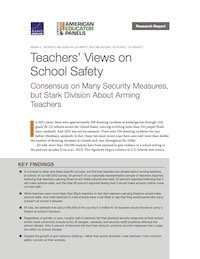
Teachers' Views on School Safety: Consensus on Many Security Measures, But Stark Division About Arming Teachers

By Brian A. Jackson, Melissa Kay Diliberti, Pauline Moore, Heather L. Schwartz

Shooting incidents at kindergarten through grade 12 (K–12) schools in the United States, including mass attacks like the one that killed 19 students and two teachers at Robb Elementary School in Uvalde, Texas, have sparked calls to increase security or adopt altogether new approaches to school safety. These approaches include allowing teachers or staff to carry firearms in some schools. To learn what teachers across the United States think about school safety generally and about specific proposals to enhance safety in schools, such as teacher-carry policies, RAND researchers administered a survey to a randomly sampled set of 973 K–12 teachers using the American Teacher Panel. The survey focused on teachers' views of safety in their schools, including their main safety concerns, perceptions of security measures in place, the effect of those measures on school climate, and whether they were concerned for their own safety and that of their students. On the specific issue of firearms in school, the survey asked whether allowing teachers to carry firearms would make schools more or less safe and whether teachers would personally carry a firearm if given the choice to do so. Findings note that teachers, like the U.S. population as a whole, are divided about armed teachers at school: Fifty-four percent of respondents reported believing that teachers carrying firearms will make schools less safe, 20 percent reported believing that it will make schools safer, and the final 26 percent reported feeling that it would make schools neither more nor less safe.

Key Findings

  • Similar to older and state-specific surveys, this survey found that teachers are divided about arming teachers at school. Fifty-four percent of the nationally representative sample of teachers reported believing that teachers carrying firearms will make schools less safe, 20 percent reported believing that it will make schools safer, and the final 26 percent reported feeling that it would make schools neither more nor less safe.

  • White teachers were more likely than Black teachers to feel that teachers carrying firearms would make schools safer, and male teachers in rural schools were most likely to say that they would personally carry a firearm at school if allowed.

  • All told, about 550,000 of the country's 3 million K–12 teachers would choose to carry a firearm at school if allowed.

  • Regardless of gender or race, roughly half of teachers felt that physical security measures at their school (which most commonly include locks, ID badges, cameras, and security staff) positively affected the school climate. Only 5 percent of teachers felt that their schools' physical security measures had a negative effect on school climate.

  • Despite the growth in gun violence, bullying — rather than active shooters — was teachers' most common safety concern.

Recommendations

  • Study early adopter schools or school districts that have more-expansive versions of teacher-carry programs to understand how they work in practice.

  • Conduct a comprehensive cost-benefit analysis of programs allowing teacher-carry to rigorously assess their outcomes.

  • Develop risk analysis approaches to inform school safety and security planning that balance frequent, lower-level forms of school violence, such as bullying, and lower-probability, extreme forms of school violence, such as shootings.

  • Develop a deeper understanding of the sources of teachers' safety concerns.

  • Identify how fears of victimization and of specific safety concerns contribute to teacher and principal turnover, and to student enrollment, attendance, and academic performance.

  • Better characterize the combined effects of school security measures and strategies on safety, school climate, and student attendance and academic performance.

  • Take the pulse of parents, teachers, administrators, and students about school safety measures to disaggregate by type of community and to triangulate their views on school safety.

Santa Monica, CA: RAND,  2023.

Download

download
Interactions at the point of firearm purchase and subsequent use of locking devices

By Shelby L Bandel , Allison E Bond , Michael D Anestis 

Background: Firearms account for over 40,000 deaths in the USA each year in addition to thousands of nonfatal injuries. One notable prevention strategy for firearm-related fatalities and nonfatal injuries is safe storage. Safe storage of firearms emphasizes using storage mechanisms that limit the ready access of firearms to unauthorized users. Cable locks are one safe storage option that is easy to access and typically free, as they are included in many firearms sales. The present study examined the extent to which firearms retailers notifying purchasers at the point of sale about the included cable locks was associated with subsequent locking device use in two large samples and three subsamples. Exploratory analyses then examined demographic factors associated with the frequency of seller notification of locks.

Methods: Sample 1 included 1203 firearm owners and sample 2 included 1556 firearm owners. Subsamples were drawn from sample 2 to examine if there were differences by state. The three subsamples included firearm owners from Minnesota (n = 515), Mississippi (535), and New Jersey (506). Logistic regressions were used to examine the association between the frequency of sellers notifying buyers of locks and subsequent locking device use. Linear regressions were used to examine what demographic factors were associated with greater frequency of seller notification of locking devices.

Results: Results indicated a general trend such that more frequent notification of cable locks at the point of purchase was associated with a greater likelihood of using locking devices to secure firearms. At the subsample level, these findings were most consistent for Mississippi relative to Minnesota and New Jersey. Exploratory analyses generally indicated those who were younger and those living in more densely populated areas were more likely to be notified about cable locks at the point of purchase.

Conclusions: These findings suggest that interactions about cable locks at the point of firearm purchase has an impact on firearm storage behaviors. Such results indicate that encouraging firearm retailers to have these discussions with those purchasing firearms might be an important strategy for preventing firearm-related fatalities and nonfatal injuries.

Inj Epidemiol. 2023; 10: 11

download
Escaping Precariousness: Criminal Occupational Mobility of Homicide Inmates During the Mexican Drug War

By Raul Zepeda Gil

One of the main inquiry topics within crime and conflict studies is how inequalities or poverty fosters or deters participation in organized violence. Since the late 1990s, the increase in violence in Latin America has boosted the use of Global North criminology and conflict studies to explain this phenomenon. Although helpful, the question about the link between inequality and violence remains elusive. Instead, this research uses occupational mobility and life course approaches to analyze the latest Mexican inmate survey data. With this data, we can understand the factors behind youth recruitment into violent criminal organizations during the current drug war. The main findings point to youth transitions from school and low-skilled manual employment towards criminal violent activities as an option out of work precariousness. This research proposes researching transitions to organized violence as an occupational choice in market economies and post-conflict settlements as a possible causal mechanism that explains inequalities and violence.

   Journal of Illicit Economies and Development, 6(1): pp. 1–15, 2024

download
New War, Same Battle? Conflict-Related Human Trafficking in the Context of the War in Ukraine

By Eva Veldhuizen Ochodničanová, Alicia Heys

Despite the link between conflict and human trafficking having been globally recognized, academic inquiry investigating how the two interact continues to be limited. Given the recency of the full-scale invasion of Ukraine by the Russian Federation in February 2022, this lack of literature is even more pronounced in understanding how the risks of trafficking are developing in the current context. This paper examines extant academic literature to explore what is already known about the relationship between conflict and human trafficking, situating this within the theoretical framework of routine activity theory (RAT). It analyses governmental and non-governmental organization reports emerging from Ukraine to contextualize the risk that is specific to those affected by the war. The paper identifies four key drivers of risk facing those in, or fleeing, Ukraine, which can heighten their vulnerability to human trafficking, before offering a novel and innovative typology of the ways that human trafficking can manifest as a result of conflict. The typology considers the direct and indirect links between conflict and trafficking, the geographical spaces in which trafficking can occur, and the specific forms that exploitation can take. By situating the paper within RAT and contextualizing it with evidence from the war in Ukraine, the findings of this paper provide both theoretical and empirical insights that help to expand existing knowledge on how conflict situations can increase the risk of THB.

Journal of Illicit Economies and Development, 6(2): pp. 26–41.2024 

download
Gun violence against unhoused and unstably housed women:  A cross-sectional study that highlights links to childhood violence

By Rose M. C. Kagawa and Elise D. Riley

Background: Unstably housed women experience high levels of violence. While previous studies have investigated psychological, physical, and sexual violence, weapon and gun violence are rarely delineated. We examined factors associated with experiencing violence as an adult among unhoused and unstably housed women, with a focus on gun violence. Methods: We recruited women with a history of housing instability from San Francisco homeless shelters, street encampments, free meal programs, low-income hotels, and health clinics. Participants completed interviews including questions regarding both childhood and adult violence. We used multivariable logistic regression to examine associations of specific types of childhood violence (i.e., physical, sexual, gun, and other weapon-involved violence), age, race, ethnicity, educational attainment, and sexual orientation, with risk of experiencing specific types of violence as an adult (i.e., gun, other weapon-involved, physical violence). Because the violence outcomes were not rare, odds ratios were transformed to approximate risk ratios. Results: Nearly half of women (n = 110, 45%) had been attacked with a gun as an adult. Violent victimization in adulthood was common, with 33% having experienced all three forms of violence. The probability of being attacked with a gun as an adult was almost 70% higher among women who had been hit or kicked hard enough to cause injury as a child (RR = 1.68; 95% CI = 1.24, 2.11), and this association was present for all three violence outcomes. No other risk factors explored, including other types of violence experienced as a child, met the statistical threshold to be considered significant. Conclusions: The high prevalence of gun violence reported here is consistent with prior studies of violence conducted in similar populations. Considered in combination with prior research, findings suggest that multi-generational violence prevention interventions for low-income women and girls are needed. They also emphasize the need to more actively include people who experience unstable housing in statewide and national violence surveys to better understand the extent of the problem and address on a broader scale the high rates of violence experienced by unstably housed populations, which have been consistently documented in local research

Inj. Epidemiol. 8:52, 2021

download
Guns, Violence, Politics: The Gyre Widens

By Garen J. Wintemute 

Inter-related sustained upward trends in firearm purchasing, violence, and political extremism are converging to put the USA at risk for disaster and threaten our future as a democracy. This narrative review provides a critical assessment and call to action. It explores each trend separately, considers the effects of their likely and imminent convergence, and suggests possibilities for collective and individual action to prevent or at least reduce those effects.

Injury Epidemiology volume 8, Article number: 64 (2021)

download
Defensive Gun Use: What can we learn from news reports?

By David HemenwayChloe ShawahElizabeth Lites 

Background: In the past decade, most people who buy and own guns are doing so for self-defense. Yet little is known about actual defensive gun use in the USA.

Methods: To discover what information newspaper articles and local news reports might add, we read the news reports of defensive use incidents assembled by the Gun Violence Archive. We examined a sample of more than a quarter of the incidents from 2019, the last year before the pandemic. We examined all cases from four months-January, April, July, and October. We created a typology of defensive gun use incidents.

Results: Of 418 incidents, in about half, the perpetrator was armed with a firearm. In almost 90% of the cases, the victim fired their firearm-315 perpetrators were shot, and about half of them died. The average number of perpetrators shot per incident was 0.75; the average number of victims shot was 0.25. We estimate that in 2019 fewer than 600 potential perpetrators were killed in defensive gun use incidents that made the news. Among the thirteen categories of shooting were drug-related (4% of incidents), gang-like combat (6%), romantic partner disputes (11%), escalating arguments (13%), store robberies (9%), street robberies (5%), unoccupied vehicle theft (5%), unarmed burglaries (7%), home invasions (20%), and miscellaneous (6%).

Conclusion: We believe the Gun Violence Archive dataset includes the large majority of news reports of defensive gun use especially those in which the perpetrator is shot and dies. Some of the strengths of using news reports as a data source are that we can be certain that the incident occurred, and the reports provide us with a story behind the incident, one usually vetted in part by the police with occasional input from the victims, perpetrator, family, witnesses, or neighbors. Defensive gun use situations are quite diverse, and among the various categories of defensive gun use, a higher percentage of incidents in some of the categories seemed far less likely to be socially beneficial (e.g., drug-related, gang-like, escalating arguments) than in others (e.g., home invasions).

Injury Epidemiology  9:19, 2022.

download
Domestic Terrorists' Contact with System Stakeholders Before Attacks

MCBRIDE, MEGAN K.; JENKINS, MONIQUE

From the document: "Within the public violence literature--that is, the literature on domestic terrorism, mass shootings, school shootings, and hate crimes, among others--leakage has been identified as a core warning behavior. Leakage occurs when a would be assailant communicates an intention to harm a target before committing an attack. This communication can vary in timing, level of detail, form, intentionality, and audience. Through such a communication, an individual might directly verbalize an intent to commit an act, make more subtle threats and innuendos, or share a plan via social media. Researchers have found relatively high levels of leakage associated with acts of public violence, including adolescent-perpetrated mass murders, mass shootings, political and public figure assassinations, and domestic terrorism. For this reason, leakage--which often occurs in interactions online or with loved ones--can be an important warning sign. But leakage to family, friends, or acquaintances is not the only way to detect when an individual is intending to commit an act of public violence, and over the last decade, researchers have started to examine preattack contact with system stakeholders, such as law enforcement, mental health, and education professionals. [...] We sought to advance understanding of what percentage of the violent extremist population could be 'catchable' in the sense that an individual had been in previous contact with a system stakeholder (e.g., law enforcement, mental health provider) or had been reported to a system stakeholder (e.g., by a friend or loved one to whom they had intentionally or unintentionally leaked information). To explore this issue, we leveraged a new dataset: the Domestic Terrorism Offender Level Database (DTOLD). The database includes detailed information on the 320 non-Islamist individuals who carried out terrorist attacks in the United States between January 1, 2001, and December 31, 2020. Specifically, we sought to understand what percentage of this population was known to system stakeholders at some point before they perpetrated their attacks." Further information for this document can be found here: www.cna.org/reports/2024/08/domestic-terrorists-contact-with-system-stakeholders-before-attacks

CNA CORPORATION. 2024. 4p.

download
Wicked Ties: Understanding the Crime-Conflict Nexus, Its Implications, and Strategic Motivations in the Russo-Ukrainian War

By André Duffles, Teixeira Araneg and Ariel Faccioli Fernandes

Grounded on an extensive literature review derived from evidence-based studies (e.g., scientific articles, institutional and technical reports, journalistic evidence, academic books, and book chapters), our article develops a qualitative analysis to address the following question: to what extent do the strategic motivations of states and organized crime groups converge/diverge in the context of the current Russo-Ukrainian conflict? This article is divided into three parts. The initial section delves into the interconnections between illicit markets and armed conflicts. Secondly, after acknowledging the background of organized crime in both countries and the emergence of the current Russo-Ukrainian war, it highlights the implications of this conflict on the dynamics of illicit markets. Finally, it analyzes the strategic motivations of states and organized crime within this setting, as well as its points of convergence and divergence. This research potentially explores the frequently wicked ties of (inter)national politics and criminal adaptation during (post-)war times in Eastern Europe and within the international system.

Journal of Illicit Economies and Development, 6(2): pp. 48–60. 2024.

download