Open Access Free Library
CRIME+CRIMINOLOGY.jpeg

CRIME

Violent-Non-Violent-Cyber-Global-Organized-Environmental-Policing-Crime Prevention-Victimization

Posts in Drug policy
Drug Dealers, Robbery and Retaliation. Vulnerability, Deterrence and the Contagion of Violence

VOLKAN TOPALLI , RICHARD WRIGHT and ROBERT FORNANGO

Because of their illicit status, drug dealers robbed in the course of doing business cannot go to the police. Thus, the deterrent, compensatory and retributive benefits of formal justice are unavailable to them. Informal avenues of redress represent their only means of obtaining justice. This article, based on interviews with 20 recently robbed, active drug dealers in St Louis, Missouri, explores how such victims perceive and respond to the assault. Results indicate that direct retaliation is the preferred response because it serves three important aims: reputation maintenance, loss recovery and vengeance. When dealer/victims are unable or unwilling to retaliate they resort to less satisfactory alternatives such as robbery displacement and the resumption of selling. The implications of these findings for the spread of drug market violence are discussed.

BRIT. J. CRIMINOL.. (2002) 42, 337–351
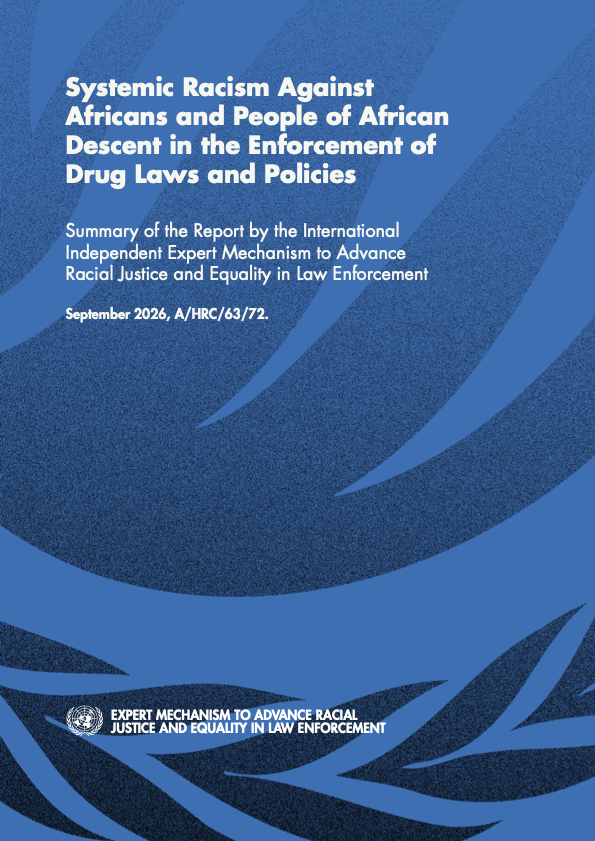
Systemic racism against Africans and people of African descent in the enforcement of drug laws and policies

By United Nations EMLER

In the present report, the International Independent Expert Mechanism to Advance Racial Justice and Equality in Law Enforcement examines how racism is embedded in drug control systems and shapes their impacts on Africans and people of African descent. It begins by exploring the root causes of racial discrimination in drug policy, including the legacies of colonialism, the racialization of drugs, the influence of militarized approaches and the “war on drugs”. The Mechanism then analyses manifestations of racial discrimination across the criminal justice system. Building on this analysis, it examines the intersection of drug policy with other grounds of discrimination, such as gender, highlighting how intersecting forms of discrimination can increase the risk of human rights violations. The Mechanism also identifies factors that exacerbate these harms and concludes by highlighting promising practices and policy approaches aimed at
addressing racial discrimination and advancing more equitable and rights-based drug policies. The present report also includes information on the activities of the Mechanism since its previous report.