
Open Access Publisher and Free Library
CRIME+CRIMINOLOGY.jpeg

CRIME

Violent-Non-Violent-Cyber-Global-Organized-Environmental-Policing-Crime Prevention-Victimization

Posts tagged forgery
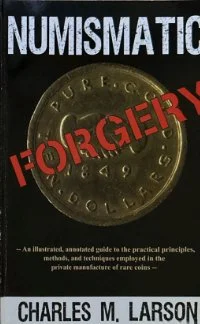
Numismatic Forgery

By Charles M. Larson

In "Numismatic Forgery," author Charles M. Larson pulls back the curtain on one of the most secretive and sophisticated threats to the world of coin collecting.1 Far from a simple historical overview, this book serves as a definitive guide to the dark art of the "super-forger," detailing the methods used to deceive even the most seasoned experts.

Larson provides a deep dive into the technical evolution of counterfeiting—from the crude cast copies of the past to the modern, high-precision struck forgeries that haunt the current marketplace. By meticulously explaining the tools of the trade, including centrifugal casting, pressure casting, and the creation of deceptive dies, Larson equips collectors, dealers, and historians with the knowledge necessary to spot the subtle "tells" of a fake.

Key features of this essential numismatic reference include:

  • The Forger's Toolkit: A step-by-step examination of the physical processes used to create counterfeit currency.

  • Detection Techniques: Practical advice on identifying "transfer marks," edge filing, and suspicious luster.

  • Case Studies: Real-world examples of famous forgeries that have infiltrated major collections.

  • The Ethics of the Hobby: A sobering look at how forgery undermines the historical integrity of numismatics.

Whether you are a casual hobbyist or a professional dealer protecting a million-dollar inventory, "Numismatic Forgery"is an indispensable resource for anyone who wants to ensure that the history they hold in their hands is the real deal.
read
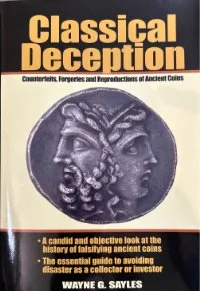
Classical Deception: Counterfeits, Forgeries and Reproductions of Ancient Coins

Wayne G. Sayles:


Classical Deception is a detailed and accessible exploration of the long history of counterfeit ancient coins and the methods by which they are produced, detected, and sometimes unwittingly circulated within the numismatic world. Designed for collectors, students of antiquity, and museum professionals alike, the book traces forgery practices from antiquity to the modern era, showing that imitations have accompanied genuine coinage for as long as coins have existed. Sayles examines a spectrum of deceptions — from ancient contemporary counterfeits meant to pass in daily commerce, to the sophisticated modern forgeries that challenge even seasoned experts.

A substantial portion of the book profiles well-known forgers, documenting their techniques, motives, and the specific pieces they produced. Sayles pays particular attention to the prolific work of modern reproduction artists, including Peter Rosa, whose replicas are widely encountered and often misunderstood by beginning collectors. More than 200 photographs allow readers to visually compare authentic coins with their deceptive counterparts, highlighting telltale markers in style, fabric, metallurgy, and die workmanship.

Sayles also introduces the scientific and observational tools available to detect fakes — from simple weight measurement and magnified study of surfaces to metallurgical testing, microscopy, and imaging technologies. Throughout, he emphasizes practical guidance: what warning signs to look for, how to assess provenance, and how to avoid costly errors in the marketplace.

Ultimately, Classical Deception serves both as a cautionary manual and as a historical study of ingenuity, fraud, and craftsmanship. It equips the reader to navigate the hazards of collecting while deepening appreciation for the authentic artistry of ancient coinage.

Read
Faking, Forging, Counterfeiting: Discredited Practices at the Margins of Mimesis

Edited by Daniel Becker, Annalisa Fischer, Yola Schmitz

Forgeries are an omnipresent part of our culture and closely related to traditional ideas of authenticity, legality, authorship, creativity, and innovation. Based on the concept of mimesis, this volume illustrates how forgeries must be understood as autonomous aesthetic practices – creative acts in themselves – rather than as mere rip-offs of an original work of art. The proceedings bring together research from different scholarly fields. They focus on various mimetic practices such as pseudo-translations, imposters, identity theft, and hoaxes in different artistic and historic contexts. By opening up the scope of the aesthetic implications of fakes, this anthology aims to consolidate forging as an autonomous method of creation.

 Bielefeld: transcript Verlag, 2018. 248p.

download
Piracy: The Best Business Model Available

By John Alexander

In this monograph, Dr. Alexander sets the stage with a brief historical account of how maritime piracy has evolved over the centuries to its current state: a vast enterprise whose increasing profitability has attracted a confluence of nefarious actors including warlords and international criminal organizations. Dr. Alexander speculates on the potential for intersection between pirates and ideological terrorist movements such as al-Qaeda and Associated Movements. Such a future would significantly elevate the stakes in a U.S. whole-of-government counter-piracy response. What role should the U.S. military, and Special Operations Forces (SOF) in particular, play in addressing the global issue of maritime piracy? Dr. Alexander points out many of the thorny legal considerations that contextually color any efforts to address counter-piracy and notes that the best solution to criminal acts occurring hundreds of miles at sea may in fact lie with efforts, including the use of SOF, to improve the security apparatus on shore.

MacDill Air Force Base, Florida: Joint Special Operations University Press. 2013. 102p

download