Open Access Publisher and Free Library
CRIME+CRIMINOLOGY.jpeg

CRIME

Violent-Non-Violent-Cyber-Global-Organized-Environmental-Policing-Crime Prevention-Victimization

Posts in Illicit Trade
A Rebel Playing Field: Colombian Guerrillas on the Venezuelan Border

By Bram Ebus

In the jungle along the Colombian-Venezuelan frontier, guerrillas, criminals and shadowy state elements jostle for illicit profits. Venezuela’s campaign against one armed group has raised tensions. Bogotá and Caracas should temper their war of words and work to forestall an inadvertent bilateral escalation.

A Curse of Gold: Mining and Violence in Venezuela’s South

By The International Crisis Group

What’s new? Venezuelan government forces have raided numerous illegal gold mines in the country’s south in recent years, ostensibly to protect the environment. But the truth is that they are exploiting the mines for their own enrichment or allowing armed groups to do so in exchange for a cut of the profits.

Why does it matter? Rising gold prices have fuelled unchecked illegal mining, strengthening Venezuelan criminal enterprises, Colombian guerrilla groups and corrupt elites. The racket destroys fragile ecosystems while also triggering violence against local people and migrant workers, who have been subject to sexual abuse, child labour recruitment and even summary executions.

What should be done? Hard as it is to sway President Nicolás Maduro, foreign governments should use his proclaimed environmental concern and hunger for international legitimacy after the disputed 2024 election to press for curbs on illegal mining and the attendant violence. Buyers, particularly in the Middle East and Asia, should demand conflict-free gold.

Trends and Sources of Crime Guns in California: 2010–2021

By  Hannah S. Laqueur · Christopher McCort · Colette Smirniotis · Sonia Robinson · Garen J. Wintemute

Firearm-related interpersonal violence is a leading cause of death and injury in cities across the United States, and understanding the movement of firearms from on-the-books sales to criminal end-user is critical to the formulation of gun violence prevention policy. In this study, we assemble a unique dataset that combines records for over 380,000 crime guns recovered by law enforcement in California (2010– 2021), and more than 126,000 guns reported stolen, linked to in-state legal handgun transactions (1996– 2021), to describe local and statewide crime gun trends and investigate several potentially important sources of guns to criminals, including privately manufactured firearms (PMFs), theft, and “dirty” dealers. We document a dramatic increase over the decade in firearms recovered shortly after purchase (7% were recovered within a year in 2010, up to 33% in 2021). This corresponds with a substantial rise in handgun purchasing over the decade, suggesting some fraction of newly and legally acquired firearms are likely diverted from the legal market for criminal use. We document the rapid growth of PMFs over the past 2–3 years and find theft plays some, though possibly diminishing, role as a crime gun source. Finally, we find evidence that some retailers contribute disproportionately to the supply of crime guns, though there appear to be fewer problematic dealers now than there were a decade ago. Overall, our study points to temporal shifts in the dynamics of criminal firearms commerce as well as significant city variation in the channels by which criminals acquire crime guns. 

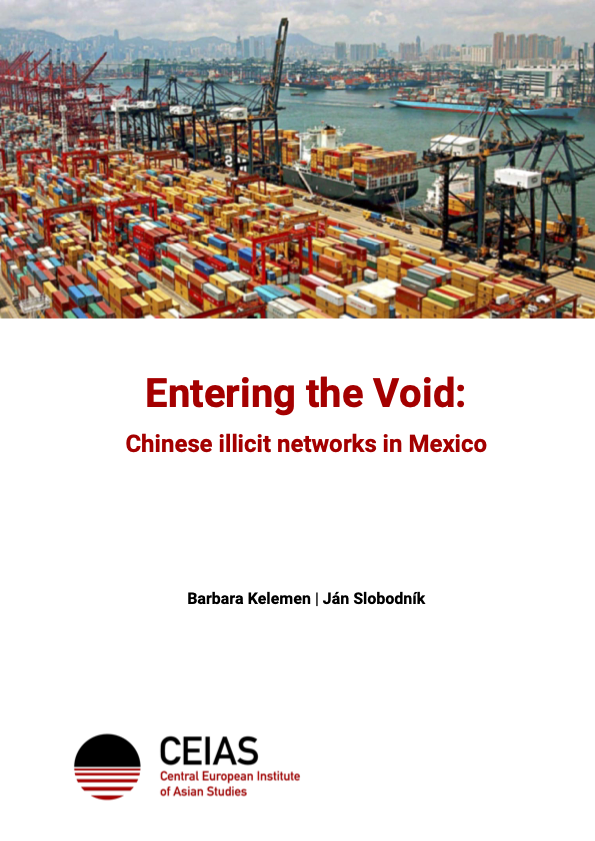
Entering the Void: Chinese illicit networks in Mexico 

By Barbara Kelemen | Ján Slobodník

Summary ▪ Mexico’s macroeconomic stability and abundant natural resources have made the country into an attractive destination for Chinese businesses. ▪ The country still suffers from a lack of internal security, most of it stemming from the Mexican Drug War, an ongoing multilateral lowintensity conflict between the Mexican government and a large number of criminal organizations. ▪ In some of Mexico’s states, pervasive violence and instability have resulted in a power vacuum. With the government being unable to guarantee security, non-state actors such as criminal organizations and/or civilian militias seize the opportunity to establish their own rule. ▪ When foreign companies operate in such troubled areas, they inevitably run into problems caused by Mexico’s security issues. ▪ Within this trend of foreign companies operating in Mexico, some level of tacit cooperation has been observed between Chinese businesses and non-state actors. This cooperation is often an outcome of localized security vacuums that are exploited by alternative security providers, such as criminal organizations, that can fill them and provide operational safety for local businesses. ▪ A growing body of research has identified the existence of Chinese illicit networks and their involvement in the trafficking of people, narcotics, and contraband goods, as well as money laundering and illegal arms trade in Mexico. ▪ Concealed under the guise of legal commercial activity, networks of Mexican criminal organizations and their Chinese business partners exploit the dire security situation in some areas of Mexico. ▪ Despite attempts by the Chinese and the Mexican governments to regulate certain sectors that contribute to the existence of the illicit networks in Mexico, there are still substantial opportunities that are ripe for exploitation by the criminal group-legitimate business partnerships.

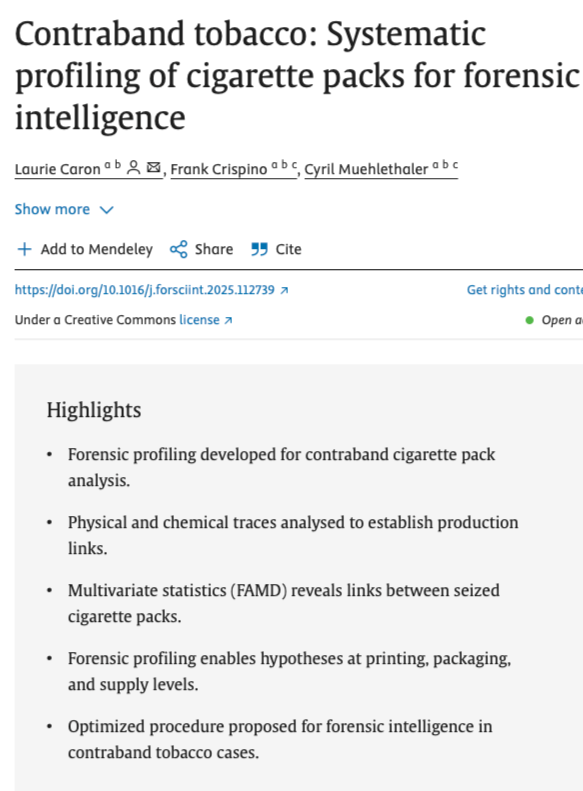
Contraband tobacco: Systematic profiling of cigarette packs for forensic intelligence

By: Laurie Caron, Frank Crispino, Cyril Muehlethaler 

Tobacco smuggling remains a widespread illegal activity in Canada, associated with important social and economic impacts, and often linked to organized crime. This study explores the application of forensic profiling as an intelligence tool to support the analysis of contraband cigarette production and distribution. Physical and chemical manufacturing characteristics of seized contraband cigarette packs, provided by police forces, were observed and coded using macroscopic, microscopic, and spectroscopic techniques. Multivariate statistical analyses were then conducted to compare manufacturing characteristics between packs and identify potential links. The analyses highlighted links between cigarette packs and seizures based on shared manufacturing characteristics. The results and the identified groups were also compared with seizure data provided by our collaborator. The results demonstrate the relevance of forensic profiling to formulate hypotheses regarding shared production processes or supply networks. These hypotheses provide information that contributes to understanding tobacco smuggling and aim to examine how forensic intelligence can support law enforcement and measures to prevent and disrupt this criminal activity. A preliminary optimal procedure for applying forensic profiling in operational contexts targeting contraband tobacco was finally proposed. Despite limitations in the dataset creation that were beyond our control, this study represents a starting point for applying this scientific approach to tobacco smuggling.

Transnational Organized Crime in Mexico and the Government's Response

By Evan Ellis

The U.S. government threats of tariffs on the Mexican government if it did not do more to control illicit fentanyl ows into the United States have cast new attention on the growing problem of transnational organized crime that has wrought violence and corruption at all levels in Mexico. This work, based on the authors research in interviews with senior Mexican security ofcials in Mexico City in March 2025, examines the evolution of transnational organized crime in the country, and the Mexican government’s response, with the support of the United States and other partners.The principal drivers of transnational organized crime dynamics in Mexico are ows of cocaine through the country, largely destined for European and Asian markets, as well as the production of fentanyl there from Chinese and other precursors, mostly oriented toward export to the United States. In addition, other illicit activities including petroleum theft (huachicol), smuggling and exploitation of migrants transiting the country, extortion and kidnapping, illegal mining and money laundering, have also fueled Mexico’s evolving illicit economy. With respect to murders and other violence in Mexico, arms, including long arms imported from the United States, arms obtained on the black market from Central American and other global wars, drones and other military products principally from the People’s Republic of China (PRC), as well as a large, welldeveloped illicit domestic industry for military vehicles and supplies all contribute to the lethality of multiple ongoing conict within the country.The organized crime dynamics in Mexico, the domestic and international groups involved, in the pattern of violence has evolved signicantly in the almost two decades since 2006 when Mexican president Felipe Calderon declared war on the drug cartels for their escalating violence and deployed federal troops into Michoacan to respond. This work analyzes of those dynamics, their evolution, and the response of the Mexican government, in conjunction with the US and other partners.

Criminal Violence, the State, and Society

By Omar García-Ponce

The study of criminal violence has received increasing attention in political science over the past 15 years, as organized criminal groups have grown and diversified worldwide, unleashing unprecedented waves of violence. This article presents a critical assessment of the current state of political science scholarship on criminal violence. It discusses the sources and dynamics of organized criminal violence, emphasizing the reconceptualization of state–criminal group relationships in the literature, shifts in illegal markets, and the political incentives fueling criminal wars. It also examines how states and societies respond to criminal violence. State responses include punitive approaches, institutional reform, and community-based interventions, while societal responses can be examined through the lenses of exit (e.g., migration, disengagement), voice (e.g., political participation, collective resistance), and loyalty (i.e., compliance with state authorities or criminal groups). The article also addresses conceptual and methodological challenges, policy implications, and ethical considerations inherent in this field of study and identifies promising pathways for future research.

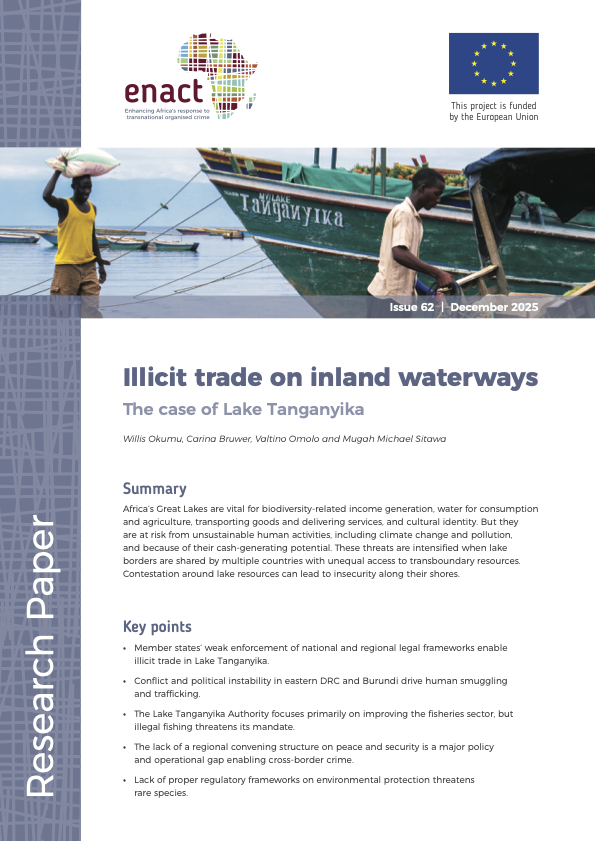
Illicit trade on inland waterways. The case of Lake Tanganyika 

By Willis Okumu, Carina Bruwer, Valtino Omolo and Mugah Michael Sitawa

Africa’s Great Lakes are vital for biodiversity-related income generation, water for consumption and agriculture, transporting goods and delivering services, and cultural identity. But they are at risk from unsustainable human activities, including climate change and pollution, and because of their cash-generating potential. These threats are intensified when lake borders are shared by multiple countries with unequal access to transboundary resources. Contestation around lake resources can lead to insecurity along their shores.

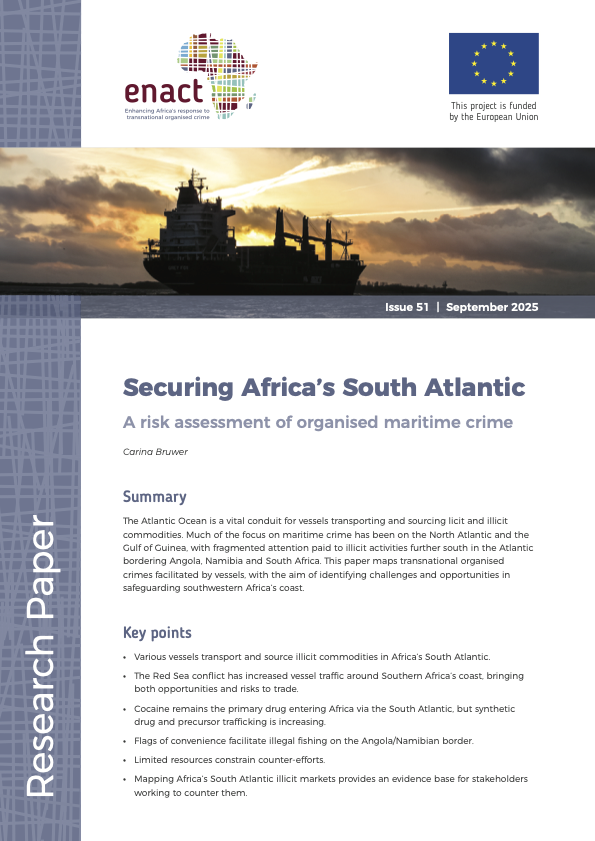
Securing Africa’s South Atlantic:  A risk assessment of organised maritime crime

By Carina Bruwer 

The Atlantic Ocean is a vital conduit for vessels transporting and sourcing licit and illicit commodities. Much of the focus on maritime crime has been on the North Atlantic and the Gulf of Guinea, with fragmented attention paid to illicit activities further south in the Atlantic bordering Angola, Namibia and South Africa. This paper maps transnational organised crimes facilitated by vessels, with the aim of identifying challenges and opportunities in safeguarding southwestern Africa’s coast. Key points • Various vessels transport and source illicit commodities in Africa’s South Atlantic. • The Red Sea conflict has increased vessel traffic around Southern Africa’s coast, bringing both opportunities and risks to trade. • Cocaine remains the primary drug entering Africa via the South Atlantic, but synthetic drug and precursor trafficking is increasing. • Flags of convenience facilitate illegal fishing on the Angola/Namibian border. • Limited resources constrain counter-efforts. • Mapping Africa’s South Atlantic illicit markets provides an evidence base for stakeholders working to counter them.

Superhighway Robbery

By Graeme R. Newman and Ronald V. Clarke

In Superhighway Robbery, Graeme Newman and Ronald Clarke provide a grounded, pragmatic analysis of how the digital revolution didn't necessarily create new types of criminals, but rather provided them with a much more efficient set of tools. They move away from the sensationalized "hacker" myths of the early 2000s to focus on the cold reality of Situational Crime Prevention. The book's central thesis is that the internet acts as a vast infrastructure—a superhighway—that significantly reduces the effort required to commit traditional crimes like theft, fraud, and piracy while increasing the potential rewards and lowering the risk of being caught.

By applying their famous CRAVED model to the digital world, the authors explain that data and software are the ultimate targets because they are easily concealable, removable, and available. They argue that the most effective way to stop cybercrime is not to wait for a change in human nature, but to change the digital environment itself. This involves "designing out" crime by making digital targets harder to reach and less profitable to exploit. Ultimately, Newman and Clarke strip away the mystery of the "Information Age" to reveal that cybercrime is essentially a matter of opportunity, and by closing those digital windows of opportunity, we can make the superhighway a significantly safer place.

In the digital realm, the CRAVED model explains why certain data or media becomes a prime target for "superhighway robbery." Concealability is at an all-time high because digital files take up no physical space and can be hidden in encrypted folders or behind innocuous filenames, making them easy to possess without detection. These files are incredibly Removable because they can be copied or moved across the globe in milliseconds, allowing a thief to "steal" an item while the original remains in place. The Availability of these targets is virtually limitless; once a movie or piece of software is uploaded to a server, it is accessible to anyone with a connection, twenty-four hours a day.

The Value of digital goods remains high because they often represent thousands of hours of professional labor or sensitive personal information that can be sold on the dark web. These items are also highly Enjoyable, as they often consist of popular entertainment, games, or high-end tools that people naturally want to use. Finally, they are perfectly Disposablebecause there is a massive, ready-made market of willing buyers or downloaders, ensuring that a criminal can quickly offload their "loot" for profit or social capital without the logistical headaches of physical fencing.

Cullompton, Devon. UK. Willan. 2003.

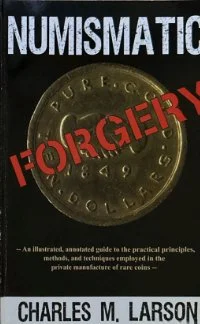
Numismatic Forgery

By Charles M. Larson

In "Numismatic Forgery," author Charles M. Larson pulls back the curtain on one of the most secretive and sophisticated threats to the world of coin collecting.1 Far from a simple historical overview, this book serves as a definitive guide to the dark art of the "super-forger," detailing the methods used to deceive even the most seasoned experts.

Larson provides a deep dive into the technical evolution of counterfeiting—from the crude cast copies of the past to the modern, high-precision struck forgeries that haunt the current marketplace. By meticulously explaining the tools of the trade, including centrifugal casting, pressure casting, and the creation of deceptive dies, Larson equips collectors, dealers, and historians with the knowledge necessary to spot the subtle "tells" of a fake.

Key features of this essential numismatic reference include:

  • The Forger's Toolkit: A step-by-step examination of the physical processes used to create counterfeit currency.

  • Detection Techniques: Practical advice on identifying "transfer marks," edge filing, and suspicious luster.

  • Case Studies: Real-world examples of famous forgeries that have infiltrated major collections.

  • The Ethics of the Hobby: A sobering look at how forgery undermines the historical integrity of numismatics.

Whether you are a casual hobbyist or a professional dealer protecting a million-dollar inventory, "Numismatic Forgery"is an indispensable resource for anyone who wants to ensure that the history they hold in their hands is the real deal.

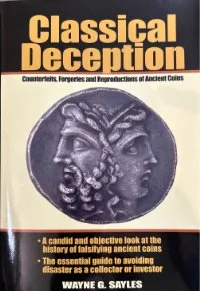
Classical Deception: Counterfeits, Forgeries and Reproductions of Ancient Coins

Wayne G. Sayles:


Classical Deception is a detailed and accessible exploration of the long history of counterfeit ancient coins and the methods by which they are produced, detected, and sometimes unwittingly circulated within the numismatic world. Designed for collectors, students of antiquity, and museum professionals alike, the book traces forgery practices from antiquity to the modern era, showing that imitations have accompanied genuine coinage for as long as coins have existed. Sayles examines a spectrum of deceptions — from ancient contemporary counterfeits meant to pass in daily commerce, to the sophisticated modern forgeries that challenge even seasoned experts.

A substantial portion of the book profiles well-known forgers, documenting their techniques, motives, and the specific pieces they produced. Sayles pays particular attention to the prolific work of modern reproduction artists, including Peter Rosa, whose replicas are widely encountered and often misunderstood by beginning collectors. More than 200 photographs allow readers to visually compare authentic coins with their deceptive counterparts, highlighting telltale markers in style, fabric, metallurgy, and die workmanship.

Sayles also introduces the scientific and observational tools available to detect fakes — from simple weight measurement and magnified study of surfaces to metallurgical testing, microscopy, and imaging technologies. Throughout, he emphasizes practical guidance: what warning signs to look for, how to assess provenance, and how to avoid costly errors in the marketplace.

Ultimately, Classical Deception serves both as a cautionary manual and as a historical study of ingenuity, fraud, and craftsmanship. It equips the reader to navigate the hazards of collecting while deepening appreciation for the authentic artistry of ancient coinage.

A Primer in Private Security: Revived edition

By Mahesh Nalla and Graeme Newman

When the first edition of A Primer in Private Security was published, its principal purpose was to demonstrate that private policing was not a mere auxiliary to public law enforcement but a robust and rapidly growing institution with its own organizational forms, priorities, and traditions. At that time, the Hallcrest Report had just confirmed that private security personnel outnumbered public police officers in the United States, a landmark finding that set the tone for debates about the privatization of policing .

Nearly four decades later, the central argument remains as relevant as ever, but the field itself has changed dramatically. Private security is now not only a supplement to public policing but a global, technologically sophisticated industry involved in nearly every sector of modern life. While we think that the original book still remains relevant to security today, we suggest in this preface that the reader approach the content from the point of view of four major perspectives that dominate security  (the word “private” seems old fashioned and less appropriate given that what is public and what is private have become incredibly and interwoven largely as a result of media, especially social media). 

The four perspectives are:

1.     the domestic sphere of home and family,

2.     the economic sphere of business,

3.     the public sphere of local and state government, and

4.     the international sphere of global security and climate-related risk.

Read-Me.Org Inc. New York-Philadelphia-Australia. 2025. 183p.

Transitions to legal cannabis markets: Legal market capture of cannabis expenditures in Canada following federal cannabis legalization

By David Hammond, Daniel Hong, Samantha Rundle, Maryam Iraniparast, Beau Kilmer, Elle Wadsworth

Canada legalized ‘recreational’ or ‘non-medical’ cannabis in 2018 with a primary objective of displacing illicit cannabis and transitioning consumers to a ‘quality controlled’ legal retail market. To date, there is limited research on legal market capture in jurisdictions with non-medical cannabis markets. Methods: The current analysis used ‘demand-side’ methods to estimate the size of the Canadian cannabis market using data from two sources. First, data from the Canadian Community Health Survey were used to estimate the number of Canadians who use cannabis. Second, data on cannabis expenditures from legal versus illegal sources were analyzed from 5656 past 12-month consumers aged 16–100 who completed national surveys conducted in 2022 as part of the International Cannabis Policy Study. Results: Total estimated expenditures from legal sources were within two percentage points of the ‘actual’ retail sales data from Government of Canada’s tracking system. In the 12-month period ending in September 2022, total cannabis expenditures in Canada were estimated at $6.72 billion dollars, including $5.23 billion from legal sources and $1.49 billion from illegal sources for an estimated legal market capture of 78 %. In 2022, dried flower accounted for 55 % of total legal expenditures and an additional 2 % was spent on plants and seeds. Concentrates accounted for 12 % of legal expenditures, followed by oral liquids (11 %), vaping liquids (10 %), and edibles (8 %, excluding drinks). Conclusions: The findings provide evidence of substantial transition in expenditures from the illegal to the legal market in the five years since legalization of non-medical cannabis in Canada.

International Journal of Drug Policy, 2025. 10p.

Cannabis consumption and motor vehicle collision: A systematic review and meta-analysis of observational studies

By Jin A, Darzi AJ, Dargham A, Liddar N, Bozorgi S, Sohrevardi S, Zhang M, Torabiardakani K, Couban RJ, Khalili M, Busse JW, Sadeghirad B.

Background: Increasing legalization of recreational cannabis and availability of cannabinoid products has resulted in expanded use, which is associated with adverse effects including concerns over increased risk of motor vehicle collision (MVC). We aimed to explore the association between cannabis consumption and MVC.

Methods: We searched MEDLINE, EMBASE, CINAHL, Cochrane library, SCOPUS, PsycInfo, Web of Science, TRID from inception to November 2024. We included studies assessing the association between cannabis consumption on MVC fatalities, any injuries, and culpability/unsafe driving actions. Pairs of reviewers independently screened search results, extracted data, and assessed risk of bias. We used a DerSimonian and Laird random-effects model for all meta-analyses and the GRADE approach to assess the certainty of evidence.

Results: We included 31 studies with 328,388 individuals. Low certainty evidence suggests that cannabis consumption may be associated with an increased risk of MVC fatality (8 studies, OR 1.55, 95% CI: 1.20 to 1.98) with an absolute risk increase (ARI) of 14 more deaths per 100,000 MVC's. Low certainty evidence from 9 case-control studies suggests cannabis consumption may be associated with an increased risk of injury due to MVC (OR 2.00, [95% CI: 1.31-3.07]; absolute risk increase of 6.8%). We are uncertain about the association of cannabis consumption with MVC culpability/unsafe driving action as the evidence was only very low certainty.

Conclusions: Low certainty evidence suggests that cannabis consumption may increase risk of MVC fatality and risk of injury from MVC. The association between cannabis use and risk of unsafe driving is uncertain.

Int J Drug Policy. 2025 Aug;142:104832. doi: 10.1016/j.drugpo.2025.104832. Epub 2025 May 13. PMID: 40367728.

Repairing the “Machinery”: Recommendations and expectations for the independent review of international drug policy commitments

By The International Drug Policy Consortium

In March 2025, amidst geopolitical tensions, protracted negotiations, and a chaotic voting session at the 68th session of the Commission on Narcotic Drugs (CND), a ground-breaking document was adopted. A new resolution, submitted by Colombia and supported by a broad cross-regional coalition of Member States, agreed to create a “multidisciplinary panel of 19 independent experts” tasked with reviewing “the existing machinery for the international control of narcotic drugs” and providing recommendations to strengthen the system and its implementation.

This is a historical, once-in-a-generation opportunity to propose serious changes that further social inclusion, social justice, and “the health and welfare of humankind”. This opportunity must not be wasted.

In this advocacy note, IDPC lays out some key considerations and aspirations for the panel, as well as some of the potential pitfalls to avoid, in order to make this review count.

London: IDPC, 2o25. 11p

State Marijuana "Legalization" and Federal Drug Law: A Brief Overview for Congress

By Joanna R. Lampe

State marijuana laws have changed significantly in recent years, and federal law appears poised to change in the coming months. At the state level, many states have enacted laws authorizing the use of marijuana for medical purposes. A smaller but growing number of states have also amended their laws to legalize or decriminalize marijuana use. At the federal level, in April 2024, news outlets reported that the Drug Enforcement Administration (DEA) planned to change the status of marijuana under the Controlled Substances Act (CSA) by moving it from Schedule I to the less restrictive Schedule III. Under current law, many cannabis-related activities that comply with state law may nonetheless violate the federal CSA. Moving marijuana to Schedule III would not bring state-legal marijuana markets into compliance with federal law. In light of recent and proposed changes to state and federal marijuana regulation, this Sidebar provides an overview of the divergence between federal and state marijuana law. It then briefly discusses the legal consequences of the divergence and outlines certain related considerations for Congress.

Washington, DC: Congressional Research Service, 2025. 5p.

A national survey of state laws regarding medications for opioid use disorder in problem-solving courts

By Barbara Andraka-Christou , Olivia Randall-Kosich , Matthew Golan , Rachel Totaram , Brendan Saloner , Adam J Gordon , Bradley D Stein

Background: Problem-solving courts have the potential to help reduce harms associated with the opioid crisis. However, problem-solving courts vary in their policies toward medications for opioid use disorder (MOUD), with some courts discouraging or even prohibiting MOUD use. State laws may influence court policies regarding MOUD; thus, we aimed to identify and describe state laws related to MOUD in problem-solving courts across the US from 2005 to 2019.

Methods: We searched Westlaw legal software for regulations and statutes (collectively referred to as "state laws") in all US states and D.C. from 2005 to 2019 and included laws related to both MOUD and problem-solving courts in our analytic sample. We conducted a modified iterative categorization process to identify and analyze categories of laws related to MOUD access in problem-solving courts.

Results: Since 2005, nine states had laws regarding MOUD in problem-solving courts. We identified two overarching categories of state laws: 1) laws that prohibit MOUD bans, and 2) laws potentially facilitating access to MOUD. Seven states had laws that prohibit MOUD bans, such as laws prohibiting exclusion of participants from programs due to MOUD use or limiting the type of MOUD, dose or treatment duration. Four states had laws that could facilitate access to MOUD, such as requiring courts to make MOUD available to participants.

Discussion: Relatively few states have laws facilitating MOUD access and/or preventing MOUD bans in problem-solving courts. To help facilitate MOUD access for court participants across the US, model state legislation should be created. Additionally, future research should explore potential effects of state laws on MOUD access and health outcomes for court participants.

Health Justice. 2022 Mar 31;10(1):14. doi: 10.1186/s40352-022-00178-6. PMID: 35357599; PMCID: PMC8969254.

Synthetic Drugs in East and Southeast Asia - Latest developments and challenges

By Inshik Sim, Shawn Kelley, Kavinvadee Suppapongtevasakul, Seong Jae Shin

This report shows that the production and trafficking of methamphetamine in Shan State, Myanmar, have significantly increased since 2021. Thailand remained the main transit and destination point for methamphetamine trafficked from Myanmar and recorded the largest quantity of methamphetamine seizures in the region. The report highlights the evolving nature of transnational drug trafficking groups operating in East and Southeast Asia. These groups have demonstrated remarkable agility in reacting to law enforcement pressure, as shown by the spread of production sites for ketamine and related precursor chemicals.

Vienna: United Nations Office on Drugs and Crime; 2025. 150p.

Understanding the EU's response to illicit drugs

By Katrien Luyten

The EU is an important market for illicit drugs (hereinafter referred to as drugs), both in terms of consumption and production. An estimated 29% of European adults aged 15-65 have used drugs at least once in their lifetime, the majority of them being men. Cannabis remains by far the most used drug, followed by cocaine, MDMA (ecstasy or molly) and amphetamines. Drugs have been claiming an increasing number of lives in the EU since 2012, but their impact goes far beyond the harm caused by their use. The drugs market is the largest criminal market in the EU, with an estimated minimum retail value of €30 billion per year in the EU alone. Over a third of the organised crime groups active in the EU are involved in the trade in drugs, which, besides generating massive criminal profits and inflicting substantial harm, incites associated violence. Drug markets furthermore have links with wider criminal activity, including terrorism; they have a negative impact on the legal economy and communities, cause environmental damage and can fuel corruption and undermine governance. Drugs have been trafficked into and through the EU for decades, but they are also increasingly produced in the EU, for both local and global markets, asis the case for cannabis and synthetic drugs such as amphetamines. In fact, the trade in synthetic drugs in the EU is unique compared to other substances,as the production of these drugs and new psychoactive substances in most cases takes place in the EU. In 2021, around 1million seizures of drugs were reported in the EU-27 plus Norway and Türkiye. Although the EU Member States carry the primary responsibility for developing their drug policy and legislation, cross-border cooperation is paramount in the fight against drugs. With the problem constantly expanding in scale and complexity, the EU has been increasingly active since the early 1990s, particularly with respect to law enforcement, health-related issues and the detection and risk assessment of new psychoactive substances. This is an update of a briefing published in September 2021.

Brussels: EPRS | European Parliamentary Research Service , 2023.. 12p.