Open Access Publisher and Free Library
CRIME+CRIMINOLOGY.jpeg

CRIME

Violent-Non-Violent-Cyber-Global-Organized-Environmental-Policing-Crime Prevention-Victimization

Posts in Social Sciences
Group Threat and Social Control: Who, What, Where, and When

By Matt Vogel and Steven F. Messner

Group threat theory has stimulated an impressive number of studies over the course of the past several decades. Our review takes stock of this literature, focusing on core issues of concern to the criminological community. We begin by documenting the theoretical origins of group threat theory and discussing the early research informed by the theory. We then highlight the ways in which criminologists have built on and extended the early research by expanding the theory's scope, clarifying mechanisms, and addressing methodological issues. In our concluding remarks, we direct attention to the more consequential limitations of the work to date and offer suggestions about areas for fruitful growth in the future

Annual Review of Criminology, Volume 7, Page 39 - 58

Tolerance: The Beacon of the Enlightenment

By: Caroline Warman

"Inspired by Voltaire's advice that a text needs to be concise to have real influence, this anthology contains fiery extracts by forty eighteenth-century authors, from the most famous philosophers of the age to those whose brilliant writings are less well-known. These passages are immensely diverse in style and topic, but all have in common a passionate commitment to equality, freedom, and tolerance. Each text resonates powerfully with the issues our world faces today. Tolerance was first published by the Société française d'étude du dix-huitième siècle (the French Society for Eighteenth-Century Studies) in the wake of the Charlie Hebdo assassinations in January 2015 as an act of solidarity and as a response to the surge of interest in Enlightenment values. With the support of the British Society for Eighteenth-Century Studies, it has now been translated by over 100 students and tutors of French at Oxford University."

Cambridge: Open Book Publishers, [2016]

A Critical Review of the Law of Ecocide

By Rachel Killean

This paper reviews key definitions of ecocide that have emerged since the 1970s, from Richard A Falk’s early draft International Convention on the Crime of Ecocide, to the Stop Ecocide Foundation Expert Panel’s definition of 2021, and analyses enduring legal and political challenges to the prospects for a new international crime. Despite the latter definition gaining prominence and considerable support we argue that there is a continuing necessity to reflect on the key challenges to the development of an international crime that can actually deliver accountability for serious crimes against the environment, and that engagement with previous definitions can assist in these reflections. We discuss core problems with categorising and negotiating ecocide, guaranteeing legality and ascertaining appropriate gravity and requisite levels of intention. Based on our analysis of past and present definitions, and the social construction of related crimes and international norms, we advocate for a robust articulation of the potential crime that balances foreseeability and flexibility, detached from the requirements of the other core crimes and includes an understanding of intent that embraces reckless acts and omissions and which avoids a cost versus benefit analysis. While we are advocates of ecocide’s criminalisation, we are also conscious of the political and operational barriers to ecocide’s creation and implementation. As such, we argue both for interim measures such as non-binding declarations in support of ecocide, and for humility with regards to what the law can meaningfully achieve. For us, ecocide represents one possible tool in a toolkit that must include a range of legal and political interventions to prevent and repair environmental destruction.

Australia, Sydney, University of Sydney Law School. 2023, 18pg

Embracing Virtual Reality Technology with Black Adolescents to Redress Police Encounters

By Danielle M. Olson, Tyler Musgrave, Divya Gumudavelly, Chardee Galan, Sarita Schoenebeck, D. Fox Harrell, and Riana E. Anderson

Police brutality—including the incidents that mobilized collective outrage and action across the world during the summer of 2020—has negatively impacted the psychological health of Black youth for generations. Police harassment is a persistent form of racial discrimination that Black youth frequently navigate (Brunson, 2007), and particularly as a consequence of vicarious trauma via social media, it has been associated with depressive and anxious sequelae (e.g., Tynes et al., 2019). While Black youth are faced with policing experiences in vivo and in vitro, many studies of the psychological impact of policing are contained within traditional retrospective surveys, which limits our understanding of youth’s in-the-moment perceptions and desired concurrent actions. To expand the efforts to assess and redress youth’s experiences with police encounters, this manuscript details the development of an afterschool program that supports adolescents in the creation of a series of video game and virtual reality (VR) narratives. A participatory design method was utilized to co-create the perception of policing experiences with Detroit high school students enrolled in a computer science course, allowing them to actualize their experiences “on screen” and work towards redressing these experiences through co-construction and virtual activism.

United States, Journal of Youth Development Vol 18 Issue 3. 2023, 18pg

For A Broader Understanding Of Corruption As A Cultural Fact, And Its Influence In Society

By Fernando Forattini

This brief article intends to demonstrate some of the problems with the main theories on corruption and introduce the reader to the new field of Anthropology of Corruption, a type of research that tries to understand one of the most pressing issues nowadays through a nonbinary point of view, but trying to understand the root of corruption, and its multifaceted characteristic, especially through its cultural aspect; and why it is, contemporarily, the most effective political-economic discourse – most at the times used in a populistic fashion, at the expense of democratic institutions. Therefore, we will briefly analyze the three main theoretical strands on corruption and point at some of its faults; then indicate to the reader what are the main goals Anthropology of Corruption, and what questions it seeks to answer; and, finally, the political impact that corruption discourses have on society, and its perils when instrumentalized in populistic discourses.

Ecological Threat Report 2023: Analysing Ecological Threats, Resilience & Peace

By Institute For Economics & Peace

From the document: "The Ecological Threat Report (ETR) is a comprehensive, data-driven analysis covering 3,594 sub-national areas across 221 countries and territories. It covers 99.99 per cent of the world's population and assesses threats relating to food insecurity, water risk, demographic pressures, and natural disasters. This report identifies countries that have the highest risk, both now and in the future, of suffering from major disasters due to the ecological threats they face, the lack of societal resilience, and other factors. These countries are also the most likely to suffer from conflict. The 2023 ETR aims to provide an impartial, data-driven foundation for the debate about ecological threats facing countries and sub-national areas and to inform the design of resilience-building policies and contingency plans."

Institute For Economics & Peace . 2023. 77p.

Economic Crime and Illicit Finance in Russia’s Occupation Regime in Ukraine

By David Lewis

Despite Ukraine's ongoing counter-offensive, in September 2023 Russia still controlled around 17% of Ukrainian territory, an area roughly the size of Denmark. Russia's occupation of these Ukrainian territories relied primarily on repression and violence, but economic levers also played an important role in consolidating Russian rule. This paper details Russia's illicit economic activity in the occupied territories and calls for more international attention to this aspect of Russia's invasion.

Since Russia occupied large parts of south-eastern Ukraine in March 2022, it has worked rapidly to incorporate these regions into Russia's economic and financial system. Key elements in this 'economic occupation' include:

  • The seizure of many Ukrainian businesses and assets. The occupation authorities 'nationalised' many companies and reregistered them as Russian businesses with new management.

  • The imposition of the Russian currency, financial and tax system, and the forced closure of Ukrainian banks.

  • The forcible takeover of farms or pressure on farmers to cooperate with the occupation authorities. Russian officials oversaw the illegal export of Ukrainian grain from the occupied territories.

The reconstruction of cities such as Mariupol, the city destroyed by Russian forces in spring 2022, in a multi-billion-dollar government programme that is profiting well-connected Russian companies.

These acts were all illegal under Ukrainian law and some may constitute potential war crimes under international law.

Research Paper 20. Birmingham, UK: University of Birmingham, 2023. 43p.

Illicit Economies and Peace and Security in Libya

By Matt Herbert | Rupert Horsely | Emadeddin Badi

Libya has been a key focus of the United Nations Security Council (UNSC) since the country’s 2011 revolution. A June 2023 UNSC meeting on Libya focused on the country’s political process, the need to hold elections and support work around the reunification of security and defence forces.1 That same month, the Council re-authorized its arms embargo on the country2 and in late 2023 it is set to renew the UN mission in Libya. The UNSC has sought to advance an effective political process, reunify the country’s divided institutions and address threats to peace and security, and human rights abuses. To effect this change, the UNSC authorized and draws on the United Nations Support Mission in Libya (UNSMIL), a sanctions committee and linked Panel of Experts, and the European Union Naval Force Mediterranean Operations Sophia and IRINI.3 Despite these efforts, Libya remains a highly fragile country. Although large-scale violence has ebbed since the Libyan Arab Armed Forces (LAAF)’s loss in the 2019–2020 war for Tripoli, the country remains divided. The Government of National Unity (GNU) – the internationally recognized government in Tripoli led by Abd al-Hamid Dabaiba – exerts direct influence over limited areas of the country’s territory, mainly in Tripolitania. Most territory, including Cyrenaica and the Fezzan, is held by the LAAF, led by Khalifa Haftar. Attempts to bridge these divides, hold elections and forge a broadly legitimate government have repeatedly failed, most recently in December 2021.4 Nonetheless, UNSC efforts in this regard continue, reflecting an international consensus that the way out of Libya’s protracted instability is likely to be found in the political track, through the establishment of a government capable of superseding the current divides and exercising sovereign control over the country.5 However, the distribution of power within Libya challenges efforts to stabilize the country through the political track alone. Belying the simple narrative of national bifurcation, the GNU and LAAF have limited and contingent control over their respective areas. Instead, armed groups rooted in municipal or tribal groupings dominate local power. Governance and security often hinge on deals and agreements continually being renegotiated between these groups and the GNU or the LAAF.

Libya’s thriving illicit economies, and their links to armed groups and political actors throughout the country, compound the challenges to the UNSC’s efforts to promote a stable peace and the rule of law.6 Profits from these markets provide a crucial funding source for armed groups, enabling and incentivizing pushback against state efforts to assert control, and drive conflicts between groups over control of key markets and routes.7 They also fuel petty and large-scale corruption, stymying efforts to rebuild rule of law and security-force effectiveness in the country.8 Efforts to prevent criminal penetration of the Libyan state have failed. Actors linked to illicit economies have increasingly become embedded within the security forces, while others seek opportunities for high-level positions and political influence. This raises the risk that criminal interests, predation and corruption will be fused into the state. Equally problematically, it risks poisoning citizen trust in and possible acceptance of future governance and security structures involving compromised actors. For these reasons, understanding how illicit economies function in Libya and their impacts, and how they are changing, is essential for the UNSC as it seeks to promote political solutions and stability in the country. This brief provides the UN and member states with a snapshot of how Libya’s illicit economies have developed over the last three years and the impact those shifts have had. In the interest of length, the brief does not detail all changes or offer a full description of the structural elements in all markets. Rather, it focuses on the most salient aspects for policymakers assessing the challenge of illicit markets. The brief begins by detailing the impact illicit economies have on armed groups and political dynamics. Next, it assesses the state of play of the main illicit markets in the country: fuel smuggling, drug trafficking, mercenaries, arms and ammunition smuggling, and migrant smuggling and trafficking. It ends with a brief set of recommendations.

Geneva, SWIT: Global Initiative Against Transnational Organized Crime , 2023. 35p.

Critical Minerals in the Energy Transition: Environmental and Human Security Risks

Genevieve Kotarska and Lauren Young

This paper explores the environmental and human security risks associated with critical mineral extraction, how rising demand for critical minerals in the context of the net zero transition will impact these risks, and what options exist for the UK to address these risks.

Critical minerals are broadly defined as minerals that are of vital importance for technology, the economy and national security and are also subject to serious risks relating to the security of their supply. This paper uses the term ‘critical minerals’ broadly, focusing on minerals considered to be of high criticality to the UK in particular. It recognises that this is not a fixed list, and that a country’s specific assessment will affect whether a mineral is considered critical.

A dramatically increased supply of these minerals will be vital for the net zero transition – both in the UK and internationally – and to meet the target to limit global temperature rise to 1.5°C above pre-industrial levels, set at the UN Framework Convention on Climate Change (UNFCCC) Paris Conference in 2015.

Yet the extraction of critical minerals poses various environmental and human security risks, many of which pose a threat to the net zero transition, in the UK and globally. This paper explores the environmental and human security risks associated with critical mineral extraction, how rising demand for critical minerals in the context of the net zero transition will impact these risks, and what options exist for the UK to address these risks. It identifies key environmental risks as including the potential for critical mineral extraction to contribute to deforestation, pollution, soil degradation, water scarcity and biodiversity loss. In relation to human security, key risks identified include the potential for critical mineral extraction to contribute to human rights abuses, labour exploitation, crime, conflict and corruption. Where mining takes place on or near Indigenous lands, both environmental and human security risks are found to disproportionately affect already-disenfranchised communities.

While a number of these risks are well established, there is a potential for burgeoning demand for critical minerals to accelerate potential harms. Such harms can occur in situations where rising demand pushes governments to remove or overlook relevant regulations; where new extractive operations open up in countries without mining histories, which lack the infrastructure or capacity to manage the associated risks; where harmful boom–bust cycles of extractive activity occur due to ongoing technological advances; and where a race to secure supplies of critical minerals exacerbates competition and geopolitical tensions.

If the mining sector fails to address these risks as demand booms, public opinion across source and supply countries might turn against the net zero transition as the harms are perceived to outweigh the benefits. It is crucial that the UK leverages its unique position as an international trade, financial and mining hub to help the international community mitigate the risks posed in this regard.

Based on the findings of this research, the authors suggest the following ways forward for consideration by the UK government, many of which are also applicable to other governments in the Global North:

  • Use its role as a mining and financial hub to improve regulation, standards and transparency in relation to investment in critical minerals based on key environmental priorities, for example, through the application of the Taskforce on Nature-Related Financial Disclosures, Science-Based Targets for Nature, Global Reporting Initiative and other similar initiatives, thereby supporting integration of high-quality targeted frameworks into this burgeoning sub-sector. This will reward and enhance uptake of best practice by businesses and support regulation in producer countries globally.

  • Develop an updated industrial strategy on critical mineral use specifically, to support the strategic acquisition and use of critical minerals and facilitate prioritisation across key industries should a shortage of critical minerals occur. This should be used alongside the UK’s Critical Minerals Strategy to ensure that critical minerals are used strategically, particularly in the face of fluctuations in supply.

  • Given the criticality of the net zero transition and the minerals it requires, review domestic policies to maximise recovery of critical minerals that are already in consumer supply chains, in the form of waste. This would broaden opportunities for critical mineral sourcing aside from extraction via new mines. This should include prioritising the upscaling of the UK’s recycling capacity to facilitate the reuse of critical minerals, mindful of the fact that while recycling alone cannot meet demand for critical minerals, estimates suggest that recycling could meet 10% of global demand, while bringing jobs to the UK in support of the ‘levelling up’ agenda.

  • Work with manufacturers on extended producer responsibility, right to repair and design-to-recycle best practice to move towards a circular economy and ensure that critical minerals are reused and recycled wherever possible, thereby reducing demand. This will help to reduce wastage of critical minerals and decrease pressure on supply chains.

  • Support improved consumer requirements for standards around the production of critical minerals. An example of this can be seen in the case of the 2023 EU Regulation on Deforestation-Free Products, which could be adapted for the critical mineral sector in the UK and more widely across the Global North.

  • Support governments in source countries to develop the infrastructure and capability to manage mining-related risks. This could involve providing development assistance to build capacity to apply regulation and best practice, while supporting initiatives that mainstream biodiversity, conservation and social justice into regulation. Such regulation should improve the development and practice of the mining sector in producer countries, in collaboration with other actors working in this area, such as relevant aid agencies and multilateral development banks.

  • Consider how to integrate innovative concepts and proposals that call for a paradigm shift in our approach to economic activity, human wellbeing and the natural world. This can be achieved through an approach which prioritises the pursuit of human and ecological wellbeing over material growth, and has the potential to help us better assess, understand and mitigate the environmental and social harms associated with the mining sector and other sectors dependent on natural resources

London: Royal United Services Institute for Defence and Security Studies -RUSI, 2023. 49p.

The Gangster Governor of Zulia: The Rise and Fall of Venezuela’s Omar Prieto

By The Venezuela Investigative Unit

The blood streamed down Eduardo Labrador’s face and splattered across his shirt. “Film me! Film me!” he shouted at the journalist who had come to check on him. As he addressed the camera, he was defiant, angry even. Today, he said, they had come out to defend democracy in Venezuela. And this was the result.

One year later, he grasped for an analogy for what it felt like to be beaten. “I don’t know if you’ve ever experienced an explosion, you feel it there, so close to your ears — Boom! For hours I heard that boom in my ears,” he told InSight Crime.

The image of Labrador, blood-streaked and indignant, shattered the façade of an orderly and peaceful election that the Venezuelan government had been desperate to present to the world.

Labrador had been attacked by armed men as he tried to carry out his duties as the campaign director for the political opposition during local and regional elections in November 2021. The assault, he says, was part of a premeditated campaign of voter intimidation in the municipality of San Francisco in the northwestern state of Zulia. And behind that campaign, he alleged, was Zulia’s then-governor Omar Prieto.

Labrador had witnessed Prieto’s rise firsthand as a political ally within the ruling United Socialist Party of Venezuela (Partido Socialista Unido de Venezuela – PSUV) and member of his cabinet. He was often seen as Prieto’s right-hand man.

But over time, Labrador watched the socialist project he had once believed in descend into what another former high-level PSUV insider described to InSight Crime as “a project of crime in power.”

That project saw Prieto and his cronies carry out extortion, embezzlement, theft, and smuggling rackets from within the state, while deploying a criminalized police force as a private militia to protect their interests.

It was a project very much of that moment in Venezuela’s history.

When Prieto became governor in 2017, Venezuela was on the brink of economic collapse, and President Nicolás Maduro was under political siege. Desperate to maintain the loyalty of a fractured PSUV, underpaid security forces, and military and political elites unhappy with their dwindling corruption profits, Maduro granted territories to the different poles of power within the Chavista political movement. And then he gave them permission to squeeze whatever criminal profits they could from those territories.

Prieto was granted power in Zulia as a scion of the most important political faction within Chavismo outside of Maduro’s own network. And for the duration of his term, he pushed that permissiveness to its limits.

But by the time he was standing for reelection in 2021, that moment was beginning to pass. Venezuela had a measure of stability. Maduro’s presidency had survived, and his objectives were shifting. He wanted to reenter the international community both politically and economically. He wanted to consolidate his personal power and neuter his rivals within the PSUV. And he wanted to bring order to the mafia state that had grown up during the crisis.

Which is why Maduro invited international observers to monitor the 2021 elections, in the hopes that they would tell the world the elections were free and fair. And why even when it became clear the PSUV was going to lose Zulia, he made no intervention to help Prieto, who had overstepped the conventional limits on criminality and corruption.

Venezuela’s 2021 elections were problematic but largely peaceful. The violence in Zulia, which left one dead and three — including Labrador — injured, was a shocking exception. But it was entirely predictable. Prieto, the gangster governor, was never likely to go quietly.

Washington DC: InSight Crime, 2023. 39p.

Shaping crime: risks and opportunities in Africa's aviation infrastructure

by Julia Stanyard

The development of transport infrastructure boosts trade and stimulates economic growth. However, this infrastructure can also benefit criminal networks, which use air transport to traffic illicit goods such as drugs, wildlife and gold. Their activities are disguised from regulatory bodies, and many act in collusion with corrupt officials. However, this can be countered by implementing effective oversight measures. This is crucial considering the substantial expansion of African air traffic in recent years, forecasts that Africa will continue to be one of the fastest-growing regions in the world for aviation, and the challenges that the aviation sector globally is facing due to the COVID-19 pandemic.

ENACT Africa, 2023. 18p.

Organised crime and armed conflicts in Eastern Africa

By INTERPOL and ENACT Africa

Across the globe, the proliferation of new armed groups (including rebels, militias, criminal groups and gangs) has made conflict prevention and resolution even more complex . Armed groups are diversifying their revenues, which are increasingly based on organized crime activities . Organized Crime Groups (OCGs) often benefit from the turmoil of armed conflicts and violence. They can engage in violence to protect their illicit business, undermining national economic development and security. Furthermore, OCGs can team up with armed groups to access and control natural resources, competing with the state to provide public goods or even protection to their community. Different situations of violent conflict affect countries in the Eastern African region. Crime dynamics that emerge from instability in one country of the region can spill over into a neighbouring country, posing a threat to regional peace and security. The emergence of hybrid criminal groups engaged in transnational organized crime and in armed conflict most likely represents a relevant dimension of contemporary conflict in Eastern Africa. Yet, the knowledge on the multiple ways in which OCGs prey, or even amplify, local conflicts for their own benefit remains limited. In many instances, the scale of criminal activities in Eastern Africa contributes to an increase in the risk of conflict or in its prolongation. Organized crime thrives in conflict and other situations of violence in the region when goods and supplies are scarce, filling the demand often in association with armed groups. In some cases, revenue from criminal activities enables armed groups to finance their activities. The illicit circulation of weapons in the region from and into conflict-affected settings fuels violence and criminal activities. Information suggests that in some occasions, armed groups and OCGs collude to smuggle goods, migrants and drugs through the region and beyond. Moreover, the illicit extraction, control and taxation of natural resources in the region is often a source of revenue for armed groups and often links them with criminal actors. Information shows that livestock theft, or cattle rustling, poses a serious threat to many countries in the region and fuels the increase in the demand for small arms and light weapons in two aspects: for fighters to steal cattle and for ranchers to protect their livestock against such attacks. Higher levels of violence have been reported in cattle rustling cases affecting local economies and security. Organized violence for profit continues to affect Eastern Africa. Kidnapping for ransom, looting, threats and sexual gender-based violence are among the most reported incidents in the region. The driving factors for those crimes are sometimes difficult to discern and involve a combination of reasons such as economic gain, firearms sourcing (notably for cases of looting security forces), intention to control a community or territory. Illicit financial flows, and particularly, illicit taxation, allow OCGs and armed groups to generate revenue through commodity taxes, by imposing taxes on the community to move through certain areas or to run their business

Lyon, France: INTERPOL, 2021. 32p

The impact of Afghanistan’s drug trade on its neighbours: the case of Pakistan, Iran and Tajikistan

By Shehryar Fazli

This project addresses the complex issue of drug production in Afghanistan, which continues to fuel regional and global narcotics trade. Despite the Taliban's 2022 ban on poppy cultivation and narcotics trade, trafficking remains a major concern. The subsequent crackdown in 2023 resulted in reduced cultivation in specific provinces, but the ban's sustainability is uncertain due to poppy's significance in Afghanistan's rural economy and the fragile economic situation.

The project extends its focus to the Golden Crescent region, where Afghanistan, Pakistan, and Iran intersect, serving as a prominent drug smuggling hub. Pakistan and Iran, pivotal to the southern drug trafficking route, have consistently accounted for over 90% of global opium seizures since 2002. Central Asia, particularly Tajikistan, presents counter-narcotics challenges in the northern drug route to Russia and Europe.

Challenging the notion that state capacity alone can address the drug trade, the project advocates for a multifaceted approach, emphasising international cooperation beyond law enforcement. The punitive regimes in Pakistan, Iran, and Tajikistan, coupled with corruption, inadvertently protect high-level traffickers. In Afghanistan, the project raises the question of whether neighboring or Western governments are willing to end Kabul's isolation, providing economic assistance to reduce dependence on poppy cultivation. However, prospects are limited due to regressive Taliban policies.

The proposed counter-narcotics strategy expands beyond law enforcement, including building domestic public pressure for an accountable regime. This involves partnerships with local organisations, rehabilitation centers, health and education NGOs, and human rights groups. The goal is to foster domestic political ownership and public demand for humane and accountable national counter-narcotics policies. The project argues against relying solely on coercive state organs, offering a more comprehensive and sustainable solution to the core challenges posed by drug trafficking.

SOC ACE Research Paper 25. University of Birmingham. Birmingham, UK: University of Birmingham, 2023. 30p.

Smuggling and Border Enforcement

By Diana Kim andYuhki Tajima

This article analyzes the efficacy of border enforcement against smuggling. We argue that walls, fences, patrols, and other efforts to secure porous borders can reduce smuggling, but only in the absence of collusion between smugglers and state agents at official border crossings. When such corruption occurs, border enforcement merely diverts smuggling flows without reducing their overall volume. We also identify the conditions under which corruption occurs and characterize border enforcement as a sorting mechanism that allows high-skilled smugglers to forge alternative border-crossing routes while deterring low-skilled smugglers or driving them to bribe local border agents. Combining a formal model and an archival case study of opium smuggling in Southeast Asia, we demonstrate that border enforcement has conditional effects on the routes and volumes of smuggling, depending on the nature of interactions between smugglers and border agents. By drawing attention to the technological and organizational aspects of smuggling, this article brings scholarship on criminal governance into the study of international relations, and contributes to debates on the effects of border enforcement and border politics more generally.

International Organization , Volume 76 , Issue 4 , Fall 2022 , pp. 830 - 867

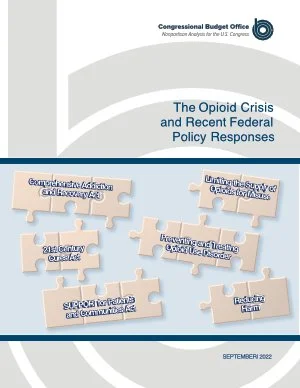
The Opioid Crisis and Recent Federal Policy Responses

By The Congressional Budget Office

The United States has been experiencing an opioid crisis since the mid-1990s, and opioids have had a significant effect on public health and on the nation’s economic and social outcomes. In this report, the Congressional Budget Office examines the consequences and timeline of the crisis, the contributing factors and federal responses to it, and the effects of the coronavirus pandemic on the crisis.

Deaths. More than 500,000 opioid-involved deaths have occurred since 2000, and the United States has the world’s highest number of opioid-involved deaths per capita. Although federal funding to address the opioid crisis has increased in recent years, opioid overdose mortality has increased as well. Deaths from opioid-involved overdoses were among the leading causes of death in 2020.

Health and Other Effects. The use and misuse of opioids can result in serious health effects: People with certain harmful behaviors that result from opioid misuse—such as an increase in the amount and frequency of opioid use or failure to fulfill major responsibilities at work, home, or school—have opioid use disorder (OUD), which can affect people’s participation in the labor force and their ability to care for their children. Treatment for OUD is used far less than behavioral health professionals recommend.

Changes Over Time. The opioid crisis has occurred in waves distinguished by the different types of opioids involved in overdose deaths and the use of opioids in combination with other drugs.

Contributing Factors. A rise in opioid prescribing, changes in illegal opioid markets, and greater demand for opioids due to worsening economic and social conditions for certain populations are key contributors to the crisis.

Federal Laws. Between 2016 and 2018, three laws enacted in response to the crisis aimed to lower the demand for and supply of opioids and to reduce their harm. The funding in those laws complemented annual appropriations to agencies tasked with responding to substance use disorder, including opioid use disorder.

The Crisis After the Enactment of the Laws and During the Pandemic. Opioid-involved deaths continued to increase after the laws were enacted—initially more slowly than in preceding years but then more rapidly during the pandemic. Opioid misuse increased during the pandemic as people experienced worsened mental health, more social isolation, greater job losses, and reduced access to treatment. In addition, the use of more potent synthetic opioids led to a sharp increase in overdose deaths. The pandemic and other factors have made it difficult to isolate the effect of the laws on the opioid crisis.

Washington, DC: CBO, 2022. 38p.

Shifting drug markets in North America - a global crisis in the making?

By Maximilian Meyer, Jean N. Westenberg , Kerry L. Jang , Fiona Choi , Stefanie Schreiter , Nickie Mathew , Conor King, Undine. Lang , Marc Vogel and R. Michael Krausz

Understanding drug market dynamics and their underlying driving factors is paramount to developing effective responses to the overdose crisis in North America. This paper summarises the distinct drug market trends observed locally and internationally over the past decade to extrapolate future drug market trajectories. The emergence of fentanyl on North American street markets from 2014 onwards led to a shift of street drug use patterns. Previously perceived as contaminants, novel synthetic opioids became the drugs of choice and a trend towards higher potency was observed across various substance classes. The diversification of distribution strategies as well as the regionalisation and industrialisation of production followed basic economic principles that were heavily influenced by prosecution and policy makers. Particularly, the trend towards higher potency is likely most indicative of what to expect from future illicit drug market developments. Nitazenes and fentanyl-analogues, several times more potent than fentanyl itself, are increasingly detected in toxicological testing and have the potential of becoming the drugs of choice in the future. The dynamic of drug import and local production is less clear and influenced by a multitude of factors like precursor availability, know-how, infrastructure, and the success of local drug enforcement strategies. Drug market dynamics and the current trajectory towards ultrapotent opioids need to be recognised by legislation, enforcement, and the health care system to prepare effective responses. Without significant improvements in treatment access, the implementation of preventative approaches and early warning systems, the mortality rate will continue to increase. Furthermore, there is no mechanism in place preventing the currently North American focused overdose crisis to spread to other parts of the globe, particularly Europe. A system of oversight, research, and treatment is needed to address mortality rates of historic proportions and prevent further harm.

International Journal of Mental Health Systems (2023) 17:36

New Drugs, Old Misery: The Challenge of Fentanyl, Meth, and Other Synthetic Drugs

By Jonathan P. Caulkins and Keith Humphreys

If, in 2015, someone had told you that the number of overdose deaths caused solely by the two most historically lethal drugs—heroin and cocaine—would drop by more than half by 2021, you would likely have assumed that the overdose crisis in the U.S. was finally coming to an end. Instead, drug overdose deaths soared to more than 100,000 per year due to the rise of synthetic drugs, a truly disruptive innovation with which U.S. drug policy is only beginning to grapple.

To clarify the key term: synthetic drugs are substances that can be produced in a lab and are not from plant-derived components. In Canadian and U.S. illegal opioid markets, synthetic fentanyl and its analogues are outcompeting heroin, which is made from the poppy plant. These synthetics claimed the lives of more than 70,000 Americans in 2021 (out of 106,699 total drug-involved overdose deaths, or 66%), either by themselves or in combination with other drugs.[1] Methamphetamine, another synthetic, has attained a larger share of the stimulant market than cocaine, which is made from coca leaves.[2] The rapid expansion of synthetic tranquilizers—such as xylazine and benzodiazepines—has spread addiction and death, particularly when these drugs are used in combination with opioids. The U.S. is also facing a bevy of so-called new psychoactive substances (NPS), such as MDMA and mephedrone, that collectively attract more users than do older, “minor” drugs such as LSD, GHB, and PCP.

Drug policy analysts, including the authors of this brief, are swamped with requests from desperate policymakers, clinicians, parents, and activists to find solutions to the problem of synthetic drugs. This brief comprises our answer. Unfortunately, it is not particularly upbeat. All four traditional pillars of drug policy—enforcement, treatment, harm reduction, and prevention—have limits, and there is no simple solution for the synthetic drug market. Nonetheless, the nation can do some things better and should stop doing other things that are harmful. Policymakers must:

  • Maintain prohibition of the production and sale of synthetic drugs

  • Expect law enforcement to shrink market-related harms, such as violence, but not necessarily to shrink the supply of the drugs themselves

  • Keep expanding medication-assisted treatment and access to naloxone

  • Embrace the shunning of illegal drugs as a cultural norm

  • Be generous toward those who are struggling, including those suffering from drug addiction

Unfortunately, the widespread availability of potentially lethal temptations in the U.S. may be the new normal, and overdose deaths will continue to remain higher than historical norms. Such realism is depressing but honest, and honesty is the best foundation for policy.

New York: Manhattan Institute, 2023. 13p.

Environmental Harms at the Border: The Case of Lampedusa

By Francesca Soliman

In this paper I examine authorities’ management of migrant boats on the island of Lampedusa, Italy, as an example of environmental border harm. A danger to trawlers, sunken wrecks are also hazardous to the environment, with pollutants such as oil and fuel seeping into the sea. Migrant boats that reach the island, whether independently or towed by rescuers, are left to accumulate in the harbour and eventually break up, scattering debris in bad weather. When boats are uplifted onto land, they are amassed in large dumps, leaking pollutants into the soil. Periodically, the resulting environmental crises trigger emergency tendering processes for the disposal of the boats, which allow for the environmental protections normally required in public bidding to be suspended for the sake of expediency. The disposal of migrant boats thus relies on a pattern of manufactured environmental emergencies, consistent with the intrinsically crisis-based management of the border itself.\

Critical Criminology 31(12):1-17, 2023.

Impact of biodiversity loss and environmental crime on women from rural and indigenous communities: Evidence from ECUADOR, MEXICO, CAMEROON AND INDONESIA

By Faith Ngum | Radha Barooah

What constitutes an environmental crime has long been subject to debate. However, human-induced environmental degradation and biodiversity loss are both pertinent. Local communities, largely indigenous groups, living around biodiverse areas comprising forests, mountains and marine ecosystems stand to be among the first affected. The presence of illegal extractive activities, whether mining or logging, attracts men from outside these areas and effectively ‘masculinizes’ these territories. This disrupts regular life and threatens the safety of women, who often have to venture into forests to carry out domestic activities. The impact varies from community to community and is linked to gender roles and patriarchy, and sometimes includes physical violence. This policy brief presents case studies from four forest ecosystems: the Arajuno forests of the Ecuadorian Amazon, the Sierra Tarahumara forests in Mexico, the Yabassi forests in Cameroon and the rainforests of North Sumatra in Indonesia. The findings show that while local indigenous communities rally to defend their territories against extractive operations and perceived environmental crimes, gender norms and patriarchy limit women’s voices and participation. However, women’s participation in resistance movements has gradually increased, especially against large-scale state concessions, and many have become leading environmental defenders in their communities. Their motivation to voice their perspectives and challenge dominant narratives against indigenous communities through various acts of solidarity is firmly rooted in their desire to protect their livelihoods. Their resilience strategies are similar but context-specific and nuanced across the communities in the four forest ecosystems analyzed in this brief.

Geneva, SWIT: Global Initiative Against Transnational Organized Crime 2023. 34p.

The Ivory Trade of Laos: Now the Fastest growing in the World

By Lucy Vigne and Esmond Martin

Executive summary ■ From 2013 to 2016, Laos’s retail ivory market has expanded more rapidly than in any other country surveyed recently. ■ Laos has not been conforming with CITES regulations that prohibit the import and export of ivory. Since joining CITES in 2004, only one ivory seizure into Laos has been reported to the Elephant Trade Information System (ETIS). ■ Almost no arrests, let alone prosecutions and punishments, have been made of smugglers with ivory coming in or out of the country. ■ Most worked ivory for sale in Laos originates from elephants poached in Africa. ■ Ivory has also been entering Laos illegally from Thailand, as Thai traders have been offloading their ivory following the imposition of much stricter regulations there. ■ In late 2013 the average wholesale price of raw ivory sold by Lao traders peaked at about USD 2,000/kg. ■ By late 2016, the average wholesale price of raw ivory in Laos had declined to USD 714/kg, in line with prices elsewhere in the region. This price was much higher than in African countries, such as Sudan (Omdurman/Khartoum), where the average wholesale price of ivory was USD 279/kg in early 2017. This price differential is due to the extra expenses incurred in transport and bribes to government officials on the long journey to Asia. ■ In Laos, the decline in the wholesale price of raw ivory between 2013 and 2016, as elsewhere in the region, was mainly due to the slowdown in China’s economy, that resulted in an oversupply of illegal ivory, relative to demand. ■ Ivory items seen for sale in Laos are carved or machine-processed in Vietnam by Vietnamese and smuggled into Laos for sale, or are processed by Chinese traders in Laos on new computerdriven machines. Ivory carving by Lao people is insignificant. ■ In Laos, the survey found 81 retail outlets with ivory on view for retail sale, 40 of which were in the capital, Vientiane, 21 in Luang Prabang, 8 in Kings Romans, 5 in Oudom Xay, 3 in Pakse, 2 in Dansavanh Nam Ngum Resort and 2 in Luang Nam Tha. ■ The survey counted 13,248 ivory items on display for sale, nearly all recently made to suit Chinese tastes. Vientiane had 7,014 items for sale, Luang Prabang 4,807, Kings Romans 1,014, Dansavanh Nam Ngum Resort 291, Oudom Xay 93, Luang Nam Tha 16, and Pakse 13. ■ Most outlets, displaying the majority of worked ivory, also sold souvenirs, Chinese herbal teas or jewellery, or were hotel gift shops. ■ Outlets were usually owned by traders from mainland China. The number of Chinese-owned shops had risen in Laos from none recorded in the early 2000s to several in 2013, including one main shop in Vientiane’s Chinese market and two on the main tourist street of Luang Prabang. By 2016, there were 22 and 15 outlets, respectively, in these two areas, both of which are popular with Chinese visitors. By 2016, Chinese outlets with ivory had also sprung up in other locations, mainly those visited by the increasing number of Chinese. ■ In 2016, the most common ivory items for sale were pendants, followed by necklaces, bangles, beaded bracelets and other jewellery, similar to items for sale in 2013, but in far larger quantities. ■ The least expensive item was a thin ring for USD 3 and the most expensive was a pair of polished tusks for USD 25,000. ■ Retail prices for ivory items of similar type were higher than elsewhere in Kings Romans, which is visited primarily by wealthier Chinese visitors with money to spend. ■ Mainland Chinese buy over 80% of the ivory items in Laos today. There are sometimes buyers from South Korea and other Asian countries, according to vendors. ■ Laotians today generally buy amulets that are made of bone or synthetic material, rather than ivory items.

Nairobi, Kenya: Save the Elephants, 2027. 92p.