Open Access Publisher and Free Library
CRIME+CRIMINOLOGY.jpeg

CRIME

Violent-Non-Violent-Cyber-Global-Organized-Environmental-Policing-Crime Prevention-Victimization

Examining emerging fraud facilitated by the internet through crime scripts

By Benoit Leclerc and Elena Morgenthaler

The rise of the internet or, more specifically, of services offered and conducted online has led to a dramatic rise in frauds and scams. This study is a systematic review of the literature on the use of crime script analysis in the field of fraud facilitated by the internet to identify stages of the crime commission process across different forms of fraud and examine ways to disrupt those crimes. The scripts for different forms of fraud shared three common elements: communicating with the victim, recruiting enablers, and using money mules. These common elements suggest possible prevention measures. Future applications of crime scripts in the field of fraud and financial crime more broadly are discussed.

Trends & issues in crime and criminal justice no. 680.

Canberra: Australian Institute of Criminology. 2023. 28p.

Download
Laundering Love: A Multi-Case Analysis of the Evolution of Romance Scam Victims into Co-Offending Money Mules

By: Christopher k. Huhn

From the thesis: "This thesis addresses the problems of rapidly rising cyber-enabled fraud and concomitant money laundering by focusing on romance scam victims who evolve into willing partners in money laundering schemes, known as 'witting money mules.' This thesis explores how and why individuals become money mules after victimization in online romance scams. The thesis employs a grounded theory approach and investigates data from over 134,000 historical text messages between three offenders and 22 victims, as well as three participant interviews with romance scam victims. The data resulted in a grounded theory that a romantically lonely victim who persistently engages online with an offender that strategically repeats scheme-relevant premises in the guise of a romantic partner can result in the victim acceding to the offender's exploitative requests and the eventual decision to co-offend. This theory also explains how a person can simultaneously be a victim and offender and why they would intentionally choose to help the romance scammer launder money. The literature and data similarly support a suggested definition for 'grooming' in the context of romance scams. As a whole, this thesis provides insight into romance scams and money mules as a strategic pivot point that, if disrupted, can simultaneously impact a criminal organization's ability to profit from romance scams and launder the proceeds of cyber-enabled fraud."

Monterey, CA: Naval Postgraduate School (U.S.). Center for Homeland Defense and Security, 2023. 182p.

Download
Financial Crime Scripting: an Analytical Method to Generate, Organise and Systematise Knowledge on the Financial Aspects of Profit-Driven Crime

By Thom Snaphaan and Teun van Ruitenburg

This article presents a further development of the existing crime scripting framework to enhance insight in the financial aspects of profit-driven crime: financial crime scripting. By drawing on the foundations of crime script analysis, financial crime scripting allows to generate, organize and systematize knowledge about the financial aspects of the crime commission processes of a variety of crime types, and accounts for linking the dots with financial crimes, such as bribery, bankruptcy fraud and money laundering. Viewing these financial crimes as supporting or succeeding offences in light of profit-driven crimes, and at the same time providing guidance to analyze these offences as profit-driven crimes in itself, opens the door for detailed analyses without losing sight of the bigger picture, i.e., the interconnectedness with other crimes. This analytical method helps crime researchers to take into account the financial aspects of crime-commission processes in crime script analyses and could help law enforcement agencies and other crime prevention partners to go beyond a proceeds-of-crime approach and put a follow-the-money approach in practice. Financial crime scripting takes full account of the financial aspects of profit-driven crime and puts relevant concepts in broader perspective, enhancing understanding with conceptual clarity. In addition to outlining the framework, the relevance for policy and practice is unraveled and avenues for future research are discussed.)

European Journal on Criminal Policy and Research, 2024.

Download
FOR A A BROADER UNDERSTANDING OF UNDERSTANDING OF CORRUPTION AS AS A A CULTURAL FACT, AND ITS INFLUENCE IN IN SOCIETY

By Fernando Forattini

This brief brief article intends to to demonstrate some of the problems with the main theories on corruption and introduce the reader to the new field of Anthropology of Corruption, a type of of research that tries to understand one of the most pressing issues nowadays through a nonbinary point of view, but trying to to understand the root of of corruption, and its its multifaceted characteristic, especially through its cultural aspect; and why it is, contemporarily, the most it is, the most effective political-economic political-economic discourse discourse – - most most at at the the times used in a populistic fashion, at the the expense of of democratic institutions. Therefore, we we will will briefly analyze the three main theoretical strands on corruption and point at some of its faults; then indicate to the reader what are the main goals Anthropology of Corruption, and what questions it seeks to answer; of and, and, finally, the the political impact that corruption discourses have on society, and its perils when on its instrumentalized in populistic discourses.

Academia Letters, Article 2245.. 2024

download
Star Chamber Matters: An Early Modern Court and its Records

Edited by Natalie Mears and Krista Kesselring

An extraordinary court with late medieval roots in the activities of the king’s council, Star Chamber came into its own over the sixteenth and early seventeenth centuries, before being abolished in 1641 by members of parliament for what they deemed egregious abuses of royal power. Before its demise, the court heard a wide range of disputes in cases framed as fraud, libel, riot, and more. In so doing, it produced records of a sort that make its archive invaluable to many researchers today for insights into both the ordinary and extraordinary. The chapters gathered here explore what we can learn about the history of an age through both the practices of its courts and the disputes of the people who came before them. With Star Chamber, we view a court that came of age in an era of social, legal, religious, and political transformation, and one that left an exceptional wealth of documentation that will repay further study.

London: University of London Press, 2021. 222p.

Download
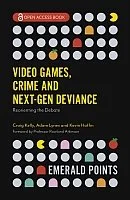
Video Games, Crime and Next-Gen Deviance: Reorienting the Debate

Edited by Adam Lynes, Craig Kelly, and Kevin Hoffin

In recent decades the video games industry has grown astronomically, quickly becoming a substantial part of our everyday lives. Alongside the rise of this technology, the media, academia and, in some cases, governments, have drawn correlations between video games and serious instances of violence, focusing most notably on mass shootings. This narrow debate has distracted from our understanding of many of the harms which video games can, in some cases, cause, perpetuate or hide. Drawing upon the emerging deviant leisure perspective, this book seeks to re-orientate the debate on video games and their associated potential harms. Through the examination of culturally embedded harms such as gambling, sexual violence and addiction, together with the rise in swatting and other activities, the authors explore the notion that video games are inexplicably intertwined with aspects of deviancy.

Bingley, UK: Emerald Publishing, 2020. 208p.

Download
Killer Fandom: Fan Studies and the Celebrity Serial Killer

By Judith May Fathallah

Killer Fandom is the first long-form treatment of serial killer fandom. Fan studies have mostly ignored this most moralized form of fandom, as a stigmatized Bad Other in implicit tension with the field’s successful campaign to recuperate the broader fan category. Yet serial killer fandom, as Judith May Fathallah shows in the book, can be usefully studied with many of the field’s leading analytic frameworks. After tracing the pre-digital history of fans, mediated celebrity, and killers, Fathallah examines contemporary fandom through the lens of textual poaching, affective community, subcultural capital, and play. With close readings of fan posts, comments, and mashups on Tumblr, TikTok, and YouTube, alongside documentaries, podcasts, and a thriving “murderabilia” industry, Killer Fandom argues that this fan culture is, in many ways, hard to distinguish from more “mainstream” fandoms. Fan creations around Aileen Wuornos, Jeffrey Dahmer, Ted Bundy, and Richard Ramirez, among others, demonstrate a complex and shifting stance toward their objects—marked by parodic humor and irony in many cases. Killer Fandom ultimately questions—given our crime-and violence-saturated media culture—whether it makes sense to set Dahmer and Wuornos “fans” apart from the rest of us.

Bethlehem, PA: Media Studies Press, 2023. 259p.

Download
Grassroots Law in Papua New Guinea

Edited by: Melissa Demian

The introduction of village courts in Papua New Guinea in 1975 was an ambitious experiment in providing semi-formal legal access to the country’s overwhelmingly rural population. Nearly 50 years later, the enthusiastic adoption of these courts has had a number of ramifications, some of them unanticipated. Arguably, the village courts have developed and are working exactly as they were supposed to do, adapted by local communities to modes and styles consistent with their own dispute management sensibilities. But with little in the way of state oversight or support, most village courts have become, of necessity, nearly autonomous.

Village courts have also become the blueprint for other modes of dispute management. They overlap with other sources of authority, so the line between what does and does not constitute a ‘court’ is now indistinct in many parts of the country. Rather than casting this issue as a problem for legal development, the contributors to Grassroots Law in Papua New Guinea ask how, under conditions of state withdrawal, people seek to retain an understanding of law that holds out some promise of either keeping the attention of the state or reproducing the state’s authority.

Canberra: ANU Press, 2023. 210p.

Download
Concealing for Freedom: The Making of Encryption, Secure Messaging and Digital Liberties

By: Ksenia Ermoshina and Francesca Musiani

Concealing for Freedom: The Making of Encryption, Secure Messaging and Digital Liberties sets out to explore one of the core battlegrounds of Internet governance: the encryption of online communications. Current debates around encryption have fundamental implications for our individual liberties and collective presence on the Internet. Encryption of communications at scale and in increasingly usable ways has become a matter of public concern, especially since Edward Snowden’s 2013 revelations. A new cryptographic imaginary is taking hold, which sees encryption as a necessary precondition for the formation of networked publics. At the same time, there have been major evolutions and accelerations in the field of secure communications, prompted in part by the cryptography community’s renewed efforts to create next-generation secure messaging protocols and applications. It is vital that we unveil the very recent, and sometimes less recent history of these protocols and their key applications. The book takes on this task, in order to show how the opportunities and constraints they provide to Internet users came about, and how both developer communities and institutions are working towards making them available for the largest possible audience. It explores how efforts towards this goal are built upon interwoven stories about technical development and architectural choices, about community-building – and about Internet governance and politics. In doing so, the book focuses on the experience of encryption in a wide variety of contemporary secure messaging protocols and tools, and looks at the implications of these endeavors for the “making of” digital liberties on the Internet. Concealing for Freedom provides two key empirical and theoretical contributions. Firstly, it enriches a social sciences-informed understanding of encryption. It does so by examining how different solutions of cryptography for secure communications are created, developed, enacted, and governed, and what this diverse experience of encryption, operating across many different sites, means for online civil liberties. Secondly, it contributes to understanding the social and political implications of particular design choices when it comes to the technical architecture of digital networks, in particular their degree of (de-)centralization. The book explores developers’ actions and their interactions with other stakeholders, for instance users, security trainers, standardising bodies, and funding organizations. It also examines their interactions with the technical artifacts they develop, in which a core common objective is to create tools that “conceal for freedom” even as how this objective is met differs according to technical architectures, the user publics being targeted and the tools’ underlying values and business models.

Manchester, UK: Mattering Press, 2022. 274p.

Download
Addressing Illicit Financial Flows in East and Southern Africa

By Michael McLaggan

Prominent throughout the world, illicit financial flows (IFFs) not only undermine the ability of states to collect revenue, but they also pose challenges to governance and the rule of law and provide avenues for the funding of further illicit activity. Although a global occurrence, IFFs may manifest differently at the regional level, making a uniform approach difficult. This calls for a model that is more inclusive of different types of flows than traditional understandings of IFFs, which tend to focus on financial flows within the formal system. In regions such as East and southern Africa, where informality is much higher than in the developed nations of the ‘global north’, the greater focus on formal systems does not find the same degree of applicability. This is not to downplay the necessity of observing and countering formal financial flows of an illicit nature but rather to emphasise the need to pay greater attention to informal and trade flows, which are prolific in less developed regions. This paper draws on extensive research by the Global Initiative against Transnational Organized Crime (GI-TOC) – in particular, the Observatory of Illicit Economies in East and Southern Africa – in addition to research by other international organisations, to analyse whether the ‘IFFs pyramid’ proposed by the GI-TOC (Reitano, 2022) is applicable to and useful for researchers seeking to understanding illicit financial flows in various settings around the world but especially in regions where greater levels of informality exists, such as East and southern Africa. The paper finds that the pervasive informality of markets in the East and southern African region, and their abuse by criminal actors, means that greater attention to IFFs is necessary in this sphere. Common also is the use of illicitly acquired, or otherwise illicitly traded commodities, in barter (that is, goods for goods) markets. Identified as particularly relevant is the pernicious influence of state-embedded actors, who often play substantial roles in the facilitation of IFFs and act as obstacles to policies to address them. Furthermore, vested interests of criminal actors in keeping certain industries and markets informal serve as barriers to formalisation and highlight the greater need to pay attention to informal financial flows especially. The due consideration to trade and informal flows is what makes the IFFs pyramid a useful model for understanding these flows in both global and regional settings. At the very least, the pyramid model highlights the need for holistic approaches and policy reform when considering IFFs in less developed regions.  

Birmingham, UK: University of Birmingham. 2024, 33pg

download
Opioid Market Trends in Afghanistan Poppy Cultivation, Policy and Practice Under the New Regime

By Prem Mahadevan, Maria Khoruk, Alla Mohammad Mohmandzai and Ruggero Scaturro

How will the new Taliban regime change Afghanistan’s illicit drug landscape in the coming years? Are the Taliban genuinely committed to combating the flow of narcotics within and outside Afghanistan, as signalled by the ban on opium cultivation issued by the Taliban leadership in April 2022?

Based on field research coordinated by the Global Initiative against Transnational Organized Crime (GI-TOC) in the Afghan provinces of Helmand and Nangarhar, this paper analyses the changes to the Afghan drug economy since the Taliban’s return to power on 15 August 2021, documenting the adaptation of local actors engaged in the opium economy to the events that had a profound impact on their lives. Historical analysis supplements the field research findings and aids our understanding of the shifting conditions of the illicit drug economy in Afghanistan. Given the institutional weakness of Afghan statehood after nearly five decades of civil war, the GI-TOC’s approach represents a collation of provincial and district-level assessments rather than a comprehensive country-wide assessment.

This research paper outlines the complexities of local conditions and reveals a regime fragmented among varied interests and power structures, seeking to reconcile the profitability of the drugs trade with the strive for legitimacy.

University of Birmingham, Research Paper No. 27. 2023, 31pg

download
Organized Vehicle Crime in Europe Barriers to Prevent Vehicle Theft and Online Distribution of Stolen Vehicles and Vehicle Parts

By Atanas Rusev, et al.

Organized property crime is considered to be a significant criminal market affecting virtually all members states of the European Union. Organized property crime is reportedly being committed by highly mobile organized crime groups (MOCG). These groups have been engaging in various forms of property crime, such as motor vehicle theft throughout Europe. At European level, ongoing initiatives are supporting member states in the fight against organized property crime. Nonetheless, to date still little is known on the logistical processes of motor vehicle theft across EU member states and in Europe as a whole. Within this context, this project aims at enhancing the knowledge of organized property crime in the form of motor vehicle crime, which includes motor vehicle theft and the sale of stolen vehicle parts.

Vehicle Crime Barrier, 2023, 46p.

Download
Organized Vehicle Crime in Europe: Six Country Case Studies on Organized Vehicle Crime and Potential Barriers to Prevent the Facilitation of Online Distribution of Stolen Vehicles and Vehicle Parts

By: Atanas Rusev, Tihomir Bezlov, Flamma Terenghi

Organized property crime is a pervasive issue across all EU Member States, demanding immediate and collective action. V-BAR specifically targets one aspect of organized property crime: motor vehicle crime, encompassing theft and the illicit trade of stolen vehicle parts. Despite a decline in vehicle theft, the overall prevalence of motor vehicle crime remains alarmingly high. This comprehensive report outlines V-BAR’s objectives in enhancing operational cooperation between EU law enforcement authorities and private partners to combat the menace posed by mobile organized crime groups involved in vehicle theft. Additionally, the report delves into an extensive investigation of motor vehicle theft trends within six EU countries, namely Belgium, Bulgaria, Germany, France, and The Netherlands, providing valuable insights for combating this form of criminal activity.

CrimRxiv. https://doi.org/10.21428/cb6ab371.af77f1d4 2023.

Download
On the Trail of Illicit Gold Proceeds: Strengthening the Fight Against Illegal Mining Finances: The Case of Ecuador

By Organization of American States , Department against Transnational Organized Crime

The illegal gold trade is a growing and significant challenge in Ecuador. The spread of illegal gold mining activity has brought surges of violence and instability to remote areas while attracting organized crime, at the local and international level, and triggering an increase in money laundering and contraband. Concern regarding the disruptive and harmful impact of illegal gold mining, as well as the government’s desire to develop and expand Ecuador’s mining sector away from its reliance on small-scale and artisanal operations, have also led to a renewed focus on the challenges posed by illegal mining. There is reason to believe that the illegal gold trade and its associated criminal networks are less entrenched and developed in Ecuador than in neighboring Peru and Colombia. However, there are significant challenges facing the government as it works to combat illegal mining activity, which is increasingly accelerated by illicit cross-border contraband flows and unique vulnerabilities to money laundering activity.

Washington, DC: OAS, 2021. 46p.

Download
Fighting Fakes, Contraband and Illicit Trade: Spotlight on The Philippines

By Transnational Alliance to Combat Illicit Trade (TRACIT)

The Philippines, with its strategic location in the heart of Southeast Asia and its dynamic economy, is one of the fastest-growing economies in Southeast Asia, and a leader in the Association of Southeast Asia Nations (ASEAN). However, the country’s position as a vital maritime gateway in the region, coupled with its robust economic activities, has rendered it susceptible to a spectrum of illicit practices. From counterfeit goods flooding local markets to the underground movement of smuggled products, the illegal wildlife trade, and the intricate networks of money laundering, the Philippines faces significant challenges in its ongoing battle against these illicit activities

New York: The Transnational Alliance to Combat Illicit Trade (TRACIT), 2023. 48p.

Download
Information Manipulation and Organized Crime: Examining the Nexus

By Tena Prelec

Information manipulation has been a growing concern in recent years, particularly in relation to the disinformation tactics employed by authoritarian regimes. However, the role of non-state actors, such as organized crime (OC) groups, in information manipulation has been largely overlooked. This research aims to fill this gap by examining the various ways in which OC groups manipulate information to achieve their objectives and those of actors connected to them. Drawing on Nicholas Barnes’ concept of ‘political criminality’ (2017), this study examines the varying degrees of proximity between criminal actors and the state, which is essential in exploring the complex interplay between OC and information manipulation. Empirical data was collected from several geographies, with a particular focus on Eastern Europe and the post-Soviet space, including Ukraine, Russia, Moldova (Transnistria), and Albania. The research highlights several dimensions of interest, including: the changing opportunities that technology gives to OC groups to shape facts and narratives; media ownership by organised crime groups and criminal actors; and the ways in which this interplay is situated within the global political economy of offshore finance – including the wider networks of enablers these actors rely on. By shedding light on these aspects, the research seeks to contribute to a more comprehensive understanding of the threat posed by the misuse of information, situates it within the literatures on non-state actors and transnational kleptocracy, and puts forward a framework for analysis that can be tested in future work.

Birmingham, UK: SOC ACE Research Paper 22. University of Birmingham 2023. 44p,

Download
El Salvador’s (Perpetual) State of Emergency: How Bukele’s Government Overpowered Gangs

By Alex Papadovassilakis, et al

El Salvador’s gangs are in disarray.

For decades, the Mara Salvatrucha (MS13) and two factions of the 18th Street (Barrio 18) dominated the small Central American nation’s criminal landscape. The gangs embedded themselves in poor communities, terrorizing urban dwellers with extortion and murders. Successive governments tried and failed to dismantle the gangs with aggressive security policies, known as mano dura (iron fist).

In March 2022, the government of El Salvador President Nayib Bukele enacted a state of emergency (régimen de excepción) in response to a brutal gang massacre that left 87 dead. Buoyed by emergency powers, security forces tore through the gangs, arresting tens of thousands of suspected gang members and collaborators. Those who escaped arrest went underground or into exile. In a flash, the MS13 and Barrio 18 all but vanished from the streets of El Salvador.

But though battered and bruised, a surprising number of gang members remain at large. The country’s prisons, once incubators for the gangs, have never been so full.

This six-part investigation looks at how the Bukele government’s crackdown succeeded in overpowering the MS13 and Barrio 18. We assess what remains of the gangs in El Salvador, and contemplate whether these structures could one day return or mutate.

Washington, DC; Medellin, Columbia: InSight Crime, 2023.56p.

Download
The Moskitia: The Honduran Jungle Drowning in Cocaine

By: Bryan Avelar, Juan José Martínez

Moskitia is dying. And it is organized crime that is killing it.

First came the drugs, as traffickers turned the region’s coasts and forests into a cocaine corridor. Then came the traffickers themselves, financing invaders that are clear-cutting thousands of hectares of forest and fencing off vast tracts of land with barbed wire and armed guards.

The region’s Indigenous Miskito people have been left trapped in desperate poverty, and are caught between the traffickers and an indifferent state. But some are now preparing to fight back.

Washington, DC, Columbia: InSight Crime, 2023. 64p..

Download
South Africa Illicit Copper Economy

By Jenni Irish-Qhobosheane

Our new report focuses on the pervasive issue of copper theft in South Africa. This socio-economic challenge has severe consequences on the country's already strained infrastructure, affecting the capacity and operations of state-owned entities and municipalities.

Our 2022 South Africa Strategic Organized Crime Risk Assessment revealed that the nation's critical infrastructure is 'at a tipping point after years of chronic mismanagement and rampant theft,' noting the role of copper theft as an exacerbating factor. In light of this alarming situation, our latest report delves into the repercussions of copper theft on South Africa's infrastructure and its links to organized crime networks.

This comprehensive study examines the value chain and market dynamics for stolen copper, a familiar yet often overlooked area where criminal enterprises have become deeply entrenched. With a focus on solutions, the report outlines measures taken to combat copper theft and explores possible future strategies for addressing this growing concern.

Geneva, SWIT: Global Initiative Against Transnational Organized Crime, 2023. 60p.

Download