Open Access Free Library
Fiction+Mediajpg.jpg

FICTION and MEDIA

CRIME AND MEDIA — TWO PEAS IN A POD

Posts in crime
Philosophies of Crime Fiction

By Josef Hoffmann

Josef Hoffmann covers influences and inspirations in crime writing with references to a stellar cast of crime writers including Arthur Conan Doyle, G. K. Chesterton, Dashiell Hammett, Albert Camus, Borges, Agatha Christie, Raymond Chandler, and Ted Lewis. Hoffmann examines why crime literature may provide stronger consolation for readers than philosophy. In so doing, he demonstrates the truth of Wittgenstein's claim that more wisdom is contained in the best crime fiction than in philosophical essays. Josef Hoffmann's combination of knowledge, academic acuity, and enthusiasm makes this a must-have book for any crime fiction aficionado—with or without a philosophical nature.

Harpenden, Herts, UK: No Exit Press, 2013. 192p.
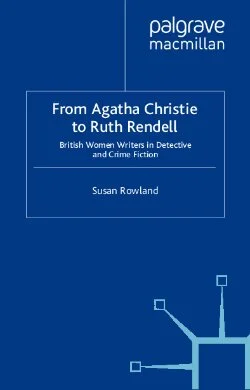
From Agatha Christie to Ruth Rendell: British Women Writers in Detective and Crime Fiction

From Agatha Christie to Ruth Rendell: British Women Writers in Detective and Crime Fiction

By Susan Rowland

From Agatha Christie to Ruth Rendell is the first book to consider seriously the hugely popular and influential works of Agatha Christie, Dorothy L. Sayers, Margery Allingham, Nag Marsh, P.D. James and Ruth Rendell/Barbara Vine. Providing studies of 42 key novels, this volume introduces these authors for students and the general reader in the context of their lives, and of critical debates on gender, colonialism, psychoanalysis, the Gothic, and feminism. It includes interviews with P.D. James and Ruth Rendell/Barbara Vine.
Palgrave macmillan, 2000. 232p.

Shakespearean Allusion in Crime Fiction: DCI Shakespeare

By Lisa Hopkins

This book explores why crime fiction so often alludes to Shakespeare. It ranges widely over a variety of authors including classic golden age crime writers such as the four ‘queens of crime’ (Allingham, Christie, Marsh, Sayers), Nicholas Blake and Edmund Crispin, as well as more recent authors such as Reginald Hill, Kate Atkinson and Val McDermid. It also looks at the fondness for Shakespearean allusion in a number of television crime series, most notably Midsomer Murders, Inspector Morse and Lewis, and considers the special sub-genre of detective stories in which a lost Shakespeare play is found. It shows how Shakespeare facilitates discussions about what constitutes justice, what authorises the detective to track down the villain, who owns the countryside, national and social identities, and the question of how we measure cultural value.

London; New York: Palgrave Macmillan, 2016. 211p.

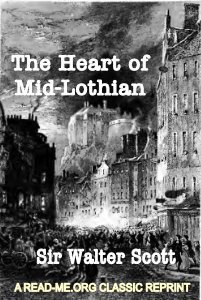
The Heart of Mid-Lothian

By Sir Walter Scott.

“Edinburgh, 1736: an indignant crowd has gathered in the Grassmarket to watch the execution of a smuggler...” Opening with the start of the Porteous Riots, The Heart of Midlothian is one of Walter Scott's most famous historical novels, featuring murder, madness and seduction. Following his brutal suppression of the spectators, John Porteous, Captain of the Guard, is charged with murder and locked up in Edinburgh's Tolbooth prison, also known as the Heart of Midlothian. When news comes that he has been pardoned, an angry mob breaks into the jail, liberating its inmates and bringing Porteous to its own form of justice. But one prisoner who fails to take this opportunity to flee is Effie Deans, who, wrongly convicted of infanticide, has been sentenced to death. Jeanie, her older sister, sets off to London on foot to beg for her pardon from the queen.

Boston: Dana Estes & Co., 1893.

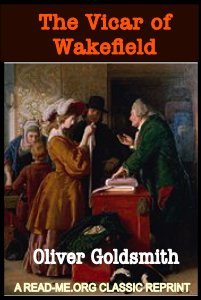
The Vicar of Wakefield

By Oliver Goldsmith.

“When Dr Primrose loses his fortune in a disastrous investment, his idyllic life in the country is shattered and he is forced to move with his wife and six children to an impoverished living on the estate of Squire Thornhill. Taking to the road in pursuit of his daughter, who has been seduced by the rakish Squire, the beleaguered Primrose becomes embroiled in a series of misadventures–encountering his long-lost son in a travelling theatre company and even spending time in a debtor’s prison. Yet Primrose, though hampered by his unworldliness and pride, is sustained by his unwavering religious faith. In The Vicar of Wakefield, Goldsmith gently mocks many of the literary conventions of his day–from pastoral and romance to the picaresque – infusing his story of a hapless clergyman with warm humour and amiable social satire.”

J.C. Krieger and Company, 1828 300p.

The Dead Secret

By Wilkie Collins. .

A Novel . Two of the characters which appear in these pages -- "Rosamond," and "Uncle Joseph" -- had the good fortune to find friends everywhere who took a hearty liking to them. A more elaborately drawn personage in the story -- "Sarah Leeson" -- was, I think, less generally understood. The idea of tracing, in this character, the influence of a heavy responsibility on a naturally timid woman, whose mind was neither strong enough to bear it, nor bold enough to drop it altogether, was a favorite idea with me, at the time, and is so much a favorite still, that I privately give "Sarah Leeson" the place of honor in the little portrait-gallery which my story contains.

London: Bradbury and Evans, 1857. 322p.

The Ball And The Cross

By G.K. Chesterton.

When two men decide to fight for their respective beliefs, they discover to their astonishment that an unbelieving world won’t let them, and they find themselves partners and fugitives from the law in this steampunk satire. Penned by G.K. Chesterton in 1909, this whimsical and biting novel eerily foreshadows a world in which “tolerance” is the only god and all those who believe ideas are worth dying for are forced to stand together to defend freedom of speech and belief.

New York: J. Lane, 1909. 436p.