Open Access Publisher and Free Library
Fiction+Mediajpg.jpg

FICTION and MEDIA

CRIME AND MEDIA — TWO PEAS IN A POD

Posts in culture
The Ball And The Cross

By G.K. Chesterton.

When two men decide to fight for their respective beliefs, they discover to their astonishment that an unbelieving world won’t let them, and they find themselves partners and fugitives from the law in this steampunk satire. Penned by G.K. Chesterton in 1909, this whimsical and biting novel eerily foreshadows a world in which “tolerance” is the only god and all those who believe ideas are worth dying for are forced to stand together to defend freedom of speech and belief.

New York: J. Lane, 1909. 436p.
download
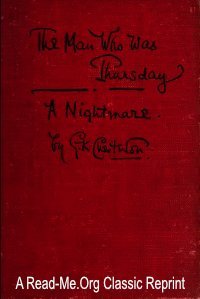
The Man Who was Thursday: A Nightmare

By G.K. Chesterton.

It is very difficult to classify The Man Who Was Thursday. It is possible to say that it is a gripping adventure story of murderous criminals and brilliant policemen; but it was to be expected that the author of the Father Brown stories should tell a detective story like no-one else. On this level, therefore, The Man Who Was Thursday succeeds superbly; if nothing else, it is a magnificent tour-de-force of suspense-writing. However, the reader will soon discover that it is much more than that. Carried along on the boisterous rush of the narrative by Chesterton’s wonderful high-spirited style, he will soon see that he is being carried into much deeper waters than he had planned on; and the totally unforeseeable denouement will prove for the modern reader, as it has for thousands of others since 1908 when the book was first published, an inevitable and moving experience, as the investigators finally discover who Sunday is.

Bristol: J.W. Arrowsmith, 1908. 329p.

download
Moll Flanders

By Daniel Defoe.

Moll Flanders follows the life of its eponymous heroine through its many vicissitudes, which include her early seduction, careers in crime and prostitution, conviction for theft and transportation to the plantations of Virginia, and her ultimate redemption and prosperity in the new World. “When a woman debauched from her youth, nay, even being the offspring of debauchery and vice, comes to give an account of all her vicious practices, and even to descend to the particular occasions and circumstances by which she ran through in threescore years, an author must be hard put to it wrap it up so clean as not to give room, especially for vicious readers, to turn it to his disadvantage.”

NY. Harrow and Heston Classic Reprint. (1772) 502 pages.

download
Hard Times

By Charles Dickens.

This is Dickens’ tenth novel, published without illustrations, in Household Word, his weekly journal. Dickens continues to fly the banner of social reform, touching on themes of industrialization, education, and utilitarianism in the sweeping Industrial Revolution of the 1850's.

NY. Harrow and Heston Classic Reprint. (1854) 302 pages.

download
Great Expectations

By Charles Dickens.

This was Charles Dickens' thirteenth novel published in Dickens' weekly journal All the Year Round without illustrations. An American edition was also published in Harper's Weekly. The novel contains a strong autobiographical element, though not as openly as in David Copperfield. Dickens reread Copperfield before beginning Great Expectations to avoid unintentional repetition. It is generally acclaimed as his best work.

NY. Harrow and Heston Classic Reprint. (186-1861) 521 pages.

download
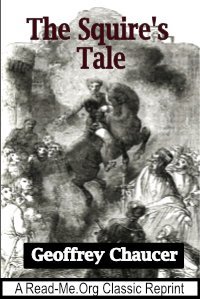
The Squire's Tale

By Geoffrey Chaucer.

Edited with an introduction by A. W. Pollard. This story from Chaucer’s Canterbury Tales was the first serious attempt to tell the story of the great Genghis Khan, leader of the Moguls, who conquered peoples and lands of Asia and South East Asia, Russia and the fringes of Europe, and by his hand spread and distributed wealth, commerce and technology throughout the peoples and lands he conquered. All of this much to the benefit of the peoples of Europe that he did not conquer, but who nevertheless absorbed the amazing commercial production and distribution of goods and the important elements of nascent science encouraged and exported by the Great Khan. None of these achievements were acknowledged by the West, instead calling the Moguls barbarians and savages.

London: Macmillan (1899) 76p.

download