Open Access Free Library
CRIMINAL JUSTICE.jpeg

CRIMINAL JUSTICE

CRIMINAL JUSTICE-CRIMINAL LAW-PROCDEDURE-SENTENCING-COURTS

Posts tagged Criminal law
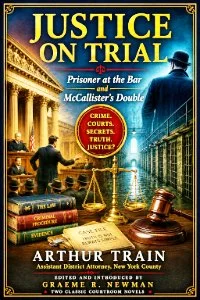
Justice on Trial

By Arthur Train (Author) and Graeme Newman (Editor and Introduction)

Arthur Train was not merely a novelist of crime and courtroom intrigue—he was an Assistant District Attorney in New York County who understood the hidden machinery of American justice from the inside. In Justice on Trial, two of his most compelling works—Prisoner at the Bar and McCallister’s Double—are brought together in a powerful new edition edited and introduced by Graeme R. Newman.

Part legal exposé, part philosophical inquiry, part classic crime fiction, this volume explores questions that remain disturbingly relevant today: How is guilt really determined? Do courts discover truth—or construct it? Why are prisons hidden from public view? Do criminals receive justice, or merely punishment? And what of the victims left behind by the machinery of law?

In Prisoner at the Bar, Train offers a rare insider’s account of the criminal justice system of early twentieth-century America. Drawing upon his own prosecutorial experience, he exposes the realities behind arrests, grand juries, trials, sentencing, police practices, courtroom performance, and the uneasy relationship between law and morality. The result is one of the earliest and most penetrating critiques of modern criminal justice ever written.

Complementing this work is McCallister’s Double, a brilliant collection of courtroom and criminal tales filled with deception, mistaken identity, legal maneuvering, and moral ambiguity. These stories reveal Train’s remarkable ability to combine suspense with sharp observations about the fictions upon which justice itself often depends.

Graeme R. Newman’s extensive new introduction places Train’s work within the larger history of crime, punishment, and legal power, comparing the courts and prisons of Train’s era with those of the twenty-first century. The introduction examines the secrecy of prisons, the hidden social functions of trials, the mythology of “justice,” and the enduring question of whether criminal justice systems truly deliver fairness—or merely preserve authority.

Blending classic legal writing, detective fiction, social criticism, and courtroom drama, Justice on Trial is both a fascinating historical document and a strikingly modern meditation on crime, punishment, truth, and power.

For readers of true crime, legal history, courtroom drama, criminology, and classic detective fiction, this volume offers a rare and unsettling look behind the curtain of justice itself.

Read-Me.Org Inc. New York-Philadelphia-Australia. 2026. p.362.
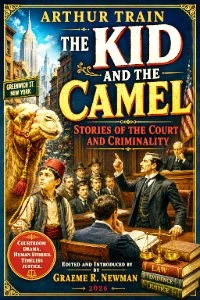
The Kid And The Camel: Stories Of The Court And Criminality

By Arthur Train (Author) and Graeme Newman (Editor and Introduction)

Before modern courtroom thrillers and television crime dramas, Arthur Train was bringing readers inside the strange, unpredictable, and deeply human world of criminal law. The Kid and the Camel: Stories of the Court and Criminality collects some of Train’s most memorable tales from the New York courts, blending legal realism, sharp humor, and penetrating social observation.

At the center of the volume is the celebrated story “The Kid and the Camel,” a bizarre and unforgettable courtroom case involving immigrants, conflicting testimony, cultural misunderstanding, and a camel hidden in a city attic. Around it unfolds a wider panorama of criminal justice in early twentieth-century America: ambitious lawyers, eccentric witnesses, cunning swindlers, ethical dilemmas, jury manipulation, and the uncertain search for truth inside crowded urban courtrooms.

This collection also features the famous Tutt & Tutt stories, introducing one of American fiction’s earliest and most sophisticated lawyer-heroes. Through the clever, theatrical, and psychologically astute attorney Ephraim Tutt, Train explores the law not merely as a system of rules, but as a human drama shaped by persuasion, ambiguity, and competing notions of justice.

Far more than period entertainment, these stories remain strikingly relevant today. Issues of immigration, courtroom spectacle, prosecutorial strategy, media influence, unequal justice, and the power of lawyers continue to dominate modern criminal justice systems. Train’s fiction reveals how little the essential tensions of law and society have changed.

Edited and introduced by Graeme Newman, this new Read-Me.Org edition restores an important classic of American legal literature for contemporary readers interested in true crime, courtroom drama, criminology, legal history, and the enduring complexities of justice itself.

Read-Me.Org Inc. New York-Philadelphia-Australia. 2026. p.367.

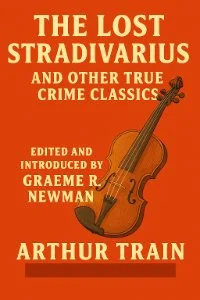
The Lost Stradivarius: And Other True Crime Classics

By Arthur Train (Author) and Graeme Newman (Editor and Introduction)

tep into the shadowed world of early twentieth‑century justice, where truth is elusive, appearances deceive, and a single misjudgment can alter lives forever. The Lost Stradivarius and Other True Crime Classics by Arthur Train brings together some of the most compelling real cases ever drawn from the files of a New York prosecutor. Written with the authority of firsthand experience and the narrative power of a master storyteller, these accounts reveal the drama, tension, and human complexity behind headline crimes. At the heart of the collection is The Lost Stradivarius, a haunting tale of a priceless violin whose disappearance sets in motion a troubling chain of suspicion, error, and unintended injustice. Around it unfold other striking cases—of ingenious frauds, daring deceptions, and courtroom battles in which certainty proves fragile and truth stubbornly resists easy conclusions. Throughout, Train explores not only crime itself, but the deeper forces of character, ambition, and fallibility that shape the pursuit of justice. This new edition features a fresh introduction by Graeme R. Newman, placing these enduring stories in modern perspective and highlighting their continuing relevance. Timeless, unsettling, and richly human, this collection reminds us that truth is often stranger—and far more unsettling—than fiction.

Read-Me.Org Inc. New York-Philadelphia-Australia. 2026. p.187..

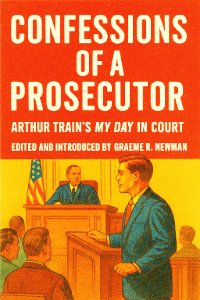
Confessions of a Prosecutor

By Arthur Train (Author) and Graeme Newman (Editor and Introduction)

Step inside the courtroom—and beyond it—through the eyes of a man who knew both the practice of law and the art of storytelling.

Arthur Train, a former New York prosecutor and celebrated author, offers a vivid and deeply reflective account of life in the criminal courts. Drawing on real cases, personal experience, and keen psychological insight, Confessions of a Prosecutor reveals the drama, uncertainty, and moral complexity behind the pursuit of justice. These are not merely stories of trials—they are portraits of human nature under pressure, where truth, perception, and judgment are rarely simple.

More than a legal memoir, this book is a masterclass in understanding how justice is truly administered. Train exposes the hidden tensions of courtroom life: unreliable witnesses, circumstantial evidence, the burden of decision, and the immense responsibility borne by those who prosecute in the name of society. His reflections remain strikingly relevant today, offering timeless lessons on fairness, doubt, and the ethical challenges of wielding authority.

What makes this work especially compelling is Train’s dual perspective as both practitioner and writer. With the skill of a seasoned storyteller, he shapes real events into engaging narratives—blending fact and interpretation to illuminate the deeper truths behind the law. The result is a work that is as absorbing as it is instructive, where the boundary between reality and narrative art invites thoughtful reflection.

In its later chapters, Train turns to another side of his life: the craft of writing and the realities of building a career beyond the courtroom. He offers a fascinating glimpse into the world of early twentieth-century publishing—writing for popular magazines, reaching a wide audience, and transforming professional experience into stories that endure. His journey underscores the discipline, adaptability, and persistence required to succeed as an author.

Confessions of a Prosecutor is an essential read for anyone interested in law, justice, and the power of storytelling. It is a book for lawyers and readers alike—for those who seek to understand not only how the law works, but how it feels to live within it.

Experience the courtroom as it truly is: human, uncertain, and endlessly compelling.

Read-Me.Org Inc. New York-Philadelphia-Australia. 2026. p.381.

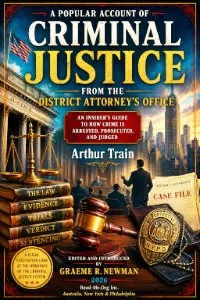
A Popular Account Of Criminal Justice

By Arthur Train (Author) and Graeme Newman (Editor and Introduction)

Before true crime became entertainment and courtroom drama became television spectacle, Arthur Train took readers directly inside the machinery of American criminal justice. Drawing on his experience in the New York District Attorney’s Office, Train produced one of the first and most compelling insider accounts of how criminal law actually worked—from arrest and indictment to jury trial, sentencing, and the uneasy pursuit of justice itself.

In A Popular Account of Criminal Justice from the District Attorney’s Office, Train strips away the myths surrounding crime and punishment to reveal a system shaped as much by human judgment, politics, error, and improvisation as by law. Murder cases, frauds, police practices, courtroom tactics, unreliable witnesses, legal absurdities, and the psychology of criminals all come under his sharp and often surprisingly modern scrutiny.

Far ahead of his time, Train questions whether criminal law truly reflects morality, whether prisons reform offenders, and whether society punishes the most dangerous forms of wrongdoing at all. His observations on violent crime, corruption, prosecutorial discretion, media sensationalism, and unequal justice remain startlingly relevant in the twenty-first century.

This new edition, edited and introduced by Graeme R. Newman, situates Train’s classic work within today’s debates over mass incarceration, overcriminalization, white-collar crime, police power, and the continuing struggle to balance public safety with individual rights. More than a historical curiosity, this book is a penetrating exploration of the enduring contradictions of criminal justice—then and now.

Combining legal history, criminology, courtroom drama, and social criticism, A Popular Account of Criminal Justice will appeal to readers interested in true crime, law, policing, criminology, criminal procedure, and the evolution of modern justice systems.

Read-Me.Org Inc. New York-Philadelphia-Australia. 2026. p.334.

The Four Faces of Intoxication in the Botswana Criminal Justice System: “Defence”, Extenuation, Mitigation, and Aggravation

By Baboki Jonathan Dambe & Badala Tachilisa Balule 

Intoxication plays a role in the commission of crimes in most, if not all, jurisdictions. Botswana is no exception. Our law reports are replete with cases in which intoxication is alleged to have contributed to the commission of the offence. In this regard, courts continually find themselves contending with the consideration that they ought to give to the intoxication, in respect to both the criminal culpability of the accused person and their moral blameworthiness when it comes to sentencing. This paper highlights that, in the context of Botswana, intoxication may be treated as a defence, an extenuating circumstance, a mitigating factor, or an aggravating factor. It interrogates the approaches adopted by the courts in considering intoxication in these four roles. Given the divergence of judicial approach to intoxication in sentencing, the paper highlights the necessity of sentencing guidelines in order to attain a measure of predictability and consistency. Consequently, the paper assesses the sentencing guidelines adopted by other jurisdictions in respect of intoxication and the lessons to be drawn from such guidelines.

 Crim Law Forum 35, 289–318 (2024).