Open Access Publisher and Free Library
CRIMINAL JUSTICE.jpeg

CRIMINAL JUSTICE

CRIMINAL JUSTICE-CRIMINAL LAW-PROCDEDURE-SENTENCING-COURTS

Posts in Judicial Discretion
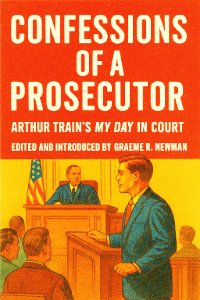
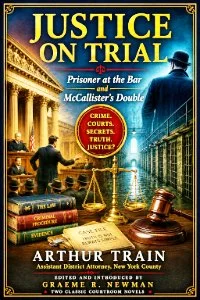
Confessions of a Prosecutor

By Arthur Train (Author) and Graeme Newman (Editor and Introduction)

Step inside the courtroom—and beyond it—through the eyes of a man who knew both the practice of law and the art of storytelling.

Arthur Train, a former New York prosecutor and celebrated author, offers a vivid and deeply reflective account of life in the criminal courts. Drawing on real cases, personal experience, and keen psychological insight, Confessions of a Prosecutor reveals the drama, uncertainty, and moral complexity behind the pursuit of justice. These are not merely stories of trials—they are portraits of human nature under pressure, where truth, perception, and judgment are rarely simple.

More than a legal memoir, this book is a masterclass in understanding how justice is truly administered. Train exposes the hidden tensions of courtroom life: unreliable witnesses, circumstantial evidence, the burden of decision, and the immense responsibility borne by those who prosecute in the name of society. His reflections remain strikingly relevant today, offering timeless lessons on fairness, doubt, and the ethical challenges of wielding authority.

What makes this work especially compelling is Train’s dual perspective as both practitioner and writer. With the skill of a seasoned storyteller, he shapes real events into engaging narratives—blending fact and interpretation to illuminate the deeper truths behind the law. The result is a work that is as absorbing as it is instructive, where the boundary between reality and narrative art invites thoughtful reflection.

In its later chapters, Train turns to another side of his life: the craft of writing and the realities of building a career beyond the courtroom. He offers a fascinating glimpse into the world of early twentieth-century publishing—writing for popular magazines, reaching a wide audience, and transforming professional experience into stories that endure. His journey underscores the discipline, adaptability, and persistence required to succeed as an author.

Confessions of a Prosecutor is an essential read for anyone interested in law, justice, and the power of storytelling. It is a book for lawyers and readers alike—for those who seek to understand not only how the law works, but how it feels to live within it.

Experience the courtroom as it truly is: human, uncertain, and endlessly compelling.

Read-Me.Org Inc. New York-Philadelphia-Australia. 2026. p.381.

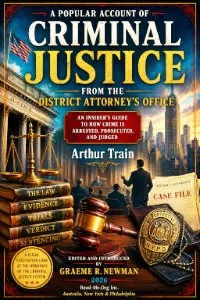
A Popular Account Of Criminal Justice

By Arthur Train (Author) and Graeme Newman (Editor and Introduction)

Before true crime became entertainment and courtroom drama became television spectacle, Arthur Train took readers directly inside the machinery of American criminal justice. Drawing on his experience in the New York District Attorney’s Office, Train produced one of the first and most compelling insider accounts of how criminal law actually worked—from arrest and indictment to jury trial, sentencing, and the uneasy pursuit of justice itself.

In A Popular Account of Criminal Justice from the District Attorney’s Office, Train strips away the myths surrounding crime and punishment to reveal a system shaped as much by human judgment, politics, error, and improvisation as by law. Murder cases, frauds, police practices, courtroom tactics, unreliable witnesses, legal absurdities, and the psychology of criminals all come under his sharp and often surprisingly modern scrutiny.

Far ahead of his time, Train questions whether criminal law truly reflects morality, whether prisons reform offenders, and whether society punishes the most dangerous forms of wrongdoing at all. His observations on violent crime, corruption, prosecutorial discretion, media sensationalism, and unequal justice remain startlingly relevant in the twenty-first century.

This new edition, edited and introduced by Graeme R. Newman, situates Train’s classic work within today’s debates over mass incarceration, overcriminalization, white-collar crime, police power, and the continuing struggle to balance public safety with individual rights. More than a historical curiosity, this book is a penetrating exploration of the enduring contradictions of criminal justice—then and now.

Combining legal history, criminology, courtroom drama, and social criticism, A Popular Account of Criminal Justice will appeal to readers interested in true crime, law, policing, criminology, criminal procedure, and the evolution of modern justice systems.

Read-Me.Org Inc. New York-Philadelphia-Australia. 2026. p.334.

Appellate Review of Daubert Rulings

By Steven M. Klepper

The Supreme Court of Maryland adopted the federal Daubert standard for admission of expert testimony in 2020.1 Given that Daubert rulings are discretionary, the abuse-of-discretion standard governs appellate review of expert testimony.2 During the summer of 2023, the Supreme Court of Maryland issued three opinions holding that trial judges abused their discretion—at least in part—when they admitted or excluded expert testimony.3 In the last of the three cases, Justice Brynja Booth authored a concurring opinion noting how the Court was applying less deference than in other discretionary contexts, and she urged her colleagues to clarify the nature of review.4 This article posits that Daubert errors fall into two main categories: procedural and substantive. Procedural errors occur when a trial court misunderstands an aspect of the Daubert framework.5 In effect, the trial judge has misread Maryland Rule 5-702, which governs expert testimony. 6 A misreading of an evidentiary rule is a legal error that is reviewed de novo, meaning without deference. 7 Substantive error occurs when a trial judge follows the Daubert framework but reaches a result to which an appellate courts cannot defer because either the trial judge has abused their8 discretion in the traditionalsense or the Supreme Court of Maryland has decided to draw a boundary circumscribing all trial judges’ discretion.9 Such vocabulary not only accurately describes the nature of judicial review but also reduces friction between trial judges and appellate courts

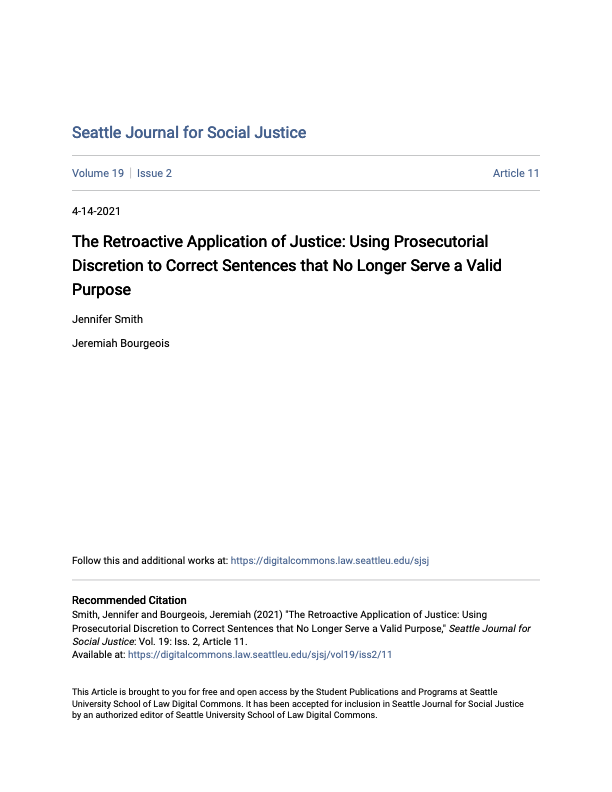
The Retroactive Application of Justice: Using Prosecutorial Discretion to Correct Sentences that No Longer Serve a Valid Purpose

By Jennifer Smith and Jeremiah Bourgeois

The criminal justice system is centered around three major participants: a prosecutor, a defense attorney, and a defendant. Each plays a role in the ensuing adversarial process, and each has their own perceptual lenses and interests. The prosecutor, for instance, seeks a conviction and focuses more on evidence of guilt than on innocence. The defense attorney endeavors to bring about a verdict of not guilty or a favorable plea rather than seeking to promote public safety. As for the defendant, he often cannot perceive the factors that led to his criminality, and he has neither the insight nor the will necessary to change his life’s trajectory. After sentencing, the criminal justice system in Washington State provides very few mechanisms for any of these participants to undo the result, even after decades have passed.2A prosecutor, who “has the Jennifer Smith Jeremiah Bourgeoisresponsibility of a minister of justice and not simply that of an advocate,”  may later come to question the fairness of the sentence. However, until 2020, prosecutors lacked the power to reduce the term of confinement. A defense attorney may belatedly find mitigating evidence, but procedural rules foreclose the opportunity to have the defendant resentenced.As for a defendant who underwent an incredible transformation after a substantial period of confinement, the only hope for an early release is the unlikely possibility of a sentence commutation. The absence of an effective means to undo injustice has long been the status quo of punishment in the State of Washington.

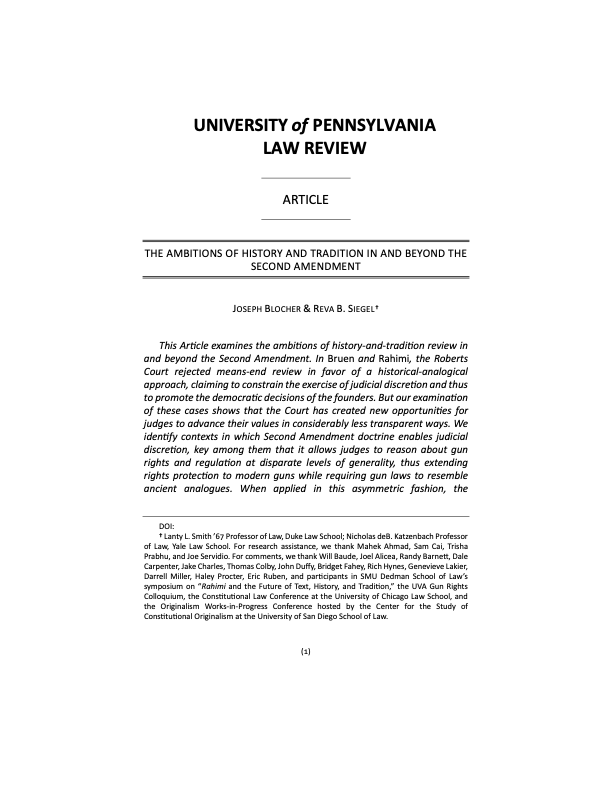
The Ambitions of History and Tradition in and Beyond the Second Amendment

By Joseph Blocher and Reva Siegel

This Article examines the ambitions of history-and-tradition review in and beyond the Second Amendment. In Bruen and Rahimi the Roberts Court rejected means-end review in favor of a historical-analogical approach, claiming to constrain the exercise of judicial discretion, and thus to promote the democratic decisions of the founders. But our examination of these cases shows that the Court has created new opportunities for judges to advance their values in considerably less transparent ways. We identify contexts in which Second Amendment doctrine enables judicial discretion, key among them that it allows judges to reason about gun rights and regulation at disparate levels of generality, extending rights protection to modern guns while requiring gun laws to resemble ancient analogues. When applied in this asymmetric fashion, the historical approach deregulates in ways that are neither acknowledged nor justified. An eight-member majority objected to this strategy in Rahimi and voted to uphold a federal gun law. Yet numerous Justices wrote separately to limit Rahimi’s reach—and, a year later, to suggest that the Court should take a case involving an assault-weapons ban to clarify the method set forth in its earlier cases.

Our close reading of the history-and-tradition (HAT) cases shows that there is a persistent gap between what the Court says and does—between the judicial constraint the Roberts Court promises and the actual decisions it delivers. Understanding this dynamic in the Second Amendment cases helps us recognize it in the First Amendment and Substantive Due Process cases as well.

We can better appreciate the Court’s reasoning in extending HAT review if we excavate the arguments advanced in the decade between Heller and Bruen for substituting the HAT approach for means-ends review. This retrospective shows us that HAT approaches exhibit the very problems imputed to means-ends review: HAT review is not grounded in original understanding and employs shifts in generality to provide judges discretion to enforce value-based understandings. We can see this dynamic unfolding inside and outside the Second Amendment context.

HAT decisions pose distinctive threats to democracy. First, Bruen has implemented HAT through judicial review with a strong presumption of unconstitutionality, a counter-majoritarian practice lacking precedent at the founding. Second, HAT review is not transparent, obscuring reasons for judicial decisions from the people and thus obstructing democratic dialogue. Third, the HAT framework encourages judges to decide the constitutionality of public safety laws on grounds that ignore the public’s most urgent reasons for enacting the laws.

This reading of the Court’s Second Amendment cases indicates that the push to adopt HAT approaches in First Amendment, Due Process, and other areas of constitutional law is likely to compound the problems it is supposed to solve, while insulating the Court’s control of the Constitution from the public governed by it.