Open Access Free Library
CRIMINAL JUSTICE.jpeg

CRIMINAL JUSTICE

CRIMINAL JUSTICE-CRIMINAL LAW-PROCDEDURE-SENTENCING-COURTS

Posts in Procedural Safeguards
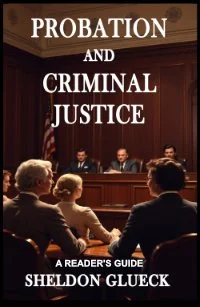
PROBATION AND CRIMINAL JUSTICE: Mini-Classic

By Graeme R. Newman and Claude AI.

Long before probation became the most widely used criminal sanction in America, leading criminologists, judges, lawyers, social workers, psychiatrists, and probation administrators gathered to answer a fundamental question:

Could offenders be rehabilitated in the community instead of being sent to prison?

Originally published in 1933 as a tribute to pioneering probation leader Herbert C. Parsons, Probation and Criminal Justicebrought together some of the most influential voices in early twentieth-century criminal justice. Their essays explored sentencing, rehabilitation, probation administration, judicial discretion, psychiatric treatment, casework methods, and comparative probation systems in the United States, England, France, Belgium, and Germany.

Nearly a century later, the book reads with surprising relevance. The contributors debated many of the same issues that continue to dominate criminal justice policy today: overcrowded prisons, evidence-based sentencing, risk assessment, officer training, community supervision, recidivism, and the tension between punishment and rehabilitation.

This Mini-Classic edition presents an expertly condensed and accessible version of the original volume, preserving the essential arguments, insights, and debates while making them available to modern readers.

Inside you will discover:

  • The origins and early development of probation in America and Europe

  • Sheldon Glueck's influential critique of punishment and rehabilitation

  • The legal and constitutional issues raised by probation

  • How probation officers were selected, trained, and supervised

  • Competing views of sentencing from judges and criminologists

  • Early psychiatric and social-work approaches to offender treatment

  • Comparative probation systems in England, France, Belgium, and Germany

  • A modern commentary examining what has and has not changed since 1933

Part historical document, part policy debate, and part blueprint for reform, Probation and Criminal Justice captures a pivotal moment when criminal justice thinkers were struggling to replace purely punitive responses to crime with more individualized and humane approaches.

For students, scholars, practitioners, and anyone interested in the history of corrections and criminal justice reform, this volume offers a fascinating window into ideas that continue to shape probation and community supervision today.

Crime and Justice Mini-Classics bring influential but often overlooked works in criminology, policing, punishment, and criminal justice history back into print in concise, accessible editions for contemporary readers.

Read-Me.Org Inc. New York-Philadelphia-Australia. 2026. p.83.

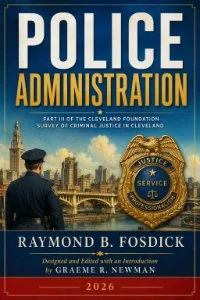
POLICE ADMINISTRATION: Part III of the Cleveland Foundation Survey of Criminal Justice in Cleveland

Raymond B. Fosdick. Designed and Edited with an Introduction by Graeme R. Newman and Claude.

A landmark classic in the history of policing, public administration, and criminal justice reform.

When Raymond B. Fosdick published Police Administration in 1921 as part of the renowned Cleveland Foundation Survey of Criminal Justice, he delivered one of the most penetrating examinations ever undertaken of an American police department. More than a century later, his analysis remains remarkably relevant.

Confronted by rising crime and concerns about police effectiveness, Cleveland commissioned an independent investigation of its law enforcement system. Fosdick responded with a rigorous, evidence-based study that compared American policing with the more professionalized police systems of Europe. His conclusions were blunt: crime was not simply the product of social conditions, but also of outdated organization, weak leadership, inadequate training, political interference, and a failure to adapt policing to the demands of the modern city.

This groundbreaking work examines every major aspect of police administration, including:

  • Police organization and leadership

  • Recruitment, selection, and training of officers

  • Promotion and discipline systems

  • Patrol operations and crime prevention

  • Detective bureau management

  • Personnel administration and record keeping

  • Accountability, professionalism, and public service

Fosdick's recommendations anticipated many reforms that would shape twentieth-century policing: merit-based advancement, professional training academies, modern management practices, specialized investigative units, and the use of data and performance measurement in public administration.

This new edition includes a substantial introduction by criminologist Graeme R. Newman, placing Fosdick's work in historical context and exploring its continuing significance in contemporary debates over police reform, professionalism, accountability, and governance.

More than a historical document, Police Administration is an essential source for understanding the origins of modern policing and the enduring challenges of managing police organizations in democratic societies.

Ideal for readers interested in:

  • Police history

  • Criminal justice

  • Criminology

  • Public administration

  • American legal history

  • Progressive Era reform

  • Law enforcement studies

  • Government and public policy

A century after its publication, Fosdick's classic reminds us that effective policing depends not only on laws and officers, but on leadership, organization, and the intelligent administration of justice.

Read-Me.Org Inc. New York-Philadelphia-Australia. 2026. p.104.

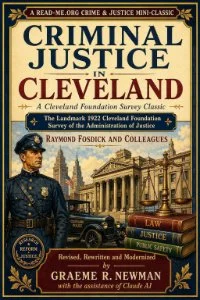
Criminal Justice in Cleveland-Mini-Classic

By Graeme R. Newman and Claude AI.

A landmark investigation into how America's criminal justice system actually worked, and why it often failed.

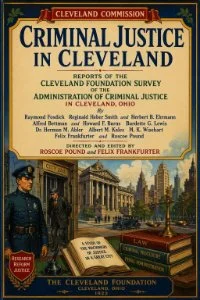
In 1921, a series of scandals and rising public concern about crime prompted the Cleveland Foundation to commission an unprecedented examination of the administration of justice in Cleveland, Ohio. Directed by two of the most influential legal minds of the twentieth century, Roscoe Pound and Felix Frankfurter, the resulting study became one of the most important reform documents in American criminal justice history.

Originally published in 1922, Criminal Justice in Cleveland was the first comprehensive effort to analyze an entire urban justice system as an interconnected whole. Drawing on detailed investigations of police, prosecutors, courts, corrections, probation, legal education, medical science, and the press, the survey revealed a system plagued by inefficiency, poor record-keeping, fragmented authority, political influence, and a startling lack of accountability.

This modernized edition, edited and introduced by Graeme R. Newman, makes this classic study accessible to today's readers while preserving its most important findings, statistics, and arguments. Readers will discover:

• How police departments operated in major American cities during the early twentieth century
• Why so many criminal cases disappeared before reaching trial
• The hidden influence of politics, public opinion, and newspapers on justice
• Early debates over probation, parole, rehabilitation, and sentencing reform
• The origins of evidence-based criminal justice research
• Reform proposals that continue to resonate more than a century later

Written during the Progressive Era but strikingly relevant today, Criminal Justice in Cleveland demonstrates that many of the challenges confronting modern police, prosecutors, courts, and correctional institutions are far older than most people realize. Its authors recognized that successful reform requires more than replacing individuals; it requires understanding how institutions work, how they fail, and how they can be improved.

Essential reading for students of criminology, criminal justice professionals, legal scholars, historians, policymakers, and anyone interested in the evolution of the American justice system.

More than a century after its publication, this pioneering study remains one of the most insightful examinations ever written of crime, law, and urban justice in America

Read-Me.Org Inc. New York-Philadelphia-Australia. 2026. p.90.

Criminal Justice in Cleveland

Criminal Justice in Cleveland was one of the most influential studies of the American criminal justice system produced during the Progressive Era. Published by The Cleveland Foundation, the volume brought together leading legal scholars, reformers, and public officials, including Raymond Fosdick, Roscoe Pound, Felix Frankfurter, and others, to examine the administration of justice in Cleveland, Ohio. The work was directed and edited by Roscoe Pound and Felix Frankfurter.

Rather than focusing solely on crime, the study investigated the entire machinery of justice, including police, prosecutors, courts, probation services, corrections, and related public institutions. The authors sought to determine how effectively these agencies worked together, where delays and inefficiencies occurred, and what reforms were needed to create a more fair, efficient, and accountable system of justice.

The survey became a landmark in empirical legal research because it relied on systematic investigation rather than anecdote or political opinion. Its findings helped shape twentieth-century reforms in policing, court administration, criminal procedure, and corrections, making it essential reading for historians, criminologists, legal scholars, and students of public administration.

Today, Criminal Justice in Cleveland remains a classic study of urban criminal justice and a foundational text in the movement to evaluate government institutions through rigorous research and evidence-based reform.

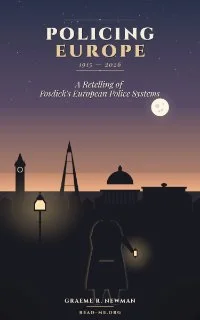
POLICING EUROPE 1915–2026: A Retelling of Fosdick's European Police Systems

by Graeme Newman (Author)

How did Europe police its cities before the First World War, and what can those systems teach us today?

In Policing Europe: A Retelling of Fosdick's Classic, criminologist and policing scholar Graeme R. Newman presents a concise, modernized edition of Raymond B. Fosdick's landmark 1915 study of European policing. Based on nearly two years of firsthand research across England, Scotland, Germany, Austria-Hungary, France, Italy, Holland, and Belgium, Fosdick's original work remains one of the most comprehensive comparative examinations of police systems ever written. [Policing_Europe Word]

Traveling through the great capitals and industrial cities of Europe on the eve of World War I, Fosdick interviewed commissioners, detectives, patrol officers, judges, and government officials to answer questions that remain deeply relevant today:

  • Should policing be controlled locally or by the national government?

  • How much authority should police possess?

  • What creates public trust in law enforcement?

  • How should police leaders be selected and trained?

  • What prevents corruption and abuse of power?

  • Which organizational structures produce effective and accountable policing?

This edition preserves Fosdick's remarkable firsthand observations while updating the language for contemporary readers. It explores the contrasting traditions of British "policing by consent" and Continental state-centered policing, compares police organizations in London, Paris, Berlin, Vienna, Budapest, and Rome, and examines detective methods, recruitment, training, leadership, forensic science, and police integrity. [Policing_Europe Word]

More than a historical document, Policing Europe offers a fascinating window into the origins of many modern debates about public safety, civil liberties, professionalization, surveillance, police accountability, and the relationship between citizens and the state. Written just before a world war transformed Europe forever, it captures a vanished world while illuminating issues that continue to shape policing in the twenty-first century. [Policing_Europe Word]

Ideal for:

  • Students of criminology and criminal justice

  • Police professionals and policymakers

  • Historians of law, government, and public administration

  • Readers interested in comparative policing and European history

  • Anyone seeking a deeper understanding of how modern police systems evolved

A century after its original publication, Fosdick's pioneering study remains essential reading for anyone interested in the enduring challenge of balancing order, authority, liberty, and public trust. [Policing_Europe Word]

Read-Me.Org Inc. New York-Philadelphia-Australia. 2026. p172.

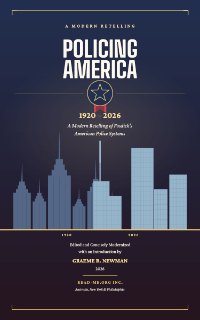
Policing America:1920–2026:: A Modern Retelling of Fosdick's American Police Systems

by Graeme Newman (Author)

In 1920, an investigator toured seventy-two American cities and concluded that the police in every one of them were failing — not from a lack of good men, but from a century of political interference, organizational chaos, and a refusal to let any competent leader keep the job long enough to matter. A hundred years later, the argument still lands.

Raymond B. Fosdick's American Police Systems was one of the most ambitious studies of policing ever produced in the Progressive Era — a firsthand, city-by-city comparison of American departments against the professional, politically insulated forces of London, Paris, and Berlin. Fosdick found American policing outmatched at nearly every turn: murder rates that dwarfed Europe's, police chiefs who rotated out with every election, civil-service rules that protected the incompetent as readily as the honest, and city after city that tore up its own police governance and started over, never once letting a good structure — or a good leader — mature.

This edition brings that argument back, rewritten for a modern reader.

This is not a facsimile reprint. Every chapter has been surveyed against Fosdick's original text — including its extensive footnotes — and rewritten fresh, in modernized prose, at roughly a fifth of the original length. The topic structure, the argument, and the great majority of Fosdick's specific facts, cases, and comparisons survive intact; the discursive, footnote-heavy academic style of 1920 does not. Readers get the substance of a landmark study without the apparatus of a century-old monograph.
A substantial new introduction places Fosdick's argument in conversation with policing today: the persistence of American police fragmentation across eighteen thousand separate agencies, the technology Fosdick could only gesture toward (national fingerprint databases, predictive policing, body-worn cameras), the surprising afterlife of "heterogeneity" as European cities have grown as demographically diverse as the American ones Fosdick once contrasted them against, the diversity of police workforces themselves in the U.S. and U.K. today, and where Fosdick's own instincts do — and don't — anticipate contemporary arguments over the scope and funding of policing.
What's inside:
- All eleven chapters of Fosdick's original argument, modernized and condensed
- A new, extensive introduction connecting the book to policing in 2026
- The original seven city police-organization charts, reproduced as images
- Modern 5x8 trade formatting with a full table of contents
Policing America, 1920-2026 is for readers of policing history, criminal justice students, and anyone following today's debates over police reform who wants to see how far back — and how little changed — those debates actually go.
A Read-Me.Org Modern Adaptation. Modernized and edited, with an introduction, by Graeme R. Newman. Based on the 1920 original by Raymond B. Fosdick.

Read-Me.Org Inc. New York-Philadelphia-Australia. 2026. p111.

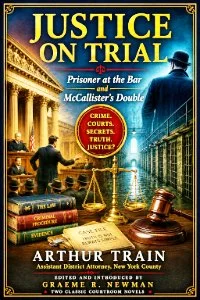
Justice on Trial

By Arthur Train (Author) and Graeme Newman (Editor and Introduction)

Arthur Train was not merely a novelist of crime and courtroom intrigue—he was an Assistant District Attorney in New York County who understood the hidden machinery of American justice from the inside. In Justice on Trial, two of his most compelling works—Prisoner at the Bar and McCallister’s Double—are brought together in a powerful new edition edited and introduced by Graeme R. Newman.

Part legal exposé, part philosophical inquiry, part classic crime fiction, this volume explores questions that remain disturbingly relevant today: How is guilt really determined? Do courts discover truth—or construct it? Why are prisons hidden from public view? Do criminals receive justice, or merely punishment? And what of the victims left behind by the machinery of law?

In Prisoner at the Bar, Train offers a rare insider’s account of the criminal justice system of early twentieth-century America. Drawing upon his own prosecutorial experience, he exposes the realities behind arrests, grand juries, trials, sentencing, police practices, courtroom performance, and the uneasy relationship between law and morality. The result is one of the earliest and most penetrating critiques of modern criminal justice ever written.

Complementing this work is McCallister’s Double, a brilliant collection of courtroom and criminal tales filled with deception, mistaken identity, legal maneuvering, and moral ambiguity. These stories reveal Train’s remarkable ability to combine suspense with sharp observations about the fictions upon which justice itself often depends.

Graeme R. Newman’s extensive new introduction places Train’s work within the larger history of crime, punishment, and legal power, comparing the courts and prisons of Train’s era with those of the twenty-first century. The introduction examines the secrecy of prisons, the hidden social functions of trials, the mythology of “justice,” and the enduring question of whether criminal justice systems truly deliver fairness—or merely preserve authority.

Blending classic legal writing, detective fiction, social criticism, and courtroom drama, Justice on Trial is both a fascinating historical document and a strikingly modern meditation on crime, punishment, truth, and power.

For readers of true crime, legal history, courtroom drama, criminology, and classic detective fiction, this volume offers a rare and unsettling look behind the curtain of justice itself.

Read-Me.Org Inc. New York-Philadelphia-Australia. 2026. p.362.

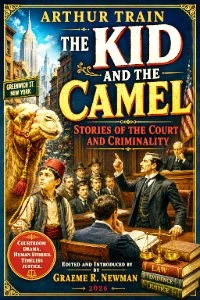
The Kid And The Camel: Stories Of The Court And Criminality

By Arthur Train (Author) and Graeme Newman (Editor and Introduction)

Before modern courtroom thrillers and television crime dramas, Arthur Train was bringing readers inside the strange, unpredictable, and deeply human world of criminal law. The Kid and the Camel: Stories of the Court and Criminality collects some of Train’s most memorable tales from the New York courts, blending legal realism, sharp humor, and penetrating social observation.

At the center of the volume is the celebrated story “The Kid and the Camel,” a bizarre and unforgettable courtroom case involving immigrants, conflicting testimony, cultural misunderstanding, and a camel hidden in a city attic. Around it unfolds a wider panorama of criminal justice in early twentieth-century America: ambitious lawyers, eccentric witnesses, cunning swindlers, ethical dilemmas, jury manipulation, and the uncertain search for truth inside crowded urban courtrooms.

This collection also features the famous Tutt & Tutt stories, introducing one of American fiction’s earliest and most sophisticated lawyer-heroes. Through the clever, theatrical, and psychologically astute attorney Ephraim Tutt, Train explores the law not merely as a system of rules, but as a human drama shaped by persuasion, ambiguity, and competing notions of justice.

Far more than period entertainment, these stories remain strikingly relevant today. Issues of immigration, courtroom spectacle, prosecutorial strategy, media influence, unequal justice, and the power of lawyers continue to dominate modern criminal justice systems. Train’s fiction reveals how little the essential tensions of law and society have changed.

Edited and introduced by Graeme Newman, this new Read-Me.Org edition restores an important classic of American legal literature for contemporary readers interested in true crime, courtroom drama, criminology, legal history, and the enduring complexities of justice itself.

Read-Me.Org Inc. New York-Philadelphia-Australia. 2026. p.367.

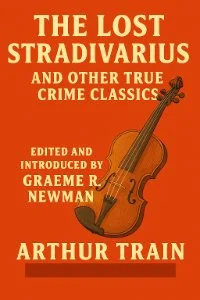
The Lost Stradivarius: And Other True Crime Classics

By Arthur Train (Author) and Graeme Newman (Editor and Introduction)

tep into the shadowed world of early twentieth‑century justice, where truth is elusive, appearances deceive, and a single misjudgment can alter lives forever. The Lost Stradivarius and Other True Crime Classics by Arthur Train brings together some of the most compelling real cases ever drawn from the files of a New York prosecutor. Written with the authority of firsthand experience and the narrative power of a master storyteller, these accounts reveal the drama, tension, and human complexity behind headline crimes. At the heart of the collection is The Lost Stradivarius, a haunting tale of a priceless violin whose disappearance sets in motion a troubling chain of suspicion, error, and unintended injustice. Around it unfold other striking cases—of ingenious frauds, daring deceptions, and courtroom battles in which certainty proves fragile and truth stubbornly resists easy conclusions. Throughout, Train explores not only crime itself, but the deeper forces of character, ambition, and fallibility that shape the pursuit of justice. This new edition features a fresh introduction by Graeme R. Newman, placing these enduring stories in modern perspective and highlighting their continuing relevance. Timeless, unsettling, and richly human, this collection reminds us that truth is often stranger—and far more unsettling—than fiction.

Read-Me.Org Inc. New York-Philadelphia-Australia. 2026. p.187..

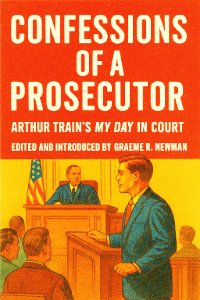
Confessions of a Prosecutor

By Arthur Train (Author) and Graeme Newman (Editor and Introduction)

Step inside the courtroom—and beyond it—through the eyes of a man who knew both the practice of law and the art of storytelling.

Arthur Train, a former New York prosecutor and celebrated author, offers a vivid and deeply reflective account of life in the criminal courts. Drawing on real cases, personal experience, and keen psychological insight, Confessions of a Prosecutor reveals the drama, uncertainty, and moral complexity behind the pursuit of justice. These are not merely stories of trials—they are portraits of human nature under pressure, where truth, perception, and judgment are rarely simple.

More than a legal memoir, this book is a masterclass in understanding how justice is truly administered. Train exposes the hidden tensions of courtroom life: unreliable witnesses, circumstantial evidence, the burden of decision, and the immense responsibility borne by those who prosecute in the name of society. His reflections remain strikingly relevant today, offering timeless lessons on fairness, doubt, and the ethical challenges of wielding authority.

What makes this work especially compelling is Train’s dual perspective as both practitioner and writer. With the skill of a seasoned storyteller, he shapes real events into engaging narratives—blending fact and interpretation to illuminate the deeper truths behind the law. The result is a work that is as absorbing as it is instructive, where the boundary between reality and narrative art invites thoughtful reflection.

In its later chapters, Train turns to another side of his life: the craft of writing and the realities of building a career beyond the courtroom. He offers a fascinating glimpse into the world of early twentieth-century publishing—writing for popular magazines, reaching a wide audience, and transforming professional experience into stories that endure. His journey underscores the discipline, adaptability, and persistence required to succeed as an author.

Confessions of a Prosecutor is an essential read for anyone interested in law, justice, and the power of storytelling. It is a book for lawyers and readers alike—for those who seek to understand not only how the law works, but how it feels to live within it.

Experience the courtroom as it truly is: human, uncertain, and endlessly compelling.

Read-Me.Org Inc. New York-Philadelphia-Australia. 2026. p.381.

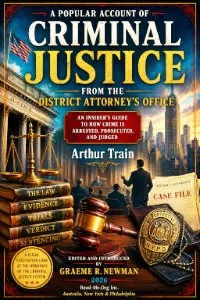
A Popular Account Of Criminal Justice

By Arthur Train (Author) and Graeme Newman (Editor and Introduction)

Before true crime became entertainment and courtroom drama became television spectacle, Arthur Train took readers directly inside the machinery of American criminal justice. Drawing on his experience in the New York District Attorney’s Office, Train produced one of the first and most compelling insider accounts of how criminal law actually worked—from arrest and indictment to jury trial, sentencing, and the uneasy pursuit of justice itself.

In A Popular Account of Criminal Justice from the District Attorney’s Office, Train strips away the myths surrounding crime and punishment to reveal a system shaped as much by human judgment, politics, error, and improvisation as by law. Murder cases, frauds, police practices, courtroom tactics, unreliable witnesses, legal absurdities, and the psychology of criminals all come under his sharp and often surprisingly modern scrutiny.

Far ahead of his time, Train questions whether criminal law truly reflects morality, whether prisons reform offenders, and whether society punishes the most dangerous forms of wrongdoing at all. His observations on violent crime, corruption, prosecutorial discretion, media sensationalism, and unequal justice remain startlingly relevant in the twenty-first century.

This new edition, edited and introduced by Graeme R. Newman, situates Train’s classic work within today’s debates over mass incarceration, overcriminalization, white-collar crime, police power, and the continuing struggle to balance public safety with individual rights. More than a historical curiosity, this book is a penetrating exploration of the enduring contradictions of criminal justice—then and now.

Combining legal history, criminology, courtroom drama, and social criticism, A Popular Account of Criminal Justice will appeal to readers interested in true crime, law, policing, criminology, criminal procedure, and the evolution of modern justice systems.

Read-Me.Org Inc. New York-Philadelphia-Australia. 2026. p.334.

Immigration, Due Process, and Executive Power

By Shoba Sivaprasad Wadhia and Peter Margulies 

The current Administration's approach to immigration law enforcement has augmented executive power and reduced procedural safeguards. That approach has raised questions under the Immigration and Nationality Act (INA) and the Constitution. Courts have often pushed back, although the Supreme Court has stayed judicial curbs on one area we'll discuss: Removal to a country other than the home country of the noncitizen (sometimes called third-country removal (TCR)). In other areas, such as the First Amendment rights of foreign students and the reach of the Alien Enemies Act (AEA), adjudication is moving through the courts, although the Supreme Court has imposed limits on the use of the AEA.