Open Access Free Library
CRIMINAL JUSTICE.jpeg

CRIMINAL JUSTICE

CRIMINAL JUSTICE-CRIMINAL LAW-PROCDEDURE-SENTENCING-COURTS

Posts tagged police
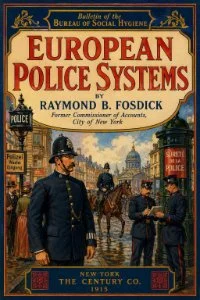
European Police Systems

By Raymond B. Fosdick

European Police Systems

Raymond B. Fosdick (1915)

Published in 1915, European Police Systems is a pioneering comparative study of law enforcement in the major nations of Europe during the early twentieth century. Based on extensive travel and firsthand investigation, Raymond B. Fosdick examined how police organizations in England, France, Germany, Austria-Hungary, Italy, Belgium, and the Netherlands were structured, governed, and employed to maintain public order.

Fosdick explores the fundamental differences between the British tradition of local policing and the more centralized police systems of Continental Europe. He analyzes police recruitment, training, discipline, detective work, administrative organization, and the relationship between police authority and civil liberty. Drawing upon interviews with police officials and direct observation of police operations, he provides a detailed portrait of the institutions responsible for public safety in some of Europe's most important cities.

Written on the eve of the First World War, the book captures a European society in transition while addressing questions that remain relevant today: How much power should the police possess? What forms of accountability are most effective? How can governments maintain order while preserving the freedoms of citizens?

Combining careful scholarship with vivid observation, European Police Systems became a landmark work in the study of policing and public administration. More than a historical record, it offers valuable insight into the origins of modern police institutions and the enduring challenges of balancing authority, efficiency, and democratic governance.

New York. Century. 1915 . p.410.
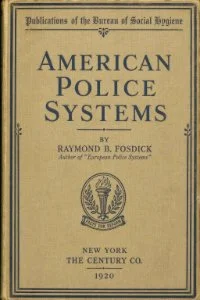
American Police Systems

By Raymond B. Fosdick

American Police Systems (1920) by Raymond B. Fosdick is a landmark study of law enforcement in the United States during the early twentieth century. Drawing on extensive research and firsthand observation, Fosdick examines the organization, responsibilities, and challenges of American police departments, comparing them with policing models in Europe. The book explores issues such as crime prevention, public order, police administration, and the evolving relationship between law enforcement and the communities they serve.

A valuable resource for historians, criminologists, and students of public administration, American Police Systems offers a fascinating snapshot of policing at a pivotal moment in American history. Its insights into reform, professionalism, and accountability remain relevant to contemporary discussions about law enforcement and public policy.

Read-Me.Org Inc. New York-Philadelphia-Australia. 2026. p.429.

Downstream Effects of Frayed Relations: Juror Race, Judgment, and Perceptions of Police

By Mona Lynch and Emily V. Shaw

Building on research demonstrating significant differences in how Black and White Americans view law enforcement, this study assesses how views of police shape potential jurors’ decision-making. The authors conclude that it is critical that citizens are not prevented from being seated on juries due to skepticism about police, given the risk of disproportionate exclusion of Black potential jurors. The legal processes relevant to juror excusals need to be reconsidered to ensure that views of police, rooted in actual experience or knowledge about the problems with fair and just policing, are not used to disproportionately exclude persons of color, or to seat juries overrepresented by people who blindly trust police. A sample of 649 Black and White jury-eligible U.S. citizens were exposed a federal drug conspiracy case in which the primary evidence against the defendant is provided by an FBI agent and an informant cooperating with the agent, in which a Black defendant is being tried, and where the informant-witness race (Black or White) was varied. Participants determined verdict, evaluated evidence, and completed additional measures. Results indicated that Black participants were significantly less likely to convict than White participants, especially in the White informant condition; rated the law enforcement witness as less credible; and viewed police more negatively across three composite measures. Exploratory analysis of how juror race and gender interacted indicates Black women largely drove racial differences in verdicts. Perceptions of police legitimacy mediated the relationship between juror race and verdict choice

Race and Justice Volume: Online Dated: 2023 Pages: 1-25