Open Access Free Library
CRIMINAL JUSTICE.jpeg

CRIMINAL JUSTICE

CRIMINAL JUSTICE-CRIMINAL LAW-PROCDEDURE-SENTENCING-COURTS

Posts in policing
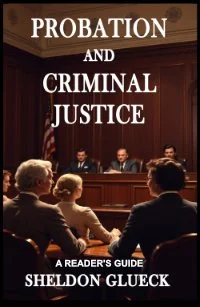
PROBATION AND CRIMINAL JUSTICE: Mini-Classic

By Graeme R. Newman and Claude AI.

Long before probation became the most widely used criminal sanction in America, leading criminologists, judges, lawyers, social workers, psychiatrists, and probation administrators gathered to answer a fundamental question:

Could offenders be rehabilitated in the community instead of being sent to prison?

Originally published in 1933 as a tribute to pioneering probation leader Herbert C. Parsons, Probation and Criminal Justicebrought together some of the most influential voices in early twentieth-century criminal justice. Their essays explored sentencing, rehabilitation, probation administration, judicial discretion, psychiatric treatment, casework methods, and comparative probation systems in the United States, England, France, Belgium, and Germany.

Nearly a century later, the book reads with surprising relevance. The contributors debated many of the same issues that continue to dominate criminal justice policy today: overcrowded prisons, evidence-based sentencing, risk assessment, officer training, community supervision, recidivism, and the tension between punishment and rehabilitation.

This Mini-Classic edition presents an expertly condensed and accessible version of the original volume, preserving the essential arguments, insights, and debates while making them available to modern readers.

Inside you will discover:

  • The origins and early development of probation in America and Europe

  • Sheldon Glueck's influential critique of punishment and rehabilitation

  • The legal and constitutional issues raised by probation

  • How probation officers were selected, trained, and supervised

  • Competing views of sentencing from judges and criminologists

  • Early psychiatric and social-work approaches to offender treatment

  • Comparative probation systems in England, France, Belgium, and Germany

  • A modern commentary examining what has and has not changed since 1933

Part historical document, part policy debate, and part blueprint for reform, Probation and Criminal Justice captures a pivotal moment when criminal justice thinkers were struggling to replace purely punitive responses to crime with more individualized and humane approaches.

For students, scholars, practitioners, and anyone interested in the history of corrections and criminal justice reform, this volume offers a fascinating window into ideas that continue to shape probation and community supervision today.

Crime and Justice Mini-Classics bring influential but often overlooked works in criminology, policing, punishment, and criminal justice history back into print in concise, accessible editions for contemporary readers.

Read-Me.Org Inc. New York-Philadelphia-Australia. 2026. p.83.

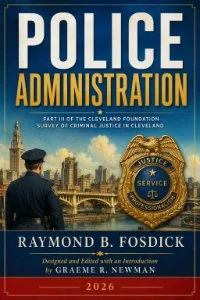
POLICE ADMINISTRATION: Part III of the Cleveland Foundation Survey of Criminal Justice in Cleveland

Raymond B. Fosdick. Designed and Edited with an Introduction by Graeme R. Newman and Claude.

A landmark classic in the history of policing, public administration, and criminal justice reform.

When Raymond B. Fosdick published Police Administration in 1921 as part of the renowned Cleveland Foundation Survey of Criminal Justice, he delivered one of the most penetrating examinations ever undertaken of an American police department. More than a century later, his analysis remains remarkably relevant.

Confronted by rising crime and concerns about police effectiveness, Cleveland commissioned an independent investigation of its law enforcement system. Fosdick responded with a rigorous, evidence-based study that compared American policing with the more professionalized police systems of Europe. His conclusions were blunt: crime was not simply the product of social conditions, but also of outdated organization, weak leadership, inadequate training, political interference, and a failure to adapt policing to the demands of the modern city.

This groundbreaking work examines every major aspect of police administration, including:

  • Police organization and leadership

  • Recruitment, selection, and training of officers

  • Promotion and discipline systems

  • Patrol operations and crime prevention

  • Detective bureau management

  • Personnel administration and record keeping

  • Accountability, professionalism, and public service

Fosdick's recommendations anticipated many reforms that would shape twentieth-century policing: merit-based advancement, professional training academies, modern management practices, specialized investigative units, and the use of data and performance measurement in public administration.

This new edition includes a substantial introduction by criminologist Graeme R. Newman, placing Fosdick's work in historical context and exploring its continuing significance in contemporary debates over police reform, professionalism, accountability, and governance.

More than a historical document, Police Administration is an essential source for understanding the origins of modern policing and the enduring challenges of managing police organizations in democratic societies.

Ideal for readers interested in:

  • Police history

  • Criminal justice

  • Criminology

  • Public administration

  • American legal history

  • Progressive Era reform

  • Law enforcement studies

  • Government and public policy

A century after its publication, Fosdick's classic reminds us that effective policing depends not only on laws and officers, but on leadership, organization, and the intelligent administration of justice.

Read-Me.Org Inc. New York-Philadelphia-Australia. 2026. p.104.

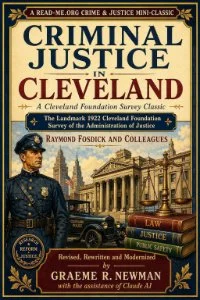
Criminal Justice in Cleveland-Mini-Classic

By Graeme R. Newman and Claude AI.

A landmark investigation into how America's criminal justice system actually worked, and why it often failed.

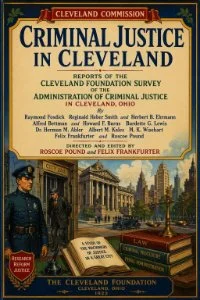
In 1921, a series of scandals and rising public concern about crime prompted the Cleveland Foundation to commission an unprecedented examination of the administration of justice in Cleveland, Ohio. Directed by two of the most influential legal minds of the twentieth century, Roscoe Pound and Felix Frankfurter, the resulting study became one of the most important reform documents in American criminal justice history.

Originally published in 1922, Criminal Justice in Cleveland was the first comprehensive effort to analyze an entire urban justice system as an interconnected whole. Drawing on detailed investigations of police, prosecutors, courts, corrections, probation, legal education, medical science, and the press, the survey revealed a system plagued by inefficiency, poor record-keeping, fragmented authority, political influence, and a startling lack of accountability.

This modernized edition, edited and introduced by Graeme R. Newman, makes this classic study accessible to today's readers while preserving its most important findings, statistics, and arguments. Readers will discover:

• How police departments operated in major American cities during the early twentieth century
• Why so many criminal cases disappeared before reaching trial
• The hidden influence of politics, public opinion, and newspapers on justice
• Early debates over probation, parole, rehabilitation, and sentencing reform
• The origins of evidence-based criminal justice research
• Reform proposals that continue to resonate more than a century later

Written during the Progressive Era but strikingly relevant today, Criminal Justice in Cleveland demonstrates that many of the challenges confronting modern police, prosecutors, courts, and correctional institutions are far older than most people realize. Its authors recognized that successful reform requires more than replacing individuals; it requires understanding how institutions work, how they fail, and how they can be improved.

Essential reading for students of criminology, criminal justice professionals, legal scholars, historians, policymakers, and anyone interested in the evolution of the American justice system.

More than a century after its publication, this pioneering study remains one of the most insightful examinations ever written of crime, law, and urban justice in America

Read-Me.Org Inc. New York-Philadelphia-Australia. 2026. p.90.

Criminal Justice in Cleveland

Criminal Justice in Cleveland was one of the most influential studies of the American criminal justice system produced during the Progressive Era. Published by The Cleveland Foundation, the volume brought together leading legal scholars, reformers, and public officials, including Raymond Fosdick, Roscoe Pound, Felix Frankfurter, and others, to examine the administration of justice in Cleveland, Ohio. The work was directed and edited by Roscoe Pound and Felix Frankfurter.

Rather than focusing solely on crime, the study investigated the entire machinery of justice, including police, prosecutors, courts, probation services, corrections, and related public institutions. The authors sought to determine how effectively these agencies worked together, where delays and inefficiencies occurred, and what reforms were needed to create a more fair, efficient, and accountable system of justice.

The survey became a landmark in empirical legal research because it relied on systematic investigation rather than anecdote or political opinion. Its findings helped shape twentieth-century reforms in policing, court administration, criminal procedure, and corrections, making it essential reading for historians, criminologists, legal scholars, and students of public administration.

Today, Criminal Justice in Cleveland remains a classic study of urban criminal justice and a foundational text in the movement to evaluate government institutions through rigorous research and evidence-based reform.

European Police Systems

By Raymond B. Fosdick

European Police Systems

Raymond B. Fosdick (1915)

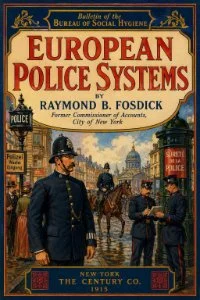
Published in 1915, European Police Systems is a pioneering comparative study of law enforcement in the major nations of Europe during the early twentieth century. Based on extensive travel and firsthand investigation, Raymond B. Fosdick examined how police organizations in England, France, Germany, Austria-Hungary, Italy, Belgium, and the Netherlands were structured, governed, and employed to maintain public order.

Fosdick explores the fundamental differences between the British tradition of local policing and the more centralized police systems of Continental Europe. He analyzes police recruitment, training, discipline, detective work, administrative organization, and the relationship between police authority and civil liberty. Drawing upon interviews with police officials and direct observation of police operations, he provides a detailed portrait of the institutions responsible for public safety in some of Europe's most important cities.

Written on the eve of the First World War, the book captures a European society in transition while addressing questions that remain relevant today: How much power should the police possess? What forms of accountability are most effective? How can governments maintain order while preserving the freedoms of citizens?

Combining careful scholarship with vivid observation, European Police Systems became a landmark work in the study of policing and public administration. More than a historical record, it offers valuable insight into the origins of modern police institutions and the enduring challenges of balancing authority, efficiency, and democratic governance.

New York. Century. 1915 . p.410.

POLICING EUROPE 1915–2026: A Retelling of Fosdick's European Police Systems

by Graeme Newman (Author)

How did Europe police its cities before the First World War, and what can those systems teach us today?

In Policing Europe: A Retelling of Fosdick's Classic, criminologist and policing scholar Graeme R. Newman presents a concise, modernized edition of Raymond B. Fosdick's landmark 1915 study of European policing. Based on nearly two years of firsthand research across England, Scotland, Germany, Austria-Hungary, France, Italy, Holland, and Belgium, Fosdick's original work remains one of the most comprehensive comparative examinations of police systems ever written. [Policing_Europe Word]

Traveling through the great capitals and industrial cities of Europe on the eve of World War I, Fosdick interviewed commissioners, detectives, patrol officers, judges, and government officials to answer questions that remain deeply relevant today:

  • Should policing be controlled locally or by the national government?

  • How much authority should police possess?

  • What creates public trust in law enforcement?

  • How should police leaders be selected and trained?

  • What prevents corruption and abuse of power?

  • Which organizational structures produce effective and accountable policing?

This edition preserves Fosdick's remarkable firsthand observations while updating the language for contemporary readers. It explores the contrasting traditions of British "policing by consent" and Continental state-centered policing, compares police organizations in London, Paris, Berlin, Vienna, Budapest, and Rome, and examines detective methods, recruitment, training, leadership, forensic science, and police integrity. [Policing_Europe Word]

More than a historical document, Policing Europe offers a fascinating window into the origins of many modern debates about public safety, civil liberties, professionalization, surveillance, police accountability, and the relationship between citizens and the state. Written just before a world war transformed Europe forever, it captures a vanished world while illuminating issues that continue to shape policing in the twenty-first century. [Policing_Europe Word]

Ideal for:

  • Students of criminology and criminal justice

  • Police professionals and policymakers

  • Historians of law, government, and public administration

  • Readers interested in comparative policing and European history

  • Anyone seeking a deeper understanding of how modern police systems evolved

A century after its original publication, Fosdick's pioneering study remains essential reading for anyone interested in the enduring challenge of balancing order, authority, liberty, and public trust. [Policing_Europe Word]

Read-Me.Org Inc. New York-Philadelphia-Australia. 2026. p172.

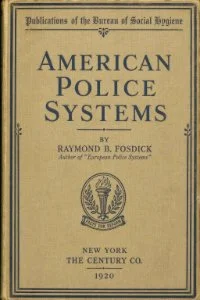
Policing America:1920–2026:: A Modern Retelling of Fosdick's American Police Systems

by Graeme Newman (Author)

In 1920, an investigator toured seventy-two American cities and concluded that the police in every one of them were failing — not from a lack of good men, but from a century of political interference, organizational chaos, and a refusal to let any competent leader keep the job long enough to matter. A hundred years later, the argument still lands.

Raymond B. Fosdick's American Police Systems was one of the most ambitious studies of policing ever produced in the Progressive Era — a firsthand, city-by-city comparison of American departments against the professional, politically insulated forces of London, Paris, and Berlin. Fosdick found American policing outmatched at nearly every turn: murder rates that dwarfed Europe's, police chiefs who rotated out with every election, civil-service rules that protected the incompetent as readily as the honest, and city after city that tore up its own police governance and started over, never once letting a good structure — or a good leader — mature.

This edition brings that argument back, rewritten for a modern reader.

This is not a facsimile reprint. Every chapter has been surveyed against Fosdick's original text — including its extensive footnotes — and rewritten fresh, in modernized prose, at roughly a fifth of the original length. The topic structure, the argument, and the great majority of Fosdick's specific facts, cases, and comparisons survive intact; the discursive, footnote-heavy academic style of 1920 does not. Readers get the substance of a landmark study without the apparatus of a century-old monograph.
A substantial new introduction places Fosdick's argument in conversation with policing today: the persistence of American police fragmentation across eighteen thousand separate agencies, the technology Fosdick could only gesture toward (national fingerprint databases, predictive policing, body-worn cameras), the surprising afterlife of "heterogeneity" as European cities have grown as demographically diverse as the American ones Fosdick once contrasted them against, the diversity of police workforces themselves in the U.S. and U.K. today, and where Fosdick's own instincts do — and don't — anticipate contemporary arguments over the scope and funding of policing.
What's inside:
- All eleven chapters of Fosdick's original argument, modernized and condensed
- A new, extensive introduction connecting the book to policing in 2026
- The original seven city police-organization charts, reproduced as images
- Modern 5x8 trade formatting with a full table of contents
Policing America, 1920-2026 is for readers of policing history, criminal justice students, and anyone following today's debates over police reform who wants to see how far back — and how little changed — those debates actually go.
A Read-Me.Org Modern Adaptation. Modernized and edited, with an introduction, by Graeme R. Newman. Based on the 1920 original by Raymond B. Fosdick.

Read-Me.Org Inc. New York-Philadelphia-Australia. 2026. p111.

American Police Systems

By Raymond B. Fosdick

American Police Systems (1920) by Raymond B. Fosdick is a landmark study of law enforcement in the United States during the early twentieth century. Drawing on extensive research and firsthand observation, Fosdick examines the organization, responsibilities, and challenges of American police departments, comparing them with policing models in Europe. The book explores issues such as crime prevention, public order, police administration, and the evolving relationship between law enforcement and the communities they serve.

A valuable resource for historians, criminologists, and students of public administration, American Police Systems offers a fascinating snapshot of policing at a pivotal moment in American history. Its insights into reform, professionalism, and accountability remain relevant to contemporary discussions about law enforcement and public policy.

Read-Me.Org Inc. New York-Philadelphia-Australia. 2026. p.429.

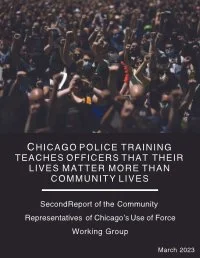
CHICAGO POLICE TRAINING TEACHES OFFICERS THAT THEIR LIVES MATTER MORE THAN COMMUNITY LIVES

Public Report on Chicago Police Training on the Use of Force

From the introduction; This Report from community representatives of Chicago’s Use of Force Community Working Group offers our feedback on the Chicago Police Department’s (CPD) training on de-escalation and the use of force. The Working Group was first convened in the summer of 2020 in response to the requirements of the federal civil rights Consent Decree designed to bring an end to the CPD’s pattern of police brutality and racial discrimination. Over the course of two years, the Working Group persuaded the CPD to make transformative changes to its policies governing police use of force. 1 Last fall, we issued a Public Report on CPD’s new policies, including areas still in need of change. 2 The new policies, if implemented and enforced on the ground, have the potential to dramatically reduce unnecessary CPD violence and improve public safety.

Second Report of the Community Representatives of Chicago’s Use of Force Working Group. 2023March 2023. 24p.

Cascading Constraint and Subsidiary Discretion: Perspectives on Police Discretion From Police-Led Drug Diversion and Stop and Search in England

By : Lex Stevens, Winifred Agnew-Pauley, Matthew Bacon, Helen Glasspoole-Bird, Nadine Hendrie, Caitlin Elizabeth Hughes, Charlie Lloyd, Mark Monaghan, Rivka Smith, Charlie Sutton 

This article explores how discretion is managed and exercised across senior, middle, and street levels of policing. It uses qualitative data from two studies in England. The first, a study across three police force areas, involved interviews and focus groups with 221 people who were designers, deliverers, and recipients of police-led drug diversion. The second study used 354 hours of ethnographic observation and 21 interviews to examine stop-and-search practices in one other police force. Rather than a simply expanding scope of discretion at lower levels of the hierarchy, the findings reveal a multi-level process of cascading constraints and subsidiary discretion. At each level, we observe the exercise of occupational professionalism and autonomous judgement, but higher-level constraints shape how discretion is applied in pursuit of organizational professionalism.

Police Reform and the Dismantling of Legal Estrangement

By Monica C. Bell In police reform circles, many scholars and policymakers diagnose the frayed relationship between police forces and the communities they serve as a problem of illegitimacy, or the idea that people lack confidence in the police and thus are unlikely to comply or cooperate with them. The core proposal emanating from this illegitimacy diagnosis is procedural justice, a concept that emphasizes police officers’ obligation to treat people with dignity and respect, behave in a neutral, nonbiased way, exhibit an intention to help, and give them voice to express themselves and their needs, largely in the context of police stops. This Essay argues that legitimacy theory offers an incomplete diagnosis of the policing crisis, and thus de-emphasizes deeper structural, group-centered approaches to the problem of policing. The existing police regulatory regime encourages large swaths of American society to see themselves as existing within the law’s aegis but outside its protection. This Essay critiques the reliance of police decision makers on a simplified version of legitimacy and procedural justice theory. It aims to expand the predominant understanding of police mistrust among African Americans and the poor, proposing that legal estrangement offers a better lens through which scholars and policymakers can understand and respond to the current problems of policing. Legal estrangement is a theory of detachment and eventual alienation from the law’s enforcers, and it reflects the intuition among many people in poor communities of color that the law operates to exclude them from society. Building on the concepts of legal cynicism and anomie in sociology, the concept of legal estrangement provides a way of understanding the deep concerns that motivate today’s police reform movement and points toward structural approaches to reforming policing.

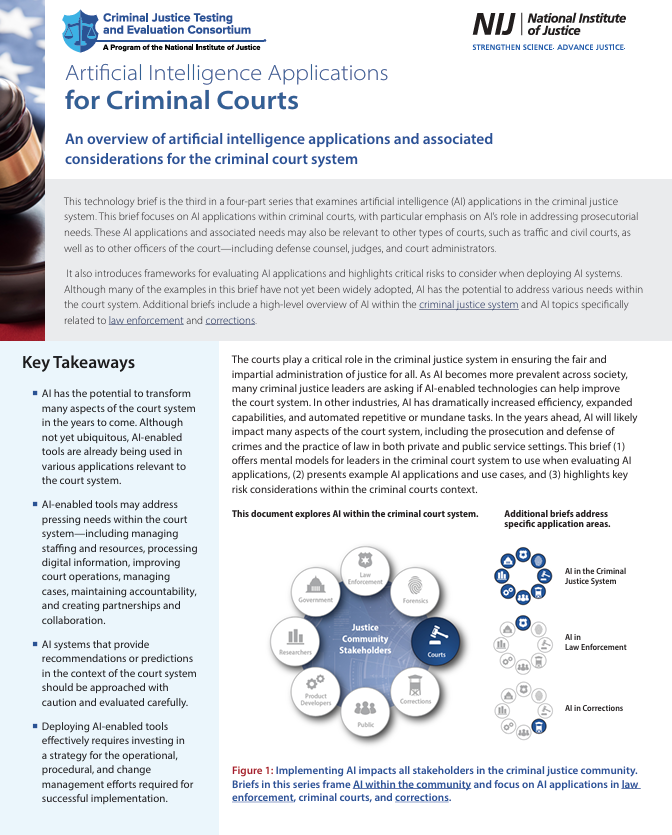
Artificial Intelligence Applications for Criminal Courts.  An overview of artificial intelligence applications and associated considerations for the criminal court system 

By Redden, J., Banks, D.,   

Key Takeaways ¡ AI has the potential to transform many aspects of the court system in the years to come. Although not yet ubiquitous, AI-enabled tools are already being used in various applications relevant to the court system. ¡ AI-enabled tools may address pressing needs within the court system—including managing staffing and resources, processing digital information, improving court operations, managing cases, maintaining accountability, and creating partnerships and collaboration. ¡ AI systems that provide recommendations or predictions in the context of the court system should be approached with caution and evaluated carefully. ¡ Deploying AI-enabled tools effectively requires investing in a strategy for the operational, procedural, and change management efforts required for successful implementation. This technology brief is the third in a four-part series that examines artificial intelligence (AI) applications in the criminal justice system. This brief focuses on AI applications within criminal courts, with particular emphasis on AI’s role in addressing prosecutorial needs. These AI applications and associated needs may also be relevant to other types of courts, such as traffic and civil courts, as well as to other officers of the court—including defense counsel, judges, and court administrators. It also introduces frameworks for evaluating AI applications and highlights critical risks to consider when deploying AI systems. Although many of the examples in this brief have not yet been widely adopted, AI has the potential to address various needs within the court system. Additional briefs include a high-level overview of AI within the criminal justice system and AI topics specifically related to law enforcement and corrections

  The courts play a critical role in the criminal justice system in ensuring the fair and impartial administration of justice for all. As AI becomes more prevalent across society, many criminal justice leaders are asking if AI-enabled technologies can help improve the court system. In other industries, AI has dramatically increased efficiency, expanded capabilities, and automated repetitive or mundane tasks. In the years ahead, AI will likely impact many aspects of the court system, including the prosecution and defense of crimes and the practice of law in both private and public service settings. This brief (1) offers mental models for leaders in the criminal court system to use when evaluating AI applications, (2) presents example AI applications and use cases, and (3) highlights key risk considerations within the criminal courts context.

Criminal Justice Testing (and Evaluation Consortium . 2020. 11p.

The Police’s Work In Connection With Profiling and Equal treatment.

With a focus on discriminatory and ethnic profiling.

By Anna Öström, Lars Lewenhagen, Emma Patel and Sara Jonsson

This is a complex subject to study. To address the questions in the study, Brå has therefore used several different types of data and methodological approaches, both qualitative and quantitative. One important contribution is the large number of interviews and conversations held with managers at different levels within the organisation, and with police officers on patrol duty. Significant parts of the report are thus based on what employees at both strategic and operational levels deem to be important in the work in connection with profiling and equal treatment.

The study has a particular focus on discriminatory ethnic profiling, which involves the police relying solely or primarily on an individual’s ethnic origin when assessing who they check or suspect of crimes. The profiling work examined in this study mainly relates to suspected drug offences. This is a typical search and intervention offence in which the police have a relatively wide scope for action

English summary of Brå report 2023:12

Police Use Of Deadly Force In New York State: A Report To Governor Mario M. Cuomo

Richard J. Condon Commissioner Division Of Criminal Justice Services

Police Use of Deadly Force in New York State: A Report to Governor Mario M. Cuomo (1985) offers one of the earliest systematic examinations of how and why lethal force was deployed by law enforcement across the state during a period of intense public scrutiny. Commissioned at a time when debates over police accountability, training standards, and civil rights were gaining national prominence, the report evaluates legal frameworks, departmental policies, and patterns of police–citizen encounters to assess the necessity and proportionality of deadly force incidents. Drawing on case reviews, agency surveys, and statistical analyses, it seeks to identify structural weaknesses and propose reforms aimed at reducing unnecessary violence and strengthening public trust.

Viewed from today’s perspective, the report stands as an important precursor to contemporary discussions about policing and the appropriate limits of state power. In the decades since its publication, nationwide movements such as Black Lives Matter, advances in data transparency, increased availability of video evidence, and evolving constitutional standards have intensified scrutiny of deadly force practices. Modern debates continue to revolve around issues the 1985 report identified early on: the need for clear and consistent use‑of‑force policies, robust training in de‑escalation, improved data collection, and stronger mechanisms of accountability. As current policymakers and communities grapple with how to balance public safety, civil liberties, and equitable treatment, this historical report offers valuable insight into the longstanding nature of these challenges and the enduring need for thoughtful, evidence‑based reform.

If you'd like, I can also turn this into a full foreword, integrate it into a larger document, or tailor the tone for academic, policy, or public audiences.

NY. Division Of Criminal Justice Services. 1985. p.273.

The Impacts of and Response to Drug Use on Transit

By Emily Grisé; Alexander Cooke; David Cooper; Zane Oueja; Willem Klumpenhouwer; Amy HobbsOn transit systems across the United States, rising rates of drug use along with deteriorating safety conditions for customers and staff have become increasingly pressing and complex issues for transit agencies to solve. Many challenges surround agencies’ responses to drug use on transit, such as inconsistent data collection and the low uptake of support services.

TCRP Synthesis 179: The Impacts of and Response to Drug Use on Transit, from TRB's Transit Cooperative Research Program, documents and synthesizes the current practices of transit agencies in addressing the consumption and distribution of illegal drugs on their systems, as well as the resulting effects on customer and staff safety and security.

National Academies of Sciences, Engineering, and Medicine; Transportation Research Board; Transit Cooperative Research Program. 2025. p91.

School Active Shooter Drills: Mitigating Risks to Mental, Emotional, and Behavioral Health

By Richard J. Bonnie and Rebekah Hutton, Editors

Active shooter drills have become a standard practice in nearly all U.S. schools, yet their potential impact on students and educators has received limited attention. School Active Shooter Drills: Mitigating Risks to Mental, Emotional, and Behavioral Health explores how these drills are conducted and how to reduce potential harm while supporting school safety. Developed by a committee of experts in education, school safety, public health, pediatrics, child and adolescent development, psychiatry, psychology, neuroscience, public policy, and criminology, this report provides an in-depth review of current practices and offers guidance. The report provides suggestions for implementing practices that promote prevention and preparedness while supporting well-being, and foster learning environments where students and staff feel safe, capable, and supported.

School Active Shooter Drills finds that while drills aim to enhance preparedness, they often vary dramatically in intensity and design, from simple safety walk-throughs to unannounced, high-simulation events. Such inconsistencies can heighten anxiety, distress, and confusion, especially among vulnerable student populations. The report underscores that developmentally appropriate, trauma-informed practices are essential, and drills involving realistic simulations or deception should be avoided entirely.

School Active Shooter Drills outlines actionable recommendations for state and local policymakers, school leaders, researchers, and federal agencies, including banning harmful practices, supporting staff training, ensuring equitable inclusion, and increasing access to mental health resources. This report also calls for national guidance and sustained research to strengthen the evidence base and help schools foster safe, inclusive, and supportive learning environments so that schools not only prepare students and staff for emergencies but also protect their mental, emotional, and behavioral well-being.

National Academies of Sciences, Engineering, and Medicine; Division of Behavioral and Social Sciences and Education; Board on Children, Youth, and Families; Committee on Law and Justice; Committee on the Impact of Active Shooter Drills on Student Health and Wellbeing. 2025. p253.

Emotional Labour and Public Protection Policing: The experience and impact of emotional labour on Police Scotland public protection police officers

By Maureen Taylor and Lesley McMillan

There is a significant body of research that illustrates the emotional demands of policing and the physical and psychological toll this takes on officers and staff. However, the management of these demands, particularly in more specialist roles such as those in public protection policing where the demand may be higher, are less well understood. This research explores the experiences of public protection police officers in Police Scotland through a lens of emotional labour The aims of this research were to: • Critically review the literature around the emotional impacts of policing on officers and the role of emotional labour in policing; • Establish the experience of, and impact on, officers involved in the investigation of public protection cases; assess how police officers in roles where emotional labour may be heightened, manage their emotions and the strategies they develop to do so; and • Examine how emotions and emotion management are mediated by organisational, departmental and role values, demands and culture In doing so, the research sought to answer the following research questions: 1. What is the emotional experience of police officers in public protection roles and what impact does it have on them? 2. What emotional labour do officers undertake, and what strategies of emotion management do officers employ? 3. To what extent does the theory of emotional labour explain the experiences of public protection police officers? 4. What role does the prevailing organisational culture play in the emotion management strategies of public protection policing? This report presents the findings from this research and a potential framework for understanding the factors that contribute to resilience within the context of public protection policing

Edinburgh: Scottish Institut Institute for Policing Research, 2025. 32p.

THE KGB: THE EYES OF RUSSIA

Harry Rositzke

THE KGB: THE EYES OF RUSSIA delves deep into the history and operations of one of the most notorious intelligence agencies in the world. Through meticulous research and firsthand accounts, this book uncovers the secretive world of the KGB, revealing its inner workings, espionage tactics, and impact on global affairs. A gripping and informative read for anyone interested in Cold War history and the shadowy realm of international espionage.

DOUBLEDAY & COMPANY, INC. GARDEN CITY, NEW YORK. 1981. 292p.

FEMINIST FREIKORPS: The British Voluntary Women Police, 1914-1940

MAY CONTAIN MARKUP

R. M. DOUGLAS

"FEMINIST FREIKORPS: The British Voluntary Women Police, 1914-1940" delves into the history of the women who volunteered in law enforcement during a crucial period. Exploring their motivations, struggles, and impact, this book sheds light on a lesser-known aspect of feminism and policing in the early 20th century. Through meticulous research and compelling narratives, readers are invited to discover the untold stories of these pioneering women who challenged societal norms and paved the way for future generations in law enforcement."

London. Praeger. 1999. 188p.

Fontana 16: The Tsar's Secret Police

MAY CONTAIN MARKUP

By CHARLES A. RUUD and SERGEI A. STEPANOV

From Introduction: Fontanka 16 takes a fresh look at the feared Russian tsarist secret police, the Okhranka, during the period of the imperial regime leading up to the Revolution of r917. It is a fascinating account of the development of a secret police organization that was deeply rooted in tsarist Russia but provided a model for Soviet police organizations.

McGill-Queen's University Press Montreal &e Kingston • London • Ithaca. 1999. 409p.