
By Citizens for Juvenile Justice
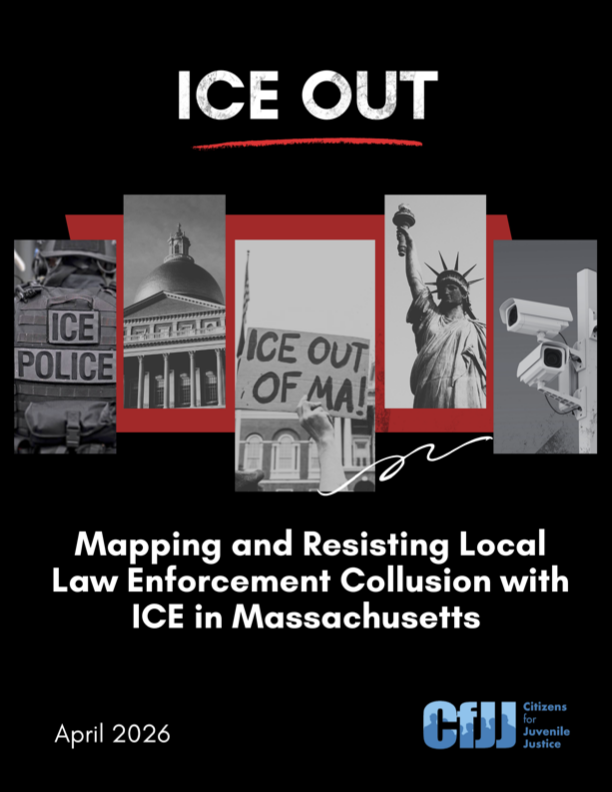
This report by Citizens for Juvenile Justice (CfJJ) investigates the level of information sharing and collusion between police and courthouse staff with federal Immigration and Customs Enforcement (ICE) in Massachusetts. CfJJ filed more than 90 public records requests in the state and found that police and courthouse staff regularly share information with ICE, effectively becoming “force multipliers” for ICE. This report details specific ways police and courthouse staff are cooperating with ICE and cautions that this
practice undermines public trust, legitimacy, and democratic accountability. This report offers key policy and narrative recommendations to create guardrails around information sharing practices with ICE, including a proposed ban on transmitting youth fingerprints to the FBI (which are then shared with ICE).
By U.S. Government Accountability Office; Rebecca S. Gambler
Customs and Border Protection can grant parole to noncitizens, giving them temporary permission to stay in the United States. CBP granted roughly 2.4 million paroles at the southwest border from late 2018
through May 2025. Once parole is granted, Immigration and Customs Enforcement is supposed to monitor them to make sure they follow release requirements, like attending immigration court proceedings. But ICE doesn’t readily have information to identify people who were paroled at the southwest border and doesn’t monitor them as required.
By Graeme R. Newman and Claude AI.
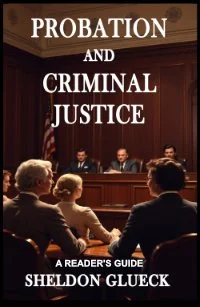
LIs probation mercy, or is it a serious way of changing lives?
In 1933 probation was in use in every state, and no one could say what it accomplished. Probation and Criminal Justice, edited by Sheldon Glueck of the Harvard Law School, brought together judges, social workers, a psychiatrist, a criminologist, the builder of the new federal system, and four foreign authorities to ask how it should be done. Their answer: probation succeeds or fails according to the people who run it, and a community that wants its benefits must pay for good officers and be honest about how little it knows.
This Reader's Guide explains the arguments in plain language, supplies the history and law, and shows what has changed since. Inside are a chapter map, a worked example that turns the book's own numbers into caseloads and costs, common misreadings, and discussion questions.
A companion to the original, for students, practitioners and curious readers. Read online the original book.
Read-Me.Org Inc. New York-Philadelphia-Australia. 2026. p.64.
Raymond B. Fosdick. Designed and Edited with an Introduction by Graeme R. Newman and Claude.
A landmark classic in the history of policing, public administration, and criminal justice reform.
When Raymond B. Fosdick published Police Administration in 1921 as part of the renowned Cleveland Foundation Survey of Criminal Justice, he delivered one of the most penetrating examinations ever undertaken of an American police department. More than a century later, his analysis remains remarkably relevant.
Confronted by rising crime and concerns about police effectiveness, Cleveland commissioned an independent investigation of its law enforcement system. Fosdick responded with a rigorous, evidence-based study that compared American policing with the more professionalized police systems of Europe. His conclusions were blunt: crime was not simply the product of social conditions, but also of outdated organization, weak leadership, inadequate training, political interference, and a failure to adapt policing to the demands of the modern city.
This groundbreaking work examines every major aspect of police administration, including:
Police organization and leadership
Recruitment, selection, and training of officers
Promotion and discipline systems
Patrol operations and crime prevention
Detective bureau management
Personnel administration and record keeping
Accountability, professionalism, and public service
Fosdick's recommendations anticipated many reforms that would shape twentieth-century policing: merit-based advancement, professional training academies, modern management practices, specialized investigative units, and the use of data and performance measurement in public administration.
This new edition includes a substantial introduction by criminologist Graeme R. Newman, placing Fosdick's work in historical context and exploring its continuing significance in contemporary debates over police reform, professionalism, accountability, and governance.
More than a historical document, Police Administration is an essential source for understanding the origins of modern policing and the enduring challenges of managing police organizations in democratic societies.
Ideal for readers interested in:
Police history
Criminal justice
Criminology
Public administration
American legal history
Progressive Era reform
Law enforcement studies
Government and public policy
A century after its publication, Fosdick's classic reminds us that effective policing depends not only on laws and officers, but on leadership, organization, and the intelligent administration of justice.
Read-Me.Org Inc. New York-Philadelphia-Australia. 2026. p.104.
By Graeme R. Newman and Claude AI.
A landmark investigation into how America's criminal justice system actually worked, and why it often failed.
In 1921, a series of scandals and rising public concern about crime prompted the Cleveland Foundation to commission an unprecedented examination of the administration of justice in Cleveland, Ohio. Directed by two of the most influential legal minds of the twentieth century, Roscoe Pound and Felix Frankfurter, the resulting study became one of the most important reform documents in American criminal justice history.
Originally published in 1922, Criminal Justice in Cleveland was the first comprehensive effort to analyze an entire urban justice system as an interconnected whole. Drawing on detailed investigations of police, prosecutors, courts, corrections, probation, legal education, medical science, and the press, the survey revealed a system plagued by inefficiency, poor record-keeping, fragmented authority, political influence, and a startling lack of accountability.
This modernized edition, edited and introduced by Graeme R. Newman, makes this classic study accessible to today's readers while preserving its most important findings, statistics, and arguments. Readers will discover:
• How police departments operated in major American cities during the early twentieth century
• Why so many criminal cases disappeared before reaching trial
• The hidden influence of politics, public opinion, and newspapers on justice
• Early debates over probation, parole, rehabilitation, and sentencing reform
• The origins of evidence-based criminal justice research
• Reform proposals that continue to resonate more than a century later
Written during the Progressive Era but strikingly relevant today, Criminal Justice in Cleveland demonstrates that many of the challenges confronting modern police, prosecutors, courts, and correctional institutions are far older than most people realize. Its authors recognized that successful reform requires more than replacing individuals; it requires understanding how institutions work, how they fail, and how they can be improved.
Essential reading for students of criminology, criminal justice professionals, legal scholars, historians, policymakers, and anyone interested in the evolution of the American justice system.
More than a century after its publication, this pioneering study remains one of the most insightful examinations ever written of crime, law, and urban justice in America
Read-Me.Org Inc. New York-Philadelphia-Australia. 2026. p.90.
Criminal Justice in Cleveland was one of the most influential studies of the American criminal justice system produced during the Progressive Era. Published by The Cleveland Foundation, the volume brought together leading legal scholars, reformers, and public officials, including Raymond Fosdick, Roscoe Pound, Felix Frankfurter, and others, to examine the administration of justice in Cleveland, Ohio. The work was directed and edited by Roscoe Pound and Felix Frankfurter.
Rather than focusing solely on crime, the study investigated the entire machinery of justice, including police, prosecutors, courts, probation services, corrections, and related public institutions. The authors sought to determine how effectively these agencies worked together, where delays and inefficiencies occurred, and what reforms were needed to create a more fair, efficient, and accountable system of justice.
The survey became a landmark in empirical legal research because it relied on systematic investigation rather than anecdote or political opinion. Its findings helped shape twentieth-century reforms in policing, court administration, criminal procedure, and corrections, making it essential reading for historians, criminologists, legal scholars, and students of public administration.
Today, Criminal Justice in Cleveland remains a classic study of urban criminal justice and a foundational text in the movement to evaluate government institutions through rigorous research and evidence-based reform.
By Raymond B. Fosdick
European Police Systems
Raymond B. Fosdick (1915)
Published in 1915, European Police Systems is a pioneering comparative study of law enforcement in the major nations of Europe during the early twentieth century. Based on extensive travel and firsthand investigation, Raymond B. Fosdick examined how police organizations in England, France, Germany, Austria-Hungary, Italy, Belgium, and the Netherlands were structured, governed, and employed to maintain public order.
Fosdick explores the fundamental differences between the British tradition of local policing and the more centralized police systems of Continental Europe. He analyzes police recruitment, training, discipline, detective work, administrative organization, and the relationship between police authority and civil liberty. Drawing upon interviews with police officials and direct observation of police operations, he provides a detailed portrait of the institutions responsible for public safety in some of Europe's most important cities.
Written on the eve of the First World War, the book captures a European society in transition while addressing questions that remain relevant today: How much power should the police possess? What forms of accountability are most effective? How can governments maintain order while preserving the freedoms of citizens?
Combining careful scholarship with vivid observation, European Police Systems became a landmark work in the study of policing and public administration. More than a historical record, it offers valuable insight into the origins of modern police institutions and the enduring challenges of balancing authority, efficiency, and democratic governance.
New York. Century. 1915 . p.410.
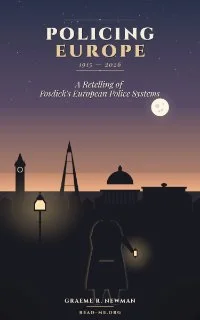
by Graeme Newman (Author)
How did Europe police its cities before the First World War, and what can those systems teach us today?
In Policing Europe: A Retelling of Fosdick's Classic, criminologist and policing scholar Graeme R. Newman presents a concise, modernized edition of Raymond B. Fosdick's landmark 1915 study of European policing. Based on nearly two years of firsthand research across England, Scotland, Germany, Austria-Hungary, France, Italy, Holland, and Belgium, Fosdick's original work remains one of the most comprehensive comparative examinations of police systems ever written. [Policing_Europe Word]
Traveling through the great capitals and industrial cities of Europe on the eve of World War I, Fosdick interviewed commissioners, detectives, patrol officers, judges, and government officials to answer questions that remain deeply relevant today:
Should policing be controlled locally or by the national government?
How much authority should police possess?
What creates public trust in law enforcement?
How should police leaders be selected and trained?
What prevents corruption and abuse of power?
Which organizational structures produce effective and accountable policing?
This edition preserves Fosdick's remarkable firsthand observations while updating the language for contemporary readers. It explores the contrasting traditions of British "policing by consent" and Continental state-centered policing, compares police organizations in London, Paris, Berlin, Vienna, Budapest, and Rome, and examines detective methods, recruitment, training, leadership, forensic science, and police integrity. [Policing_Europe Word]
More than a historical document, Policing Europe offers a fascinating window into the origins of many modern debates about public safety, civil liberties, professionalization, surveillance, police accountability, and the relationship between citizens and the state. Written just before a world war transformed Europe forever, it captures a vanished world while illuminating issues that continue to shape policing in the twenty-first century. [Policing_Europe Word]
Ideal for:
Students of criminology and criminal justice
Police professionals and policymakers
Historians of law, government, and public administration
Readers interested in comparative policing and European history
Anyone seeking a deeper understanding of how modern police systems evolved
A century after its original publication, Fosdick's pioneering study remains essential reading for anyone interested in the enduring challenge of balancing order, authority, liberty, and public trust. [Policing_Europe Word]
Read-Me.Org Inc. New York-Philadelphia-Australia. 2026. p172.
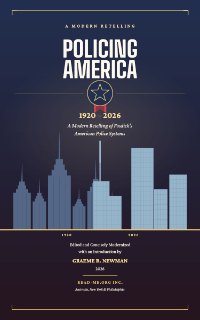
by Graeme Newman (Author)
In 1920, an investigator toured seventy-two American cities and concluded that the police in every one of them were failing — not from a lack of good men, but from a century of political interference, organizational chaos, and a refusal to let any competent leader keep the job long enough to matter. A hundred years later, the argument still lands.
Raymond B. Fosdick's American Police Systems was one of the most ambitious studies of policing ever produced in the Progressive Era — a firsthand, city-by-city comparison of American departments against the professional, politically insulated forces of London, Paris, and Berlin. Fosdick found American policing outmatched at nearly every turn: murder rates that dwarfed Europe's, police chiefs who rotated out with every election, civil-service rules that protected the incompetent as readily as the honest, and city after city that tore up its own police governance and started over, never once letting a good structure — or a good leader — mature.
This edition brings that argument back, rewritten for a modern reader.
This is not a facsimile reprint. Every chapter has been surveyed against Fosdick's original text — including its extensive footnotes — and rewritten fresh, in modernized prose, at roughly a fifth of the original length. The topic structure, the argument, and the great majority of Fosdick's specific facts, cases, and comparisons survive intact; the discursive, footnote-heavy academic style of 1920 does not. Readers get the substance of a landmark study without the apparatus of a century-old monograph.
A substantial new introduction places Fosdick's argument in conversation with policing today: the persistence of American police fragmentation across eighteen thousand separate agencies, the technology Fosdick could only gesture toward (national fingerprint databases, predictive policing, body-worn cameras), the surprising afterlife of "heterogeneity" as European cities have grown as demographically diverse as the American ones Fosdick once contrasted them against, the diversity of police workforces themselves in the U.S. and U.K. today, and where Fosdick's own instincts do — and don't — anticipate contemporary arguments over the scope and funding of policing.
What's inside:
- All eleven chapters of Fosdick's original argument, modernized and condensed
- A new, extensive introduction connecting the book to policing in 2026
- The original seven city police-organization charts, reproduced as images
- Modern 5x8 trade formatting with a full table of contents
Policing America, 1920-2026 is for readers of policing history, criminal justice students, and anyone following today's debates over police reform who wants to see how far back — and how little changed — those debates actually go.
A Read-Me.Org Modern Adaptation. Modernized and edited, with an introduction, by Graeme R. Newman. Based on the 1920 original by Raymond B. Fosdick.
Read-Me.Org Inc. New York-Philadelphia-Australia. 2026. p111.
By Raymond B. Fosdick
American Police Systems (1920) by Raymond B. Fosdick is a landmark study of law enforcement in the United States during the early twentieth century. Drawing on extensive research and firsthand observation, Fosdick examines the organization, responsibilities, and challenges of American police departments, comparing them with policing models in Europe. The book explores issues such as crime prevention, public order, police administration, and the evolving relationship between law enforcement and the communities they serve.
A valuable resource for historians, criminologists, and students of public administration, American Police Systems offers a fascinating snapshot of policing at a pivotal moment in American history. Its insights into reform, professionalism, and accountability remain relevant to contemporary discussions about law enforcement and public policy.
Read-Me.Org Inc. New York-Philadelphia-Australia. 2026. p.429.
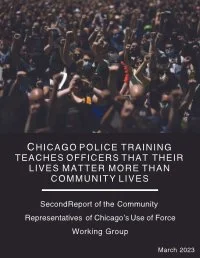
Public Report on Chicago Police Training on the Use of Force
From the introduction; This Report from community representatives of Chicago’s Use of Force Community Working Group offers our feedback on the Chicago Police Department’s (CPD) training on de-escalation and the use of force. The Working Group was first convened in the summer of 2020 in response to the requirements of the federal civil rights Consent Decree designed to bring an end to the CPD’s pattern of police brutality and racial discrimination. Over the course of two years, the Working Group persuaded the CPD to make transformative changes to its policies governing police use of force. 1 Last fall, we issued a Public Report on CPD’s new policies, including areas still in need of change. 2 The new policies, if implemented and enforced on the ground, have the potential to dramatically reduce unnecessary CPD violence and improve public safety.
Second Report of the Community Representatives of Chicago’s Use of Force Working Group. 2023March 2023. 24p.
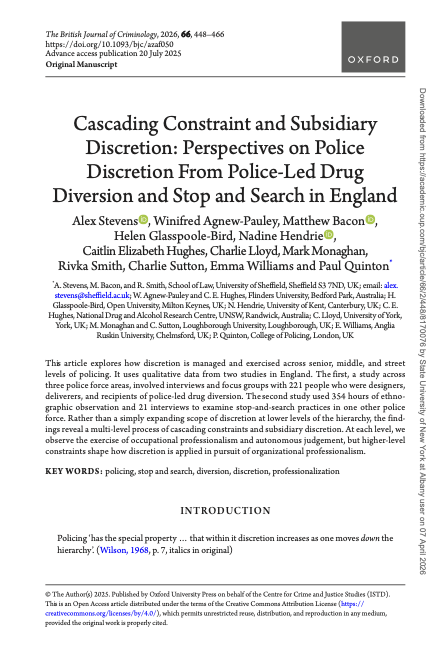
By : Lex Stevens, Winifred Agnew-Pauley, Matthew Bacon, Helen Glasspoole-Bird, Nadine Hendrie, Caitlin Elizabeth Hughes, Charlie Lloyd, Mark Monaghan, Rivka Smith, Charlie Sutton
This article explores how discretion is managed and exercised across senior, middle, and street levels of policing. It uses qualitative data from two studies in England. The first, a study across three police force areas, involved interviews and focus groups with 221 people who were designers, deliverers, and recipients of police-led drug diversion. The second study used 354 hours of ethnographic observation and 21 interviews to examine stop-and-search practices in one other police force. Rather than a simply expanding scope of discretion at lower levels of the hierarchy, the findings reveal a multi-level process of cascading constraints and subsidiary discretion. At each level, we observe the exercise of occupational professionalism and autonomous judgement, but higher-level constraints shape how discretion is applied in pursuit of organizational professionalism.
By Murat C. Mungan. J. Shahar Dillbary
We consider a framework which brings together losses arising from rent-dissipation and the workhorse model of law enforcement. Governmental actors engage in a contest to share the proceeds from the enforcement of the law through monetary fines, which leads to rent-dissipation. This causes monetary sanctions to be costly, rendering the model used for studying nonmonetary sanctions a better fit for their analysis. The effect of rent-dissipation on optimal sanctions is directly related to the sanction elasticity of offenses measured at the classic optimum (i.e., where the expected sanction equals the direct harm from the offense). When offenses are inelastic, the optimal sanction is smaller than the classic optimum and it is decreasing in the degree of rent-dissipation; and a legislator who does not fully internalize contest costs chooses an overly-punitive sanction which is smaller than the classic optimum. The opposite results are obtained when offenses are elastic. We discuss implications and extensions.
By Daniel C.K. Chow
Multinational companies (MNCs) with valuable trademarks in China seek criminal enforcement against counterfeiting because other available avenues of relief, such as administrative and judicial remedies, have proven to be ineffective. While MNCs prefer enforcement through China’s Police, the Public Security Bureau (PSB), many MNCs are unaware of the significant hidden dangers of using the PSB.Most MNCs will delegate enforcement of trademark rights to their Chinese subsidiaries. These subsidiaries are known to make illegal payments to the PSB that may violate the laws of the PRC as well as the United States Foreign Corrupt Practices Act (FCPA). These acts expose MNCs to draconian penalties under PRC law and the FCPA. MNCs can be unaware of these illegal practices because many MNCs organize their business structures and intellectual property (IP) management strategies in ways that shield MNCs from reviewing some of the on-the-ground actions by their Chinese subsidiaries. This Article exposes these risks, explains how some of these risks arise, and makes suggestions on how MNCs can structure their business organizations and IP management structures in China to eliminate or mitigate these risks. *
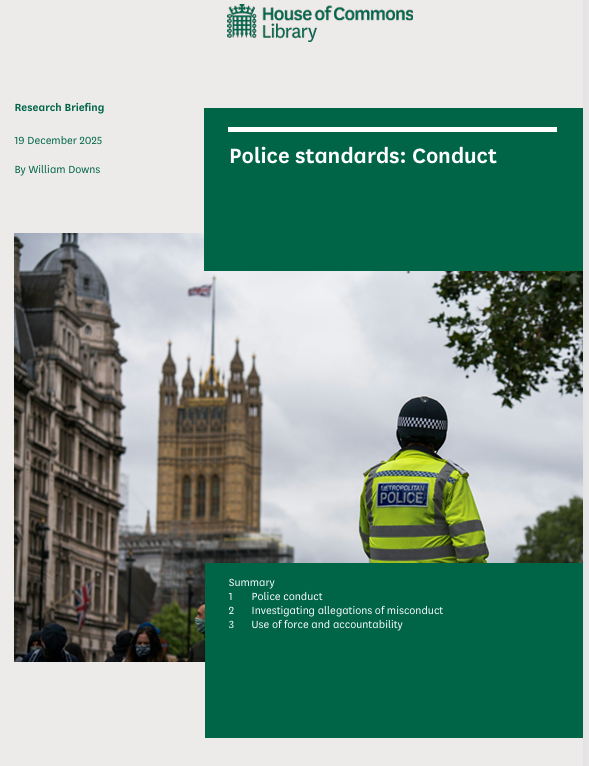
By William Downs
Who handles complaints against the police?
A member of the public can make a complaint if they are dissatisfied with the police.
There are three crucial actors in the police complaints system:
Professional standards departments (PSDs) are specialist teams based within every police force in England and Wales. They are responsible for handling most complaints for their force.
The Independent Office for Police Conduct (IOPC) is an independent body that oversees the police complaints system. It also conducts independent investigations into some of the most serious police complaints and conduct matters.
Local policing bodies (either the police and crime commissioner or the deputy mayor for policing and crime, depending on the area) are responsible for monitoring their force’s complaint handling and conducting some complaint reviews.
By Cornelius Friesendorf
For post-conflict stabilisation and peacebuilding efforts to have a chance of success, security gaps need to be closed. Domestic law enforcement agencies tend to be too weak or unreliable after war to enforce the law and fight serious crime. As a consequence, operations against organised crime, the arrest of suspected war criminals and the protection of minorities depend on international intervention forces. Much attention has been paid to domestic police reform and the problems of deploying international civilian police. This book examines the under-explored role of international military missions in post-conflict law enforcement, with a focus on serious crime. The military is under pressure to fill security gaps. Yet military involvement in crime-fighting is problematic practically (soldiers are generally not trained and equipped for it), politically (crime-fighting is seen as military mission creep) and normatively (it undermines the delineation of military and policing functions). Military support of law enforcement poses a major dilemma in peace operations. Decision-makers continue to struggle with this dilemma in an ad-hoc fashion, while scholars have so far provided few empirical accounts. This book focuses on post-war Bosnia-Herzegovina (BiH) and Kosovo. It argues that the pros of military involvement in law enforcement outweigh the cons, given the continuing lack of strong police forces, the criminalised nature of contemporary wars and the negative influence of spoilers onstabilisation and peacebuilding efforts. Military support of the fight against serious crime is not sufficient for these efforts to succeed, but it is necessary. This book has three objectives. It describes the role of NATO and EU military missions in law enforcement in BiH and Kosovo from the 1990s through early 2009, thus filling an empirical knowledge gap. By formulating a strategy for military involvement in law enforcement, the book also makes a normative contribution to the debate on peace operations. Drawing on, among other sources, interviews in these two ‘international protectorates’, the book shows that military support of the fight against serious crime has lacked effectiveness, efficiency and legitimacy, examples of success notwithstanding. Third, the book adds conceptual value to the debate on peace operations, by drawing on security governance, Security Sector Reform and Security Sector Governance. These concepts help to understand the military role in post-conflict law enforcement and to guide improved efforts.
Geneva: Geneva Centre for the Democratic Control of Armed Forces (DCAF) , 2010. 207p.