Open Access Publisher and Free Library
HUMAN RIGHTS.jpeg

HUMAN RIGHTS

Human Rights-Migration-Trafficking-Slavery-History-Memoirs-Philosophy

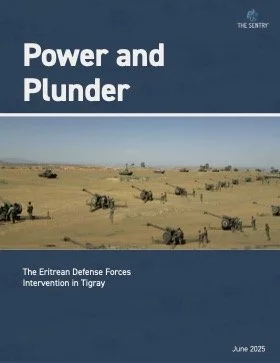
Power and Plunder: The Eritrean Defense Forces Intervention in Tigray

By The Sentry

In November 2018, the United Nations lifted sanctions on Eritrea, including a two-way arms embargo banning both the import and export of arms, after a successful campaign by Eritrea’s longtime rival, Ethiopia. As Eritrean President Isaias Afwerki and Ethiopian Prime Minister Abiy Ahmed Ali began to reestablish ties, having signed a formal peace agreement in September 2018, hope was high that this reset of regional relations would provide long-term security. That hope quickly faded as increasingly secret talks resulted in the military encirclement of Ethiopia’s Tigray region.

In the absence of the UN’s two-way arms embargo, the Eritrean Defense Forces (EDF) reequipped and rearmed, while its senior officers conspired with the newly configured Ethiopian security apparatus to launch the Tigray War in late 2020. The EDF played a prominent and highly problematic role in that conflict, committing atrocities in a campaign of collective punishment against the people of Tigray, at great human cost.

The Tigray War resulted in a humanitarian crisis of immense proportions. War crimes were perpetrated by all parties to the conflict, but the nature of atrocities and war profiteering carried out by the EDF was unmatched in scale and premeditation. The EDF engaged in massacres, widespread sexual violence, and systematic looting, including of Tigrayan factory machinery, medical supplies and equipment, and cultural antiquities.

Since the signing of the 2022 Pretoria Agreement that marked the end of the Tigray War, the EDF has continued to occupy territory within Ethiopia. Eritrean military commanders and their agents within Ethiopia continue to profit from a conflict economy, including through human trafficking, kidnapping, and illicit gold mining.

In the meantime, Eritrean President Isaias Afwerki has emerged as the clear winner of the new status quo, as Ethiopia’s fragile federal coalition continues to struggle with widespread disorder. With Russia emerging as a key military ally in the post-embargo landscape, the EDF now has few constraints on its continued rearmament. For Eritrea’s leadership, the new state of “no war, no peace” is proving advantageous.

Key recommendations

As a matter of urgent conflict prevention, the United States, European Union, United Kingdom, and other like-minded jurisdictions need to send a clear message to the Ethiopian government, the Eritrean government, the Tigrayan People’s Liberation Front (TPLF), and the Tigray Interim Administration (TIA) that they will face an escalated international response and sanctions if there is a resumption of conflict.

The US, the EU, and the UK should consider designating Eritrean Defense Forces Brigadier General Eyob Fessehaye (aka Halibay), Brig. Gen. Simon Oqbu (aka Riesi Mirak), and Maj. Gen. Romadan Osman Awliya for their responsibility for human rights violations in Tigray.

The UN Security Council should determine that Ethiopia-Eritrea border issues—including unimplemented components of the November 2, 2022, Pretoria peace agreement—constitute a threat to international peace and security, and it should thus establish a panel of enquiry with a Chapter VII mandate to monitor and report on the situat

Washington, DC: The Sentry, 2025. 45p.
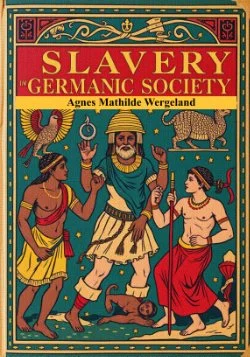
Slavery in Germanic Society During The Middle Ages

By Agnes Mathilde Wergeland (Author), Colin Heston (Introduction)

Slavery in Germanic Society sets out to trace the evolution of slavery from the late Roman world through the early and high medieval periods. Wergeland’s analysis begins by distinguishing classical slavery—predicated on the total alienation of the enslaved person from kinship, community, and legal personhood—from the systems of servitude that emerged in Germanic societies. As Germanic tribes moved into former Roman territories, they both absorbed and modified existing practices of unfree labor. Captives taken in war, debtors who had fallen into bondage, and the descendants of slaves formed a stratum of society that was neither fully outside nor fully within the emerging frameworks of medieval law.

Wergeland is especially attentive to the role of law codes in shaping and regulating these relationships. The Salic Law, the Lex Saxonum, and other Germanic legal compilations provide glimpses into a world where freedom and unfreedom were not binary categories but existed along a continuum. The distinction between a servus (slave), a colonus (tenant bound to the land), and a liber homo (freeman) was fluid and often contested. Her work suggests that these categories were not only legal but also deeply embedded in cultural ideas about honor, lineage, and the obligations of lordship.

Wergeland’s historiographical legacy is also tied to the broader cultural currents of her time. Writing in the aftermath of the American Civil War and during the height of European colonial expansion, she was acutely aware of slavery’s moral and political resonance. While she does not draw explicit parallels between medieval and modern forms of servitude, her decision to study the topic reflects a world in which questions of liberty, labor, and human rights were urgently contested.
In returning to Slavery in Germanic Society During the Middle Ages today, readers encounter a work that is both a product of its era and strikingly relevant to our own. It invites us to consider how deeply embedded systems of inequality are in the fabric of society, and how they can endure even as their outward forms change. Wergeland’s careful scholarship provides a foundation for ongoing conversations about freedom, coercion, and the ways in which human societies organize power and labor.
This edition reintroduces Wergeland’s study to a new generation of readers at a moment when the legacies of slavery and unfreedom are once again at the center of global debates. It offers not only an invaluable historical resource but also a reminder of the intellectual courage of a scholar who, against the odds, claimed her place in the academy and in the long conversation about justice and humanity.

Read-Me.Org Inc. New York-Philadelphia-Australia. 2025. 93p.

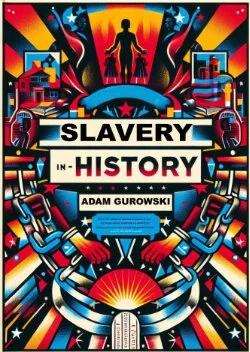
Slavery in History

By Adam Gurowski (Author), Colin Heston (Preface)

Adam Gurowski’s Slavery in History is a sweeping and impassioned historical treatise that challenges the reader to reconsider the institution of slavery not as a fixed or inevitable component of human civilization, but as a corrosive anomaly that has repeatedly undermined the moral and structural integrity of societies throughout history. Written in the mid-19th century, a time when the question of slavery was at the forefront of political and ethical discourse—particularly in the United States—Gurowski’s work stands as both a scholarly inquiry and a moral indictment. His approach is not merely descriptive; it is analytical and polemical, seeking to dismantle the notion that slavery is a natural or historically justified institution.
From the outset, Gurowski frames slavery as a “general disease” rather than a social norm, arguing that its presence in any civilization is symptomatic of deeper political and moral decay. He rejects the deterministic view that slavery is a universal or necessary stage in societal development, instead positing that it is an aberration that has consistently led to the decline of the cultures that embraced it. This thesis is developed through a methodical examination of a wide array of civilizations—from the Egyptians and Phoenicians to the Greeks, Romans, and beyond. In each case, Gurowski explores how slavery was integrated into the social fabric, how it was justified or resisted, and ultimately, how it contributed to the weakening or collapse of those societies.
Adam Gurowski’s view on modern slavery, particularly as it existed in the 19th century, is deeply critical and morally charged. In Slavery in History, he argues that for the first time in human civilization, slavery had been elevated into a comprehensive ideological system—a “religious, social, and political creed” . This modern form of slavery, especially as practiced in the United States, was not merely a continuation of ancient customs but a deliberate and systemic institution, defended by theology, law, and public discourse. He is especially scathing in his critique of how slavery in the modern era had been rationalized and sanctified by political leaders, religious figures, and intellectuals. He describes this as a “new faith” with its own “temples,” “altars,” and “fanatical devotees,” suggesting that slavery had become a kind of state religion in parts of the American Republic. This metaphor underscores his belief that modern slavery was not just a social or economic system but a deeply entrenched ideology that corrupted every aspect of public life.
Finally, his introduction to Slavery in History serves as both a roadmap and a manifesto. It outlines the historical scope of the book—spanning ancient to modern civilizations—and sets the tone for a critical, morally engaged exploration of one of humanity’s oldest and most pernicious institutions. Gurowski’s work is not merely a catalog of historical facts; it is a call to conscience, urging readers to recognize the enduring consequences of slavery and to commit to the principles of justice and equality. In doing so, he positions his book as a vital contribution to the intellectual and ethical debates of his era—debates that, in many ways, continue to resonate today.
Read-Me.Org Inc. New York-Philadelphia-Australia. 2025. 172p.

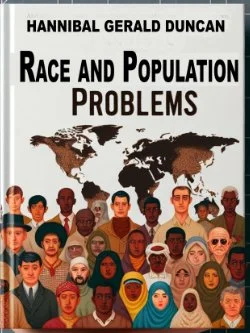
Race And Population Problems

By Hannibal Gerald Duncan (Author), Colin Heston (Preface) Format: Kindle Edition

Race and Population Problems by Hannibal Gerald Duncan is a product of its era—an ambitious, controversial, and often troubling contribution to the early 20th-century debates surrounding race, eugenics, and the sociopolitical implications of demographic change. Published during a time of intense anxiety over immigration, fertility rates, and racial hierarchy, Duncan’s work must be approached with both critical detachment and historical awareness. This preface aims to contextualize his arguments, dissect the theoretical frameworks he employs, and consider the legacy—both intellectual and political—of the ideas he advances.
The book appeared in the interwar period, when Western nations were grappling with the aftermath of World War I, economic uncertainty, and what many perceived as the unraveling of long-standing social and racial orders. In the United States, anxieties about immigration—particularly from Southern and Eastern Europe—converged with pseudo-scientific theories of race and heredity. The eugenics movement, bolstered by the popularity of Darwinian and Mendelian thought, provided an ideological framework for addressing what were seen as "population problems"—namely, the declining birth rates among "Nordic" peoples, the increasing fecundity of supposedly inferior groups, and the racial mixing that challenged white supremacist conceptions of national identity.
Duncan’s work fits squarely within this intellectual climate. It draws from the racial typologies common in early anthropological and sociological literature, and, like many of his contemporaries, he sees population dynamics not merely as matters of biology or demography but as fundamental determinants of national strength, cultural cohesion, and civilizational vitality.
At its core, Race and Population Problems is driven by a deterministic view of race, wherein biological heredity dictates intelligence, morality, productivity, and political capacity. Duncan frequently invokes the "biological law" to argue for the inherent superiority of certain races—usually Northern Europeans—and the degenerative consequences of racial intermixture. His demographic analysis is not neutral; it is laced with prescriptive anxieties about the dilution of white racial stock and the ascendancy of "undesirable" populations.
Modern readers must engage with Duncan’s work not as a valid scientific text but as a document of racial ideology—one that had real-world consequences. Books like Race and Population Problems helped lay the intellectual groundwork for discriminatory immigration laws (such as the Immigration Act of 1924), involuntary sterilization programs, and broader policies of racial exclusion. While Duncan’s tone is often measured, the policies he advocates are extreme and deeply coercive.
His use of "science" is selective and tendentious, relying on cherry-picked data, discredited anthropological categories, and assumptions about heredity and culture that are no longer tenable. The book is less a demographic study than a polemic—albeit a polished and sophisticated one—aimed at preserving white racial dominance.
Despite its overt racism and flawed methodology, Race and Population Problems provides an important window into the ways race, science, and nationalism converged in early 20th-century thought. Understanding Duncan’s arguments helps us trace the genealogy of contemporary racial and anti-immigrant ideologies, many of which still echo his concerns about national identity, cultural dilution, and the supposed threat of demographic change. It also serves as a cautionary tale about the misuse of science for ideological ends..
This edition has been designed, abridged awith an inroduction by renowned novelist and story writer Colin Heston .

Read-Me.Org Inc. New York-Philadelphia-Australia. 2025. 286p.

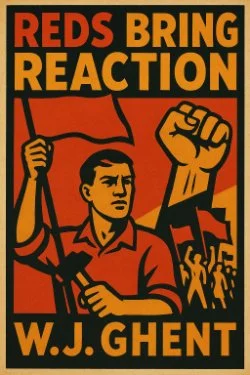
The Reds Bring Reaction

By W. J. Ghent (Author), Colin Heston (Introduction) Format: Kindle Edition

To understand The Reds Bring Reaction, one must begin with the upheavals of the early 20th century. The Bolshevik Revolution of 1917 inspired a wave of leftist movements around the world and deeply alarmed Western governments. In the United States, the postwar period brought labor unrest, anarchist bombings, and heightened fears of Bolshevism. The result was the "First Red Scare" (1919–1920), which saw mass deportations, the Palmer Raids, the suppression of radical speech, and the widespread erosion of civil liberties.
Ghent, a writer long associated with progressive and socialist causes, viewed this climate with alarm. He did not oppose socialism—indeed, he had previously published works such as Our Benevolent Feudalism (1902) and Mass and Class(1904), both critical of capitalist structures—but he believed that the radical fringes of the socialist movement were jeopardizing the very reforms they sought. The Reds Bring Reaction is his intervention, a call for sobriety and responsibility within the left.
In today’s world of polarized politics, social media echo chambers, and the radicalization of both right and left, Ghent's message is strikingly modern. He reminds activists that rage is not a strategy, and that symbolic protest, when disconnected from public sentiment, can be counterproductive. He challenges progressives to think tactically, not just morally.
The Reds Bring Reaction is a powerful, timely meditation on the dangers of political absolutism and the fragility of reform. It is a work of both intellectual depth and moral clarity. Ghent’s warnings, though born of his time, speak across the decades. They caution us that history is not kind to those who mistake destruction for transformation or confuse noise with progress. For those seeking to understand the dialectics of political change—how hope can curdle into fear, how revolution can trigger repression—Ghent offers a vital lesson: the methods of a movement matter as much as its goals. In this, his voice remains as relevant as ever.
This edition has been reformatted, designed, abridged and annotated with an introduction by renowned novelist and story writer Colin Heston.

Read-Me.Org
Power Of Federal Judiciary Over Legislation

Power of Federal Judiciary Over Legislation by J. Hampden Dougherty is a compact but weighty work first published in 1912, offering a vigorous defense of the judiciary’s power to strike down unconstitutional laws. Written during an era of growing skepticism toward centralized authority, Dougherty’s book situates judicial review as an indispensable safeguard built into the American constitutional system. He begins by tracing the intellectual and historical roots of this power, arguing that it was not an accidental byproduct but an intentional creation of the framers. Drawing on the Constitutional Convention debates and the Federalist Papers—particularly Alexander Hamilton’s famous exposition in Federalist No. 78—Dougherty insists that the courts’ ability to declare legislative acts void is central to maintaining the supremacy of the Constitution.
Read today, Dougherty’s work resonates in a world facing renewed tensions between legislatures and courts. The questions he grappled with—how much power unelected judges should have over elected lawmakers, whether the judiciary can check majoritarian excesses without overstepping, and how to reconcile constitutional text with evolving social norms—remain pressing in 2025.
In an age of polarized politics, social media-driven outrage, and legislative gridlock, the themes of Dougherty’s book speak directly to contemporary challenges. His work encourages a sober reflection on whether judicial power is a threat to democratic self-government or an essential defense against its excesses.
More than a historical artifact, Power of Federal Judiciary Over Legislation functions as a mirror for modern constitutional crises. It underscores how the tensions between law and politics, and between judicial restraint and activism, are not new but woven into the fabric of American governance. As debates continue in 2025 about court-packing, term limits for justices, and the appropriate scope of judicial intervention, Dougherty’s concise and forceful treatise offers both a defense of the judiciary’s traditional role and a challenge to ensure it remains a stabilizing rather than destabilizing force in constitutional democracy.

Read-Me.Org Inc. New York-Philadelphia-Australia. 2025. 108p.

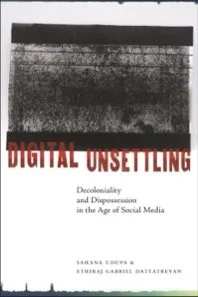
Digital Unsettling: Decoloniality and Dispossession in the Age of Social Media

By Ethiraj Gabriel Dattatreyan and Sahana Udupa

How digital networks are positioned within the enduring structures of coloniality The revolutionary aspirations that fueled decolonization circulated on paper—as pamphlets, leaflets, handbills, and brochures. Now—as evidenced by movements from the Arab Spring to Black Lives Matter—revolutions, protests, and political dissidence are profoundly shaped by information circulating through digital networks. Digital Unsettling is a critical exploration of digitalization that puts contemporary “decolonizing” movements into conversation with theorizations of digital communication. Sahana Udupa and Ethiraj Gabriel Dattatreyan interrogate the forms, forces, and processes that have reinforced neocolonial relations within contemporary digital environments, at a time when digital networks—and the agendas and actions they proffer—have unsettled entrenched hierarchies in unforeseen ways. Digital Unsettling examines events—the toppling of statues in the UK, the proliferation of #BLM activism globally, the rise of Hindu nationalists in North America, the trolling of academics, among others—and how they circulated online and across national boundaries. In doing so, Udupa and Dattatreyan demonstrate how the internet has become the key site for an invigorated anticolonial internationalism, but has simultaneously augmented conditions of racial hierarchy within nations, in the international order, and in the liminal spaces that shape human migration and the lives of those that are on the move. Digital Unsettling establishes a critical framework for placing digitalization within the longue durée of coloniality, while also revealing the complex ways in which the internet is entwined with persistent global calls for decolonization.

New York: NYU Press, 2023. 264p.

Migration and Citizenship: Legal Status, Rights and Political Participation

Edited by Rainer Bauböck

Citizenship is frequently invoked both as an instrument and goal of immigrant integration. Yet, in migration contexts, citizenship also marks a distinction between members and outsiders based on their different relations to particular states. A migration perspective highlights the boundaries of citizenship and political control over entry and exit as well as the fact that foreign residents remain in most countries deprived of core rights of political participation. This book summarizes current theories and empirical research on the legal status and political participation of migrants in European democracies.

Amsterdam: Amsterdam University Press, 2006. 128p.

The Christian Right in Europe: Movements, Networks, and Denominations

Edited by Gionathan Lo Mascolo

Inspired by the success of the US Christian Right and the rise of the global far-right, ultraconservative Christians in Europe are joining forces and seek to reshape Europe. By assembling in anti-gender movements and sharing anti-Muslim narratives, they actively influence the political landscape and shape government policies. The contributors offer new perspectives on the protagonists and the entangled networks that work to abolish liberal democracy in Europe behind the scenes. This anthology is the first to bring together case studies on the Christian Right in over 20 European countries, providing a transnational perspective and an accessible insight for clergy, politicians, and academics alike.

Bielefeld: transcript Verlag, 2023. 388p.

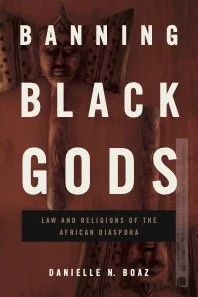
Banning Black Gods: Law and Religions of the African Diaspora

By Danielle N. Boaz

Banning Black Gods is a global examination of the legal challenges faced by adherents of the most widely practiced African-derived religions in the twenty-first century, including Santeria/Lucumi, Haitian Vodou, Candomblé, Palo Mayombe, Umbanda, Islam, Rastafari, Obeah, and Voodoo. Examining court cases, laws, human rights reports, and related materials, Danielle N. Boaz argues that restrictions on African diaspora religious freedom constitute a unique and pervasive form of anti-Black discrimination. Emphasizing that these twenty-first-century cases and controversies are not a new phenomenon but rather a reemergence of colonial-era ideologies and patterns of racially motivated persecution, Boaz focuses each chapter on a particular challenge to Black religious freedom. She examines issues such as violence against devotees, restrictions on the ritual slaughter of animals, limitations on the custodial rights of parents, and judicial refusals to recognize these faiths as protected religions. Boaz introduces new issues that have never been considered as a question of religious freedom before—such as the right of Palo Mayombe devotees to possess remains of the dead—and she brings together controversies that have not been previously regarded as analogous, such as the right to wear headscarves and the right to wear dreadlocks in schools. Framing these issues in comparative perspective and focusing on transnational and transregional issues, Boaz advances our understanding of the larger human rights disputes that country-specific studies can overlook. Original and compelling, this important new book will be welcomed by students and scholars of African diaspora religions and discerning readers interested in learning more about the history of racial discrimination

University Park, PA: Penn State University Press, 2021. 242p.

Do My Rights Matter? The Mistreatment of Unaccompanied Children in CBP Custody (October 2020)

By Jennifer Anzardo Valdes, et al.

For years, thousands of children have made the difficult decision to flee from their countries with the hope of securing safety and security in the United States. Their reasons for fleeing vary but there are common themes. Many of these children are seeking protection from human trafficking, targeted gang violence in the form of assaults, kidnappings, or extortions, as well as domestic violence and child abuse.

In 2019 alone, Customs and Border Protection (CBP) detained over 76,000 children. As part of our investigation into the treatment of unaccompanied children and conditions at the facilities at the border, we interviewed and provided legal services to 9,417 of them.

This report is based on these unaccompanied children’s testimonies of being detained at US detention facilities along the southern border. Children were detained in horrific conditions way beyond the 72 hours allowed under US law. Children described being held in frigid rooms, sleeping on concrete floors, being fed frozen food, with little or no access to medical care. Too often, they were subjected to emotional, verbal, and physical abuse by CBP officers.

Miami: Americans for Immigrant Justice,2020 74p.

The role of smuggling in shaping migrants’ journeys, finances and risks in the Central Sahel, Burkina Faso, Mali, Niger

By Thibaut Girault

This paper looks at the role of smugglers in facilitating migrant movement amid the worsening political and security situation in Mali, Burkina Faso and Niger. Findings reveal that migrants rely on smugglers to bypass occasional border restrictions between members of the Economic Community of West African States (ECOWAS) and to navigate increasingly dangerous routes within Mali, Burkina Faso, and Niger—three countries that formed the Alliance of Sahel States (ASS) in 2023. This reliance on smugglers also comes with significant risks, including greater exposure to exploitation, debt, and corruption— vulnerabilities that are particularly pronounced for women.

The research is based on the responses of 2,674 migrants surveyed by 4Mi between May and August 2024 in Niger, Mali, and Burkina Faso. It compares the experiences of migrants who used smuggler services (n=1,550) with those who did not (n=1,124) to better understand the relationship between smuggler use and migrants’ routes, journey costs, and protection risks.

London/Denmark: Mixed Migration Centre, 2025. 17p.

Climate, Crime and Exploitation: THE GENDERED LINKS BETWEEN CLIMATE-RELATED RISK, TRAFFICKING IN PERSONS AND SMUGGLING OF MIGRANTS/ Policy Brief

By The United Nations Office on Drugs and Crime (UNODC) and Global Action to Prevent and Address Trafficking in Persons and the Smuggling of Migrants (GLO.ACT)

At least 3 billion people live in contexts highly exposed to the impacts of climate change19 and yet more to non-climatic environmental degradation and disaster. Even if the world meets the currently improbable target of limiting global warming to 1.5 C degrees set out in the Glasgow Climate Pact, extreme weather and environmental degradation will see the deterioration of ecosystems and loss of biodiversity depended on by billions. In climate vulnerable countries, children and future generations, women, the poor (among whom the majority are women), and Indigenous Peoples, are disproportionately impacted.

The international community is expanding its response and financing. Mitigation measures aim to limit the damage by reducing and removing carbon, using regulation (like emissions limits) and technology (like carbon sinks). Adaptation measures seek to help people survive sudden-onset disasters and reconstitute livelihoods undermined by slow-onset processes that degrade soils, rivers and forests.

Additional factors threaten to exacerbate climate damage and undermine mitigation and adaptation strategies. Environmental crimes accelerate the destruction of natural resources and undermine the resilience of affected populations. The economic damage of COVID-19 has intensified competition for resources, increased the precarity of people on low incomes and with insecure migration statuses, and reduced the capacity of states to respond, as does the conflict and instability seen in some climate-vulnerable countries, such as those in the Sahel. Conflict and instability undermine adaptation measures.

This brief explores how climate change, climate-re- lated events, and crimes that affect the environment (environmental crimes) influence trafficking in persons (TIP) and smuggling of migrants (SOM), with special consideration of gender. It draws on expert interviews and a desk review to explore three key questions:

The effects of climate change, climate-related events, and environmental crime on TIP and SOM, and in particular its effects on women, in Part 1. Climate, movement and vulnerability.

How business practices shape exposure to TIP and SOM risk, in Part 2. Climate, industry and exploitation.

Current and emerging responses among policymakers, law enforcement, and civil society, in Part 3. Legal, policy and criminal justice responses.

The case of Bangladesh, a climate vulnerable and origin country for TIP and SOM, and a pioneer in adaptation, in Part 4. Environment and vulnerability in Bangladesh.

The paper concludes with Part 5. Framing the response and lists recommendations.

The analysis takes a human rights-based approach, integrating the United Nations Office on Drugs and Crime (UNODC) human rights and gender equality toolkit, which provides practical ways of integrating the protection of rights outlined in the United Na- tions Convention against Transnational Organized Crime (UNTOC) and sibling protocols on TIP and SOM into programmatic approaches. In particular, that approaches to countering TIP and SOM should not affect rights outlined under international human rights laws, including the 1951 Refugee Convention.

Vienna: UNODC, 2022. 55p.

Criminal Law & Migration Control: Recent History & Future Possibilities

By Jennifer M. Chacón

Immigration enforcement in the United States has undergone a revolutionary transformation over the past three decades. Once episodic, border-focused, and generally confined to the efforts of a relatively small federal agency, immigration enforcement is now exceedingly well-funded and integrated deeply into the everyday policing of the interior United States. Not only are federal immigration agents more numerous and ubiquitous in the interior, but immigration enforcement has been integrated into the policing practices of state and local officials who once saw their purview as largely distinct from that of federal immigration enforcement agents. This essay briefly explains these developments, from shortly before the passage of the Immigration Reform and Control Act of 1986 through the present day, and assesses their consequences. It includes a brief discussion of the ways states and localities have responded to federal enforcement trends, whether through amplification or constraint.

Daedalus, Winter 2022, at 121.

Silence of the Innocents: Undocumented Immigrants’ Underreporting of Crime and their Victimization

By Stefano Comino, Giovanni Mastrobuoni, Antonio Nicolò

Do undocumented migrants under report crimes to the police in order to avoid being deported? And do criminals exploit such vulnerability? We address these questions using victimization surveys and administrative data around the 1986 U.S. immigration amnesty. The amnesty allows us to solve two major identification issues that have plagued this literature: migrants’ legal status is endogenous and unobserved.

The results show that the reporting rate of undocumented immigrants is 17 percent, which limits the immigrants’ ability to protect some of their fundamental human rights. However, right after the 1986 amnesty, which disproportionately legalized individuals of Hispanic origin, crime victims of Hispanic origin show enormous improvements in reporting behavior. The implied increase in the reporting rate by amnesty applicants is close to 20 percentage points.

Journal of Policy Analysis and ManagementVolume 39, Issue 4, Sep 2020, Pages879-1288

he effect of immigration enforcement on crime reporting: Evidence from Dallas

By Elisa Jácome

Mistrust between immigrants and the police may undermine law enforcement’s ability to keep communities safe. This paper documents that immigration policies affect an individual’s willingness to report crime. I analyze the 2015 Priority Enforcement Program, which focused immigration enforcement on individuals convicted of serious crimes and shifted resources away from immigration-related offenses. I use data from the Dallas Police Department that include a complainant’s ethnicity to show that the number of violent and property crimes reported to the police by Hispanics increased by 4 percent after the introduction of PEP. These results suggest that reducing enforcement of individuals who do not pose a threat to public safety can potentially improve trust between immigrant communities and the police.

Journal of Urban Economics, 2022

MAPPING MIGRANT CHILDREN IN DETENTION

By Ben Orlebeke and Cory Shindel

In recent years, administrative policies seeking to roll back protections for immigrant and refugee children and families have had devastating impacts and only highlighted the unique needs and vulnerabilities of children in U.S. immigration custody. Efforts to restore, expand, and reimagine processes that prioritize children’s rights and well-being have never been more critical. With the generous support of the Four Freedoms Fund, Kids in Need of Defense (KIND) undertook a project to map the different types of facilities in which children are detained in the U.S. immigration system to inform efforts to create a system centered in children’s best interests, rights, and unique needs. This brief is excerpted from that project. Many thanks to the Four Freedoms Fund for making this project possible, and to Ben Orlebeke and Cory Shindel (KIND)

Washington, DC: Kids in Need of Defense (KIND), 2021. 13p.

ICE Cannot Effectively Monitor the Location and Status of All Unaccompanied Alien Children After Federal Custody.

By U.S. Department of Homeland Security, Office of Inspector General

We incorporated the formal comments provided by your office. The report contains four recommendations aimed at improving ICE’s ability to monitor the location and status of unaccompanied alien children. Your office concurred with all four recommendations. Based on information provided in your response to the draft report, we consider recommendations 1 through 4 open and resolved. Once your office has fully implemented the recommendations, please submit a formal closeout letter to us within 30 days so that we may close the recommendations. The memorandum should be accompanied by evidence of completion of agreed-upon corrective actions.

Each year, hundreds of thousands of UACs enter the United States illegally. Public concern for the safety of UACs has continued as the U.S. media has reported on trafficking, exploitation, forced labor, and other criminal activities. ICE is responsible for managing and monitoring the immigration cases of these children once they are released from DHS’ custody. We conducted this audit to determine ICE’s ability to monitor the location and status of UACs once released or transferred from DHS and HHS’ custody

Washington DC: OFFICE OF INSPECTOR GENERAL U.S. Department of Homeland Security , 2025. 27p.

Unaccompanied Alien Children: An Overview

By William A. Kandel

The number of unaccompanied alien children (UAC, unaccompanied children) apprehended at the Southwest border between U.S. ports of entry while attempting to enter the United States without authorization has increased substantially over the past decade. Apprehensions numbered 8,041 in FY2008 and reached a then-record of 68,541 in FY2014. Since FY2014, apprehensions have fluctuated considerably, ranging from a low of 30,557 in FY2020 to a high of 149,093 in FY2022. Since FY2021, they have exceeded 130,000 each year. In the first 10 months of FY2024, apprehensions of UAC numbered 87,475. UAC are children under age 18 who lack both lawful immigration status in the United States, and a parent or legal guardian in the United States, or a parent or legal guardian in the United States who is available to provide care and physical custody. U.S. policy on UAC treatment and processing is guided by the Flores Settlement Agreement of 1997, the Homeland Security Act of 2002, and the Trafficking Victims Protection Reauthorization Act (TVPRA) of 2008. Children from the Northern Triangle countries—El Salvador, Guatemala, and Honduras—and increasingly from other countries dominate what was previously an almost entirely Mexican migrant flow. The TVPRA permits most Mexican children to be voluntarily returned to Mexico. In contrast, children from all other countries may enter the United States and are placed in formal removal immigration proceedings, during which they may apply for relief or protection from removal. Consequently, the shift in origin-country composition has affected both federal spending and the federal agencies responsible for unaccompanied children. The Department of Homeland Security (DHS), Department of Health and Human Services (HHS), and Department of Justice (DOJ) share responsibility for UAC processing, treatment, placement, and immigration case adjudication. DHS’s Customs and Border Protection (CBP) apprehends and detains UAC arrested at the border. DHS’s Immigration and Customs Enforcement (ICE) handles custody transfer and repatriation, apprehends UAC in the U.S. interior, and represents the government in removal proceedings. HHS’s Office of Refugee Resettlement (ORR) coordinates care and placement of UAC in appropriate custodial settings. DOJ’s Executive Office for Immigration Review (EOIR) adjudicates UAC removal cases. The Obama, Trump, and Biden Administrations, as well as Congress, have taken steps since 2014 to respond to the general increase in UAC apprehensions. During the 2014 surge, the Obama Administration opened the first large temporary shelters, initiated programs to address root causes of child migration, and created the Central American Minors (CAM) Refugee and Parole Program. The Trump Administration instituted policies to reduce illegal migrant flows and limit who could apply for asylum. It discontinued the CAM program and implemented an agreement between ORR and DHS to share biometric and immigration status information about children as well as sponsors and any adults in their households. In 2020, HHS’s Centers for Disease Control and Prevention (CDC) exercised its authority under U.S. Code Title 42 (public health) that temporarily allowed CBP to promptly expel UAC at the border. The Biden Administration has faced record high UAC apprehension levels. It has excepted unaccompanied children from Title 42 expulsions, revoked the ORR-DHS information-sharing agreement, employed numerous temporary influx facilities, and reactivated the CAM program. It also issued a final rule implementing the Flores Agreement and formalizing UAC policies in regulation. Congress has responded by providing funding for UAC-related activities in response to annual, supplemental, and emergency appropriations requests. Current UAC policy issues facing Congress include the provision of post-release follow-up and services, the prevalence of child labor violations, legal representation for children in immigration proceedings, and potential incentives for child migration created by the TVPRA.

Washington, DC: Congressional Research Service, 2024. 56p.