Open Access Publisher and Free Library
SOCIAL SCIENCES.jpeg

SOCIAL SCIENCES

Social sciences examine human behavior, social structures, and interactions in various settings. Fields such as sociology, psychology, anthropology, and economics study social relationships, cultural norms, and institutions. By using different research methods, social scientists seek to understand community dynamics, the effects of policies, and factors driving social change. This field is important for tackling current issues, guiding public discussions, and developing strategies for social progress and innovation.

Toward a Framework to Improve Diversity and Inclusion in Clinical Trials: Proceedings of a Workshop (2024)

By: Theresa Wizemann, Kyle Cavagnini, Alex Helman, and Carolyn Shore

As stated in the 2022 National Academies of Sciences, Engineering, and Medicine (National Academies) report Improving Representation in Clinical Trials and Research: Building Research Equity for Women and Underrepresented Groups, “An equitable clinical research enterprise would include trials and studies that match the demographics of the disease burden under study. However, we remain far from achieve this goal” (NASEM, 2022). Despite decades of work and ongoing efforts on the part of policy-makers, patient groups, nonprofits, and industry sponsors to improve racial and ethnic diversity in clinical trials, there has been little change over time (Dzau, 2022). Furthermore, inconsistencies in data collection and reporting makes it difficult to track progress of demographic group participation in the United States for clinical trials. Given the urgent need, there have been calls for collective action across sectors and organizations “to align on goals for system-wide sustainable change.”

On May 20, 2024, the National Academies Forum on Drug Discovery, Development, and Translation, in collaboration with the National Cancer Policy Forum, convened a public workshop to explore opportunities to improve racial and ethnic diversity with a focus on system-level change and collective efforts across organizations and sectors that no one entity can effectively take on alone (see Box 1-1). The workshop builds on meetings hosted by the Clinical Trials Transformation Initiative (CTTI) in June 2023, the Multi-Regional Clinical Trials (MRCT) Center of Brigham and Women’s Hospital and Harvard University in September 2023, and Faster- Cures of the Milken Institute in November 2023.

National Academies of Sciences, Engineering, and Medicine. 2024.

Rethinking Race and Ethnicity in Biomedical Research

By National Academies: Sciences Engineering Medicine

"Rethinking Race and Ethnicity in Biomedical Research" by the National Academies of Sciences, Engineering, and Medicine, published in 2024, addresses the complex and often controversial use of racial and ethnic categories in biomedical research. The book provides a comprehensive assessment of how these categories are currently used and offers nine actionable recommendations to guide researchers in their future work. :

Evaluating the Use of Race and Ethnicity: The book emphasizes the importance of carefully considering whether and how to use race and ethnicity in research, taking into account historical and social contexts, scientific rationale, and potential implications.

Characterizing Limitations: It advises researchers to clearly disclose the limitations of datasets that include racial and ethnic information.

Identifying Relevant Factors: Researchers are encouraged to identify and investigate factors that may be more relevant than race and ethnicity, such as environmental, economic, and social determinants of health.

Community Engagement: The book highlights the need for sustained and meaningful engagement with communities, particularly those that are often overlooked in research.Overall, the book aims to promote a more thoughtful and responsible use of race and ethnicity in biomedical research, ultimately contributing to the reduction of health disparities and the advancement of health equity.

National Academies: Sciences, 2024, 251 pages

The Econometric Analysis of Time Series

May Contain Mark-Ups

By A.C Harvey

“The Econometric Analysis of Time Series”by A.C. Harvey is a comprehensive guide to understanding and applying econometric theory to time series data. The book is structured into several key sections, each addressing different aspects of econometric analysis. It Begins with an introduction to the importance of econometrics in estimating relationships suggested by economic theory, testing hypotheses, and making predictions. The book covers linear regression models, least squares estimation, properties of the ordinary least squares (OLS) estimator, generalized least squares (GLS), and prediction. It also delves into the method of maximum likelihood (ML) estimation, its properties, and its application to regression models, discussing sufficiency, the Cramer-Rao lower bound, and robustness of ML estimators. Further, the book explores numerical optimization techniques, including the Newton-Raphson method and two-step estimators, and discusses test procedures and model selection strategies. It addresses regression models with serially correlated disturbances, dynamic models, and simultaneous equation models, emphasizing the integration of recent advances in time series analysis into econometric theory.

The book also highlights the importance of understanding the dynamic aspects of econometric models and the challenges associated with specifying suitable models for time series data. Practical considerations such as the use of instrumental variables, handling heteroscedasticity, and constructing robust estimators are also covered, providing a thorough foundation for both theoretical and applied econometric analysis.

John Wiley & Sons, 1990, 384 pages

Independent Investigation & After-Action Review of Encampment-Related Events at the University of California, Los Angeles, April 2024 through May 6, 2024: Recommendations

By University of California, Los Angeles

Pursuant to this investigation’s findings and conclusions, the following describes a number of measures that UCLA should adopt and implement to address shortcomings, performance failures, systems breakdown, and campus safety issues that emerged from the campus events of April and May 2024. These recommendations are designed to ensure that UCLA’s response to acts of civil disobedience aligns with its commitments to freedom of expression and the protection of the health, safety, and well-being of the UCLA community. In addition to resulting in a more effective response to acts of civil disobedience, implementation of these recommendations will support a more effective response to a wide range of low-frequency, high-impact emergencies events on campus, including potential natural disasters or acts of mass violence. Finally, implementing these measures will better enable UCLA to deliver a range of public safety services in a manner that is effective, that aligns with changing conceptions of the meaning of public safety, and that reflects the UCLA community’s values and priorities. As described below, in the long-term, UCLA will need to address the possibility of making fundamental, structural changes to its public safety ecosystem, including by engaging in a community-driven process to define public safety objectives and goals and by making expanded resources available beyond law enforcement to support those goals. In the short-term, however, UCLA must make immediate changes and develop plans to effectively respond to campus disruptions using existing resources. We are encouraged that UCLA already has begun work to implement these immediate changes. 

Los Angeles: UCLA, 2024. 18p.

Gambling Away Stability: Sports Betting’s Impact on Vulnerable Households 

By Scott R. Baker,  Justin Balthrop,  Mark J. Johnson,  Jason Kotter,  Kevin Pisciotta 

We estimate the causal effect of online sports betting on households’ investment, spending, and debt management decisions using household transaction data and a staggered difference-in-differences framework. Following legalization, sports betting spreads quickly, with both the number of participants and the frequency of bets increasing over time. This increase does not displace other gambling or consumption but significantly reduces savings, as risky bets crowd out positive expected value investments. These effects concentrate among financially constrained households, as credit card debt increases, available credit decreases, and overdraft frequency rises. Our findings highlight the potential adverse effects of online sports betting on vulnerable households.  

Unpublished paper, 2024.

Historical Weapons Restrictions on Minors

By Robert J. Spitzer

Since the Supreme Court’s ruling in 2022 that recast the basis for judging the constitutionality of contemporary gun laws according to the existence of historical analogs, all manner of laws have been subject to court challenge, including those that restrict gun access to those under the age of twenty-one. To date, federal courts have split on this question. Given this new, history-based standard for judging the constitutionality of current weapons laws, this article examines the historical record pertaining to how the age of majority was defined in our past and how that pertains to the history of laws that restricted minors’ access to firearms and other weapons. This article offers the most extensive assessment of state laws and local ordinances from the eighteenth and nineteenth centuries to be found to date. In addition, it includes a new and extensive excavation of a wide range of college and university codes in the eighteenth and nineteenth centuries that limited or barred students from having weapons from that time period, the nature and extent to which has not been identified or reported before. All of this information supports the conclusion that the broadly accepted age of majority during this time period was twenty-one.

Rutgers Law Review, Vol. 76, 2024

Exploring The Intergenerational Continuity of ACEs Amongst A Sample of Welsh Male Prisoners: A Retrospective Cross-Sectional Study

By Kat Ford a, Mark A. Bellis b, Karen Hughes, Natasha Judd a, Emma R. Barton

The relationship between parent and child adverse childhood experience (ACE) exposure remains underexplored, particularly within justice-involved samples. Objective: The objective of the study was to examine the intergenerational continuity of ACEs within a UK prison population. Participants: 294 males aged 18–69 years in a Welsh prison, with father-reported data for 671 children they had fathered. Methods: A face-to-face ACE questionnaire measured exposure to 10 ACE types. For each child they had fathered participants were asked to report their child’s gender, age, and their exposure before the age of 18 to the same ACE types, except having a household member incarcerated. Findings: Paternal ACE exposure was found to increase the risk of child ACE exposure, both to multiple ACEs and individual ACE types. Compared to children of fathers with no ACEs, those of fathers with 4+ were almost three times more likely to have been exposed to 2–3 ACEs and six times more likely to be exposed to 4+ ACEs. The risk of a child residing in a household where mental illness was present was 7.4 times higher where their father had 4+ ACEs. Conclusion: Findings highlight the need for prevention interventions to break the intergenerational continuity of ACEs. Further research is needed to explore what protects against the intergenerational continuity of ACEs. Criminal justice systems and wider services need to ensure that they support those incarcerated alongside their families who are at high risk of ACEs and consequently poorer education, health, and criminal justice outcomes. 

Child Protection and Practice Volume 3, December 2024, 100053

Abduction, Marriage, and Consent in the Late Medieval Low Countries

By Delameillieure, Chanelle

The Middle Dutch term schaec referred to abduction with marital intent. This book explores this phenomenon to understand wider attitudes towards marriage-making in the fifteenth-century Low Countries. Whilst exchanging words of consent was all that was required legally, making marriage was a social process that evoked public concern and familial scrutiny. Abductions embodied contrasting evaluations of what mattered when selecting a spouse and resulted in polarized trials in which narratives on consent, coercion, and family strategy coincided and competed. Abduction, Marriage, and Consent draws from a wide range of legal records to assess how men, women, families, and authorities used, navigated, and dealt with abductions during this period. It contributes to debates on consent, family involvement, and women’s access to justice and demonstrates that abduction should be approached as a comprehensive social phenomenon, one that is crucial in the history of marriage and women’s social and legal status.

Amsterdam: Amsterdam University Press, 2024. 254p.

Ladies in Arms: Women, Guns, and Feminisms in Contemporary Popular Culture

Edited by Teresa Hiergeist, Stefanie Schäfer

In contemporary popular culture, armed women take center stage - but how can they be read from a feminist perspective? How do films, comics, and TV series depict the newly fashionable gunwomen between objectification and feminist empowerment? The contributions to this volume ask this question from different vantage points in cultural and literary studies, film and visual culture studies, history, and art history. They examine military and civic gun cultures, the rediscovery of historical armed women and revolutionaries, cultural phenomena such as gangsta rap, narcocultura and US politics, Bollywood and French cinema, and distinct genres such as the graphic novel, the romance novel, or the German police procedural Tatort.

Bielefeld: transcript Verlag, 2024. 322p.

Toxic Parliaments: And What Can Be Done About Them

By Marian Sawer and Maria Maley

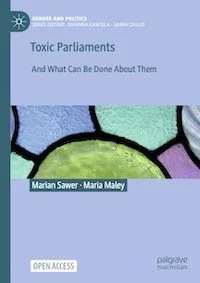
This open access book shows how the #MeToo movement and revelations of sexual harassment and bullying have spurred on reform of the parliamentary workplace in four Westminster countries – Australia, Canada, New Zealand and the UK. Long-standing conventions included extreme power imbalances between parliamentarians and staff and a lack of professionalised employment practices. Codes of conduct and independent complaints bodies were resisted on grounds of parliamentary privilege: the ballot box was supposedly the best means of holding parliamentarians accountable for their conduct. The taken-for-granted status of adversarial politics and its silencing effects also rendered gendered mistreatment invisible. The authors examine the institutional backdrop and the different trajectories of reform in the four countries, with most detail on the dramatic developments in Australia after angry women marched on parliament houses in 2021. They show how the different parliaments have responded to escalating evidence of misconduct, the role of policy borrowing, and the possibilities of lasting institutional change.

Cham: Springer Nature, 2024. 125

Like a Dog

By Samblanet, Lauren

Taking its cues from the New Narrative writing movement, like a dog considers how sexual identity is morphed, hidden, and denied by cultural forces like film, pornography, rape culture, and sexual semiotics. The speaker of like a dog writes about her sexuality, sexual trauma, and relationships in the epistolary form to explore how the personal becomes collective and how overt sexuality is necessary for questioning dominant ideologies. The intimacy (or perhaps voyeurism) that is opened through the epistolary form is balanced with commentary on the films of Lars von Trier, primarily Nymphomaniac, as a way to move away from the speaker’s experiences and into the larger social forces that seek to define us. Amidst these letters are images from a handwritten journal where blood, hair, vaginal fluids, and other bodily residues are used to direct the shape and content of the writing surrounding them. The tactility of the journal delivers the reader to the body, not as an intellectualized object, but as the physical, messy, oozing force that it is. Neither fiction nor nonfiction, and inhabiting a realm between gossip and scholarly film analysis, like a dog exists in a liminal zone that offers the speaker a site to rip away the layers of cultural conditioning surrounding sexuality and relationships, and to peek at what lies beneath. This interrogation of identity may not lead to answers but the speaker of like a dog is able to finally hear her own voice and to begin the work of rebuilding an identity that blooms from within.

Brooklyn, NY: punctum books, 2024. 149p.

Rape at the Opera: Staging Sexual Violence

By Margaret Cormier

The most-performed operas today were written at least a hundred years ago and carry some outdated and deeply problematic ideas. When performed uncritically, the misogyny, racism, and other ideologies present in many of these works clash with modern sensibilities. In Rape at the Opera, Margaret Cormier argues that production and performance are vital elements of opera, and that contemporary opera practitioners not only interpret but create operatic works when they put them onstage. Where some directors explicitly respond to contemporary dialogues about sexual violence, others utilize sexual violence as a surefire way to titillate, to shock, and to generate press for a new production. Drawing on archival footage as well as attendance at live events, Cormier analyzes productions of canonic operas from German, Italian, and French traditions from the eighteenth to the early twentieth century, including Die Entführung aus dem Serail, Don Giovanni, La forza del destino, Un ballo in maschera, Salome, and Turandot. In doing so, Cormier highlights the dynamism of twenty-first-century opera performance practice with regard to sexual violence, establishes methods to evaluate representations of sexual violence on the opera stage, and reframes the primary responsibility of opera critics and creators as being not to opera composers and librettists but to the public.

Ann Arbor: University of Michigan Press, 2024. 211p.

Representations of Rape and Consent in Medieval English Laws and Literature

Edited by Mariah L. Cooper

How did legal, literary, and scientific discourses intersect to define sexual non-consent in the Middle Ages? How did popular cultural assumptions about sexuality and gender influence actual medieval criminal proceedings? And how far have we really come today? This book explores medieval English understandings of rape, consent, and the assumed mind-body dichotomy of rapists and rape victims. It demonstrates how laws, trial records, popular romance, and ecclesiastic and medical texts defined sexual consent and non-consent, and the consequences of such ideologies. By comparing episodes of rape and consent across diverse primary sources, it considers important medieval English rape myths and victim-blaming stereotypes. Significantly, it also highlights the cultural trepidation associated with believing women’s accusations of rape and questions how much “progress” we have made since then.

Leeds, Arc Humanities Press, 2024. 214p.

Demystifying the Sacred: Blasphemy and Violence from the French Revolution to Today

Edited by Eveline G. Bouwers and David Nash

This book investigates the relationship between blasphemy and violence in modern history, with a focus on cases from the European world, including its (post-) colonial ties. Spanning from the late-eighteenth century to today, it shows how cultures of blasphemy, and related acts of heresy, apostasy and sacrilege, have interacted with different forms of violence, committed against both the sacred and the secular.

Berlin; Boston: De Gruyter Oldenbourg, 2022. 

On the Meaning of Color and the End of White(ness)

By William J. Aceves

This Article explores the history of the term “people of color” and its current status in a country struggling to overcome its racist origins. The murders of Trayvon Martin, Michael Brown, George Floyd, Breonna Taylor, and so many other victims of state violence have generated profound anger, calls for action, and demands for dialogue. It is undoubtedly simplistic to assert that words matter. But accurate descriptions are essential for honest conversations, and words convey meanings beyond their syntax. In discussions about race and racial identity, the term “people of color” is routinely used as the antipode to the white community. Yet little thought is given to its etymology or meaning. Through the use of historical documents, including many from the colonial era, and recent data compiled from search engine queries and social media activity, this Article reveals that the term “people of color” has a rich yet complicated heritage. For centuries, “people of color” was a term with legal significance. While it no longer defines rights, its use still matters. Today, we should embrace this collective terminology because it reflects a shared history among diverse communities and generates power against hierarchy. Because the white community serves as the antipode to people of color, we must also interrogate this other example of collective terminology. To engage in honest conversations about race, power, and privilege, it is time to separate white(ness) from the white community.   

  17 Harv. L. & Pol'y Rev. 79 (2022). Available at:

Whither Legitimacy? Legal Authority in the Twenty-First Century

By Tom R. Tyler

My scholarly career has centered around articulating and testing a model of legitimacy-based law and governance. In recent decades, that model has achieved considerable success in shaping the way legal authority is understood and exercised. At the same time the legitimacy of legal, political, and social institutions and authorities has declined, raising questions about the future viability of a legitimacy-based model. In this review, I discuss the ascension and potential decline of legitimacy-based governance and outline alternative models of authority that may emerge in the twenty-first century. Three issues are addressed: whether there are ways to reinvigorate legitimacy-based law and governance; whether social norms, moral values, or ideologies are viable alternative forms of authority; and whether it is better to accept that no single form of authority works best in all situations and theories should focus on identifying the contingencies under which different forms of authority are most desirable.

Annu. Rev. Law Soc. Sci. 2023. 19:1–17

Communities of Hateful Practice: The Collective Learning of Accelerations Right-Wing Extremists, With a Case Study of The Halle Synagogue Attack

By Michael Fürstenberg

In the past, far-right aggression predominantly focused on national settings and street terror against minorities; today, however, it is increasingly embedded in global networks and acts within a strategic framework aimed at revolution, targeting the liberal order as such. Ideologically combining antisemitism, racism, and anti-feminism/anti-LGBTQI, adherents of this movement see modern societies as degenerate and weak, with the only solution being a violent collapse that they attempt to accelerate with their actions. The terrorist who attacked the synagogue and a kebab shop in Halle, Germany, in October 2019 clearly identified with this transnational community and situated his act as a continuation of a series of attacks inspired by white supremacy in the past decade. The common term ‘lone wolf’ for these kinds of terrorists is in that sense a misnomer, as they are embedded in digital ‘wolf packs’. Although this movement is highly decentralized and heterogeneous, there are interactive processes that connect and shape the online milieu of extremists into more than the sum of its parts, forming a structure that facilitates a certain degree of cohesion, strategic agency, and learning. This paper uses the model of collective learning outside formal organizations to analyze how the revolutionary accelerationist right as a community of practice engages in generating collective identities and knowledge that are used in the service of their acts of death and destruction.

Halle (Saale), Germany: Max Planck Institute for Social Anthropology, 2022. 62p.

Between Extremism and Freedom of Expression: Dealing With Non-Violent Rightwing Extremist Actors

By Annemarie van de Weert ,  Radicalisation Awareness Network

  Over the course of the previous years, counterterrorism has focused more on anticipating the threat of terrorism. In this context, institutions such as the United Nations Security Council and the European Commission have increasingly emphasized that acts of terrorism cannot be prevented through repressive measures alone. Through countering violent extremism (CVE) and preventing violent extremism (PVE), the aim is to detect deviant attitudes in an early stage and promote social inclusion and cohesion at the same time. In particular, CVE consists of the early detection of radicalisation towards violent extremism and includes various approaches to increase the resilience of communities and individuals to the use of extremist violence and other related unlawful acts. In turn, the concept of PVE consists of systematic preventive measures which directly address the drivers of extremist environments. Both approaches emphasise tackling the context conducive to terrorism such as situational, social, cultural and individual factors. Because of their direct contact with society, frontline professionals are tasked with dealing with individuals who may threaten the rule of law, national security, and democratic values. This ought to be done by building normative barriers against violent extremism at an early stage, the so-called uncharted terrains between non-violent extremist ideology and terrorism. The question remains: How can youth, family and community workers intervene in radicalisation processes without infringing on personal freedoms? This overview paper focuses on right-wing extremism (RWE) and freedom of expression. It provides advices from first-line practitioners on how to deal with and respond to extremists publicly expressing their ideologies in a nonviolent, but still potentially harmful, way. It also delves into the matter of how practitioners can protect themselves against potential backlash and threats of violence from extremist organisations or movements  

Luxembourg: Publications Office of the European Union, 2021 . 29p.

Child-Taking 

By Diane Marie Amann   

A ruling group at times takes certain children out of their community and then tries to remake them in its image. It tries to rid the child of undesired differences, in ethnicity or nationality, religion or politics, race or ancestry, culture or class. There are too many examples: the colonialist residential schools that forced settler cultures on Indigenous children; the military juntas that kidnapped dissidents’ children; and today’s reports of abductions amid crises like that in Syria. Too often nothing is done, and the children are lost. But that may be changing, as the International Criminal Court (“ICC”) is seeking to arrest Russian President Vladimir Putin and Commissioner for Children’s Rights Maria Lvova-Belova for the war crimes of unlawfully deporting or transferring children from Ukraine to Russia. This article examines the criminal phenomenon that it names “child-taking.” By its definition, the crime occurs when a state or similar powerful entity, first, takes a child, and second, endeavors, whether successfully or not, to alter, erase, or remake the child’s identity. Using the ICC case as a springboard, this article relies on historical and legal events to produce an original account of child-taking. Newly available trial transcripts help bring to life a bereft mother and five teenaged survivors, plus the lone woman defendant,  who testified at a little-known child-kidnapping trial before a postwar Nuremberg tribunal. Their stories, viewed in the context of the evolution of international child law, inform this article’s definition. These sources further reveal child-taking to be what the law calls a matter of international concern. At its most serious, child-taking may constitute genocide or another crime within the ICC’s jurisdiction. Yet even if circumstances preclude punishment in that permanent criminal court, child-taking remains a grave offense warranting prosecution or other forms of local and global transitional justice. This is as true for the Indigenous children of residential schools in North America, Australia, and elsewhere, and for children in Syria and many other places in the world, as it is for the children of Ukraine.   

University of Georgia School of Law Research Paper Series Paper No. 2023-10 

Gaming and Extremism: The Extreme Right on Discord

By Aoife Gallagher, Ciarán O’Connor, Pierre Vaux, Elise Thomas, Jacob Davey

Discord is a free service accessible via phones and computers. It allows users to talk to each other in real-time via voice, text or video chat and emerged in 2015 as a platform designed to assist gamers in communicating with each other while playing video games. The popularity of the platform has surged in recent years, and it is currently estimated to have 140 million monthly active users.1 Chatrooms – known as servers - in the platform can be created by anyone, and they are used for a range of purposes that extend far beyond gaming. Such purposes include the discussion of extreme right-wing ideologies and the planning of offline extremist activity. Ahead of the far-right Unite the Right rally in Charlottesville, Virginia, in August 2017, organizers used Discord to plan and promote events and posted swastikas and praised Hitler in chat rooms with names like “National Socialist Army” and “Führer’s Gas Chamber”.2 In this briefing we provide an analysis of 24 English-language Discord servers associated with extreme right-wing activity. This analysis is intended as a snapshot of current trends on Discord with a specific focus on the role of gaming, rather than a comprehensive overview of extreme right activity on the platform. Key Findings • We found that Discord primarily acts as a hub for extreme right-wing socialising and community building. Our analysis suggests that Discord provides a safe space for users to share ideological material and explore extremist movements. • Of particular concern is the young age of the members of these servers, who on average, when determinable, were 15 years old. This suggests that Discord could act as an entry point for children to come into contact with extremist ideology. • We found limited evidence that gaming played a role in serious strategies to radicalise and recruit new individuals on the platform. Instead gaming was primarily referenced in cultural terms, being used by members of these servers to find common-ground. • Gamified online harassment through ‘raids’ was a popular activity across the channels analysed. This suggests that this semi-organised cyber-bullying could be a vector which brings young people into contact with extremist communities. • We identified discussion in these channels expressing support for the proscribed terrorist organisations Atomwaffen Division and Sonnenkrieg Division. This included the sharing of branded content produced by these organisations, as well as the identification of one user who expressed an interest in joining Atomwaffen.  

Amman | Berlin | London | Paris | Washington DC: ISD Global, 2021. 13p.