Open Access Publisher and Free Library
CRIME+CRIMINOLOGY.jpeg

CRIME

Violent-Non-Violent-Cyber-Global-Organized-Environmental-Policing-Crime Prevention-Victimization

Posts in Violence & Oppression
Confronting Child Sex Abuse

By Ann M. Nurse.

Knowledge to Action . This book describes the forces that shape our views of victims and offenders, while also providing an in-depth look at prevention efforts and current research. Topics include the prevalence of abuse, the impact of abuse on victims and families, offender characteristics, abuse in institutions, and the efficacy of treatments. Nurse’s book offers new public policy ideas as well as practical suggestions on how to engage in prevention work. Interactive links to studies, videos, and podcasts connect readers to further resources.

Lever Press (2020) 319 pages.
Animal Abuse as a Strategy of Coercive Control

By Mary Wakeham.

This study adopts a feminist methodology to explore the coexistence of animal abuse and domestic abuse. This study builds on the growing body of research in this area that to date has largely been situated in the US, Canada and Australia to provide new knowledge. There were three phases of data collection in this research which included a national online survey, semi-structured interviews with victim-survivors of domestic violence and abuse and interviews with professionals.

The research findings provide compelling evidence that animal abuse is a strategy of coercive control and an act of animal cruelty. The oppression of women, children and animals are intertwined in patriarchal systems, and nowhere is this interconnection more apparent than in the co-occurrence of animal abuse and domestic violence and abuse. A human-centric approach dominates definitions and the prevailing public story about domestic violence and abuse across society. This conceptualisation focuses on the human victim-survivor in isolation but undermines the status of the animal and the importance of the animal in the dynamics of abuse. We need to extend our construction of domestic violence and abuse to include animals as victim-survivors. Animals are the silent victim- survivors of domestic violence and abuse.

The oppression of animals is compounded by the dominant status of animals in society as ‘less important’ than human beings and ‘property’ that is ‘owned’ by humans. This conceptualisation of animals is underpinned by animal welfare legislation in the UK that provides a platform for perpetrators of domestic abuse who abuse animals to justify and continue the abuse of animals often with little consequence or challenge. This research highlights the many parallels between the abuse of animals and people in the context of domestic abuse and the implications of the abuse for all victim-survivors – humans and animals.

Bristol, UK: University of Bristol, 2021. 261p.

Journeys to freedom? Post-rescue ethnography of bonded labourers and sex workers in India

By Pankhuri Agarwal.

Working with a simplistic notion of release from bondage as “freedom”, mainstream anti-trafficking activists focus on rescue. They argue that victims of trafficking are “free” once removed from their employers. Critics contest this approach and argue that significantly less attention is paid to the role of the state and the NGOs in producing conditions due to which people remain vulnerable. This research lends empirical support to this critical position through a multi-sited ethnography of informal migrant workers, sex workers, and law enforcement officers, traversing through courtrooms, police stations, district welfare offices, worksites, shelter homes, and offices of NGOs, in New Delhi, India. It corroborates that the authority of law is compromised ‘on ground’ and is actively negotiated within the legal space of anti-trafficking efforts. Instead of being instantly transported to “freedom”, the workers end up in protracted legal proceedings, ranging two to thirty-seven years, to seek justice and rights. Their rights are neglected due to a Kafkaesque bureaucracy. Their mobility is restricted due to improper documentation. Their suffering is intensified through an evasive legal system. The result – arbitrary, unjust legal outcomes after an endless wait and dependence on intermediaries. In fact, their journey through the system, with cost and time overruns, has no direct or precise chronology, and often moves in a circle rather than reaching an end. The workers resemble the class of people that Denise Ferreira da Silva (2009) describes as “nobodies”. They continue to struggle to achieve the rights and recognition that would allow them to escape this status. The combination of empirical data, doctrinal analysis, and socio-legal theory in this research provide an insight on the harm and limits of the anti-trafficking discourse with reference to India.

Bristol, UK: University of Bristol, 2021. 233p.

Inside War. Understanding the Evolution of Organised Violence in the Global Era

By Fabio Armao.

The post-Cold War era was characterised by both the recurrence of state wars and the spread of forms of organised violence other than wars. Asymmetric warfare between alliances led by the USA and groups of insurgents, such as those witnessed in Afghanistan and Iraq, coexist alongside domestic conflicts, such as that of former Yugoslavia and, more recently, Libya and Syria; and still other conflicts involving gangs, mafias or narco-traffickers. The massive military-industrial complexes conceived in the context of the threat of nuclear Armageddon are still there of course, but they now coexist with irregular armies of insurgents carrying out massacres through the use of light weapons and improvised explosives devices. This book oppose the idea that this situation prefigures the return to an anarchical, pre-political condition, by assuming that new wars are rather the product of the blurring of the public-private divide, induced by the end of the Cold War, together with globalisation. As a consequence, also the internal and external factors are blurred; and ever more permeable and elusive is becoming even the border between war and crime. Inside War goes beyond a state-centered analysis and adopts an interdisciplinary and multilayered approach, and is intended to foster the dialogue among researchers from different fields. It places war at the core of analysis, assuming that the reality of war is what we make of it; and that the only insurmountable limit to our comprehension of war is our way of knowing and representing it. Fabio Armao teaches courses in Politics and Globalisation Processes, and Criminal Systems. He has been Visiting Professor at Cornell University, and co-convenor of the Standing Group on Organized Crime, European Consortium for Political Research. Founding member of T.wai (Torino World Affair Institute), he is also member of the Editorial Board of ‘Global Crime’. His research interests and publications focus on international wars and geopolitics, on violent non-state actors and transnational organised crime, and on urban security.

Warsaw, Poland: deGruyter, 2015. 224p.

Not just a victim: the child as catalyst and witness of contemporary Africa

Edited by Sandra J.T.M. Evers, Catrien Notermans and Erik van Ommering.

“Children should be seen, and not heard. The above maxim, though representing a Victorian value, was commonly pronounced in family homes up until a half century ago. It is based on the principle that a well-behaved child is a child who does not bother adults or disrupt their conversations. While such approaches have evolved considerably since then, in mainstream social science theory, children’s voices usually are not heard. Wallowing as it were in a phase of innocence, immaturity and dependence on adult care and protection, children continue to be largely deemed unfit as sources of scientific inquiry.”

Leiden. Koninklijke Brill NV, Leiden, The Netherlands.

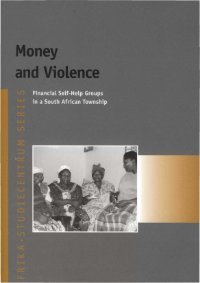
Money and Violence: financial self-help groups in a South African township

By E.. Bähre.

From the eighties onward, when apartheid was crumbling, more and more Africans migrated to Cape Town, South Africa. They did not leave their homes in the Eastern Cape because they liked the city like the many tourists who, not unlike the Dutch East India Company of the colonial past, enjoy its revitalising qualities. To the Xhosa migrants Cape Town was, and still is, a hostile city. People fear murder, rape, and theft. They do not know their neighbours and friends are scarce. They have no family there, either living or dead, and racist attitudes are ever present. The Xhosa migrants have only one motivation for plunging themselves into the unknown and hostile squatter camps of Cape Town and that is money. This ethnography concerns the way in which Xhosa migrants in the townships of Cape Town collectively manage their money in financial self-help groups, also known as financial mutuals.1 The migrants organise a myriad of groups in which the participants collectively save, borrow, lend, or use their hard-earned money to form insurances. Some mutuals consisted of only a few neighbours who met each month at a member’s home, with each giving about R200 to the host member until all members had had a turn. Other mutuals were complex arrangements where members saved money together, mostly for Christmas, but also issued loans to each other. There were also many insurance arrangements involving up to a couple of hundred members that made sure that money was available to attend the funeral of a relative back home, or to prevent a burial in Cape Town itself. One could join a group voluntarily and the social constraint of fellow members would make sure that not all the money would be spent but would be used for the contribution to the financial mutual.

Leiden/Boston: Brill Academic Publisher, 2007. 205p.

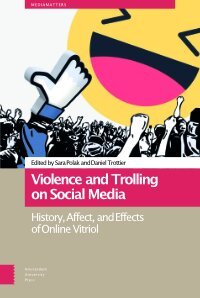
Violence and Trolling on Social Media

Edited by Sara Polak and Daniel Trottier

.History, Affect, and Effects of Online Vitriol. “Trolls for Trump', virtual rape, fake news - social media discourse, including forms of virtual and real violence, has become a formidable, yet elusive, political force. What characterizes online vitriol? How do we understand the narratives generated, and also address their real-world - even life-and-death - impact? How can hatred, bullying, and dehumanization on social media platforms be addressed and countered in a post-truth world? This book unpicks discourses, metaphors, media dynamics, and framing on social media, to begin to answer these questions. Written for and by cultural and media studies scholars, journalists, political philosophers, digital communication professionals, activists and advocates, this book makes the connections between theoretical approaches from cultural and media studies and practical challenges and experiences 'from the field', providing insight into a rough media landscape.”

Amsterdam: Amsterdam University Press, 2020. 267p.

Hidden Histories of the Dead

By Elizabeth T. Hurren.

In this discipline-redefining book, Elizabeth T. Hurren maps the post-mortem journeys of bodies, body parts, organs and brains, inside the secretive culture of modern British medical research after WWII as the bodies of the deceased were harvested as bio-commons. Often the human stories behind these bodies were dissected, discarded or destroyed in death. Hidden Histories of the Dead recovers human faces and supply-lines in the archives that medical science neglected to acknowledge. It investigates the medical ethics of organ donation, the legal ambiguities of a lack of fully informed consent and the shifting boundaries of life and re-defining of medical death in a biotechnological era. Hurren reveals the implicit, explicit and missed body disputes that took second place to the economics of the national and international com modification of human material in global medical sciences of the Genome era. This title is also available as open access.

Cambridge University Press. (2021) 350 pages.

Fraudulent Advertising Online: Emerging Risks and Consumer Fraud

By The American Apparel & Footwear Association (AAFA).

Fraudulent advertising is rapidly emerging as a new risk to consumers shopping online, where millions of consumers are exposed to thousands of fraudulent advertisements taking them to thousands of illegitimate e-commerce websites that defraud and/or sell counterfeit products and deceitful services. This report from TRACIT and the American Apparel and Footwear Association investigates and points out that Internet-based platforms for social networking and shopping from home have inherent systemic weaknesses that are exploited by criminals to sell any variety of counterfeit or illegal product with little risk of apprehension. The lack of sufficient policies and procedures to verify an advertiser’s true identity and limited vetting during the onboarding process are identified as the main vulnerabilities that enable fraudulent advertising online.

NY: TRACIT(July 2020) 66p.

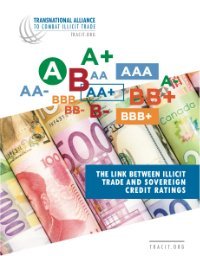
Illicit Trade and Sovereign Credit Ratings

By Transnational Alliance to Combat Illicit Trade (TRACIT),

In light of the strong and widespread impacts of illicit trade on countries’ economic output and performance, a new report from the Transnational Alliance to Combat Illicit Trade (TRACIT) investigates whether a correlation can be established between individual countries’ creditworthiness and their vulnerability to illicit trade. The report compares the credit ratings attributed by S&P Global, Fitch Group and Moody's and the scores attributed by the Global Illicit Trade Environment Index, and finds that countries that are poorly equipped to tackle illicit trade also suffer from poor credit worthiness. Illicit trade has a direct negative impact on the very economic, social, and institutional risk factors that credit rating agencies evaluate to determine countries’ ability to honor their debt. The corruption, crime, human trafficking, money laundering, and environmental degradation connected with illicit trade all combine to weaken a country’s economic, financial and institutional stability that underpin its credit ratings. Correcting the regulatory environment and economic circumstances that enable illicit trade can improve the environment upon which a country’s credit ratings are based. Governments should prioritize and increase efforts to combat illicit trade, and the underlying conditions that facilitate it, because of the severe repercussions it has on society, the economy, and development, and because it is in their own financial interest to do so.

NY: TRACIT 2021. 18p.

International Approaches to Rape

Edited by Nicole Westmarland and Geetanjali Gangoli.

“The book gives an overview of the socio-legal and political approaches taken in relation to rape across nine countries worldwide. It is written at a time in which many governments have begun to take rape more seriously than in the past and have started to implement wide-ranging reforms.This is therefore an ideal time to describe what that range of reforms has been, and to assess the degree to which they have been successful.”

Policy Press (2011) 249 pages.

Crime victims and the police: Crime victims’ evaluations of police behaviour, legitimacy, and cooperation: a multi-method study

By N. N. Koster

t seems that repeat crime victims are less likely to offer their cooperation to the police than victims who were victimized only once. This dissertation seeks to understand why this may be the case and examines what crime victims value in their contact with the police. The findings reveal that crime victims are not only interested in a fair treatment, but also in investigative activities that the police may perform to solve their case. Both are important to them, because it makes them feel that they and their case are being taken seriously. Evaluations of the police response have important consequences for both perceived police legitimacy and willingness to cooperate with the police. Negative evaluations of the police response, particularly concerning a lack of investigation activities, could have detrimental effects. This applies especially to victims of violent crimes that know their offender. As a consequence, some of them may not only become reluctant to cooperate with the police, but also develop feelings of vigilantism. To prevent repeat crime victims from evading the criminal justice system it is, therefore, of utmost importance that the police avoids negative evaluations as much as possible.

Leiden: Leiden University, 2018. 205p.

Victims of Political Violence and Terrorism

Making Up Resilient Survivors. By William McGowan. This book examines the survivors of political violence and terrorism, considering both how they have responded and how they have been responded to following critical incidents. As this work demonstrates, survivors of comparatively rare and spectacular violence hold a mirror up to society’s normative assumptions around trauma, recovery, and resilience. Drawing on two years of observational field research with a British NGO who work with victims and former perpetrators of PVT, this book explores contested notions of ‘resilience’ and what it might mean for those negotiating the aftermaths of violence. Examining knowledge about resilience from a multitude of sources, including security policy, media, academic literature, and the survivors themselves, this book contends that in order to make empirical sense of resilience we must reckon with both its discursive and practical manifestations. An accessible and compelling read, this book will appeal to students and scholars of criminology, sociology, victimology, criminal justice, and all those interested in the stories of survivors. Milton Park, Abingdon, Oxon ; New York, NY : Routledge, 2022. 274p.

Stopping Rape

Towards a comprehensive policy. By Sylvia Walby, Philippa Olive, Jude Towers, Brian Francis, Sofia Strid, Andrea Krizsán, Emanuela Lombardo, Corinne May-Chahal, Suzanne Franzway, David Sugarman, Bina Agarwal and Jo Armstrong. “The selection of the examples of good and promising practice in this book is guided by a theory of the causes of rape. The causal pathways that lead to rape involve many of society’s institutions. These pathways are embedded in the state and public services, including the criminal justice system and healthcare; culture, media and education; in other forms and contexts of violence; and in the economy. Stopping rape requires the effective mobilisation of all of these actors and institutions.” Policy Press (2015) 322p.

Combating Fiscal Fraud and Empowering Regulators

Bringing Tax Money Back into the COFFERS. Edited by Brigitte Unger, Lucia Rossel, And Joras Ferwerda. “This book brings to bear the insights from various researchers, from various disciplines, from various institutions, and from various countries to ‘analyse the impact of the new international regulations on the scope of tax evasion, tax avoidance, and money laundering’, as stated in the Introduction. The chapters in this book represent the fruits of the EU Horizon Project, ‘Combating Fiscal Fraud and Empowering Regulators’ (COFFERS), led by Brigitte Unger...” Oxford University Press (2021) 369p.