Open Access Publisher and Free Library
CRIME+CRIMINOLOGY.jpeg

CRIME

Violent-Non-Violent-Cyber-Global-Organized-Environmental-Policing-Crime Prevention-Victimization

Posts in diversity
The Sex Offender Housing Dilemma: Community Activism, Safety, and Social Justice

By Monica Williams

The controversy surrounding community responses to housing for sexually violent predators When a South Carolina couple killed a registered sex offender and his wife after they moved into their neighborhood in 2013, the story exposed an extreme and relatively rare instance of violence against sex offenders. While media accounts would have us believe that vigilantes across the country lie in wait for predators who move into their neighborhoods, responses to sex offenders more often involve collective campaigns that direct outrage toward political and criminal justice systems. No community wants a sex offender in its midst, but instead of vigilantism, Monica Williams argues, citizens often leverage moral, political, and/or legal authority to keep these offenders out of local neighborhoods. Her book, the culmination of four years of research, 70 in-depth interviews, participant observations, and studies of numerous media sources, reveals the origins and characteristics of community responses to sexually violent predators (SVP) in the U.S. Specifically, The Sex Offender Housing Dilemma examines the placement process for released SVPs in California and the communities’ responses to those placements. Taking the reader into the center of these related issues, Monica Williams provokes debate on the role of communities in the execution of criminal justice policies, while also addressing the responsibility of government institutions to both groups of citizens. The Sex Offender Housing Dilemma is sure to promote increased civic engagement to help strengthen communities, increase public safety, and ensure government accountability.

New York; London: New York University Press, 2018. 288p.

Homicide among Indigenous females in North Carolina: a comparison of publicly generated data and violent death reporting system

By Muhammad Hudhud, Scott Proescholdbell, Tammy Norwood, Crystal Cavalier-Keck, Ronny A Bel

Like other minoritized populations, American Indian/Alaska Native (AI/AN) females experience disparate morbidity and mortality outcomes to that of the general US population. This study identified discrepancies in reporting of AI/AN female decedents between the North Carolina Violent Death Reporting System (NC-VDRS) and an online, user-generated database. Female AI/AN decedent data of all ages were collected from the NC-VDRS and compared against that of the publicly available North Carolina Missing and Murdered Indigenous Women (MMIW NC) database for the study period, 2004–2019. Twenty-four of the 72 cases matched between data systems (33.3%). Substantive differences between the NC-VDRS and the MMIW NC database were found. Future efforts should be directed towards supporting Indigenous communities with the comprehensive data the NC-VDRS can provide. This paper highlights statewide public health systems like the NC-VDRS supporting community efforts to understand, advocate for, and disseminate information on MMIW.

Forensic Sciences Research, Volume 9, Issue 1. March 2024, 3pg

The “Webification” of Jihadism: Trends in the Use of Online Platforms, Before and After Attacks by Violent Extremists in Nigeria

By Folahanmi Aina and John Sunday Ojo

Violent extremist organisations (VEOs) use social media platforms to promote extremist content and coordinate agendas.  The use of digital platforms to disseminate information and coordinate activities by VEOs in Nigeria has grown considerably in recent years. This report analyses the adoption of social media before and after attacks by Boko Haram, Islamic State of West Africa Province (ISWAP) and Ansaru. In the post-attack environment, Boko Haram, ISWAP and Ansaru use platforms to claim responsibility and display their strengths against the state’s security forces. By demonstrating their capacity to attack state security forces, the three groups aim to erode the public’s confidence in the state military’s capacity to safeguard national security. The key findings of this report are as follows: Boko Haram, ISWAP and Ansaru previously leveraged popular social media platforms, including YouTube, Facebook, Telegram and Instagram. These platforms were used to promote propaganda and create awareness regarding upcoming attacks. However, all three groups have now had their use of these platforms restricted or banned. ISWAP has switched to using WhatsApp as a secure platform for communication before, during and after attacks. Rocket.Chat and Telegram have also been instrumental in ISWAP’s information dissemination. Boko Haram uses Telegram to share its activities in the pre-attack and post-attack environments. Ansaru has yet to appear on social media platforms due to its underground activities, which are hard to monitor. The recent acquisition of high-speed satellite internet has enhanced ISWAP’s communication with its audience and enabled coordinated attacks. Combating the exploitation of social media platform by VEOs requires a multidimensional approach. Effective collaboration with technology companies becomes imperative to identify extremist content. Building technological infrastructure for the state requires synergistic collaboration with the military and intelligence agencies to enable the removal of extremism from social media platforms. Devising multilingual and specialised algorithms to detect coded extremism messages and audio-visual content is essential for effective counter-extremism digital architecture. Investing in current technology through research and algorithm development must be prioritised to identify violent extremist content in Nigeria and beyond.

London: Global Network on Extremism & Technology, 2023. 30p.

Whose History? How Textbooks Can Erase the Truth and Legacy of Racism

By Jakiyah Bradley

In recognition of Black History Month, this TMI brief examines the ramifications of attempts by anti-truth groups to remove or whitewash our nation’s history and legacy of racism from K-12 public school classrooms. The Legal Defense Fund (LDF) fights tirelessly for safe, inclusive, and high-quality education, and we believe that proper education requires an honest, accurate, and comprehensive understanding of our past to create a more just and inclusive future. The current efforts to silence discussions on race and its intersections with inequalities based on sexuality and gender are not the first attempts to distort and erase U.S. history. This is a centuries old war on truth that continues to evolve. Today’s attacks on truth are born out of a broader history where a small minority tries to use their power and privilege to eclipse racial justice progress. One way in which truth is attacked is through controlling the narratives told in children’s history textbooks, a practice dating back to the U.S. Civil War.

New York: NAACP Legal Defense Fund , Thurgood Marshall Institute, 2023, 12p

Bullied: The Story of an Abuse

By Jonathan Alexander

"What happens when the defining moment of your life might be a figment of your imagination? How do you understand — and live with — definitive feelings of having been abused when the origin of those feelings won’t adhere to a singular event but are rather diffused across years of experience? In Bullied: The Story of an Abuse, Jonathan Alexander meditates on how, as a young man, he struggled with the realization that the story he’d been telling himself about being abused by a favorite uncle as a child might actually just have been a “story” — a story he told himself and others to justify both his lifelong struggle with anxiety and to explain his attraction to other men. Story though it was, Alexander maintains that some form of abuse did occur. In writing that is at turns reflective, analytic, and hallucinatory, Alexander traces what it means to suffer homophobic abuse when such is diffused across multiple actors and locales, implicating a family, a school, a culture, and a politics — as opposed to a singular individual who just happened to be the only openly gay man in young Alexander’s life. Along the way, Alexander reflects on Jussie Smollett, drug abuse, MAGA-capped boys, sadomasochism, Catholic priests, cruising, teaching young adult fiction about rape, and a host of other oddly but intimately related topics."

Brooklyn, NY: punctum books, 2021. 182p.

Exploring Data Augmentation for Gender-Based Hate Speech Detection

By Muhammad Amien Ibrahim, Samsul Arifin and Eko Setyo Purwanto

Social media moderation is a crucial component to establish healthy online communities and ensuring online safety from hate speech and offensive language. In many cases, hate speech may be targeted at specific gender which could be expressed in many different languages on social media platforms such as Indonesian Twitter. However, difficulties such as data scarcity and the imbalanced gender-based hate speech dataset in Indonesian tweets have slowed the development and implementation of automatic social media moderation. Obtaining more data to increase the number of samples may be costly in terms of resources required to gather and annotate the data. This study looks at the usage of data augmentation methods to increase the amount of textual dataset while keeping the quality of the augmented data. Three augmentation strategies are explored in this study: Random insertion, back translation, and a sequential combination of back translation and random insertion. Additionally, the study examines the preservation of the increased data labels. The performance result demonstrates that classification models trained with augmented data generated from random insertion strategy outperform the other approaches. In terms of label preservation, the three augmentation approaches have been shown to offer enough label preservation without compromising the meaning of the augmented data. The findings imply that by increasing the amount of the dataset while preserving the original label, data augmentation could be utilized to solve issues such as data scarcity and dataset imbalance.

United States, Journal Of Computer Science. 2023, 9pg

Futureproof: Security Aesthetics and the Management of Life

Editor(s): D. Asher Ghertner, Hudson McFann, Daniel M. Goldstein

Security is a defining characteristic of our age and the driving force behind the management of collective political, economic, and social life. Directed at safeguarding society against future peril, security is often thought of as the hard infrastructures and invisible technologies assumed to deliver it: walls, turnstiles, CCTV cameras, digital encryption, and the like. The contributors to Futureproof redirect this focus, showing how security is a sensory domain shaped by affect and image as much as rules and rationalities. They examine security as it is lived and felt in domains as varied as real estate listings, active-shooter drills, border crossings, landslide maps, gang graffiti, and museum exhibits to theorize how security regimes are expressed through aesthetic forms. Taking a global perspective with studies ranging from Jamaica to Jakarta and Colombia to the U.S.-Mexico border ;Futureproof expands our understanding of the security practices, infrastructures, and technologies that pervade everyday life.

Contributors: Victoria Bernal, Jon Horne Carter, Alexandra Demshock, Zaire Z. Dinzey-Flores, Didier Fassin, D. Asher Ghertner, Daniel M. Goldstein, Rachel Hall, Rivke Jaffe, Ieva Jusionyte, Catherine Lutz, Alejandra Leal Martínez, Hudson McFann, Limor Samimian-Darash, AbdouMaliq Simone, Austin Zeiderman

Durham, NC: Duke University Press, 2020. 312p.

Male witches in early modern Europe

 By Lara Apps and Andrew Gow  

Gender at stake critiques historians' assumptions about witch-hunting as well as their explanations for this complex and perplexing phenomenon. The authors insist on the centrality of gender, tradition and ideas about witches in the construction of the witch as a dangerous figure. They challenge the marginalisation of male witches by feminist and other historians. The book shows that large numbers of men were accused of witchcraft in their own right, in some regions, more men were accused than women. The authors analyse ideas about witches and witch prosecution as gendered artefacts of patriarchal societies under which both women and men suffered. They challenge recent arguments and current orthodoxies by applying crucial insights from feminist scholarship on gender to a selection of statistical arguments, social-historical explanations, traditional feminist history and primary sources, including trial records and demonological literature. The authors assessment of current orthodoxies concerning the causes and origins of witch-hunting will be of particular interest to scholars and students in undergraduate and graduate courses in early modern history, religion, culture, gender studies and methodology.

Manchester, UK: Manchester University Press, 2003. 201p

Fantasies of Gender and the Witch in Feminist Theory and Literature

By Justyna Sempruch

In Fantasies of Gender and the Witch in Feminist Theory and Literature, Justyna Sempruch analyzes contemporary representations of the “witch” as a locus for the cultural negotiation of genders. Sempruch revisits some of the most prominent traits in past and current perceptions in feminist scholarship of exclusion and difference. She examines a selection of twentieth-century US American, Canadian, and European narratives to reveal the continued political relevance of metaphors sustained in the archetype of the “witch” widely thought to belong to pop-cultural or folkloristic formulations of the past. Through a critical rereading of the feminist texts engaging with these metaphors, Sempruch develops a new concept of the witch, one that challenges traditional gender-biased theories linking it either to a malevolent “hag” on the margins of culture or to unrestrained “feminine” sexual desire. Sempruch turns, instead, to the causes for radical feminist critique of “feminine” sexuality as a fabrication of logocentric thinking and shows that the problematic conversion of the “hag” into a “superwoman” can be interpreted today as a therapeutic performance translating fixed identity into a site of continuous negotiation of the subject in process. Tracing the development of feminist constructs of the witch from 1970s radical texts to the present, Sempruch explores the early psycho-analytical writings of Cixous, Kristeva, and Irigaray, and feminist reformulations of identity by Butler and Braidotti, with fictional texts from different political and cultural contexts.

West Lafayette, IN: Purdue University Press, 2008. 198p.

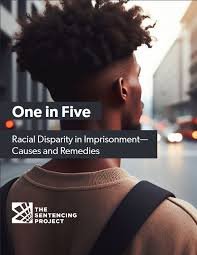
One in Five Racial Disparity in Imprisonment— Causes and Remedies

By Nazgol Ghandnoosh, Celeste Barry and Luke Trinka

The United States experienced a 25% decline in its prison population between 2009, its peak year, and 2021. While all major racial and ethnic groups experienced decarceration, the Black prison population has downsized the most. But with the prison population in 2021 nearly six times as large as 50 years ago and Black Americans still imprisoned at five times the rate of whites, the crisis of mass incarceration and its racial injustice remain undeniable. What’s more, the progress made so far is at risk of stalling or being reversed.

Washington, DC, Sentencing Project. 2023, 34pg

Concealing for Freedom: The Making of Encryption, Secure Messaging and Digital Liberties

By: Ksenia Ermoshina and Francesca Musiani

Concealing for Freedom: The Making of Encryption, Secure Messaging and Digital Liberties sets out to explore one of the core battlegrounds of Internet governance: the encryption of online communications. Current debates around encryption have fundamental implications for our individual liberties and collective presence on the Internet. Encryption of communications at scale and in increasingly usable ways has become a matter of public concern, especially since Edward Snowden’s 2013 revelations. A new cryptographic imaginary is taking hold, which sees encryption as a necessary precondition for the formation of networked publics. At the same time, there have been major evolutions and accelerations in the field of secure communications, prompted in part by the cryptography community’s renewed efforts to create next-generation secure messaging protocols and applications. It is vital that we unveil the very recent, and sometimes less recent history of these protocols and their key applications. The book takes on this task, in order to show how the opportunities and constraints they provide to Internet users came about, and how both developer communities and institutions are working towards making them available for the largest possible audience. It explores how efforts towards this goal are built upon interwoven stories about technical development and architectural choices, about community-building – and about Internet governance and politics. In doing so, the book focuses on the experience of encryption in a wide variety of contemporary secure messaging protocols and tools, and looks at the implications of these endeavors for the “making of” digital liberties on the Internet. Concealing for Freedom provides two key empirical and theoretical contributions. Firstly, it enriches a social sciences-informed understanding of encryption. It does so by examining how different solutions of cryptography for secure communications are created, developed, enacted, and governed, and what this diverse experience of encryption, operating across many different sites, means for online civil liberties. Secondly, it contributes to understanding the social and political implications of particular design choices when it comes to the technical architecture of digital networks, in particular their degree of (de-)centralization. The book explores developers’ actions and their interactions with other stakeholders, for instance users, security trainers, standardising bodies, and funding organizations. It also examines their interactions with the technical artifacts they develop, in which a core common objective is to create tools that “conceal for freedom” even as how this objective is met differs according to technical architectures, the user publics being targeted and the tools’ underlying values and business models.

Manchester, UK: Mattering Press, 2022. 274p.

Addressing Illicit Financial Flows in East and Southern Africa

By Michael McLaggan

Prominent throughout the world, illicit financial flows (IFFs) not only undermine the ability of states to collect revenue, but they also pose challenges to governance and the rule of law and provide avenues for the funding of further illicit activity. Although a global occurrence, IFFs may manifest differently at the regional level, making a uniform approach difficult. This calls for a model that is more inclusive of different types of flows than traditional understandings of IFFs, which tend to focus on financial flows within the formal system. In regions such as East and southern Africa, where informality is much higher than in the developed nations of the ‘global north’, the greater focus on formal systems does not find the same degree of applicability. This is not to downplay the necessity of observing and countering formal financial flows of an illicit nature but rather to emphasise the need to pay greater attention to informal and trade flows, which are prolific in less developed regions. This paper draws on extensive research by the Global Initiative against Transnational Organized Crime (GI-TOC) – in particular, the Observatory of Illicit Economies in East and Southern Africa – in addition to research by other international organisations, to analyse whether the ‘IFFs pyramid’ proposed by the GI-TOC (Reitano, 2022) is applicable to and useful for researchers seeking to understanding illicit financial flows in various settings around the world but especially in regions where greater levels of informality exists, such as East and southern Africa. The paper finds that the pervasive informality of markets in the East and southern African region, and their abuse by criminal actors, means that greater attention to IFFs is necessary in this sphere. Common also is the use of illicitly acquired, or otherwise illicitly traded commodities, in barter (that is, goods for goods) markets. Identified as particularly relevant is the pernicious influence of state-embedded actors, who often play substantial roles in the facilitation of IFFs and act as obstacles to policies to address them. Furthermore, vested interests of criminal actors in keeping certain industries and markets informal serve as barriers to formalisation and highlight the greater need to pay attention to informal financial flows especially. The due consideration to trade and informal flows is what makes the IFFs pyramid a useful model for understanding these flows in both global and regional settings. At the very least, the pyramid model highlights the need for holistic approaches and policy reform when considering IFFs in less developed regions.  

Birmingham, UK: University of Birmingham. 2024, 33pg

Michigan State Police Traffic Enforcement: An Assessment of Policies, Training, and Operations

By Thomas Christoff, Benjamin Carleton, Margarita Parker, Kaitlin Moloney, Alexa Blondin, and Bill Taylor

Traffic enforcement encounters represent one of the most common interactions that the public has with law enforcement, with more than 20 million people pulled over for a traffic stop in the US each year (Baumgartner et al., 2021). Police officers make at least three important decisions during a traffic stop encounter, including whether to initiate a traffic stop, whether to conduct a search of persons or the vehicle, and how the officer will sanction the driver (Schafer et al., 2006). Similarly, traffic enforcement is also one of the primary responsibilities of the Michigan State Police (MSP), with MSP having conducted 287,065 traffic stops in 2022.1 In January of 2021, MSP took proactive steps to begin a partnership with researchers from the School of Criminal Justice at Michigan State University (MSU) to understand whether racial/ethnic disparities exist in traffic stop behavior by MSP patrol members. As part of MSP’s partnership with MSU, MSU researchers examined data for MSP traffic stops conducted during the year 2020. Overall, MSU’s analysis found that “African-American drivers experienced significant disparities with respect to MSP traffic stops.” In addition, MSU’s analysis found that “Hispanic drivers were significantly more likely than White drivers to be searched or arrested after traffic stops.” MSU conducted a second round of traffic stop data analysis using MSP data for traffic stops conducted during 2021. In this second round, MSU added a Post-by-Post analysis, which revealed that “a small proportion of MSP posts accounted for the racial and ethnic disparities observed statewide.” The analysis also revealed disparities in traffic stops for African-American drivers in Secure Cities Partnership (SCP) locations. Upon receiving MSU’s initial findings, MSP leadership responded in January 2022 with the unveiling of a multifaceted Five-Point Plan intended to address racial disparities in traffic enforcement. The five points focused on understanding the contributors to disparities in traffic stops and exploring ways in which MSP could effectively reduce such disparities. The point most relevant to this assessment is the first one, which involves the hiring of an independent consulting firm to review MSP policies and make recommendations that will address racial disparities. MSP issued a request for proposals in March 2022 seeking an independent consulting firm to conduct this work, and the CNA Corporation (CNA) was awarded the contract to assess MSP traffic enforcement policies and program initiatives over the course of 18 months, starting in June 2022. CNA’s approach to this assessment focused on the full lifecycle of a trooper, including how MSP recruits and hires its troopers, instructs and trains its troopers, and supervises its troopers. We also considered organizational factors that are relevant to traffic enforcement and equitable policing. To assess MSP’s traffic enforcement policies and program initiatives, we used a variety of sources, including document review, targeted interviews, focus groups, ride-alongs, and quantitative data analysis. This report details the findings and recommendations of this focused assessment and consists of the following five main sections: 1. Methodology and Approach 2. Recruitment and Hiring Policies, Trainings, and Practices 3. Trooper Policies, Trainings, and Practices 4. Supervisor Policies, Trainings, and Practices 5. Organizational Processes and Initiatives   

Arlington VA: CNA, 2023. 95p.

Homelessness, Offending, Victimization, and Criminal Legal System Contact   

By Bill McCarthy and John Hagan

There is now a sizable literature on connections between homelessness, crime, and criminal legal system contact. We review studies on these relationships, focusing mostly on links between the adversity that often characterizes homelessness—the need for shelter, food, and income—and offending, victimization, and involvement with the criminal legal system. We concentrate on multivariate studies from the United States and Canada and consider research on youth and adults. We begin with a short discussion of some of the challenges of studying these relationships. We follow our review of research on homeless conditions with a summary of research that has used data from homeless samples to advance a broad array of explanations of crime; a collection that includes strain, routine activities and lifestyle exposure, differential association, social control, rational choice, life course, and criminal capital theories.

Annual Review of Criminology, Volume 7, Page 257 - 281

Delegated Vigilantism and Less-than-Lethal Lynching in Twenty-First-Century America

By Michael Tonry

Whites have been afraid of Black people since “20 or so” were “purchased” in Jamestown, the first permanent British colony, in 1619. Southern Whites’ fears of racial insurrections and wars pervaded American politics through the Civil War. For nearly a century afterward, southern and many other Whites feared economic and social competition from Black people and believed they were inferior human beings. Since the 1960s, most Whites have ceased believing in inherent Black inferiority but have continued to oppose integration of schools and housing and exaggeratedly feared Black criminals. Two widespread earlier practices, vigilantism and lynching, although in retrospect reviled, have modern equivalents that target Black people. Police use of the “third degree,” curbside punishment, and brutal prisons were for long acceptable to fearful and angry White citizens, just as racial profiling, police violence, and extreme punishment disparities are in our time. Call that “delegated vigilantism.” White citizens no longer themselves capture and kill alleged wrongdoers but, not so different, majorities have for a half century supported policies that authorize or mandate routine use of unprecedentedly severe punishments that ruin lives. Call that “less-than-lethal lynching.”

United States, Crime and Justice Volume 52. 2023

Embracing Virtual Reality Technology with Black Adolescents to Redress Police Encounters

By Danielle M. Olson, Tyler Musgrave, Divya Gumudavelly, Chardee Galan, Sarita Schoenebeck, D. Fox Harrell, and Riana E. Anderson

Police brutality—including the incidents that mobilized collective outrage and action across the world during the summer of 2020—has negatively impacted the psychological health of Black youth for generations. Police harassment is a persistent form of racial discrimination that Black youth frequently navigate (Brunson, 2007), and particularly as a consequence of vicarious trauma via social media, it has been associated with depressive and anxious sequelae (e.g., Tynes et al., 2019). While Black youth are faced with policing experiences in vivo and in vitro, many studies of the psychological impact of policing are contained within traditional retrospective surveys, which limits our understanding of youth’s in-the-moment perceptions and desired concurrent actions. To expand the efforts to assess and redress youth’s experiences with police encounters, this manuscript details the development of an afterschool program that supports adolescents in the creation of a series of video game and virtual reality (VR) narratives. A participatory design method was utilized to co-create the perception of policing experiences with Detroit high school students enrolled in a computer science course, allowing them to actualize their experiences “on screen” and work towards redressing these experiences through co-construction and virtual activism.

United States, Journal of Youth Development Vol 18 Issue 3. 2023, 18pg

Family and Me (FAM): A New Model of Foster Care for Youth Impacted by Commercial Sexual Exploitation in San Francisco

By Julie Freccero, Audrey Taylor, Sarah Chynoweth, Justine DeSilva

Children and youth experiencing commercial sexual exploitation (CSE) often have some form of engagement with the child welfare system. Safe and stable housing is vital to minimize vulnerability to CSE, help survivors recover, and reduce revictimization. Yet housing and shelter are among the top service gaps reported by agencies serving trafficking survivors in San Francisco, a high density area for CSE. To address this disparity, in 2019, a coalition of agencies developed Family And Me (FAM), a new model of foster care designed to meet the needs of youth who have experienced or are at risk of CSE in the San Francisco Bay Area. The goal was to establish an evidence-based, youth-centered model of care that could be scaled throughout the State of California and beyond. The 3.5-year FAM pilot aimed to improve the health, safety, and well-being of youth affected by CSE and to increase the knowledge, capacity, and retention rates of the caregivers who support them by offering a range of enhanced support services for both youth and their caregivers. However, due to numerous challenges, such as COVID-19 restrictions and recruitment barriers, the FAM collaborative was only able to implement a portion of the original FAM model.

Berkeley, CA: Human Rights Center at UC Berkeley School of Law, 2022. 40p.

The Enduring Neighborhood Effect, Everyday Urban Mobility, and Violence in Chicago

By Robert J. Sampson† and Brian L. Levy

A longstanding tradition of research linking neighborhood disadvantage to higher rates of violence is based on the characteristics of where people reside. This Essay argues that we need to look beyond residential neighborhoods to consider flows of movement throughout the wider metropolis. Our basic premise is that a neighborhood’s well-being depends not only on its own socioeconomic conditions but also on the conditions of neighborhoods that its residents visit and are visited by—connections that form through networks of everyday urban mobility. Based on the analysis of large-scale urban-mobility data, we find that while residents of both advantaged and disadvantaged neighborhoods in Chicago travel far and wide, their relative isolation by race and class persists. Among large U.S. cities, Chicago’s level of racially segregated mobility is the second highest. Consistent with our major premise, we further show that mobility-based socioeconomic disadvantage predicts rates of violence in Chicago’s neighborhoods beyond their residence-based disadvantage and other neighborhood characteristics, including during recent years that witnessed surges in violence and other broad social changes. Racial disparities in mobility-based disadvantage are pronounced—more so than residential neighborhood disadvantage. We discuss implications of these findings for theories of neighborhood effects on crime and criminal justice contact, collective efficacy, and racial inequality

University of Chicago Law Review, U Chi L Rev > Vol. 89 (2022) > Iss. 2

Ecological Threat Report 2023: Analysing Ecological Threats, Resilience & Peace

By Institute For Economics & Peace

From the document: "The Ecological Threat Report (ETR) is a comprehensive, data-driven analysis covering 3,594 sub-national areas across 221 countries and territories. It covers 99.99 per cent of the world's population and assesses threats relating to food insecurity, water risk, demographic pressures, and natural disasters. This report identifies countries that have the highest risk, both now and in the future, of suffering from major disasters due to the ecological threats they face, the lack of societal resilience, and other factors. These countries are also the most likely to suffer from conflict. The 2023 ETR aims to provide an impartial, data-driven foundation for the debate about ecological threats facing countries and sub-national areas and to inform the design of resilience-building policies and contingency plans."

Institute For Economics & Peace . 2023. 77p.

A Report of Blockchain and Cryptocurrencies in Illegal Betting:

By The Asian Racing Federation Council on Anti-illegal Betting & Related Financial Crime

The purpose of this report is to explain how blockchain technology and cryptocurrencies are being used in the illegal betting industry in Asia. Blockchain and cryptocurrencies have been widely adopted in the betting industry in the form of payments, betting applications built on blockchain technology and to move funds. The emergence of this technology is a threat to legal betting because of the intrinsic features of many cryptocurrencies, such as: facilitating avoidance of anti-money laundering (AML) and know-your-customer (KYC) procedures by betting operators; circumvention by operators of international betting regulatory and licensing requirements; and instantaneous and anonymous cross-border transactions from bettors and operators. All of these features are attractive to bettors and operators in jurisdictions where online betting is illegal and/or restricted. Regulators in many jurisdictions have also been slow to keep up with the growth of blockchain,1 creating loopholes exploited by organised crime. International law enforcement and anti-money laundering bodies have highlighted that blockchain and cryptocurrencies facilitate illicit activities including illegal betting and money laundering. 2 As a measure of the growth of cryptocurrency in betting, Bitcoin is now accepted on at least 127 offshore sports betting websites and 284 online casinos, which is a seven- and 13-fold increase respectively since 2018.3 In addition to Bitcoin, at least 780 offshore websites accept one or more of the five biggest cryptocurrencies,4 and most of these websites accept players from jurisdictions such as Hong Kong (83%), Australia (78%), Japan (92%) and Singapore (82%). 5 Cryptocurrencies further facilitate illegal betting by giving the operators of illegal bookmaking syndicates and related entities such as Macau casino junket operators a means of transferring money without detection in order to offshore the criminal proceeds of their illegal betting operations, settle payments with customers, and pay employees in overseas illegal betting hubs such as the Philippines. For these reasons they have also been enthusiastically adopted by entities linked to the junket industry.

The Asian Racing Federation Council. 2021. 12p.