Open Access Free Library
CRIME+CRIMINOLOGY.jpeg

CRIME

Violent-Non-Violent-Cyber-Global-Organized-Environmental-Policing-Crime Prevention-Victimization

Posts in social sciences
Fraudulent Advertising Online: Emerging Risks and Consumer Fraud

By The American Apparel & Footwear Association (AAFA).

Fraudulent advertising is rapidly emerging as a new risk to consumers shopping online, where millions of consumers are exposed to thousands of fraudulent advertisements taking them to thousands of illegitimate e-commerce websites that defraud and/or sell counterfeit products and deceitful services. This report from TRACIT and the American Apparel and Footwear Association investigates and points out that Internet-based platforms for social networking and shopping from home have inherent systemic weaknesses that are exploited by criminals to sell any variety of counterfeit or illegal product with little risk of apprehension. The lack of sufficient policies and procedures to verify an advertiser’s true identity and limited vetting during the onboarding process are identified as the main vulnerabilities that enable fraudulent advertising online.

NY: TRACIT(July 2020) 66p.
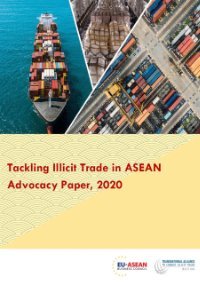
Tackling Illicit Trade in ASEAN

By A Joint Effort Between EU-ABC & TRACIT.

TRACIT has joined with the EU-ASEAN Business Council (EU-ABC) to issue a report that sheds light on the growing problem of illicit trade in the Association of South East Asian Nations (ASEAN). The report, titled, “Tackling Illicit Trade in ASEAN”, comes at a time when illicit trade is gaining momentum in ASEAN and as officials prepare for the upcoming 14th ASEAN Ministerial Meeting on Transnational Crime (AMMTC). The paper investigates various forms of illicit trade in the region, the affected industry sectors and provides critical insight on how government and industry leaders can work together to introduce regulatory changes to confront this pressing issue.

NY: TRACIT. Advocacy Paper, 2020. 35p.

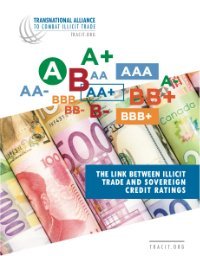
Illicit Trade and Sovereign Credit Ratings

By Transnational Alliance to Combat Illicit Trade (TRACIT),

In light of the strong and widespread impacts of illicit trade on countries’ economic output and performance, a new report from the Transnational Alliance to Combat Illicit Trade (TRACIT) investigates whether a correlation can be established between individual countries’ creditworthiness and their vulnerability to illicit trade. The report compares the credit ratings attributed by S&P Global, Fitch Group and Moody's and the scores attributed by the Global Illicit Trade Environment Index, and finds that countries that are poorly equipped to tackle illicit trade also suffer from poor credit worthiness. Illicit trade has a direct negative impact on the very economic, social, and institutional risk factors that credit rating agencies evaluate to determine countries’ ability to honor their debt. The corruption, crime, human trafficking, money laundering, and environmental degradation connected with illicit trade all combine to weaken a country’s economic, financial and institutional stability that underpin its credit ratings. Correcting the regulatory environment and economic circumstances that enable illicit trade can improve the environment upon which a country’s credit ratings are based. Governments should prioritize and increase efforts to combat illicit trade, and the underlying conditions that facilitate it, because of the severe repercussions it has on society, the economy, and development, and because it is in their own financial interest to do so.

NY: TRACIT 2021. 18p.

Organised crime, corruption and the movement of people across borders in the new enlarged EU: A case study of Estonia, Finland and the UK

By Jon Spencer, Rose Broad, Kauko Aromaa et. al.

This report was completed some time ago but for reasons beyond our control its publication has been delayed until now. The issue of the illegal movement of people retains its topicality and continues to be equally relevant as it was at the time of the project fieldwork. For example, recently, HEUNI has completed a further report on the FLEX project (Trafficking for Forced Labour and Labour Exploitation in Finland, Poland and Estonia, HEUNI Publication No. 68), and the report on trafficking for sexual exploitation published by The Swedish Council for Crime Prevention (Brå), accompanied by a Finnish country report published as HEUNI report No. 62 also indicate the importance of this area of research. The research reported on here was innovative as it included law enforcement practitioners and authority representatives in a constant dialogue with researchers. The aim was that this would allow for discussion of the data as it was gathered throughout the project. The intention was that data collection and interpretation formed a permanently iterative, self-correcting process and to some extent this was achieved. It was also an aim that the Expert Groups created for the project would continue once the research phase was completed in order to maximise the sharing of information and to sustain a dialogue between different professional groups. This aim proved to be over optimistic as there were too many problems caused by information sharing. It would seem that without external pressure and support, such formal cross-authority forms of co-operation do not survive spontaneously. The same could be observed in the context of the FLEX project. Our conclusion is that should such “horizontal” groups be created they will only continue if there is a budget and a responsible coordinating body established on a permanent basis. If not, the sustainability of such co-operative relationships is low.

Helsinki: European Institute for Crime Prevention and Control (HEUNI), 2011. 110p.

International Approaches to Rape

Edited by Nicole Westmarland and Geetanjali Gangoli.

“The book gives an overview of the socio-legal and political approaches taken in relation to rape across nine countries worldwide. It is written at a time in which many governments have begun to take rape more seriously than in the past and have started to implement wide-ranging reforms.This is therefore an ideal time to describe what that range of reforms has been, and to assess the degree to which they have been successful.”

Policy Press (2011) 249 pages.

The Poaching Diaries: Crime Scripting for Wilderness Problems

Edited by A.M. Lemieux.

The Poaching Diaries is an edited collection of contributions on wildlife crime prevention and wilderness problems. It is an outlet for practitioners, policy makers, and academics to tell stories that facilitate problem-solving.

The aim of The Poaching Diaries is to present ideas that help governments and civil society diversify their approach to wildlife protection to achieve lasting impacts. The focus of this volume is crime scripting, a useful process for unpacking problems and designing clever solutions. Crime scripts are generated by developing detailed, step-by-step accounts of very specific crimes, in the specific contexts and environments where they take place. These scripts capture the full process of committing a crime, including steps taken before and after the criminal act itself. This is useful for identifying weak points in the chain of events to focus prevention strategies. For example, a subway pickpocketing event is part of a larger process, in which the offender has many decisions to make and actions to complete; one of these actions could be loitering on platforms to find victims. Looking at this stage in the crime script, a disruption strategy might focus on limiting access to subway stations for individuals without a valid ticket. This would make it harder, or at least more expensive, for pickpockets to work and therefore a less attractive environment for crime.

Phoenix, AZ: Center for Problem-Oriented Policing, Arizona State University, 2020. 126[p.

A Chapter on Street Nuisances

Babbage, the polymath and father of the modern computer, having designed in 1822 a Difference engine” that could mechanically compute mathematical tables of many kinds, couldn’t stand street noise, so he wrote a chapter on it. Our guess is that noise pollution has become much worse than in his day.

The Metric System of Identification of Criminals

As Used in Great Britain and Ireland.by J.G. Garson. “The warrant appointing the Committee directed them to inquire (a) into the method of registering and identifying habitual criminals then in use in England; (b) into the “ Anthropometric ” system of classified registration and identification in use in France and other countries; (c) into the suggested system of identification by means of a record of finger -marks; to report whether the anthropometric system or the finger-mark system could, with advantage, be adopted into England, either in substitution for, or to supplement the then existing methods, and, if so, what arrangements should be adopted for putting them into practice, and what rules should be made under Section 8 of the Penal Servitude Act, 1891, for the photographing and measuring of prisoners.” London: Anthropological Institute of Great Britain and Ireland. 1900. 38p.

Combating Fiscal Fraud and Empowering Regulators

Bringing Tax Money Back into the COFFERS. Edited by Brigitte Unger, Lucia Rossel, And Joras Ferwerda. “This book brings to bear the insights from various researchers, from various disciplines, from various institutions, and from various countries to ‘analyse the impact of the new international regulations on the scope of tax evasion, tax avoidance, and money laundering’, as stated in the Introduction. The chapters in this book represent the fruits of the EU Horizon Project, ‘Combating Fiscal Fraud and Empowering Regulators’ (COFFERS), led by Brigitte Unger...” Oxford University Press (2021) 369p.