Open Access Publisher and Free Library
Fiction+Mediajpg.jpg

FICTION and MEDIA

CRIME AND MEDIA — TWO PEAS IN A POD

Posts in Christianity
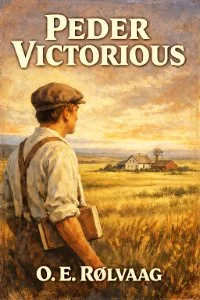
Peder Victorious

By O. E. Rølvaag (Author), Colin Heston (Introduction)

Peder Victorious by O. E. Rølvaag is a powerful continuation of the prairie saga that began with Giants in the Earth, shifting the focus from the physical hardships of pioneer settlement to the inner conflicts of the immigrant’s American-born son. Set within a Norwegian farming community in the Dakota Territory, the novel follows young Peder Holm as he comes of age amid the competing claims of ancestral faith and American ambition. Intelligent and driven, Peder embraces education and opportunity, yet his aspirations strain against the religious intensity and cultural conservatism that define his mother’s world. Rølvaag portrays with psychological depth the tension between generations, the fragility of cultural inheritance, and the cost of assimilation. The prairie remains vast and elemental, but the central struggle unfolds within the human heart, where identity, loyalty, and belief are tested. Both intimate and epic in scope, the novel offers a searching exploration of what it means to be victorious in a land that promises freedom while quietly demanding transformation.

Nearly a century after its publication, Peder Victorious by O. E. Rølvaag remains strikingly relevant in an era defined by global migration, cultural pluralism, and debates over national identity. The novel’s portrayal of second-generation tension—between inherited faith and modern ambition, communal loyalty and individual advancement—mirrors the lived experience of many contemporary families navigating assimilation in North America, Europe, and beyond. Peder’s divided consciousness anticipates what sociologists now describe as bicultural identity formation, in which success within dominant institutions can coexist with a sense of estrangement from ancestral tradition. At a time when questions of belonging, integration, and cultural continuity are again politically and socially charged, Rølvaag’s work offers a sober reminder that assimilation is not a frictionless process but a psychological and moral negotiation whose costs and gains are unevenly distributed across generations.

Read-Me.Org Inc. New York-Philadelphia-Australia. 2026. 240p.

Conversations With Eckermann

By Johann Peter Eckerman., Johann Wolfgang Von Goethe. Special Preface by Graeme R. Newman

In the final decade of his life, one of Europe’s greatest literary minds opened his door each day to a devoted young writer—and spoke freely. Conversations with Eckermann preserves those remarkable exchanges, offering readers an intimate portrait of Johann Wolfgang von Goethe at the height of his intellectual maturity. Through the attentive record of Johann Peter Eckermann, we witness Goethe reflecting on art, science, politics, poetry, and the destiny of modern culture with candor, wit, and penetrating insight.

These conversations are not formal lectures but living thought—unfolding over dinners, walks, and evenings of discussion. Goethe comments on Shakespeare and Byron, debates the direction of German literature, critiques romantic excess, anticipates the idea of “world literature,” and reveals the disciplines that sustained his own creative genius. The result is a rare literary document: philosophy in motion, cultural criticism in real time, and the inner workshop of a towering mind laid open.

Both intellectually rich and deeply human, Conversations with Eckermann offers more than historical curiosity. It models the art of thinking—measured, expansive, resistant to extremes. For modern readers navigating an age of ideological noise and cultural fragmentation, this classic work remains a masterclass in intellectual clarity, civil discourse, and the enduring power of conversation.

Read-Me.Org Inc. New York-Philadelphia-Australia. 2026. 284p.

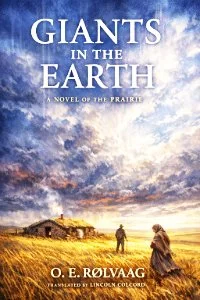
Giants in the Earth

O. E. Rølvaag, Preface by Colin Heston.

The struggle of the immigrant is often told through the lens of triumph—of cities built and fortunes made—but in O. E. Rølvaag’s Giants in the Earth, we are invited into a far more intimate and devastating arena: the psychological and spiritual cost of taming a wilderness. First published in Norwegian in 1924 as I de dage and later meticulously translated into English by Lincoln Colcord in collaboration with the author, this novel remains the definitive epic of the American prairie. It is not merely a story of farming; it is a saga of the human psyche stretched to its breaking point against an indifferent landscape.
At the heart of the narrative lies a profound dichotomy between the two protagonists, Per Hansa and Beret. Per Hansa embodies the archetype of the pioneer, fueled by a restless, creative energy that views the desolate plains of South Dakota not as a wasteland, but as a kingdom waiting to be claimed. To him, the "Giants" are physical obstacles to be conquered through grit and vision. Conversely, Beret represents the tragic reality of displacement. She is haunted by the Great Plain, a space so vast and empty that she feels God cannot find her there. For Beret, the "Giants" are the invisible, malevolent forces of the Earth itself, punishing those who dare to disturb its ancient, heavy silence.
The English version of Giants in the Earth is a rare literary achievement born of a unique partnership. Lincoln Colcord, a writer of the sea, found a common language with Rølvaag, a writer of the "sea of grass." Their collaboration ensured that the stark, rhythmic beauty of Rølvaag’s Norwegian—steeped in biblical cadence and Old World folklore—was preserved for an English-speaking audience. Colcord understood that the oceanic quality of the prairie was more than a metaphor; it was a physical reality where the winds howling across the Dakota territory carried the same weight and terror as a North Atlantic gale.
Rølvaag does not romanticize the pioneer experience. He documents the relentless succession of plagues—locusts, blizzards, and the suffocating loneliness of the sod house—forcing the reader to confront the sobering question of what is lost when a culture uproots itself. While Per Hansa builds the physical foundations of a new nation, Beret bears the burden of the cultural and emotional cost. Her descent into religious melancholy serves as a poignant reminder that while the land may be conquered, the soul is often the casualty of that conquest. She famously remarks that the Great Plain drinks the blood of Christian men and is never satisfied.
Nearly a century since its translation, Giants in the Earth stands as a pillar of American literature because it refuses to offer easy answers. It is a masterpiece of realism and a haunting work of the imagination that captures the birth of a modern identity forged in a crucible of isolation. As you turn these pages, you are witnessing a history that is as much about the internal landscape of the mind as it is about the external map of the frontier.

Read-Me.Org Inc. New York-Philadelphia-Australia. 2026. 373p.

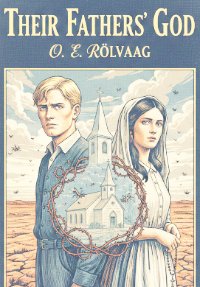
Their Father's God

By O. E. ROLVAAG

Their Fathers’ God (1931) is the powerful conclusion to O. E. Rølvaag’s epic trilogy of the Norwegian-American immigrant experience on the South Dakota prairies. Picking up where Peder Victorious left off, the novel shifts focus from the physical struggle of settling the land to the cultural and spiritual conflicts of the second generation. The story centers on the marriage of Peder Holm, a forward-thinking Norwegian Lutheran, and Susie Doheny, a devout Irish Catholic. As they attempt to build a life together, their relationship becomes a battlefield for the "clash of heritages":

  • Religious Tension: The couple struggles with the differing demands of their faiths, particularly regarding the baptism and upbringing of their children.

  • Cultural Identity: Peder wants to assimilate and modernise, while the pressures of their respective immigrant communities pull them back toward old-world traditions.

  • Environmental Hardship: Set against a backdrop of drought, grasshopper plagues, and the harsh reality of prairie farming, the physical environment mirrors the drying up of their emotional connection.

Major Themes

  • The Melting Pot Myth: Rølvaag explores the psychological toll of assimilation, suggesting that the blending of two distinct cultures is often a painful, destructive process rather than a seamless one.

  • Succession: The book examines whether the "God of the Fathers"—the rigid traditions and beliefs of the original pioneers—can survive or thrive in a rapidly changing American landscape.

While Giants in the Earth was a sweeping adventure of pioneer survival, Their Fathers’ God is a more intimate, psychological drama. It is often cited by historians and literary critics for its realistic, unsentimental portrayal of how religious and ethnic boundaries persisted even in the "limitless" American West.

Harper & Brothers. 1931. 350 p.

The Inner Beams

By Afshin rad

The document The Inner Beams by Afshin Rad is a historical novel set in East Berlin during the final years of the Cold War, focusing on the brutal atmosphere created by the East German Ministry of State Security, the Stasi. The narrative combines political history with a deeply personal story, illustrating how authoritarianism corrodes ordinary lives. It opens with a preface explaining the power and reach of the Stasi, an organization that employed nearly a hundred thousand agents and twice as many informants under the chilling slogan that anyone who “thinks differently” is an enemy.

The story follows Nadia, a young, marginalized woman surviving on the fringes of society through prostitution while raising her daughter Maya. Despite her poverty, stigmatization, and abuse at the hands of neighbors and strangers, she displays resilience and a rebellious spirit. Her life becomes entangled with the violence and hypocrisy of both the state and the church. She is alternately vilified and desired, caught between accusations of being a spy and exploitation by priests who hide their own corruption.

As events unfold, Nadia becomes a victim of the Stasi’s cruelty. She is imprisoned, tortured, and left for dead, only to be saved by a compassionate old man who hides her and helps her plan to reclaim her daughter, who has been taken by Party officials. Their efforts culminate in a daring but tragic attempt to rescue the child from a powerful regime family. The old man sacrifices his life to protect Nadia, while she herself endures near-death encounters in the collapsing state.

Against the backdrop of the Berlin Wall’s fall and the chaos of 1989, Nadia’s fate is sealed in both tragedy and symbolic triumph. Though she dies violently, her memory and sacrifice become a posthumous inspiration. Her grave, once marked with disdain, is later reclaimed as a shrine to freedom, with an epitaph honoring her rebellious spirit.

The work blends history, fiction, and allegory to show how individuals—especially the marginalized and forgotten—resist oppression and become unwilling martyrs of liberty. Through Nadia’s story, the book captures the human cost of totalitarianism while leaving readers with a sense of dignity, defiance, and the enduring value of freedom.

Read-Me.Org Inc. New York-Philadelphia-Australia. 2025. 77p.

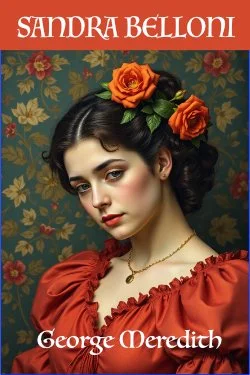
Sandra Belloni

By George Meredith. Designed and Edited with an Introduction by Colin Heston.

Sandra Belloni, first published in 1864 under the title Emilia in England, occupies a distinctive place in the literary corpus of George Meredith. It represents one of his earliest extended efforts to merge the comic novel with a more pointed social critique, a technique that would become a hallmark of his mature style. This novel, rich in subtle irony and psychological insight, grapples with the tensions between individuality and conformity, art and social convention, and the constraints of class and gender in Victorian England. At its heart, it is a narrative about a young woman of Italian descent, Emilia Belloni, whose musical gifts and unorthodox spirit clash with the expectations of the rigid English society into which she is thrust.

Meredith uses Emilia’s character not merely as a protagonist but as a symbolic figure—an embodiment of passionate sincerity, artistic freedom, and the disruptive power of the outsider. Emilia’s foreignness is not just ethnic; it is deeply cultural and emotional. Her instincts are governed by feeling and a commitment to truth, which repeatedly brings her into conflict with the carefully cultivated hypocrisies and social facades of the English middle and upper classes. Through her, Meredith examines the ways in which English society suppresses emotional authenticity in favor of propriety and self-interest.

In reading Sandra Belloni today, one encounters not only a portrait of Victorian society in all its contradictions but also an enduring exploration of the universal struggle between the self and society, between the voice that seeks to sing freely and the forces that would silence it. It is a novel that resonates beyond its historical moment, inviting readers to reflect on the costs and necessities of remaining true to oneself in the face of overwhelming pressure to conform.

Read-Me.Org Inc. New York-Philadelphia-Australia. 2025. 318p.

Beauchamp's Career

By George Meredith. Designed and Edited with an Introduction by Colin Heston.

More than any other of his novels, Beauchamp’s Career embodies Meredith’s philosophical worldview: that the highest human calling is the continual pursuit of greater consciousness. For Meredith, the “Comic Spirit” serves as an ethical guide—illuminating human folly, deflating pretension, and inviting self-correction through laughter rather than dogma.

Yet Beauchamp, ironically, lacks the flexibility of the Comic Spirit. He is too earnest, too driven by absolute convictions, to fully participate in the comic self-awareness that Meredith idealizes. In this sense, Beauchamp is both a hero and a warning: a figure of immense moral courage whose tragedy lies in his refusal to accept that the world operates not by ideals but by compromises.

While Beauchamp’s Career was never Meredith’s most popular work during his lifetime, it has come to be recognized as one of his most ambitious and profound novels. Its examination of the dilemmas of idealism, political integrity, and personal sacrifice remains strikingly relevant in an era of political polarization and disillusionment.

The novel speaks to anyone who has struggled with the tension between moral conviction and the messy realities of human society. Its insights into the nature of political life—the seductions of populism, the compromises demanded by coalition, the frustrations of advocacy in an indifferent world—resonate just as powerfully now as they did in the 19th century. Beauchamp’s Career stands as one of George Meredith’s greatest achievements: a work that challenges as much as it enlightens, a moral and political fable wrapped in the ironic garb of the Victorian social novel. It demands much of its readers—patience, attentiveness, and a willingness to engage with ambiguity—but it rewards that effort with a deeply moving meditation on the costs and the dignity of living according to one’s principles.

In an age when the struggle between ideals and pragmatism remains as urgent as ever, Beauchamp’s Career offers both a mirror and a guide—one that reflects the frailty of human institutions, but also the enduring power of conscience.

Read-Me.Org Inc. New York-Philadelphia-Australia. 2025. 383p.

Galusha The Magnificent

By Joseph C. Lincoln. Designed and Edited with an Introduction by Colin Heston

Published in 1921, Galusha the Magnificent stands as one of Joseph Crosby Lincoln’s most beloved and subtly humorous novels—a story that embodies the author’s signature blend of small-town Cape Cod charm, gently satirical social commentary, and richly drawn characters. Lincoln, often hailed as the “Bard of Cape Cod,” built a prolific career chronicling the lives, habits, and quirks of New England coastal communities. In Galusha the Magnificent, he brings his literary artistry to full bloom by offering readers a delightfully incongruous protagonist: a mild-mannered, absent-minded biblical archaeologist who finds himself entangled in the practical and parochial dramas of a fictional Cape Cod town.

Like many of Lincoln’s novels, Galusha the Magnificent is set in a fictional Cape Cod village—in this case, the town of Trumet. Lincoln’s Trumet is a lovingly detailed and recognizable composite of real Cape Cod communities, built upon generations of seafaring traditions, strong social cohesion, and a lively sense of local identity. For Lincoln, setting is never mere background. The Cape Cod environment—with its salt air, white churches, general stores, and crusty locals—serves as a character in its own right. Trumet is where the genteel values of Old New England meet the changing modern world of the early 20th century, and this dynamic tension is what fuels the plot and humor of the book.

Read-Me.Org Inc. New York-Philadelphia-Australia. 2025. 272p.

The Ebb-Tide: A Trio and Quartette: The Works of R.L.S. Volume XIX

By  Robert Louis Stevenson and Lloyd Osbourne, Edited by Colin Heston.

“The Ebb-Tide: A Trio and Quartette” is a dark, psychologically complex novella co-written by Robert Louis Stevenson and his stepson Lloyd Osbourne, first published in 1894. Included in Volume XIX of the Swanston Edition of Stevenson’s collected works, this tale marks one of the final literary efforts of Stevenson’s life and reflects his mature style—gritty, morally ambiguous, and deeply engaged with the human condition.

Set in the South Pacific, a region Stevenson had come to know intimately during his later years, The Ebb-Tide follows three disgraced and destitute Europeans—Herrick, Davis, and Huish—who find themselves stranded in Tahiti. When they are offered the chance to captain a cargo schooner, the Farallone, they seize the opportunity, only to discover that the ship is carrying a mysterious and morally troubling cargo. Their journey soon spirals into a tale of greed, betrayal, and existential crisis, culminating in a confrontation with Attwater, a charismatic and enigmatic missionary who lives alone on a remote island.

The novella is notable for its psychological depth and moral complexity. Each character represents a different facet of human weakness—cowardice, cruelty, and self-deception—and Stevenson explores how these traits play out under the pressures of isolation and lawlessness. The tropical setting, far from being idyllic, becomes a backdrop for moral decay and spiritual reckoning. The story’s title, The Ebb-Tide, metaphorically suggests the retreat of moral certainty and the erosion of personal integrity.

Stylistically, the work is lean and intense, with Stevenson’s prose sharpened by his collaboration with Osbourne. The narrative is driven by suspense and philosophical inquiry, raising questions about redemption, colonialism, and the nature of evil. It is often seen as a companion piece to Stevenson’s earlier South Seas fiction, such as The Beach of Falesá, but it is darker and more introspective in tone.

The Swanston Edition provides this novella with critical annotations and historical context, situating it within Stevenson’s broader literary and biographical trajectory. As one of his final works, The Ebb-Tide offers a powerful and unsettling vision of the human soul adrift—both literally and morally—on the margins of empire and civilization.

Read-Me.Org Inc. Australia-New York-Philadelphia. 2025. 216p.

The Black Arrow: A Tale of the Two Roses

By R. L. Stevenson. Edited by Colin Heston

"The Black Arrow: A Tale of the Two Roses" is a historical adventure novel by Robert Louis Stevenson, first published in 1888. Set during the tumultuous period of the Wars of the Roses in 15th-century England, the story follows the young protagonist, Richard Shelton. Richard is caught in the conflict between the houses of York and Lancaster, and his journey is marked by themes of loyalty, betrayal, and revenge. The novel begins with Richard discovering that his guardian, Sir Daniel Brackley, is involved in treacherous activities. As Richard seeks justice for his father's murder, he joins forces with a band of outlaws known as the Black Arrow. The leader of the outlaws, John Amend-All, becomes a key ally in Richard's quest. Throughout the narrative, Richard faces numerous challenges, including battles, escapes, and romantic entanglements with Joanna Sedley, a young woman disguised as a boy. Stevenson's vivid descriptions and fast-paced plot make "The Black Arrow" a captivating read. The novel seamlessly combines elements of adventure, romance, and historical fiction, offering readers a thrilling portrayal of medieval England and its intricate political landscape.

Volume VIII of the Swanston Edition of "The Works of Robert Louis Stevenson" continues to showcase Stevenson's literary versatility. This volume typically includes a mix of his essays, short stories, and other writings, reflecting his wide-ranging interests and talents. The Swanston Edition is renowned for its comprehensive and authoritative compilation of Stevenson's works, providing readers with an in-depth exploration of his literary contributions. Each volume in this series highlights Stevenson's ability to engage readers with his storytelling prowess across various genres and styles. This volume has been carefully edited and redesigned by Colin Heston, a renowned novelist and storyteller, to make the book more enjoyable and comprehensible to the modern reader.

Read-Me.Org Inc. New York, Philadelphia, Australia. 2025. 178p.

Tom and Maggie Tulliver

By George Eliot (author) and Colin Heston (AI assisted editor)

This book is a substory of Tom and Maggie Tulliver featured in Eliot's "The Mill on the Floss". (1860) Tom and Maggie are the children of Mr. and Mrs. Tulliver, who own and operate Dorlcote Mill near the fictional town of St. Ogg's. From an early age, the siblings exhibit starkly different temperaments and aspirations. Tom, the elder of the two, is pragmatic, responsible, and somewhat rigid in his moral outlook. He possesses a strong sense of duty and loyalty to his family but is also unforgiving and often harsh in his judgments. He takes after his father in his belief in tradition and financial security, and he grows into a young man deeply committed to restoring the family's honor after they suffer economic ruin.

Maggie, in contrast, is deeply emotional, imaginative, and intellectually curious. She is an ardent reader with a keen mind and an inclination toward philosophical reflection. However, her passionate nature and nonconformist tendencies put her at odds with the rigid expectations of her time, particularly regarding women's roles in society. Throughout the novel, Maggie struggles with her desire for personal fulfillment while also yearning for familial love and acceptance. Her deep affection for her brother is a defining aspect of her character, yet it is also a source of great pain, as Tom's strict moral code and inability to understand her inner struggles create tension and estrangement between them. George Eliot's portrayal of Tom and Maggie Tulliver is remarkable for its depth and psychological complexity. Through them, she explores the difficulties of familial duty, the limitations imposed by rigid social structures, and the yearning for personal freedom. Their story, filled with moments of tenderness, misunderstanding, and ultimate reconciliation, continues to resonate with readers, making *The Mill on the Floss* one of Eliot's most enduring and emotionally powerful works.

Read-Me.Org Inc. 2015. 80p.

Romola

By George Eliot. Introduction by Colin Heston

Step into the rich tapestry of Renaissance Florence with George Eliot's Romola, a novel that masterfully intertwines politics, religion, philosophy, and personal transformation. Originally published as a serial in The Cornhill Magazine from July 1862 to August 1863, and later in three volumes by Smith, Elder & Co., Romola stands as one of Eliot's most ambitious and intellectually rich works..

In this special edition, Colin Heston provides a compelling introduction that sets the stage for Eliot's intricate narrative. Heston's introduction delves into the historical and cultural backdrop of late 15th-century Florence, a city undergoing dramatic transformation following the death of Lorenzo de’ Medici and the rise of the Dominican friar Girolamo Savonarola. Heston highlights how Eliot's profound historical research and deep psychological insight bring to life the ideological conflicts and moral questions faced by the protagonists.

Follow the journey of Romola de’ Bardi, the daughter of a blind scholar, as she navigates personal disillusionment and societal upheaval. Raised in an environment that reveres knowledge and classical learning, Romola's path becomes entangled with Tito Melema, a charming but opportunistic Greek scholar. As Romola evolves from a passive intellectual companion to an active agent of change, she becomes a symbol of ethical steadfastness and selfless service.

Eliot's Romola engages with themes of reform, idealism, and the struggles of the human soul against the tides of history. Through Savonarola's rise and fall, Eliot examines the dangers and possibilities of ideological purity, raising questions about the balance between faith, reason, and pragmatism. The novel suggests that while individuals are often caught within the larger movements of history, personal choices and moral convictions can shape the course of one's life. Reflecting Eliot's engagement with historical materialism, moral idealism, and the complexities of human character, Romola is deeply philosophical. Heston's introduction underscores the novel's ambitious scope, feminist undertones, and philosophical depth, making it a significant achievement in historical fiction.

For those willing to immerse themselves in its complex narrative, Romola offers a rewarding exploration of human character set against one of the most fascinating periods of European history. This edition, enriched by Colin Heston's insightful introduction, invites readers to experience Eliot's remarkable ability to illuminate the past while grappling with timeless questions of morality, identity, and social responsibility.

Read-Me.Org Inc. 2025. 411p.

Silas Marner: The Weaver of Raveloe

By George Eliot. Introduction by Colin Heston.

Discover the timeless classic Silas Marner by George Eliot, a heartwarming tale of redemption and the transformative power of love. Follow the journey of Silas Marner, a reclusive weaver whose life is turned upside down when he loses his treasured gold and finds an unexpected treasure in a golden-haired child named Eppie. Set in the quaint village of Raveloe, this novel beautifully explores themes of community, isolation, and the true meaning of wealth and happiness. With richly developed characters and a compelling narrative, Silas Marner is a story that will captivate and inspire readers of all ages.

First published in 1861 by William Blackwood and Sons. This edition Read-Me.Org Inc. 2025.149p.

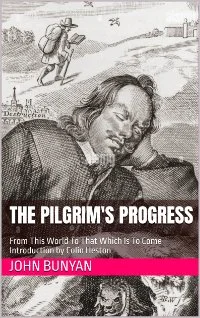
Pilgrim's Progress: From This World To That Which Is To Come

By John Bunyan. Introduction by Colin Heston Paperback

The Pilgrim’s Progress (1678) by John Bunyan is a Christian allegory that narrates the spiritual journey of a man named Christian as he seeks salvation. Leaving his home in the City of Destruction, he embarks on a perilous pilgrimage to the Celestial City, guided by faith and the teachings of the Bible. Along the way, he encounters various symbolic figures and places, such as Evangelist, who sets him on the right path; the Slough of Despond, representing despair; Vanity Fair, a place of worldly temptation; and Giant Despair, who imprisons him in Doubting Castle. The novel, written in accessible yet vivid prose, reflects Bunyan’s Puritan theology and explores themes of sin, redemption, and perseverance. Though primarily a religious work, it is also a compelling adventure story that has captivated readers for centuries. While some view its moral instruction as rigid, it remains one of the most influential and widely read books in English literature. This version contains an introduction by Colin Heston, who assesses its effect on subsequent modern-day authors, especially its religious significance, allegorical style, and theological critiques.

Read-Me.Org Inc. 2025. 133p.

The Hero Of Basil's

By C. Serjeant

A boys adventure book linking Christian life to war…FROM CHAPTER 1:

“"Yes, mother. And you remember what he said about being good soldiers of our Lord, don't you?"

"I'm afraid I didn't hear quiteall the sermon," she said, trying to speak lightly. "I wish," she added to herself, "that Jack would stop talking about such things. Especially in public. It would be frightfully embarrassing if he began to discuss religion in front of Lady Hardcastle or Mrs. Lyle-Gault. I'm not sure that they wouldn't think it a joke.'

"Well, mother,"Jack was saying, "that was what his sermon was about--being good soldiers-and somehow I felt I wanted to be one of them-and I am, mother."

London. Pickering & Inglis Ltd. 1932. 67p. USED BOOK