Open Access Publisher and Free Library
Fiction+Mediajpg.jpg

FICTION and MEDIA

CRIME AND MEDIA — TWO PEAS IN A POD

Posts in Memoirs
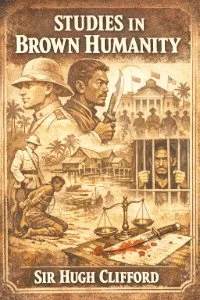
Studies in Brown Humanity: :Being Scrawls and Smudges in Sepia, White, and Yellow

By Hugh Clifford (Author), Graeme Newman (Introduction)

Studies in Brown Humanity by Sir Hugh Clifford is a striking collection of literary sketches drawn from the author’s experiences as a British colonial administrator in the Malay Peninsula during the late nineteenth century. Blending storytelling with observation, Clifford presents a series of vivid portraits of village life, local customs, personal conflicts, and dramatic encounters shaped by the social structures of colonial Southeast Asia. The narratives explore themes of honor, betrayal, justice, and authority, often focusing on moments when traditional Malay codes of conduct collide with the legal and moral framework imposed by the British colonial state.

Although written as literary sketches rather than formal social analysis, the book provides revealing insights into the ways communities understand wrongdoing and punishment. Clifford’s stories depict acts of violence, disputes over reputation, and conflicts between individuals and authority, illustrating how social norms, kinship ties, and communal expectations shape both criminal behavior and responses to it. In this sense, the work can be read not only as colonial literature but also as an early, informal contribution to the sociological study of crime and social control.

At the same time, Studies in Brown Humanity reflects the attitudes and assumptions of its imperial context. Clifford’s interpretations are filtered through the perspective of a European observer, and the book reveals much about the intellectual climate of the British Empire at the turn of the twentieth century. For modern readers, the volume is therefore both a vivid narrative of colonial life and a historical document that illuminates how crime, justice, and cultural difference were understood within the framework of empire.

Rich in atmosphere and dramatic detail, Clifford’s work remains valuable today as a window into the complex social worlds of colonial Southeast Asia and as a reminder of how early narratives about crime and punishment were shaped by the cultural and political conditions of their time.

Read-Me.Org Inc. New York-Philadelphia-Australia. 2026. 291p.

Conversations With Eckermann

By Johann Peter Eckerman., Johann Wolfgang Von Goethe. Special Preface by Graeme R. Newman

In the final decade of his life, one of Europe’s greatest literary minds opened his door each day to a devoted young writer—and spoke freely. Conversations with Eckermann preserves those remarkable exchanges, offering readers an intimate portrait of Johann Wolfgang von Goethe at the height of his intellectual maturity. Through the attentive record of Johann Peter Eckermann, we witness Goethe reflecting on art, science, politics, poetry, and the destiny of modern culture with candor, wit, and penetrating insight.

These conversations are not formal lectures but living thought—unfolding over dinners, walks, and evenings of discussion. Goethe comments on Shakespeare and Byron, debates the direction of German literature, critiques romantic excess, anticipates the idea of “world literature,” and reveals the disciplines that sustained his own creative genius. The result is a rare literary document: philosophy in motion, cultural criticism in real time, and the inner workshop of a towering mind laid open.

Both intellectually rich and deeply human, Conversations with Eckermann offers more than historical curiosity. It models the art of thinking—measured, expansive, resistant to extremes. For modern readers navigating an age of ideological noise and cultural fragmentation, this classic work remains a masterclass in intellectual clarity, civil discourse, and the enduring power of conversation.

Read-Me.Org Inc. New York-Philadelphia-Australia. 2026. 284p.

Appealing Because He Is Appalling: Black Masculinities, Colonialism, and Erotic Racism

Edited by Tamari Kitossa

This collection invites us to think about how African-descended men are seen as both appealing and appalling, and exposed to eroticized hatred and violence and how some resist, accommodate, and capitalize on their eroticization. Drawing on James Baldwin and Frantz Fanon, the contributors examine the contradictions, paradoxes, and politico-psychosexual implications of Black men as objects of sexual desire, fear, and loathing. Kitossa and the contributing authors use Baldwin’s and Fanon’s cultural and psychoanalytic interpretations of Black masculinities to demonstrate their neglected contributions to thinking about and beyond colonialist and Western gender and masculinity studies. This innovative and sophisticated work will be of interest to scholars and students of cultural and media studies, gender and masculinities studies, sociology, political science, history, and critical race and racialization. Foreword by Tommy J. Curry.

Contributors: Katerina Deliovsky, Delroy Hall, Dennis O. Howard, Elishma Khokhar, Tamari Kitossa, Kemar McIntosh, Leroy F. Moore Jr., Watufani M. Poe, Satwinder Rehal, John G. Russell, Mohan Siddi

Alberta: University of Alberta Press, 2021