Open Access Free Library
Fiction+Mediajpg.jpg

FICTION and MEDIA

CRIME AND MEDIA — TWO PEAS IN A POD

Posts tagged classic literature
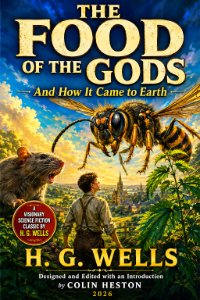
The Food of the Gods and How It Came to Earth

by H.G. Wells. Edited with an Introduction by Colin Heston.

What happens when science makes life bigger—but the world refuses to grow with it?

In The Food of the Gods and How It Came to Earth, H. G. Wells transforms a seemingly absurd scientific experiment into a sweeping and surprisingly modern story about progress, fear, power, and humanity’s resistance to change.

Two scientists, Mr. Bensington and Professor Redwood, develop an extraordinary substance—Herakleophorbia, soon known simply as “the Food”—capable of producing astonishing growth. Intended as little more than an improved food supply, their invention quickly escapes the laboratory. The consequences are spectacular: gigantic plants, monstrous wasps, enormous rats, and eventually human children who grow to dimensions that make ordinary society seem absurdly small.

At first, the giants are treated as curiosities and inconveniences. But as the children mature, their extraordinary strength and intelligence threaten a civilization constructed—physically, politically, and socially—for smaller people. The new generation can lift enormous weights, cross great distances, and contemplate achievements beyond the abilities of ordinary humanity.

Fear soon becomes political. Caterham, the self-proclaimed “Jack the Giant-killer,” rises to power as hostility toward the giants intensifies. Laws restrict their movement, society demands their submission, and the conflict between the old world and the new moves inexorably toward confrontation.

First published in book form in 1904, The Food of the Gods is one of Wells’s most imaginative works of speculative fiction—a novel he described as a “fantasia on the change of scale in human affairs.”Beneath its giant insects, colossal children, scientific mishaps, and dark comedy lies a serious question: When something new outgrows the society that created it, should humanity suppress it—or make room for the future?

This Read-Me.Org Classic Reprint preserves the novel’s original three-book structure and presents Wells’s remarkable vision for a new generation of readers. It includes a new Introduction by Colin Heston.

A classic of early science fiction filled with giant creatures, scientific catastrophe, political satire, social conflict—and H. G. Wells’s unmistakable fascination with the terrifying possibilities of the future.

.Read-Me.Org Inc. New York-Philadelphia-Australia. 2026. 176p.

The Sleeper Awakes

by H.G. Wells. Edited with an Introduction by Colin Heston.

What if you fell asleep—and awoke more than two hundred years later to discover that you owned the world?

Graham, an exhausted nineteenth-century man, falls into a mysterious cataleptic trance. When at last he awakens, London has become an immense mechanized metropolis of moving walkways, towering structures, mass communications and flying machines. But the greatest shock is not technological. During his extraordinary sleep, Graham's modest fortune has multiplied through compound interest until he has become the richest man alive—and, at least in name, the Master of the World.

Yet ownership is not power. Graham discovers that a ruling Council has governed in his name while millions of ordinary people live under a rigid system of economic and political control. His awakening threatens the entire structure. Revolution erupts, and Graham is forced to choose between the calculating Ostrog, who believes the masses must be controlled, and a population determined to overthrow its masters.

First published in 1899 as When the Sleeper Wakes, Wells substantially revised the novel in 1910 under the title The Sleeper Awakes. He removed much of the original romantic subplot, tightened the later chapters, reconsidered the story's flying machines, and gave the struggle between rulers and ruled a darker and more ambiguous conclusion.

More than a century later, Wells's vision remains startling. Concentrated wealth, manipulation of public opinion, mass entertainment, technological surveillance, economic inequality and political elites who claim to know what is best for the people make The Sleeper Awakes one of the great precursors of modern dystopian fiction.

This new Read-Me.Org edition presents Wells's revised text, newly reset and lightly corrected for typographical consistency, while retaining the language and character of the original. It also includes a new Introduction by Colin Heston and five public-domain period illustrations by Henri Lanos, the celebrated illustrator of the original 1899 publication.

For readers of The Time Machine, The War of the Worlds, Nineteen Eighty-Four, Brave New World and other classics of speculative and dystopian fiction, The Sleeper Awakes reveals H. G. Wells not merely as a prophet of technology, but as a remarkably prescient critic of wealth, power and the politics of the modern mass society.

Read-Me.Org Inc. New York-Philadelphia-Australia. 2026. 174p.

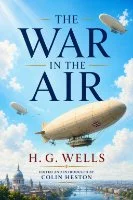
The War In The Air

by H.G. Wells. Edited with an Introduction by Colin Heston.

H. G. Wells imagined the nightmare of modern aerial warfare before the modern airplane had truly arrived.

First published in 1908, The War in the Air: And Particularly How Mr. Bert Smallways Fared While It Lasted is one of Wells’s most startling works of speculative fiction—a sweeping story of technological progress, global conflict, and the terrifying consequences of inventions that humanity may be clever enough to create but not wise enough to control.

Bert Smallways is no soldier, statesman, or scientific genius. He is an ordinary, ambitious young bicycle mechanic whose enthusiasm for the new age of machines leads him into an extraordinary adventure. By accident, Bert finds himself swept into the world of experimental aviation and then carried aboard a German aerial armada crossing the Atlantic to attack the United States.

What begins with the excitement and comedy of early flight rapidly becomes something much darker.

Wells imagines fleets of gigantic airships, military aeroplanes, battles fought above oceans and cities, the destruction of New York, international retaliation, and finally a conflict so widespread that the political, commercial, and technological foundations of civilization begin to collapse.

Written years before the First World War demonstrated the military importance of aviation, The War in the Air is remarkable for the questions it asks. What happens when technological change moves faster than political institutions can respond? Can a weapon that can destroy an enemy actually secure victory? What becomes of civilians when the battlefield expands into the sky above their homes? And what happens when every great power possesses the ability to strike beyond traditional frontiers?

Yet this is not simply a novel of machines and warfare. At its center is Bert Smallways—bewildered, resourceful, comic, frightened, and unmistakably human—trying to survive a catastrophe whose causes are far beyond his understanding or control.

More than a century after its first appearance, Wells’s warning has lost little of its force. Aircraft, missiles, nuclear weapons, drones, cyberwarfare, and autonomous military technologies have changed the instruments, but the fundamental problem remains: human beings continually acquire new powers before they have necessarily acquired the wisdom to govern them.

This new Read-Me.Org Classic Reprint reproduces Wells’s historic novel in a freshly reset edition, supplemented by period public-domain aviation illustrations and a new Introduction by Colin Heston that places the book in its historical setting while examining its continuing relevance to warfare, technology, and the uncertain future of civilization.

A classic of early science fiction, future-war literature, and political prophecy, The War in the Air remains both a gripping adventure and one of H. G. Wells’s most disturbing warnings about the price of uncontrolled progress.

.Read-Me.Org Inc. New York-Philadelphia-Australia. 2026. 210p.

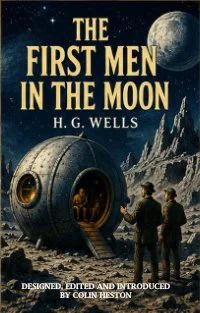
The First Men in the Moon

by H.G. Wells. Edited with an Introduction by Colin Heston.

H. G. Wells takes humanity beyond Earth in one of the earliest—and still one of the most imaginative—novels of lunar exploration.

When the eccentric scientist Mr. Cavor invents Cavorite, an extraordinary substance capable of shielding matter from gravity, his commercially minded neighbor Mr. Bedford immediately recognizes its possibilities. Together they construct a spherical spacecraft and embark upon an experiment that carries them farther than either man intended: all the way to the Moon.

But Wells's Moon is no lifeless wilderness. Beneath its strange surface lies an enormous subterranean world of caverns, vegetation and astonishing forms of life. Most remarkable of all are the Selenites, an advanced insect-like civilization whose society has developed along principles utterly different from those of humanity.

What begins with the exuberance of scientific discovery gradually becomes something much more unsettling. Bedford sees opportunity, wealth and conquest; Cavor seeks knowledge and understanding. Their reactions to the Selenites allow Wells to turn the adventure back upon its readers. Who, after all, is truly alien? What happens when one civilization encounters another that it neither understands nor controls? And what might an intelligent extraterrestrial species conclude after learning about human warfare, greed and empire?

First published in book form in 1901, The First Men in the Moon was the culmination of the extraordinary sequence of scientific romances that included The Time Machine, The Island of Doctor Moreau, The Invisible Man and The War of the Worlds. It combines humor, adventure, speculation and social criticism with an imaginative vision of extraterrestrial life that helped shape modern science fiction.

This Read-Me.Org Classic Reprint presents Wells's original narrative for a new generation of readers, together with an introduction placing the novel in its literary and historical setting. The edition preserves Wells's extraordinary mixture of Victorian adventure and remarkably modern speculation about alien intelligence, specialization, colonialism and humanity's place in the universe.

A classic voyage beyond Earth—and an encounter with a world stranger, larger and more sophisticated than its human visitors ever imagined.

Read-Me.Org Inc. New York-Philadelphia-Australia. 2026. 184p.

The Island Of Doctor Moreau

by H.G. Wells. Edited with an Introduction by Colin Heston.

What separates the human being from the animal—and what happens when science attempts to erase the boundary?

Shipwrecked and close to death, Edward Prendick is rescued from the Pacific and carried aboard a strange schooner transporting an assortment of animals to an unnamed island. His relief at surviving soon gives way to suspicion. The island is inhabited by the mysterious Doctor Moreau, a brilliant scientist whose notorious experiments forced him to abandon civilized society.

Then Prendick discovers what Moreau has been doing.

Hidden within the island is the terrible House of Pain, where Moreau has attempted to transform animals into beings resembling men and women. His creations walk upright, speak, obey commandments and struggle to suppress their animal instincts. They call themselves the Beast Folk.

And they live according to the Law.

First published in 1896, The Island of Doctor Moreau followed The Time Machine and became one of H. G. Wells's most disturbing scientific romances. Written during the fierce Victorian controversy surrounding vivisection and experimental biology, the novel pushes scientific ambition to its most horrifying conclusion. Moreau is not simply a conventional mad scientist. He is more frightening than that: an intelligent investigator who has convinced himself that knowledge justifies suffering and that scientific curiosity need recognize no moral boundary.

Yet Wells's real target extends far beyond the laboratory. The Beast Folk imitate humanity through speech, ritual, prohibition and fear. When Moreau's authority begins to collapse, so does the Law that has restrained them. The resulting nightmare forces Prendick to confront an even more disturbing possibility—that civilization itself may be only a thin covering over humanity's own animal inheritance.

More than a century after its publication, the questions raised by Doctor Moreau have become more rather than less provocative. Genetic engineering, biotechnology, animal experimentation and the power of scientists to manipulate living organisms give Wells's nightmare a striking contemporary resonance.

Part science fiction, part Gothic horror and part philosophical investigation, The Island of Doctor Moreau asks questions that remain profoundly uncomfortable: How far should science be permitted to go? Does the ability to alter life confer the right to do so? And how certain are we that the boundary between civilization and savagery is as secure as we imagine?

This Read-Me.Org Classic Reprint presents Wells's original 1896 narrative, together with a new introduction exploring the scientific, ethical and evolutionary questions behind one of the darkest masterpieces of early science fiction.

.Read-Me.Org Inc. New York-Philadelphia-Australia. 2026. 135p.

The War Of The Worlds

by H.G. Wells. Edited with an Introduction by Colin Heston.

They came from Mars—and suddenly humanity was no longer the dominant species on Earth.

When a strange cylinder crashes into the English countryside, curious spectators gather around the crater. What emerges changes the world forever.

The Martians have arrived.

Armed with terrifying technology, towering fighting machines, deadly Heat-Rays, and poisonous Black Smoke, the invaders sweep aside human resistance with shocking ease. Soldiers, artillery, cities, governments, and the certainties of Victorian civilization collapse before an enemy whose scientific superiority appears overwhelming.

Through the experiences of an unnamed narrator struggling across a devastated England, H. G. Wells creates one of literature’s greatest stories of invasion, survival, panic, and social breakdown.

First published in 1898, The War of the Worlds helped establish the modern alien-invasion story, but Wells intended much more than spectacular science fiction. Behind the Martian machines lies a provocative reversal of imperial power. What does conquest look like when the technologically superior invader is no longer European—and humanity itself becomes the apparently inferior population?

Wells strips civilization of its confidence with astonishing speed. Refugees choke the roads. Authority disintegrates. Ordinary people flee for their lives. Humanity discovers that intelligence, technology, and military power do not necessarily guarantee survival.

More than a century after its publication, The War of the Worlds retains its extraordinary power because its central question remains unsettlingly simple:

What if something arrived that we could not defeat?

This Read-Me.Org edition brings Wells’s revolutionary scientific romance to contemporary readers while preserving the extraordinary imagination, urgency, and menace of the original.

.Read-Me.Org Inc. New York-Philadelphia-Australia. 2026. 207p.

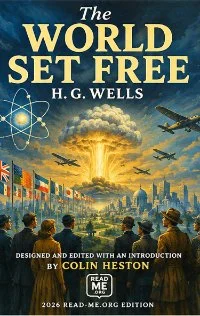
The World Set Free

by H.G. Wells. Edited with an Introduction by Colin Heston.

In 1914 H. G. Wells imagined the atomic bomb—and a world forced to confront what such a weapon would mean.

Among Wells’s extraordinary works of scientific speculation, The World Set Free occupies a unique place. Written in 1913 and published in 1914, the novel imagined the release of atomic energy and weapons Wells explicitly called “atomic bombs” decades before Hiroshima and Nagasaki.

But Wells was interested in far more than predicting a new weapon.

Beginning with humanity’s long struggle to harness energy, the novel moves toward the discovery of practical atomic power—and then toward catastrophe. The new energy promises abundance on an unprecedented scale, but nations quickly transform scientific achievement into military power. Atomic war follows, devastating cities and demonstrating that the traditional international order can no longer survive the destructive capacities science has placed in human hands.

From that destruction Wells develops his larger and more controversial argument. If technology has made war potentially catastrophic for civilization itself, must humanity eventually abandon competing sovereign states and construct some form of world government?

The World Set Free is therefore simultaneously scientific romance, future history, political argument, and warning.

Its historical significance is remarkable. Physicist Leó Szilárd, who later played an important role in the development of nuclear physics and the history of the atomic bomb, acknowledged Wells’s novel as an influence on his thinking about atomic chain reactions.

Yet the book’s greatest interest today may lie in the question Wells asks beyond the bomb itself: Can humanity develop political institutions rapidly enough to control the destructive technologies its scientists create?

The uploaded Read-Me.Org edition includes Wells’s important 1921 preface, in which he reconsidered his predictions after the catastrophe of the First World War.

More than a century after Wells wrote it, The World Set Free remains an extraordinary encounter between science fiction and history—a novel that did not merely imagine atomic warfare but helped place the idea into the intellectual world from which the nuclear age eventually emerged.Read-Me.Org Inc. New York-Philadelphia-Australia. 2026. 216p.

The Invisible Man: A Grotesque Romance

by H.G. Wells. Edited with an Introduction by Colin Heston.

A hidden garden behind a green door. A valley where the blind rule. A magic shop where every trick is real. A crystal window onto Mars.

H. G. Wells is celebrated for The Time Machine, The War of the Worlds, and The Invisible Man, but his short fiction reveals the full breadth of his imagination. In these pages, ordinary men and women stumble across impossible discoveries, strange inventions, terrifying creatures, and worlds that exist just beyond the boundaries of everyday experience.

The Door in the Wall and Other Stories brings together forty of Wells's finest short stories, including every story from his definitive 1911 collection The Country of the Blind and Other Stories together with the additional tales from The Stolen Bacillus and Other Incidents that Wells himself later left behind. The result is the most complete single-volume gathering of his greatest short fiction from the remarkable decade in which he transformed modern speculative storytelling.

Here are unforgettable classics such as:

  • The Door in the Wall

  • The Country of the Blind

  • The Crystal Egg

  • The Magic Shop

  • The New Accelerator

  • The Star

  • The Man Who Could Work Miracles

  • The Empire of the Ants

  • The Red Room

  • The Remarkable Case of Davidson's Eyes

Alongside these famous masterpieces are comic tales, Gothic horrors, scientific romances, social satires, mysteries, and fantasies that display Wells at his most inventive and entertaining.

Whether imagining alien visions, miraculous powers, invisible thresholds, or the unexpected consequences of scientific discovery, Wells continually asks a question that became the foundation of modern science fiction: What would happen if the impossible were suddenly true?

Complete, authoritative, and newly introduced for modern readers, this volume is an essential collection for fans of classic science fiction, fantasy, horror, and one of the greatest imaginative writers in English literature.

Read-Me.Org Inc. New York-Philadelphia-Australia. 2026. 172p.

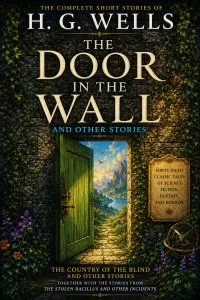
The Door in the Wall: And Other Stories

by H.G. Wells. Edited with an Introduction by Colin Heston.

A hidden garden behind a green door. A valley where the blind rule. A magic shop where every trick is real. A crystal window onto Mars.

H. G. Wells is celebrated for The Time Machine, The War of the Worlds, and The Invisible Man, but his short fiction reveals the full breadth of his imagination. In these pages, ordinary men and women stumble across impossible discoveries, strange inventions, terrifying creatures, and worlds that exist just beyond the boundaries of everyday experience.

The Door in the Wall and Other Stories brings together forty of Wells's finest short stories, including every story from his definitive 1911 collection The Country of the Blind and Other Stories together with the additional tales from The Stolen Bacillus and Other Incidents that Wells himself later left behind. The result is the most complete single-volume gathering of his greatest short fiction from the remarkable decade in which he transformed modern speculative storytelling.

Here are unforgettable classics such as:

  • The Door in the Wall

  • The Country of the Blind

  • The Crystal Egg

  • The Magic Shop

  • The New Accelerator

  • The Star

  • The Man Who Could Work Miracles

  • The Empire of the Ants

  • The Red Room

  • The Remarkable Case of Davidson's Eyes

Alongside these famous masterpieces are comic tales, Gothic horrors, scientific romances, social satires, mysteries, and fantasies that display Wells at his most inventive and entertaining.

Whether imagining alien visions, miraculous powers, invisible thresholds, or the unexpected consequences of scientific discovery, Wells continually asks a question that became the foundation of modern science fiction: What would happen if the impossible were suddenly true?

Complete, authoritative, and newly introduced for modern readers, this volume is an essential collection for fans of classic science fiction, fantasy, horror, and one of the greatest imaginative writers in English literature.

Read-Me.Org Inc. New York-Philadelphia-Australia. 2026. 360p.

Dark And Dangerous Mysteries

J. S. Fletcher (author). Colin Heston (Editor and Preface).

Before modern crime thrillers and historical adventures captivated millions of readers, J. S. Fletcher was crafting tales of intrigue, danger, deception, and suspense that kept readers turning pages late into the night. Dark and Dangerous Mysteries brings together two of Fletcher's most compelling novels, revealing the remarkable range of one of Britain's most prolific and imaginative writers.

In Mistress Spitfire, Fletcher transports readers to the turbulent days of seventeenth-century England. Against a backdrop of political unrest, secret loyalties, and personal vendettas, a spirited and unforgettable heroine finds herself caught in a web of danger and adventure. Combining historical drama, romance, and high-stakes intrigue, this vivid tale evokes a world where courage and cunning often mean the difference between life and death.

In The Orange-Yellow Diamond, Fletcher turns his formidable talents to mystery and detection. A priceless gem, mysterious disappearances, hidden motives, and a trail of clues lead readers through a masterfully constructed puzzle. As secrets emerge and suspects multiply, Fletcher demonstrates why he became one of the leading architects of twentieth-century crime fiction.

Together, these two novels showcase Fletcher at his best: a writer equally at home in the shadowy corridors of mystery and the dramatic landscapes of historical adventure. Rich in atmosphere, populated by memorable characters, and driven by expertly crafted plots, these stories remain as entertaining today as when they first appeared.

Carefully edited by Colin Heston, Dark and Dangerous Mysteries offers modern readers an opportunity to rediscover a forgotten master of suspense whose influence can still be felt in contemporary crime and adventure fiction.

Perfect for readers who enjoy classic mysteries, historical adventures, vintage detective fiction, and the timeless storytelling of the golden age of popular fiction.

Read-Me.Org Inc. New York-Philadelphia-Australia. 2026. p.302.

Conversations With Eckermann

By Johann Peter Eckerman., Johann Wolfgang Von Goethe. Special Preface by Graeme R. Newman

In the final decade of his life, one of Europe’s greatest literary minds opened his door each day to a devoted young writer—and spoke freely. Conversations with Eckermann preserves those remarkable exchanges, offering readers an intimate portrait of Johann Wolfgang von Goethe at the height of his intellectual maturity. Through the attentive record of Johann Peter Eckermann, we witness Goethe reflecting on art, science, politics, poetry, and the destiny of modern culture with candor, wit, and penetrating insight.

These conversations are not formal lectures but living thought—unfolding over dinners, walks, and evenings of discussion. Goethe comments on Shakespeare and Byron, debates the direction of German literature, critiques romantic excess, anticipates the idea of “world literature,” and reveals the disciplines that sustained his own creative genius. The result is a rare literary document: philosophy in motion, cultural criticism in real time, and the inner workshop of a towering mind laid open.

Both intellectually rich and deeply human, Conversations with Eckermann offers more than historical curiosity. It models the art of thinking—measured, expansive, resistant to extremes. For modern readers navigating an age of ideological noise and cultural fragmentation, this classic work remains a masterclass in intellectual clarity, civil discourse, and the enduring power of conversation.

Read-Me.Org Inc. New York-Philadelphia-Australia. 2026. 284p.

Treasure Island: Works of R.L.Stevenson Vol.6

By R. L. Stevenson. Edited by Colin Heston

"Treasure Island" is a classic adventure novel by Robert Louis Stevenson, first published in 1883. The story follows young Jim Hawkins, who discovers a treasure map in the chest of a deceased pirate. This discovery sets him on a thrilling journey across the seas aboard the Hispaniola, in search of the hidden treasure. Along the way, Jim encounters a host of memorable characters, including the charismatic and cunning Long John Silver, who leads a mutiny among the crew. The novel is celebrated for its vivid characters, gripping plot, and timeless themes of adventure, bravery, and the quest for fortune. "Treasure Island" has had a lasting impact on popular culture, shaping the modern image of pirates and inspiring countless adaptations.

Volume VI of the Swanston Edition of "The Works of Robert Louis Stevenson" continues to showcase the breadth of Stevenson's literary talent. This volume typically includes a mix of his essays, short stories, and other writings. The Swanston Edition is known for its comprehensive and authoritative compilation of Stevenson's works, offering readers a thorough exploration of his diverse contributions to literature. Each volume in this series provides insight into Stevenson's versatility as a writer, highlighting his ability to engage readers across various genres and styles.

This volume has been carefully edited and redesigned by Colin Heston, renowned novelist and story writer, to make the book more comprehensible to the present-day reader.

Read-Me.Org Inc. NY. Philal Australia. 2025. 197p.

The New Arabian Nights: Vol.4. Works of R;L;S.

By Robert Louis Stevenson. Edited by Colin Heston

"The New Arabian Nights" by Robert Louis Stevenson is a captivating collection of short stories that showcases his talent for blending adventure, mystery, and humor. Volume 4 of his works includes these tales, which are inspired by the classic "Arabian Nights" but set in contemporary Europe.

The Suicide Club: The collection opens with "The Suicide Club," a trilogy of stories that revolve around Prince Florizel of Bohemia and his loyal companion, Colonel Geraldine. They stumble upon a secret society where members gamble with their lives, seeking an escape from their troubles through death. The stories are filled with suspense, intrigue, and Stevenson's signature wit, as the prince and the colonel navigate dangerous situations to uncover the club's dark secrets.

The Rajah's Diamond: Another notable story is "The Rajah's Diamond," which is divided into four parts. It follows the adventures of a priceless diamond and the various characters who come into possession of it. The diamond's journey leads to a series of thrilling and unexpected events, showcasing Stevenson's ability to weave complex plots and create memorable characters.

Other Stories: The volume also includes other engaging tales such as "The Pavilion on the Links," a story of love, betrayal, and revenge set against the backdrop of a remote Scottish coast, and "A Lodging for the Night," which features the infamous French poet François Villon and his escapades in medieval Paris.

"The New Arabian Nights" is a testament to Stevenson's versatility as a writer. Each story is rich with vivid descriptions, dynamic characters, and a blend of humor and suspense. Stevenson's ability to transport readers to different settings and immerse them in the adventures of his characters makes this collection a delightful and compelling read. Volume 4 of his works highlights Stevenson's skill in crafting engaging narratives that continue to captivate readers with their originality and charm.

Australia. Read-Me.Org. Inc. 2025. 197p.

Portrait of a Lady

MAY CONTAIN MARKUP

By Henry James

"Portrait of a Lady" is a timeless classic written by Henry James that delves into the complexities of societal expectations and personal freedom in the 19th century. The novel follows the journey of Isabel Archer, a spirited and independent young American woman, as she navigates the intricacies of wealth, love, and betrayal while living in Europe. James masterfully crafts a narrative that explores the innermost thoughts and desires of his characters, making "Portrait of a Lady" a compelling exploration of self-discovery and the consequences of one's choices. This novel continues to captivate readers with its insightful commentary on the social norms of the era and the timeless question of what it means to truly be free.

Gutenberg Project. 1881. 340p.

THE TURN OF THE SCREW

MAY CONTAIN MARKUP

By Henry James

The Turn of the Screw by Henry James is a classic gothic novella that delves into the realms of psychological horror and suspense. The story follows a governess who is hired to care for two orphaned children at a remote estate in the English countryside. As she begins her duties, she starts to experience strange and eerie occurrences, convinced that the children are under the influence of malevolent spirits.

James masterfully weaves a tale of ambiguity, leaving readers questioning the governess's sanity and the true nature of the entities haunting the children. With its chilling atmosphere, subtle psychological tension, and unsettling ambiguity, The Turn of the Screw is a timeless masterpiece that continues to captivate readers with its haunting narrative and enigmatic characters.

NY. Macmillan. Gutenberg Project. 1898. 107p.

THE WINGS OF THE DOVE. VOLUME I

MAY CONTAIN MARKUP

HENRY JAMES.

In the first volume of "The Wings of the Dove," readers are introduced to a compelling story of love, desire, and betrayal set in the lavish backdrop of Victorian England. The novel follows the intertwined lives of Kate Croy, a young woman from a modest background with ambitious aspirations, and Merton Densher, a struggling journalist with his own dreams of success.

As their forbidden romance blossoms, the couple becomes entangled in a web of deceit and manipulation orchestrated by Kate's wealthy, dying aunt, Milly Theale. In a bid to secure her financial future, Kate schemes to have Merton woo and marry Milly, whose immense fortune could provide them with the means to live out their desires.

Henry James masterfully weaves a tale of moral complexity and emotional turmoil, exploring the depths of human ambition and the consequences of selfishness. As the characters navigate the intricacies of love and wealth, readers are drawn into a world where the allure of power and possessions threatens to overshadow the purity of the heart.

Volume I of "The Wings of the Dove" sets the stage for a riveting narrative that will captivate readers with its rich character development and profound exploration of the human spirit. Henry James's exquisite prose and keen observations make this classic novel a timeless masterpiece that continues to resonate with audiences today.

NEW YORK. CHARLES SCRIBNER'S SONS. 1902. 318.

WASHINGTON SQUARE

MAY CONTAIN MARKUP

BY HENRY JAMES

"Washington Square" by Henry James is a classic novel that delves into the complexities of relationships, wealth, and betrayal. Set in the affluent society of mid-19th century New York City, the story follows Catherine Sloper, a plain and unassuming young woman who stands to inherit a considerable fortune from her father, Dr. Austin Sloper.

Dr. Sloper, a wealthy and renowned physician, disapproves of Catherine's suitor, Morris Townsend, whom he believes to be pursuing her solely for her inheritance. As the drama unfolds, Catherine must navigate the conflicting desires of her heart and her duty to her father, leading to a poignant and powerful exploration of love, manipulation, and the consequences of one's choices.

With its keen observations of human nature and intricate character portrayals, "Washington Square" is a timeless novel that continues to captivate readers with its nuanced storytelling and profound insights into the complexities of life and relationships.

London. MacMillan. 1881. 128p.