
Open Access Publisher and Free Library
Fiction+Mediajpg.jpg

FICTION and MEDIA

CRIME AND MEDIA — TWO PEAS IN A POD

Posts in Religion
Conversations With Eckermann

By Johann Peter Eckerman., Johann Wolfgang Von Goethe. Special Preface by Graeme R. Newman

In the final decade of his life, one of Europe’s greatest literary minds opened his door each day to a devoted young writer—and spoke freely. Conversations with Eckermann preserves those remarkable exchanges, offering readers an intimate portrait of Johann Wolfgang von Goethe at the height of his intellectual maturity. Through the attentive record of Johann Peter Eckermann, we witness Goethe reflecting on art, science, politics, poetry, and the destiny of modern culture with candor, wit, and penetrating insight.

These conversations are not formal lectures but living thought—unfolding over dinners, walks, and evenings of discussion. Goethe comments on Shakespeare and Byron, debates the direction of German literature, critiques romantic excess, anticipates the idea of “world literature,” and reveals the disciplines that sustained his own creative genius. The result is a rare literary document: philosophy in motion, cultural criticism in real time, and the inner workshop of a towering mind laid open.

Both intellectually rich and deeply human, Conversations with Eckermann offers more than historical curiosity. It models the art of thinking—measured, expansive, resistant to extremes. For modern readers navigating an age of ideological noise and cultural fragmentation, this classic work remains a masterclass in intellectual clarity, civil discourse, and the enduring power of conversation.

Read-Me.Org Inc. New York-Philadelphia-Australia. 2026. 284p.

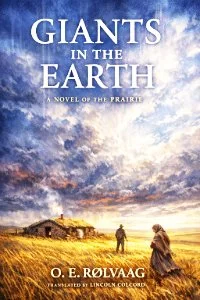
Giants in the Earth

O. E. Rølvaag, Preface by Colin Heston.

The struggle of the immigrant is often told through the lens of triumph—of cities built and fortunes made—but in O. E. Rølvaag’s Giants in the Earth, we are invited into a far more intimate and devastating arena: the psychological and spiritual cost of taming a wilderness. First published in Norwegian in 1924 as I de dage and later meticulously translated into English by Lincoln Colcord in collaboration with the author, this novel remains the definitive epic of the American prairie. It is not merely a story of farming; it is a saga of the human psyche stretched to its breaking point against an indifferent landscape.
At the heart of the narrative lies a profound dichotomy between the two protagonists, Per Hansa and Beret. Per Hansa embodies the archetype of the pioneer, fueled by a restless, creative energy that views the desolate plains of South Dakota not as a wasteland, but as a kingdom waiting to be claimed. To him, the "Giants" are physical obstacles to be conquered through grit and vision. Conversely, Beret represents the tragic reality of displacement. She is haunted by the Great Plain, a space so vast and empty that she feels God cannot find her there. For Beret, the "Giants" are the invisible, malevolent forces of the Earth itself, punishing those who dare to disturb its ancient, heavy silence.
The English version of Giants in the Earth is a rare literary achievement born of a unique partnership. Lincoln Colcord, a writer of the sea, found a common language with Rølvaag, a writer of the "sea of grass." Their collaboration ensured that the stark, rhythmic beauty of Rølvaag’s Norwegian—steeped in biblical cadence and Old World folklore—was preserved for an English-speaking audience. Colcord understood that the oceanic quality of the prairie was more than a metaphor; it was a physical reality where the winds howling across the Dakota territory carried the same weight and terror as a North Atlantic gale.
Rølvaag does not romanticize the pioneer experience. He documents the relentless succession of plagues—locusts, blizzards, and the suffocating loneliness of the sod house—forcing the reader to confront the sobering question of what is lost when a culture uproots itself. While Per Hansa builds the physical foundations of a new nation, Beret bears the burden of the cultural and emotional cost. Her descent into religious melancholy serves as a poignant reminder that while the land may be conquered, the soul is often the casualty of that conquest. She famously remarks that the Great Plain drinks the blood of Christian men and is never satisfied.
Nearly a century since its translation, Giants in the Earth stands as a pillar of American literature because it refuses to offer easy answers. It is a masterpiece of realism and a haunting work of the imagination that captures the birth of a modern identity forged in a crucible of isolation. As you turn these pages, you are witnessing a history that is as much about the internal landscape of the mind as it is about the external map of the frontier.

Read-Me.Org Inc. New York-Philadelphia-Australia. 2026. 373p.

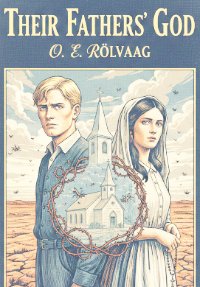
Their Father's God

By O. E. ROLVAAG

Their Fathers’ God (1931) is the powerful conclusion to O. E. Rølvaag’s epic trilogy of the Norwegian-American immigrant experience on the South Dakota prairies. Picking up where Peder Victorious left off, the novel shifts focus from the physical struggle of settling the land to the cultural and spiritual conflicts of the second generation. The story centers on the marriage of Peder Holm, a forward-thinking Norwegian Lutheran, and Susie Doheny, a devout Irish Catholic. As they attempt to build a life together, their relationship becomes a battlefield for the "clash of heritages":

  • Religious Tension: The couple struggles with the differing demands of their faiths, particularly regarding the baptism and upbringing of their children.

  • Cultural Identity: Peder wants to assimilate and modernise, while the pressures of their respective immigrant communities pull them back toward old-world traditions.

  • Environmental Hardship: Set against a backdrop of drought, grasshopper plagues, and the harsh reality of prairie farming, the physical environment mirrors the drying up of their emotional connection.

Major Themes

  • The Melting Pot Myth: Rølvaag explores the psychological toll of assimilation, suggesting that the blending of two distinct cultures is often a painful, destructive process rather than a seamless one.

  • Succession: The book examines whether the "God of the Fathers"—the rigid traditions and beliefs of the original pioneers—can survive or thrive in a rapidly changing American landscape.

While Giants in the Earth was a sweeping adventure of pioneer survival, Their Fathers’ God is a more intimate, psychological drama. It is often cited by historians and literary critics for its realistic, unsentimental portrayal of how religious and ethnic boundaries persisted even in the "limitless" American West.

Harper & Brothers. 1931. 350 p.

The Story Page

By Charlie Blank

The Story Page: Embracing Ten Interesting Tales is a short story anthology by Charlie Blank, published in 1933 by The O’Sullivan Publishing House in Chicago. The book is a collection of ten distinct narratives that explore themes of missed opportunities, second chances, and the dramatic twists of fate that define human lives during the early 20th century.

The collection is dedicated "Lovingly to Mother". It features the following ten stories:

1. "The Unanswered Call.. 2. His Second Chance-3. Ann-4. The Destroyer 5. The Teetotal Tar. 6. The Sequel, Unique. 7. The Phantom at the Wheel. 8. A Brush with Civilization. 9. The Crampton Kidnapping. 10. A Peep into the Hereafter.

The stories often focus on characters at emotional or moral crossroads, dealing with the consequences of their choices or the intervention of tragedy.

Thematic Overview.

“Tragedy and Irony:” In "The Unanswered Call," a nurse named Jane Merrick decides to end her eight-year relationship with a man named Jerry. She intentionally ignores his persistent phone calls to prove her resolve, only to receive a call from a hospital informing her that he was fatally struck by a car thirty minutes prior—the very period during which she refused to answer.

The Struggle for Redemption:. "His Second Chance"* follows John V. Caruthers, a man living in poverty and shame after losing his job during the Depression and embezzling money to play the stock market. The story explores his internal battle as a fugitive from justice, trying to earn enough money through a risky oil venture to make amends for his past.

Historical Context: The narratives are deeply rooted in their era, referencing the **Great Depression**, the volatility of the **Stock Exchange**, and the personal toll of financial ruin.

The prose is character-driven and often somber, highlighting the thin line between a "fresh youthfulness" and a life turned "sordid and bitter" by time and circumstance.

The O’Sullivan Publishing house. Chicago. Illinois. 1938. 229p.

Came a Cavalier

By Frances Parkinson Keyes

Came a Cavalier by Frances Parkinson Keyes is a sweeping historical romance set against the backdrop of two world wars. The novel explores themes of resilience, identity, and the transformative power of love. At its heart is Constance “Connie” Galt, a young woman whose life is reshaped by personal betrayal and the chaos of global conflict. Her journey begins with heartbreak, which propels her into service with the American Red Cross in France during World War I. This experience becomes a crucible for her character, forcing her to confront suffering and loss while discovering inner strength and purpose.

The story delves deeply into the theme of personal growth through adversity. Connie’s evolution from a disillusioned college student to a confident, compassionate woman mirrors the broader societal shifts of the early twentieth century. Her relationships—first with Duncan Craig, an American doctor, and later with Tristan de Fremond, a French cavalry officer—highlight the tension between security and passion, as well as the cultural contrasts between America and Europe during wartime.

Historically, the novel captures the atmosphere of wartime France with vivid detail, from the scarcity and danger of the front lines to the elegance and traditions of the French aristocracy. It reflects the impact of war on both individuals and nations, portraying how global upheaval can dismantle old social orders while creating new opportunities for connection and renewal. The narrative also touches on themes of honor and duty, embodied in Tristan’s role within the prestigious Cadre Noir, and contrasts these ideals with the pragmatic realities of survival and love in times of uncertainty.

Ultimately, Came a Cavalier is not just a romance but a meditation on courage, endurance, and the human capacity for reinvention. It situates personal drama within the grand sweep of history, offering readers both an intimate love story and a rich portrait of a world in transition.

Julian Messner, Inc. NY. 1947. Read-Me.Org Inc. New York-Philadelphia-Australia. 2025. 437p.

The Count Of Monte-Cristo: Volume Two


By Alexandre Dumas (Author), G. Staal (Illustrator), J.A. Beauce (Illustrator), & 2more Format: Kindle Edition

Few novels have captured the imagination of readers across generations as powerfully as The Count of Monte Cristo. First published in 1844, this sweeping tale of betrayal, revenge, and redemption is the work of Alexandre Dumas, one of France’s most celebrated literary figures. Set against the backdrop of post-Napoleonic France, the novel follows the transformation of Edmond Dantès, a young sailor whose promising future is shattered by the treachery of those he trusted. Wrongfully imprisoned in the Château d’If, Dantès emerges years later not as the man he once was, but as the enigmatic and wealthy Count of Monte Cristo—determined to exact justice on those who wronged him. At once a thrilling adventure and a profound exploration of human nature, The Count of Monte Cristodelves into themes of vengeance, justice, mercy, and the enduring power of hope. Dumas weaves a rich tapestry of characters and subplots, each contributing to the novel’s intricate moral landscape. His storytelling is both grand in scope and intimate in detail, offering readers a journey that is as emotionally resonant as it is exhilarating.
This two volume edition is based on the five volume 1888 English edition. It retains all text as in the original and includes most of the illustrations preserving the spirit and elegance of Dumas’s original edition, while making the novel accessible to contemporary readers. This version is most likely that of an anonymous translator who translated the work from the French for the publisher Chapman and Hall in 1846. There have been many translations in dozens of languages, and some in the 20th century basically rewriting the novel in modern prose and almost always considerably abridged.

Read-Me.Org Inc. New York-Philadelphia-Australia. 2025. 501 p.

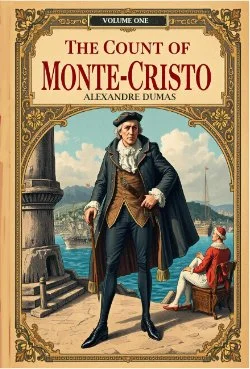
The Count Of Monte-Cristo: Volume One


By Alexandre Dumas (Author), G. Staal (Illustrator), J.A. Beauce (Illustrator), & 2more Format: Kindle Edition

Few novels have captured the imagination of readers across generations as powerfully as The Count of Monte Cristo. First published in 1844, this sweeping tale of betrayal, revenge, and redemption is the work of Alexandre Dumas, one of France’s most celebrated literary figures. Set against the backdrop of post-Napoleonic France, the novel follows the transformation of Edmond Dantès, a young sailor whose promising future is shattered by the treachery of those he trusted. Wrongfully imprisoned in the Château d’If, Dantès emerges years later not as the man he once was, but as the enigmatic and wealthy Count of Monte Cristo—determined to exact justice on those who wronged him. At once a thrilling adventure and a profound exploration of human nature, The Count of Monte Cristodelves into themes of vengeance, justice, mercy, and the enduring power of hope. Dumas weaves a rich tapestry of characters and subplots, each contributing to the novel’s intricate moral landscape. His storytelling is both grand in scope and intimate in detail, offering readers a journey that is as emotionally resonant as it is exhilarating.
This two volume edition is based on the five volume 1888 English edition. It retains all text as in the original and includes most of the illustrations preserving the spirit and elegance of Dumas’s original edition, while making the novel accessible to contemporary readers. This version is most likely that of an anonymous translator who translated the work from the French for the publisher Chapman and Hall in 1846. There have been many translations in dozens of languages, and some in the 20th century basically rewriting the novel in modern prose and almost always considerably abridged.

Read-Me.Org Inc. New York-Philadelphia-Australia. 2025. 456 p.

"SHAVINGS"

By Joseph C. Lincoln (Author), Colin Heston (Introduction)

In Shavings, published in 1918 at the peak of his literary success, Joseph C. Lincoln again turns his familiar eye and pen toward Cape Cod—its people, its rhythms, and its moral heart. Like much of Lincoln’s fiction, this novel offers more than light entertainment; it is a nuanced exploration of human decency, community obligation, and emotional transformation, wrapped in a quietly humorous and affectionately drawn setting.
Set in the fictional village of East Wellmouth, Shavings centers on a seemingly unremarkable character: a middle-aged man named Lemuel “Shavings” Keziah, a gentle and eccentric resident who works as a handyman and caretaker of sorts at the local ship-chandlery. What begins as a portrait of a quiet, solitary man becomes a deeper meditation on compassion, guardianship, and the power of unassuming kindness to transform lives. In this novel, Lincoln refines his formula of New England coastal fiction, combining rich local detail, deft character sketches, and moral clarity in a story that both reflects and transcends its setting.
The title Shavings is rich in metaphor. At the surface level, it refers to wood shavings—fragments trimmed away in the process of building or shaping. But on a deeper level, it suggests themes of smallness, modesty, and the overlooked. Lemuel Keziah is, like his namesake shavings, a figure that most would pass over without a second thought. He is plain, odd, physically unimposing, and considered somewhat simple by his neighbors. Yet within that uncarved block of humility lies a figure of enormous quiet integrity, and Lincoln’s triumph is in showing how such a man can become a pillar of his community and a redeemer in the lives of others.
Lincoln gives us a novel that blends humility with heart, modesty with moral insight. It is a story of redemption through quiet persistence, of fatherhood without blood, and of character tested not by fame or fortune but by the daily demands of decency. For those who cherish gentle fiction with real emotional weight, Shavings is a touchstone. It evokes a vanished New England but leaves in its place timeless lessons on love, trust, and the power of doing good without seeking reward. In Lemuel Keziah, Lincoln offers a model of quiet heroism whose relevance has only grown with time.

Read-Me.Org Inc. New York-Philadelphia-Australia. 2025. 229p.

The Black Arrow: A Tale of the Two Roses

By R. L. Stevenson. Edited by Colin Heston

"The Black Arrow: A Tale of the Two Roses" is a historical adventure novel by Robert Louis Stevenson, first published in 1888. Set during the tumultuous period of the Wars of the Roses in 15th-century England, the story follows the young protagonist, Richard Shelton. Richard is caught in the conflict between the houses of York and Lancaster, and his journey is marked by themes of loyalty, betrayal, and revenge. The novel begins with Richard discovering that his guardian, Sir Daniel Brackley, is involved in treacherous activities. As Richard seeks justice for his father's murder, he joins forces with a band of outlaws known as the Black Arrow. The leader of the outlaws, John Amend-All, becomes a key ally in Richard's quest. Throughout the narrative, Richard faces numerous challenges, including battles, escapes, and romantic entanglements with Joanna Sedley, a young woman disguised as a boy. Stevenson's vivid descriptions and fast-paced plot make "The Black Arrow" a captivating read. The novel seamlessly combines elements of adventure, romance, and historical fiction, offering readers a thrilling portrayal of medieval England and its intricate political landscape.

Volume VIII of the Swanston Edition of "The Works of Robert Louis Stevenson" continues to showcase Stevenson's literary versatility. This volume typically includes a mix of his essays, short stories, and other writings, reflecting his wide-ranging interests and talents. The Swanston Edition is renowned for its comprehensive and authoritative compilation of Stevenson's works, providing readers with an in-depth exploration of his literary contributions. Each volume in this series highlights Stevenson's ability to engage readers with his storytelling prowess across various genres and styles. This volume has been carefully edited and redesigned by Colin Heston, a renowned novelist and storyteller, to make the book more enjoyable and comprehensible to the modern reader.

Read-Me.Org Inc. New York, Philadelphia, Australia. 2025. 178p.

Prince Otto

by Robert Louis Stevenson (Author), Colin Heston (Editor)

Volume VII of the Swanston Edition of "The Works of Robert Louis Stevenson" continues to present a diverse collection of Stevenson's literary output. This volume typically includes a mix of his essays, short stories, and other writings, reflecting his wide-ranging interests and talents. The lead piece, "Prince Otto", was first published in 1885. The story is set in the fictional Germanic principality of Grünewald and follows the titular character, Prince Otto Johann Friedrich. Otto is a well-meaning but somewhat ineffectual ruler, whose reign is marked by political intrigue and personal dilemmas. The novel explores themes of power, responsibility, and personal growth as Otto grapples with his duties as a prince and his relationships with those around him, including his wife, Princess Seraphina, and his scheming ministers. "Prince Otto" is notable for its blend of romance, adventure, and political satire, showcasing Stevenson's versatility as a writer.

This volume has been carefully edited and redesigned by Colin Heston, renowned novelist and story writer, to make the book more comprehensible to the present-day reader.

Devils, Demons, Death and Damnation

By Ernst and Johanna Lehner

"Throughout history, artists have grappled with the problem of depicting clearly and forcefully the principles of evil and suffering in human existence." With this view, the Lehners have collected 214 representations, symbols, and manuscript pages of devils and death from Egyptian times to 1913. Reproductions from Dürer, Holbein, Cranach, Rembrandt and many other lesser known or unknown artists illustrate the fascinating history. The 15th, 16th, and 17th centuries are stressed.

THE DOVER PICTORIAL ARCHIVES SERIES, 1971, 191p.