Open Access Publisher and Free Library
Fiction+Mediajpg.jpg

FICTION and MEDIA

CRIME AND MEDIA — TWO PEAS IN A POD

Posts in historical fiction
The Queen's Fool

By Phillippa Gregory

NY. Touchstone. 2004. 512p.

"The Queen's Fool" is a historical fiction novel by Philippa Gregory, first published in 2003. The book is set in England in the 16th century, during the reigns of King Henry VIII and Queen Mary I, and tells the story of a young girl named Hannah Green who becomes a servant in the royal court.

Hannah is a gifted "fool," a type of entertainer who uses jokes and acrobatics to amuse the court. She catches the eye of Queen Mary, who takes her under her wing and makes her a trusted confidante. But as Hannah gets caught up in the political machinations of the court, she must navigate dangerous alliances and protect herself from those who would do her harm.

"The Queen's Fool" is a well-researched and engaging work of historical fiction that offers a window into the complex and turbulent world of Tudor England. Gregory's prose is vivid and evocative, and her characters are richly drawn and memorable. The book offers a fresh perspective on well-known historical figures, such as King Henry VIII and Queen Mary I, and provides a compelling glimpse into the lives of the ordinary people who served them.

read
Silas Marner. The Lifted Veil. Brother Jacob.

By George Eliot III

Silas Marner is George Eliot's (1819-1880) short novel of 1861, in which the protagonist is obliged to leave his small religious community after being falsely accused of theft. He settles in Raveloe, where he works diligently as a weaver for 15 years and manages to accumulate and hoard a substantial amount of gold.
“The Lifted Veil” concerns themes of fate, extrasensory perception, the mystery of life and life after death. Eliot's interest in these themes stemmed partly from her own struggles with religious faith, as she was an extremely devout Christian as a child and young adult who later renounced Christianity completely. “Brother Jacob'“raises issues of perennial concern to George Eliot as an author who was also a woman. In particular, this fabular tale about a hapless confectioner and his imbecilic broth- er exposes the pitfalls in women's relationship(s) to cultural authority, 'the strange bright fruits of knowledge' (Woolf 160). As a fable whose hero is distinguished by fraudulence and guile, 'Brother Jacob' reflects its author's attitude towards plagiarists and other impostors with pre- tensions to authorship. Even as Marian Evans disguised herself as George Eliot, the 'silly lady novelist' of her day is disguised in the story's protagonist, David Faux.

London. Oxford University Press. 1861., 1859, 1860. 318p.

download
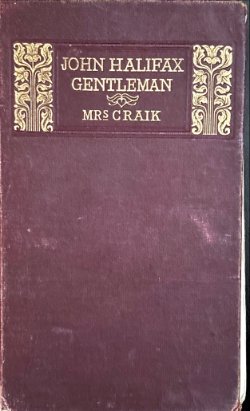
John Halifax, Gentleman

By Mrs. Craik.

The action is centred on the town of Tewkesbury, scarcely disguised by the fictional name Norton Bury, in Gloucestershire. The story is narrated by Phineas, a friend of the central character. John Halifax is an orphan, determined to make his way in the world through honest hard work. He is taken in by a tanner, Abel Fletcher, who is a Quaker, and thus meets Phineas, who is Abel's son. John eventually achieves success in business and love, and becomes a wealthy man. (Wikipedia)

London: Ward, Lock and Co. 1856. 449p.

download
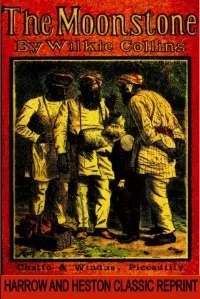
Moonstone

By Wilkie Collins.

The loss of the diamond opens the beginning of this adventure and events as related by Gabriel Betteredge, house-steward in the service of Julia, Lady Verinder. “ The Moonstone is a 19th-century British epistolary novel. It is an early modern example of the detective novel, and established many of the ground rules of the modern genre. Told from the perspective of 11different characters, tale of mystery and suspicion was considered the first modern English detective novel at its time of publication.” (Amazon).

NY. Harrow and Heston Classic Reprint. (1868) 510 pages.

download
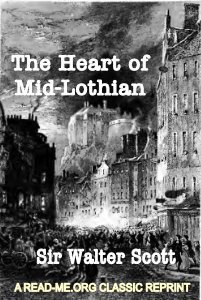
The Heart of Mid-Lothian

By Sir Walter Scott.

“Edinburgh, 1736: an indignant crowd has gathered in the Grassmarket to watch the execution of a smuggler...” Opening with the start of the Porteous Riots, The Heart of Midlothian is one of Walter Scott's most famous historical novels, featuring murder, madness and seduction. Following his brutal suppression of the spectators, John Porteous, Captain of the Guard, is charged with murder and locked up in Edinburgh's Tolbooth prison, also known as the Heart of Midlothian. When news comes that he has been pardoned, an angry mob breaks into the jail, liberating its inmates and bringing Porteous to its own form of justice. But one prisoner who fails to take this opportunity to flee is Effie Deans, who, wrongly convicted of infanticide, has been sentenced to death. Jeanie, her older sister, sets off to London on foot to beg for her pardon from the queen.

Boston: Dana Estes & Co., 1893.

download
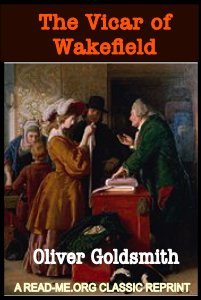
The Vicar of Wakefield

By Oliver Goldsmith.

“When Dr Primrose loses his fortune in a disastrous investment, his idyllic life in the country is shattered and he is forced to move with his wife and six children to an impoverished living on the estate of Squire Thornhill. Taking to the road in pursuit of his daughter, who has been seduced by the rakish Squire, the beleaguered Primrose becomes embroiled in a series of misadventures–encountering his long-lost son in a travelling theatre company and even spending time in a debtor’s prison. Yet Primrose, though hampered by his unworldliness and pride, is sustained by his unwavering religious faith. In The Vicar of Wakefield, Goldsmith gently mocks many of the literary conventions of his day–from pastoral and romance to the picaresque – infusing his story of a hapless clergyman with warm humour and amiable social satire.”

J.C. Krieger and Company, 1828 300p.

download
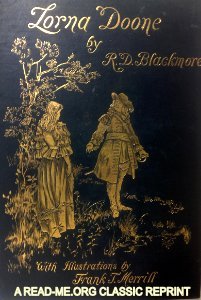
Lorna Doone: a romance of Exmoor

By R.D. Blackmore.

“This work is called a 'romance,' because the incidents, characters, time, and scenery, are alike romantic. And in shaping this old tale, the Writer neither dares, nor desires, to claim for it the dignity or cumber it with the difficulty of an historic novel….Every woman clutched her child, and every man turned pale at the very name of "Doone" ….John Ridd, an unsophisticated farmer, falls in love with the beautiful and aristocratic Lorna Doone, kidnapped as a child by the outlaw Doones on Exmoor. Ridd's rivalry with the villainous Carver Doone reaches a dramatic climax that will determine Lorna's future happiness.”

New York: Harper & Brothers, 1878. 280p.

download
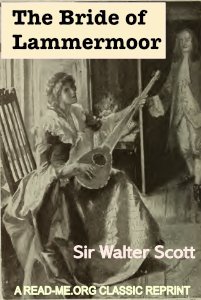
The Bride of Lammermoor

By Sir Walter Scott.

“The Author, on a former occasion, declined giving the real source from which he drew the tragic subject of this history, because, though occurring at a distant period, it might possibly be unpleasing to the feelings of the descendants of the parties. But as he finds an account of the circumstances given in the Notes to Law's Memorials by his ingenious friend Charles Kirkpatrick Sharpe, Esq., and also indicated in his reprint of the Rev. Mr. Symson's poems, appended to the Description of Galloway as the original of the Bride of Lammermoor, the Author feels himself now at liberty to tell the tale as he had it from connections of his own, who lived very near the period, and were closely related to the family of the Bride.

London: Collins Clear -Type Press, 1900. 416p.

download
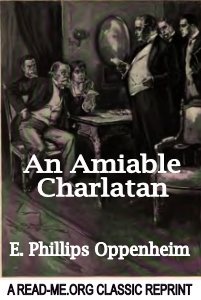
An Amiable Charlatan

By E. Phillips Oppenheim.

“An Englishman is enjoying his dinner at Stephano's, at which he is a regular diner. A man enters quickly, sits at his table, starts eating his food, and hands him a packet underneath the table! So begins Paul Walmsley's acquaintance - and adventures - with American adventurer Joseph H. Parker and his lovely daughter, Eve.”

Boston: Little, Brown and Co., 1916.341p.

download
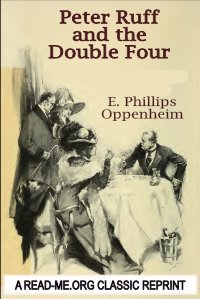
Peter Ruff and the Double Four

By E. Phillips Oppenheim.

“… Opposite him, at the other end of the table, sat his wife, Mrs. Barnes, a somewhat voluminous lady with a high colour, a black satin frock, and many ornaments. On her left the son of the house, eighteen years old, of moderate stature, somewhat pimply, with the fashion of the moment reflected in his pink tie with white spots, drawn through a gold ring, and curving outwards to seek obscurity underneath a dazzling waistcoat.”

Boston: Little, Brown, 1912. 424p.

download
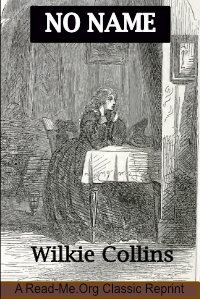
No Name

By Wilkie Collins.

This book is a 19th-century novel by the master of sensation fiction, Wilkie Collins. A country gentleman is killed in an accident and his wife dies shortly after him. The blow is double for their daughters, who discover that they were born before their parents were married. Their sudden illegitimacy robs them of their inheritance and their accustomed place in society.

New York: Harper and Brothers, 1873. 622p.

download part 1
download part 2
The Dead Secret

By Wilkie Collins. .

A Novel . Two of the characters which appear in these pages -- "Rosamond," and "Uncle Joseph" -- had the good fortune to find friends everywhere who took a hearty liking to them. A more elaborately drawn personage in the story -- "Sarah Leeson" -- was, I think, less generally understood. The idea of tracing, in this character, the influence of a heavy responsibility on a naturally timid woman, whose mind was neither strong enough to bear it, nor bold enough to drop it altogether, was a favorite idea with me, at the time, and is so much a favorite still, that I privately give "Sarah Leeson" the place of honor in the little portrait-gallery which my story contains.

London: Bradbury and Evans, 1857. 322p.

download part 1
download part 2
download part 3
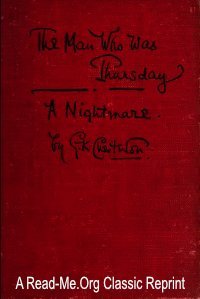
The Man Who was Thursday: A Nightmare

By G.K. Chesterton.

It is very difficult to classify The Man Who Was Thursday. It is possible to say that it is a gripping adventure story of murderous criminals and brilliant policemen; but it was to be expected that the author of the Father Brown stories should tell a detective story like no-one else. On this level, therefore, The Man Who Was Thursday succeeds superbly; if nothing else, it is a magnificent tour-de-force of suspense-writing. However, the reader will soon discover that it is much more than that. Carried along on the boisterous rush of the narrative by Chesterton’s wonderful high-spirited style, he will soon see that he is being carried into much deeper waters than he had planned on; and the totally unforeseeable denouement will prove for the modern reader, as it has for thousands of others since 1908 when the book was first published, an inevitable and moving experience, as the investigators finally discover who Sunday is.

Bristol: J.W. Arrowsmith, 1908. 329p.

download
Moll Flanders

By Daniel Defoe.

Moll Flanders follows the life of its eponymous heroine through its many vicissitudes, which include her early seduction, careers in crime and prostitution, conviction for theft and transportation to the plantations of Virginia, and her ultimate redemption and prosperity in the new World. “When a woman debauched from her youth, nay, even being the offspring of debauchery and vice, comes to give an account of all her vicious practices, and even to descend to the particular occasions and circumstances by which she ran through in threescore years, an author must be hard put to it wrap it up so clean as not to give room, especially for vicious readers, to turn it to his disadvantage.”

NY. Harrow and Heston Classic Reprint. (1772) 502 pages.

download
The Bride of the Sun

By Gaston Leroux.

Young engineer Raymond Ozoux, accompanied by his uncle, arrives in Peru to meet his fiancée, Marie-Thérèse. Meanwhile, descendents of the Incas are preparing a great feast during which a virgin will be sacrificed to the Sun, walled up alive in a secret temple. At the same time, a mysterious Inca bracelet is sent to Marie-Thérèse purporting to be a gift of the Sun to his future bride.. The young girl is then kidnapped by the Incas and Raymond, his uncle and Marie-Thérèse's father set out on a trek across Peru to free her while a revolution shakes the country.

NY. Harrow and Heston Classic Reprint. (1912) 177 pages.

download
The Dark Road

By Gaston Leroux.

Excerpt: “Excerpt: "The Nut lay on the scorching beach facing the terrible sea in which the hungry sharks, the warders of his prison, were disporting. The convict was like a weary animal at rest. In truth, he had availed himself of the "relaxation" at ten o'clock to seek out a little fresh air and seclusion between two precipitous crags which cut him off from the rest of the convict settlement. If only he could live alone! No longer to hear anything. No longer to see anything! No longer to think of anything. But how could he help thinking of what he had seen, of what he had been compelled to see, that morning?"

NY. Harrow and Heston Classic Reprint. (1924) 191 pages.

download
Phantom of the Opera

By Gaston Leroux..

The Phantom of the Opera is the most famous novel by Gaston Leroux. It is believed to be based in George du Maurier's Trilby. The novel is partly inspired by historical events at the Paris Opera during the nineteenth century and an apocryphal tale concerning the use of a former ballet pupil's skeleton in Carl Maria von Weber's 1841 production of Der Freischütz. It has been successfully adapted into various stage and film adaptations, most notable of which are the 1925 film depiction featuring Lon Chaney, and Andrew Lloyd Webber's 1986 musical — Wikipedia.

NY. Harrow and Heston Classic Reprint. (1911) 270 pages.

download
Hunted Down

By Charles Dickens..

This is a rare detective story of Charles Dickens. The main character is a smart and attentive man named Sampson. One day he sees a strange Mr. Julius Silton in his office acting strangely as though he is hiding something. Sampson suspects that a crime is occurring and and from this point he becomes a real hunter of criminals. The story's antagonist is probably based on the real life of poisoner Thomas Wainewright.

NY. Harrow and Heston Classic Reprint. (1859) 39 pages.

download
Hard Times

By Charles Dickens.

This is Dickens’ tenth novel, published without illustrations, in Household Word, his weekly journal. Dickens continues to fly the banner of social reform, touching on themes of industrialization, education, and utilitarianism in the sweeping Industrial Revolution of the 1850's.

NY. Harrow and Heston Classic Reprint. (1854) 302 pages.

download
Great Expectations

By Charles Dickens.

This was Charles Dickens' thirteenth novel published in Dickens' weekly journal All the Year Round without illustrations. An American edition was also published in Harper's Weekly. The novel contains a strong autobiographical element, though not as openly as in David Copperfield. Dickens reread Copperfield before beginning Great Expectations to avoid unintentional repetition. It is generally acclaimed as his best work.

NY. Harrow and Heston Classic Reprint. (186-1861) 521 pages.

download