Open Access Publisher and Free Library
Fiction+Mediajpg.jpg

FICTION and MEDIA

CRIME AND MEDIA — TWO PEAS IN A POD

Posts in history
File No. 113

By Emile Gaboriau

Illustrated by W. Glackens. From Chapter 1: In the Paris evening papers of Tuesday, February 28, 1866, under the head of Local Items, the following announcement appeared: " A daring robbery, committed against one of our most eminent bankers, M. André Fauvel, caused great excitement this morning throughout the neighborhood of Rue de Provence. " The thieves, who were as skilful as they were bold, succeeded in making an entrance to the bank, in forcing the lock of a safe that has heretofore been considered impregnable, and in possessing themselves of the enormous sum of three hundred and fifty thousand francs in bank-notes…”

NY. Charles Scribner’s Sons. 1903. 540p.

download
Abolition Science Fiction

By Phillip Crocket Thomas.

Abolition Science Fiction is a new, free collection of sci fi short stories written by activists and scholars involved in prison abolition and transformative justice in the UK. The stories are not all explicitly about prison abolition, but all of them explore the underlying question of how we can live well together, tackling complex topics like violence, revenge, responsibility, care, and community. As such they can help us imagine a future where we respond to harm without exclusion and punishment, illustrating Ruth Wilson Gilmore’s contention that ‘abolition requires that we change one thing: everything.’ Alongside the stories are extracts from discussions from the workshops where we wrote and shared the stories. There are also creative writing exercises and discussion prompts, included to help readers explore ideas about abolition and transformative justice in creative ways. The book is aimed both at those curious about abolition and at seasoned activists who want to explore abolition through creative writing. The book is free and can be downloaded below. There is a limited number of print copies available, to request one please email abolitionscifi [at] gmail [dot] com.

Abolition Science Fiction. 2022. 94p.

download
One Day In The Life Of Ivan Denisovich

By Alexander Solzhenitsyn

Translated from the Russian by Ralph Parker. With an Introduction by Marvin L. Kalb. Foreword By Alexander Tvardovsky. From the cover: This extraordinary novel is one of the most significant and outspoken literary documents ever to come out of Soviet Russia. It is both a brutally graphic picture of life in a Stalinist work camp and a moving tribute to man's will to prevail over relentless dehumanization. A masterpiece of modern Russian fiction, ONE DAY IN THE LIFE OF IVAN DENISOVICH first brought to world attention the work of Alexander Solzhenitsyn, brilliant author of THE CANCER WARD and THE FIRST CIRCLE.

Alexander Solzhenitsyn was born in 1918, a year after the Bolsheviks stormed to; power through­out Russia. He studied at the University of Rostov and served with distinction in the Russian Army dur­ing World War II. In 1945 he was arrested and im­prisoned in a labor camp for eight years because he allegedly made a derogatory remark about Stalin. He was released in 1953 after the death of Stalin, but was forced to live in Central Asia, where he remained until Premier Khrushchev’s historic “secret speech” denounced Stalin in 1956. Rehabilitated in 1957, Solzhenitsyn moved to Ryazan, married a chemistry student, and began to teach mathematics at the local school. In his spare time, he started to write. This novel is his first published work.

NY. A Signet Classic from New American Library. 1963. 158p.

Read
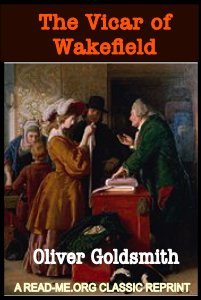
The Vicar of Wakefield

By Oliver Goldsmith.

“When Dr Primrose loses his fortune in a disastrous investment, his idyllic life in the country is shattered and he is forced to move with his wife and six children to an impoverished living on the estate of Squire Thornhill. Taking to the road in pursuit of his daughter, who has been seduced by the rakish Squire, the beleaguered Primrose becomes embroiled in a series of misadventures–encountering his long-lost son in a travelling theatre company and even spending time in a debtor’s prison. Yet Primrose, though hampered by his unworldliness and pride, is sustained by his unwavering religious faith. In The Vicar of Wakefield, Goldsmith gently mocks many of the literary conventions of his day–from pastoral and romance to the picaresque – infusing his story of a hapless clergyman with warm humour and amiable social satire.”

J.C. Krieger and Company, 1828 300p.

download
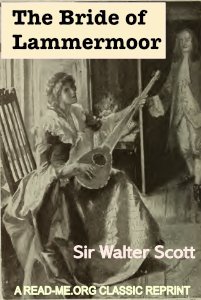
The Bride of Lammermoor

By Sir Walter Scott.

“The Author, on a former occasion, declined giving the real source from which he drew the tragic subject of this history, because, though occurring at a distant period, it might possibly be unpleasing to the feelings of the descendants of the parties. But as he finds an account of the circumstances given in the Notes to Law's Memorials by his ingenious friend Charles Kirkpatrick Sharpe, Esq., and also indicated in his reprint of the Rev. Mr. Symson's poems, appended to the Description of Galloway as the original of the Bride of Lammermoor, the Author feels himself now at liberty to tell the tale as he had it from connections of his own, who lived very near the period, and were closely related to the family of the Bride.

London: Collins Clear -Type Press, 1900. 416p.

download
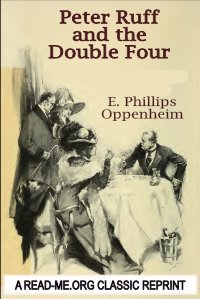
Peter Ruff and the Double Four

By E. Phillips Oppenheim.

“… Opposite him, at the other end of the table, sat his wife, Mrs. Barnes, a somewhat voluminous lady with a high colour, a black satin frock, and many ornaments. On her left the son of the house, eighteen years old, of moderate stature, somewhat pimply, with the fashion of the moment reflected in his pink tie with white spots, drawn through a gold ring, and curving outwards to seek obscurity underneath a dazzling waistcoat.”

Boston: Little, Brown, 1912. 424p.

download
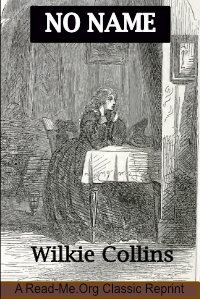
No Name

By Wilkie Collins.

This book is a 19th-century novel by the master of sensation fiction, Wilkie Collins. A country gentleman is killed in an accident and his wife dies shortly after him. The blow is double for their daughters, who discover that they were born before their parents were married. Their sudden illegitimacy robs them of their inheritance and their accustomed place in society.

New York: Harper and Brothers, 1873. 622p.

download part 1
download part 2
The Dead Secret

By Wilkie Collins. .

A Novel . Two of the characters which appear in these pages -- "Rosamond," and "Uncle Joseph" -- had the good fortune to find friends everywhere who took a hearty liking to them. A more elaborately drawn personage in the story -- "Sarah Leeson" -- was, I think, less generally understood. The idea of tracing, in this character, the influence of a heavy responsibility on a naturally timid woman, whose mind was neither strong enough to bear it, nor bold enough to drop it altogether, was a favorite idea with me, at the time, and is so much a favorite still, that I privately give "Sarah Leeson" the place of honor in the little portrait-gallery which my story contains.

London: Bradbury and Evans, 1857. 322p.

download part 1
download part 2
download part 3
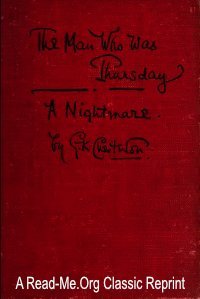
The Man Who was Thursday: A Nightmare

By G.K. Chesterton.

It is very difficult to classify The Man Who Was Thursday. It is possible to say that it is a gripping adventure story of murderous criminals and brilliant policemen; but it was to be expected that the author of the Father Brown stories should tell a detective story like no-one else. On this level, therefore, The Man Who Was Thursday succeeds superbly; if nothing else, it is a magnificent tour-de-force of suspense-writing. However, the reader will soon discover that it is much more than that. Carried along on the boisterous rush of the narrative by Chesterton’s wonderful high-spirited style, he will soon see that he is being carried into much deeper waters than he had planned on; and the totally unforeseeable denouement will prove for the modern reader, as it has for thousands of others since 1908 when the book was first published, an inevitable and moving experience, as the investigators finally discover who Sunday is.

Bristol: J.W. Arrowsmith, 1908. 329p.

download
Moll Flanders

By Daniel Defoe.

Moll Flanders follows the life of its eponymous heroine through its many vicissitudes, which include her early seduction, careers in crime and prostitution, conviction for theft and transportation to the plantations of Virginia, and her ultimate redemption and prosperity in the new World. “When a woman debauched from her youth, nay, even being the offspring of debauchery and vice, comes to give an account of all her vicious practices, and even to descend to the particular occasions and circumstances by which she ran through in threescore years, an author must be hard put to it wrap it up so clean as not to give room, especially for vicious readers, to turn it to his disadvantage.”

NY. Harrow and Heston Classic Reprint. (1772) 502 pages.

download
The Dark Road

By Gaston Leroux.

Excerpt: “Excerpt: "The Nut lay on the scorching beach facing the terrible sea in which the hungry sharks, the warders of his prison, were disporting. The convict was like a weary animal at rest. In truth, he had availed himself of the "relaxation" at ten o'clock to seek out a little fresh air and seclusion between two precipitous crags which cut him off from the rest of the convict settlement. If only he could live alone! No longer to hear anything. No longer to see anything! No longer to think of anything. But how could he help thinking of what he had seen, of what he had been compelled to see, that morning?"

NY. Harrow and Heston Classic Reprint. (1924) 191 pages.

download
Phantom of the Opera

By Gaston Leroux..

The Phantom of the Opera is the most famous novel by Gaston Leroux. It is believed to be based in George du Maurier's Trilby. The novel is partly inspired by historical events at the Paris Opera during the nineteenth century and an apocryphal tale concerning the use of a former ballet pupil's skeleton in Carl Maria von Weber's 1841 production of Der Freischütz. It has been successfully adapted into various stage and film adaptations, most notable of which are the 1925 film depiction featuring Lon Chaney, and Andrew Lloyd Webber's 1986 musical — Wikipedia.

NY. Harrow and Heston Classic Reprint. (1911) 270 pages.

download
Hunted Down

By Charles Dickens..

This is a rare detective story of Charles Dickens. The main character is a smart and attentive man named Sampson. One day he sees a strange Mr. Julius Silton in his office acting strangely as though he is hiding something. Sampson suspects that a crime is occurring and and from this point he becomes a real hunter of criminals. The story's antagonist is probably based on the real life of poisoner Thomas Wainewright.

NY. Harrow and Heston Classic Reprint. (1859) 39 pages.

download
Hard Times

By Charles Dickens.

This is Dickens’ tenth novel, published without illustrations, in Household Word, his weekly journal. Dickens continues to fly the banner of social reform, touching on themes of industrialization, education, and utilitarianism in the sweeping Industrial Revolution of the 1850's.

NY. Harrow and Heston Classic Reprint. (1854) 302 pages.

download
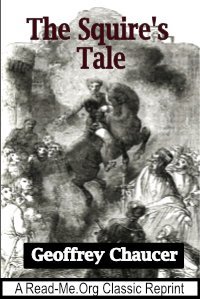
The Squire's Tale

By Geoffrey Chaucer.

Edited with an introduction by A. W. Pollard. This story from Chaucer’s Canterbury Tales was the first serious attempt to tell the story of the great Genghis Khan, leader of the Moguls, who conquered peoples and lands of Asia and South East Asia, Russia and the fringes of Europe, and by his hand spread and distributed wealth, commerce and technology throughout the peoples and lands he conquered. All of this much to the benefit of the peoples of Europe that he did not conquer, but who nevertheless absorbed the amazing commercial production and distribution of goods and the important elements of nascent science encouraged and exported by the Great Khan. None of these achievements were acknowledged by the West, instead calling the Moguls barbarians and savages.

London: Macmillan (1899) 76p.

download