Open Access Free Library
Fiction+Mediajpg.jpg

FICTION and MEDIA

CRIME AND MEDIA — TWO PEAS IN A POD

Posts in literature
History Of Florence And Of The Affairs Of Italy

By Niccolo Machiavelli

From Chapter 1: The people who inhabit the northern parts beyond the Rhine and the Danube, living in a healthy and prolific region, frequently increase to such vast multitudes, that part of them are compelled to abandon their native soil, and seek a habitation in other countries. The method adopted, when one of these provinces had to be relieved of its superabundant population, was to divide into three parts, each containing an equal number of nobles and of people, of rich and of poor. The third upon whom the lot fell, then went in search of new abodes, leaving the remaining two-thirds in possession of their native country. These migrating masses destroyed the Roman empire by the facilities for settlement which the country offered when the emperors abandoned Rome, the ancient seat of their dominion, and fixed their residence at Constantinople…..

London. M. Walter Dunne. 1901.

Getting Even

By Woody Allen

From the cover. In Getting Even Woody Allen revenges himself upon such significant subjects as death, obe­sity, organized crime, the invention of the sandwich, adult education, laundry lists of famous people, and Latin American revolu­tionaries. Here is Woody Allen at his philo­sophical deepest: •    "... Death is an acquired trait.'' •    "If man were immortal, do you realize what his meat bills would be?" •    "Why pork was proscribed by Hebraic law is still unclear, and some scholars believe that the Torah merely suggested not eating pork at certain restaurants." •    "Eternal Nothingness is OK if you're dressed for it." •    "My mind can never know my body although it has become quite friendly with my legs."

NY. Random House. 1978. 124p.

The First Circle

By Alexander Solzhenitsyn

Translated from the Russian by Michael Guybon. “*The First Circle asks to be compared to Dostoevsky. Solzhenitsyn is in the great story-telling tradition. When he introduces a character, he fills in the complete background. His portrait of a Soviet prosecutor and his family circle is unforgettable. So are chapters devoted to the brooding Stalin. A future generation of Russians will be able to come to terms with their history through books like Dr. Zhivago and The First Circle.'“ David Pryce-Jones, Financial Times.

London Collins. Fontana Books. 1970. 680P.

File No. 113

By Emile Gaboriau

Illustrated by W. Glackens. From Chapter 1: In the Paris evening papers of Tuesday, February 28, 1866, under the head of Local Items, the following announcement appeared: " A daring robbery, committed against one of our most eminent bankers, M. André Fauvel, caused great excitement this morning throughout the neighborhood of Rue de Provence. " The thieves, who were as skilful as they were bold, succeeded in making an entrance to the bank, in forcing the lock of a safe that has heretofore been considered impregnable, and in possessing themselves of the enormous sum of three hundred and fifty thousand francs in bank-notes…”

NY. Charles Scribner’s Sons. 1903. 540p.

The Devil's Dictionary

By Ambrose Bierce

From the Preface: The Devil's Dictionary was begun in a weekly paper in 1881, and was continued in a desultory way and at long intervals until 1906. In that year a large part of it was published in covers with the title The Cynic's Word Book, a name which the author had not the power to reject nor the happiness to approve. To quote the publishers of the present work: “This more reverent title had previously been forced upon him by the religious scruples of the last newspaper in which a part of the work had appeared, with the natural consequence that when it came out in covers the country already had been flooded by its imitators with a score of‘cynic’ books - The Cynic’s This, The Cynic's That and The Cynic's t’Other. Most of these books were merely stupid, though some of them added the distinction of silliness. Among them, they brought the word ‘cynic’ into disfavour so deep that any book bearing it was discredited in advance of publication.”

Hertfordshire. Wordsworth Editions Limited. 1996. 243p.

One Day In The Life Of Ivan Denisovich

By Alexander Solzhenitsyn

Translated from the Russian by Ralph Parker. With an Introduction by Marvin L. Kalb. Foreword By Alexander Tvardovsky. From the cover: This extraordinary novel is one of the most significant and outspoken literary documents ever to come out of Soviet Russia. It is both a brutally graphic picture of life in a Stalinist work camp and a moving tribute to man's will to prevail over relentless dehumanization. A masterpiece of modern Russian fiction, ONE DAY IN THE LIFE OF IVAN DENISOVICH first brought to world attention the work of Alexander Solzhenitsyn, brilliant author of THE CANCER WARD and THE FIRST CIRCLE.

Alexander Solzhenitsyn was born in 1918, a year after the Bolsheviks stormed to; power through­out Russia. He studied at the University of Rostov and served with distinction in the Russian Army dur­ing World War II. In 1945 he was arrested and im­prisoned in a labor camp for eight years because he allegedly made a derogatory remark about Stalin. He was released in 1953 after the death of Stalin, but was forced to live in Central Asia, where he remained until Premier Khrushchev’s historic “secret speech” denounced Stalin in 1956. Rehabilitated in 1957, Solzhenitsyn moved to Ryazan, married a chemistry student, and began to teach mathematics at the local school. In his spare time, he started to write. This novel is his first published work.

NY. A Signet Classic from New American Library. 1963. 158p.

The Dictionary Of Dangerous Words

By Digby Anderson

A dictionary like no other!

"This book will shortly replace a university;education and it's cheaper." John Cleese.

The dictionary of dangerous words from access to zionist via exclusion, partner and self-esteem.

Contributors: Alice Thomas, Ellis Frederick Forsyth, Simon Heffer, Peter Hitchens, Andrew Roberts, Auberon Waugh, Michael Wharton, and many Others

London. Social Affairs Unit. No Date. 129p.

Cancer Ward

By Aleksandr Solzhenitsyn.

From the jacket: Cancer Ward, which has been compared to the master­piece of another Nobel Prize winner, Thomas Mann's The Magic Mountain,examines the relationships of a group of people in a provincial Soviet hospital in 1955, two years after Stalin's death. Through their stories, Aleksandr Solzhenitsyn has created a vivid portrait of life in the So­viet Union. Alexsandr Solzhenitsyn, winner of the 1970 Nobel Prize in Literature, was born in 1918. In 1945, while a captain in the Soviet Army, he was arrested—for criticiz­ing Stalin in a letter to a friend—and sentenced to an eight-year term in a labor camp and permanent exile. In exile, he became a patient in a cancer ward, and later re­covered. Although he was allowed to publish One Day in the Life of Ivan Denisovich in 1962, Solzhenitsyn was expelled from the Soviet Writers Union in 1969. When the KGB discovered the manuscript of The Gulag Archi­pelago, it became imperative for Solzhenitsyn to have the book published in the West. The authorities retaliated in 1974 by exiling him from the Soviet Union. He settled in the United States in 1976 and now lives in Vermont.

NY. Farrar, Straus and Giroux. 1968. 630p.

Aesop's Fables

Translated Into English By Samuel Croxall.

This version is beautifully illustrated and contains “New applications, Morals etc. by the Rev. Geo. Tyler Townsend, editor of the “Arabian Nights’ Entertainments.” Eighty original Illustratiiona.

London” Frederick Warne and Co. Strand. ca. 1885. 161p.

Crime Fiction and the Law

Edited by Maria Aristodemou; Fiona Macmillan; Patricia Tuitt

This book opens up a range of important perspectives on law and violence by considering the ways in which their relationship is formulated in literature, television and film. Employing critical legal theory to address the relationship between crime fiction, law and justice, it considers a range of topics, including: the relationship between crime fiction, legal reasoning and critique; questions surrounding the relationship between law and justice; gender issues; the legal, political and social impacts of fictional representations of crime and justice; post-colonial perspectives on crime fiction; as well as the impact of law itself on the crime fiction’s development. Introducing a new sub-field of legal and literary research, this book will be of enormous interest to scholars in critical, cultural and socio-legal studies, as well as to others in criminology, as well as in literature.

Abingdon, Oxon, OX; New York: Birkbeck Law Press; 2017. 181p.

Philosophies of Crime Fiction

By Josef Hoffmann

Josef Hoffmann covers influences and inspirations in crime writing with references to a stellar cast of crime writers including Arthur Conan Doyle, G. K. Chesterton, Dashiell Hammett, Albert Camus, Borges, Agatha Christie, Raymond Chandler, and Ted Lewis. Hoffmann examines why crime literature may provide stronger consolation for readers than philosophy. In so doing, he demonstrates the truth of Wittgenstein's claim that more wisdom is contained in the best crime fiction than in philosophical essays. Josef Hoffmann's combination of knowledge, academic acuity, and enthusiasm makes this a must-have book for any crime fiction aficionado—with or without a philosophical nature.

Harpenden, Herts, UK: No Exit Press, 2013. 192p.

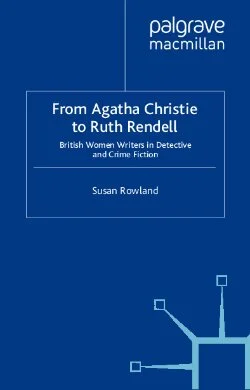
From Agatha Christie to Ruth Rendell: British Women Writers in Detective and Crime Fiction

From Agatha Christie to Ruth Rendell: British Women Writers in Detective and Crime Fiction

By Susan Rowland

From Agatha Christie to Ruth Rendell is the first book to consider seriously the hugely popular and influential works of Agatha Christie, Dorothy L. Sayers, Margery Allingham, Nag Marsh, P.D. James and Ruth Rendell/Barbara Vine. Providing studies of 42 key novels, this volume introduces these authors for students and the general reader in the context of their lives, and of critical debates on gender, colonialism, psychoanalysis, the Gothic, and feminism. It includes interviews with P.D. James and Ruth Rendell/Barbara Vine.
Palgrave macmillan, 2000. 232p.

Deviance in Contemporary Crime Fiction

By Christiana Gregoriou

This book explores the three aspects of deviance that contemporary crime fiction manipulates: linguistic, social, and generic. Gregoriou conducts case studies into crime series by James Patterson, Michael Connelly and Patricia Cornwell, and investigates the way in which these novelists correspondingly challenge those aforementioned conventions.

Houndmills, Basingstoke, Hampshire; New York: Palgrave Macmillan, 2007. 189p.

Shakespearean Allusion in Crime Fiction: DCI Shakespeare

By Lisa Hopkins

This book explores why crime fiction so often alludes to Shakespeare. It ranges widely over a variety of authors including classic golden age crime writers such as the four ‘queens of crime’ (Allingham, Christie, Marsh, Sayers), Nicholas Blake and Edmund Crispin, as well as more recent authors such as Reginald Hill, Kate Atkinson and Val McDermid. It also looks at the fondness for Shakespearean allusion in a number of television crime series, most notably Midsomer Murders, Inspector Morse and Lewis, and considers the special sub-genre of detective stories in which a lost Shakespeare play is found. It shows how Shakespeare facilitates discussions about what constitutes justice, what authorises the detective to track down the villain, who owns the countryside, national and social identities, and the question of how we measure cultural value.

London; New York: Palgrave Macmillan, 2016. 211p.

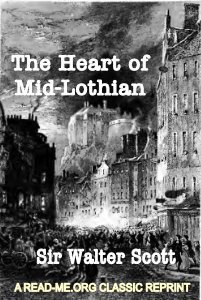
The Heart of Mid-Lothian

By Sir Walter Scott.

“Edinburgh, 1736: an indignant crowd has gathered in the Grassmarket to watch the execution of a smuggler...” Opening with the start of the Porteous Riots, The Heart of Midlothian is one of Walter Scott's most famous historical novels, featuring murder, madness and seduction. Following his brutal suppression of the spectators, John Porteous, Captain of the Guard, is charged with murder and locked up in Edinburgh's Tolbooth prison, also known as the Heart of Midlothian. When news comes that he has been pardoned, an angry mob breaks into the jail, liberating its inmates and bringing Porteous to its own form of justice. But one prisoner who fails to take this opportunity to flee is Effie Deans, who, wrongly convicted of infanticide, has been sentenced to death. Jeanie, her older sister, sets off to London on foot to beg for her pardon from the queen.

Boston: Dana Estes & Co., 1893.

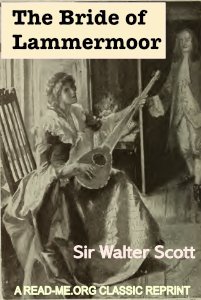
The Bride of Lammermoor

By Sir Walter Scott.

“The Author, on a former occasion, declined giving the real source from which he drew the tragic subject of this history, because, though occurring at a distant period, it might possibly be unpleasing to the feelings of the descendants of the parties. But as he finds an account of the circumstances given in the Notes to Law's Memorials by his ingenious friend Charles Kirkpatrick Sharpe, Esq., and also indicated in his reprint of the Rev. Mr. Symson's poems, appended to the Description of Galloway as the original of the Bride of Lammermoor, the Author feels himself now at liberty to tell the tale as he had it from connections of his own, who lived very near the period, and were closely related to the family of the Bride.

London: Collins Clear -Type Press, 1900. 416p.

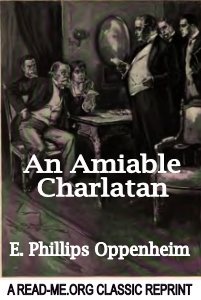
An Amiable Charlatan

By E. Phillips Oppenheim.

“An Englishman is enjoying his dinner at Stephano's, at which he is a regular diner. A man enters quickly, sits at his table, starts eating his food, and hands him a packet underneath the table! So begins Paul Walmsley's acquaintance - and adventures - with American adventurer Joseph H. Parker and his lovely daughter, Eve.”

Boston: Little, Brown and Co., 1916.341p.

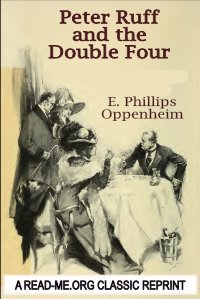
Peter Ruff and the Double Four

By E. Phillips Oppenheim.

“… Opposite him, at the other end of the table, sat his wife, Mrs. Barnes, a somewhat voluminous lady with a high colour, a black satin frock, and many ornaments. On her left the son of the house, eighteen years old, of moderate stature, somewhat pimply, with the fashion of the moment reflected in his pink tie with white spots, drawn through a gold ring, and curving outwards to seek obscurity underneath a dazzling waistcoat.”

Boston: Little, Brown, 1912. 424p.

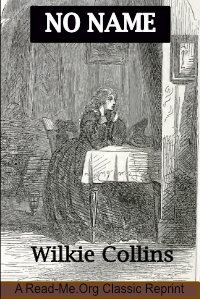
No Name

By Wilkie Collins.

This book is a 19th-century novel by the master of sensation fiction, Wilkie Collins. A country gentleman is killed in an accident and his wife dies shortly after him. The blow is double for their daughters, who discover that they were born before their parents were married. Their sudden illegitimacy robs them of their inheritance and their accustomed place in society.

New York: Harper and Brothers, 1873. 622p.

The Dead Secret

By Wilkie Collins. .

A Novel . Two of the characters which appear in these pages -- "Rosamond," and "Uncle Joseph" -- had the good fortune to find friends everywhere who took a hearty liking to them. A more elaborately drawn personage in the story -- "Sarah Leeson" -- was, I think, less generally understood. The idea of tracing, in this character, the influence of a heavy responsibility on a naturally timid woman, whose mind was neither strong enough to bear it, nor bold enough to drop it altogether, was a favorite idea with me, at the time, and is so much a favorite still, that I privately give "Sarah Leeson" the place of honor in the little portrait-gallery which my story contains.

London: Bradbury and Evans, 1857. 322p.