By: Colin Murphy
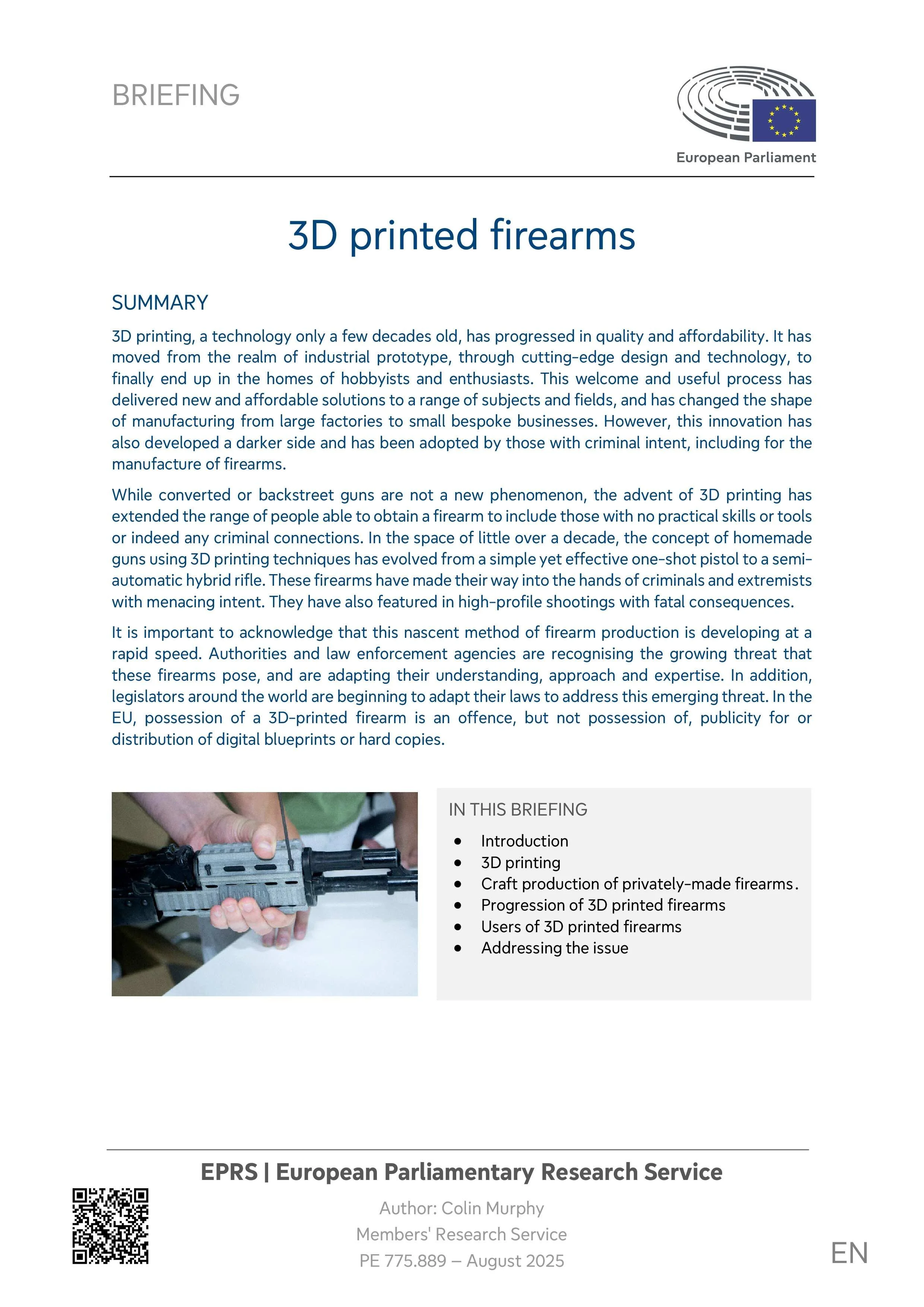
3D printing, a technology only a few decades old, has progressed in quality and affordability. It has moved from the realm of industrial prototype, through cutting-edge design and technology, to finally end up in the homes of hobbyists and enthusiasts. This welcome and useful process has delivered new and affordable solutions to a range of subjects and fields, and has changed the shape of manufacturing from large factories to small bespoke businesses. However, this innovation has also developed a darker side and has been adopted by those with criminal intent, including for the manufacture of firearms. While converted or backstreet guns are not a new phenomenon, the advent of 3D printing has extended the range of people able to obtain a firearm to include those with no practical skills or tools or indeed any criminal connections. In the space of little over a decade, the concept of homemade guns using 3D printing techniques has evolved from a simple yet effective one-shot pistol to a semi automatic hybrid rifle. These firearms have made their way into the hands of criminals and extremists with menacing intent. They have also featured in high-profile shootings with fatal consequences. It is important to acknowledge that this nascent method of firearm production is developing at a rapid speed. Authorities and law enforcement agencies are recognising the growing threat that these firearms pose, and are adapting their understanding, approach and expertise. In addition, legislators around the world are beginning to adapt their laws to address this emerging threat. In the EU, possession of a 3D-printed firearm is an offence, but not possession of, publicity for or distribution of digital blueprints or hard copies. IN THIS BRIEFING • Introduction • 3D printing • Craft production of privately-made firearms . • Progression of 3D printed firearms • Users of 3D printed firearms • Addressing the issue
Members' Research Service PE 775.889 – August 2025