Open Access Publisher and Free Library
SOCIAL SCIENCES.jpeg

SOCIAL SCIENCES

Social sciences examine human behavior, social structures, and interactions in various settings. Fields such as sociology, psychology, anthropology, and economics study social relationships, cultural norms, and institutions. By using different research methods, social scientists seek to understand community dynamics, the effects of policies, and factors driving social change. This field is important for tackling current issues, guiding public discussions, and developing strategies for social progress and innovation.

Posts in social sciences
Talks to Teachers

By William James..

In "Talks to Teachers," published in 1899, psychologist William James shares insights on the art of teaching drawn from his lectures at Harvard University. James explores the complexities of education, emphasizing the importance of engaging students' minds and emotions to foster meaningful learning experiences. With a blend of practical advice and philosophical reflections, this book continues to inspire educators to reflect on their teaching practices and cultivate a more holistic approach to education.

Cambridge. Harvard. (1899) 301 pages.

download
Personality and Deviance: Development and Core Dynamics

By S. Giora Shoham.

This is a ground breaking work by world renowned philosopher, psychologist and criminologist Shlomo Shoham that establishes the basic principles of his integrative theory of personality and deviance, combining the fields of psychology, religion, anthropology, sociology and criminology to provide unique insights into not only the dynamics of deviant behavior, but of the human psyche as well. His tools of analysis are a deep understanding of world religions applied through a lens of his own neo-psychoanalytical framework. Every page contains a new, uncanny insight into the vicissitudes of human behavior and the deviance of which humans are most capable. The book may be fifteen years old, but it is as relevant today as it was when it was written.

NY. Harrow and Heston Publishers. . 2016. 224 pages.

download
Madness Language and the Law

By Bruce A. Arrigo.

The classic real-life application of semiotics to the study of the plight of the mentally ill, victims of an impossibly convoluted legal system that gobbled them up and spat them out either as criminals or as those who must be committed to an institution no matter what. Mad or bad? You decide. One hesitates to say it, but not much has changed since this enlightening book was written some four decades ago.

NY. Harrow and Heston Publishers. 2019. 176p.

download
The Children Of Looked After Children

By Louise Roberts.

Outcomes, Experiences and Ensuring Meaningful Support to Young Parents In and Leaving Care, “…the organisation was concerned that care-experienced parents-to-be shared some additional difficulties and experiences. These included the potential for social work intervention, experiences of stigma and discrimination, as well as reduced access to resources and support. While the organisation was keen to acknowledge and champion the successes of parents who overcame multiple adversities and maintained the care of their children, they were nevertheless deeply concerned about the numbers subject to routine assessment, monitoring and intervention, including permanent and compulsory separation.”

Policy Press (2021) 173p.

download
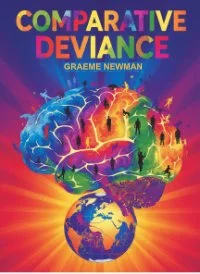
Comparative Deviance: Perception and Law in Six Cultures

By Graeme Newman.

This book represents the first systematic attempt to survey public perceptions of deviant behavior cross-culturally: in India. Indonesia. Iran Italy. Yugoslavia and the United States. While it was discovered that there was extensive diversity} in both law and perception concerning such deviances of taking drugs, homosexuality and abortion. yet evidence was found for a basically invariant structure in perception of deviance across all cultures. Within the countries that were studied, it was the strength of religious belief and urban rural background that accounted for major differences in the perception of deviance— when differences were identified. These findings challenge many of the assumptions of conflict theory in sociology, of cultural relativism in anthropology and of ethical relativism in moral philosophy. These, and other issues that are discussed will interest social scientists in many fields, especially anthropologists, sociologists of law, conflict theorists, criminologists, attitude theorists, moral philosophers, opinion pollsters, and labelling theorists.

NY. Elsevier. 1976. 320p.

download
Reflections on Violence

By Georges Sorel.

Georges Sorel's Reflections on Violence (1908) remains a controversial text to this day. It unashamedly advocates the use of violence as a means of putting an end to the corrupt politics of bourgeois democracy and of bringing down capitalism. It is both dangerous and fascinating, of enduring importance and interest to all those concerned about the nature of modern politics.

New York: B.W. Huebsch. 1914. 322p.

download
Right-Wing Populism in Europe

Edited by By Ruth Wodak, Majid KhosraviNik and Brigitte Mral. Politics and Discourse.

Right-wing populist movements and related political parties are gaining ground in many EU member states. This unique, interdisciplinary book provides an overall picture of the dynamics and development of these parties across Europe and beyond. Combining theory with in-depth case studies, it offers a comparative analysis of the policies and rhetoric of existing and emerging parties including the British BNP, the Hungarian Jobbik and the Danish Folkeparti. The case studies qualitatively and quantitatively analyse right-wing populist groups in the following countries: Austria, Germany, Britain, France, Sweden, Norway, Denmark, Italy, Netherlands, Hungary, Belgium, Ukraine, Estonia, and Latvia, with one essay exclusively focused on the US. This timely and socially relevant collection is essential reading for scholars, students and practitioners wanting to understand the recent rise of populist right wing parties at local, countrywide and regional levels.

Bloomsbury Academic (2013) 349p.

download
Online Hate Speech in the European Union

Edited by: Stavros Assimakopoulos, Fabienne H Baider, et al.

A Discourse-Analytic Perspective. This open access book reports on research carried out as part of the European Union co-funded C.O.N.T.A.C.T. project which targeted hate speech and hate crime across a number of EU member states. It showcases the bearing that discourse analytic research can have on our understanding of this phenomenon that is a growing global cause for concern.Although 'hate speech' is often incorporated in legal and policy documents, there is no universally accepted definition, which in itself warrants research into how hatred is both expressed and perceived. The research project synthesises discourse analytic and corpus linguistics techniques, and presents its key findings here. The focus is especially on online comments posted in reaction to news items that could trigger discrimination, as well as on the folk perception of online hate speech as revealed through semi-structured interviews with young individuals across the various partner countries. This work was published by Saint Philip Street Press pursuant to a Creative Commons license permitting commercial use. All rights not granted by the work's license are retained by the author or authors.

Springer (2020) 97 pages.

download
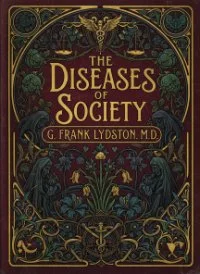
The Diseases of Society

By George Frank Lydston. Introduction by Graeme R. Newman
In Diseases of Society (1903), George Frank Lydston—Chicago physician, professor, and one of the Progressive Era’s most provocative thinkers—delivers a bold diagnosis of the forces undermining modern civilization. With the precision of a clinician and the urgency of a social critic, Lydston argues that vice, crime, poverty, political corruption, and widespread sexual ignorance are not isolated failings but symptoms of a deeper “social pathology.”

From the hidden toll of alcohol abuse and venereal disease to the pressures of urban life and the roots of criminal behavior, Lydston dissects the moral and physical maladies of American society at the dawn of the twentieth century. His prescriptions—public health measures, honest governance, education, and pragmatic regulation—anticipate many of today’s harm-reduction and evidence-based approaches.

Both unsettling and strikingly forward-looking, Diseases of Society stands as a landmark work in early social medicine and criminology. It captures the anxieties of its age while illuminating challenges that remain uncannily familiar. For scholars of public health, social reform, criminology, and American urban history, Lydston’s analysis invites a fresh reconsideration of how societies fall ill—and how they might heal.The Vice and Crime Problem..

From the preface by the author: “Twenty-five years ago I witnessed a legal murder, — the hanging of two unfortunate youths condemned for an illegal murder. Neither was over twenty-one years of age. The assassination was unprovoked, unpremeditated and committed by stabbing….’They after better off dead,’ the law said.”

This modern version has been edited by Colin Heston, retaining some of the quaint spellings, but leaving most of the older medical terms as is. The footnotes have been removed to make the book more easy to read without distractions.

Lippincott (1904). Read-Me.Org Inc. New York-Philadelphia-Australia. 2025. p.442.

download free
Kindle $2.99 -- paperback $13.99
The Sociology Of Law And The Global Transformation Of Democracy

By Chris Thornhill.

This is a book that is concerned with democracy. It aims to contribute to the defence of democracy, and to achieve this goal it aims to contribute to the broad understanding of democracy – that is, to enhance comprehension of the historical processes through which democracy developed, of its social foundations and of the expectations that people who live in democratic societies can reasonably entertain.

Cambridge. (2018) 598 pages.

download
Human Nature and Social Order Part 2

By Charles Cooley.

In the eagerly anticipated sequel to the groundbreaking exploration of human behavior and societal structures, "Human Nature and Social Order Part 2" delves even deeper into the intricate relationship between individuals and the world around them. Renowned author and sociologist Dr. Sarah Adams offers a compelling analysis of how our innate human tendencies shape the systems we create, and in turn, how these systems influence our behaviors.

From the dynamics of power and hierarchy to the evolution of norms and values, this book challenges readers to consider the complex interplay between individual choices and collective outcomes. Drawing on a wealth of interdisciplinary research and real-world examples, Dr. Adams paints a vivid portrait of the forces that drive human societies – for better or for worse.

"Human Nature and Social Order Part 2" is a must-read for anyone seeking a deeper understanding of the intricate web of human interactions that underpin our daily lives. Thought-provoking and enlightening, this book will challenge your assumptions and open your eyes to the profound ways in which human nature shapes the social order.

NY. Scribner. (1902) 421 pages total both parts.

download
Human Nature and Social Order Part 1

By Charles Cooley.

In "Human Nature and Social Order Part 1," author delves deep into the complex interplay between human behavior and societal structures. Drawing from a multitude of disciplines including sociology, psychology, and anthropology, this compelling book explores fundamental questions about the nature of humanity and the forces that shape our interactions within society.

From the intricate dynamics of interpersonal relationships to the broader impact of cultural norms and institutions, the author navigates through thought-provoking concepts with clarity and depth. Through a series of insightful case studies and theoretical discussions, "Human Nature and Social Order Part 1" invites readers to critically examine the intricacies of human nature and its role in shaping social order.

This book is a must-read for anyone seeking a deeper understanding of the complexities of human behavior and the profound ways in which individuals and societies influence each other. "Human Nature and Social Order Part 1" is a thought-provoking journey that challenges conventional wisdom and offers new insights into the intricate tapestry of human existence.

NY.: Scribner. (1902) 421 pages total both parts.

download
Disasters and History

By Bas van Bavel, Daniel R. Curtis, Jessica Dijkman, Matthew Hannaford, Maïka de Keyzer, Eline van Onacker, and Tim Soens

The Vulnerability and Resilience of Past Societies. “Disasters and History offers the first comprehensive historical overview of hazards and disasters. Drawing on a range of case studies, including the Black Death, the Lisbon earthquake of 1755, and the Fukushima disaster, the authors examine how societies dealt with shocks and hazards and their potentially disastrous outcomes. They reveal the ways in which the consequences and outcomes of these disasters varied widely not only between societies but also within the same societies according to social groups, ethnicity, and gender.”

(2020) 244 pages.

download
Bishops in Flight

By Jennifer Barry.

Exile and Displacement in Late Antiquity. This book explores why the discourse of Christian flight became an important part of the narrative of pro-Nicene orthodoxy that would dominate the Roman Empire. Not only does Christian flight take precedence over memories of martyrdom, but the cultural authority of those bygone martyrs is also slowly folded into new persecution narratives of episcopal exile. As Athanasius of Alexandria (ca. 293–373) argued in the fourth century, the blood of the martyrs may indeed be the seed of the church, but the bishop—particularly the bishop who survives—ensures that the seed takes root.

UC Press. (2019) 224 pages.

download
Blamestorming, Blamemongers And Scapegoats

By Gavin Dingwall and Tim Hillier.

Allocating blame in the criminal justice process. By Gavin Dingwall and Tim Hillier. “Like many commentators, we are perturbed by a trend to criminalise in the absence of compelling justification…this development is explained in part by a greater willingness to attribute blame for events, to demand that blame is imputed onto an individual or other legal actor, and that severe consequences should then follow. We employ the modern term blamestorming to describe the deliberate process of attribution. That ‘blamestorming’ is followed in the book’s title by blamemongers and scapegoats emphasises the fact that blamestorming is not a value-neutral exercise and that significant disparities in power are often involved.

Policy Press (2016). 216 pages.

download
Mutual Aid

By Peter Kropotkin

Ashley Montagu described Mutual Aid as “one of the world’s great books.” From butterflies to human families, Kropotkin argued that humans, indeed all species, had to help each other if they were to survive. This was a direct counter to the popularized Darwinian thesis of the “survival of the fittest” or Hobbes’s war of all against all.

McClure, Philips & Company, 1902, 181 pages

download
How Effective Are Mentorship Interventions? Assessing the Evidence Base for Preventing and Countering Violent Extremism

By Emily Winterbotham

Forming part of the Prevention Project, this paper examines the effectiveness of mentorship interventions.

Mentorships, as interventions targeted at the specific needs of individuals or groups of individuals and adapted to the local environment, are assumed to have a higher chance of tackling violent extremism than broad approaches targeting general populations. This paper demonstrates that evaluations of mentorship interventions are limited in number and scope – as with the wider P/CVE field. Existing evaluations often lack well-developed theories of change and are over-reliant on anecdotal evidence. It is therefore difficult to draw causal links between mentoring and positive P/CVE outcomes. This paper is, however, cautiously optimistic about the effectiveness of mentorship programmes.

For mentorship programmes to be successful, stakeholders with a thorough understanding of the target group’s social setting and context are crucial. Connections to local material and human resources and services are important for programme effectiveness and sustainability.

London: Royal United Services Institute, 2020. 64p.

download
Linking High-level Accused to Sexual and Gender-Based Crimes in International Criminal Law Sammie, Sylvester

By Sylvester Sammie.

Linking High-level Accused to Sexual and Gender-Based Crimes in International Criminal Law focuses on the theoretical and practical perspectives taken by the ICTY, ICTR, and ICC. It seeks to answer the question of how high-level officials can and should be investigated and prosecuted for their role in the commission of sexual and gender-based crimes. The author examines the forms, types, and amount of evidence used to prove the role of these high-level accused in the commission of crimes by rank-and-file soldiers. As the accused are usually not present on the crime scene, the international criminal courts and tribunals must rely on individual criminal liability theories enshrined in Article 7 ICTY Statute, Article 6 ICTR Statute, and Articles 25 & 28 Rome Statute to connect them to the atrocities committed on the ground. 100 individual cases from the ICTY, ICTR, and ICC are examined and reveal that in most cases there was sufficient evidence to prove that sexual and gender-based crimes were committed. It was however much more difficult for the prosecutor to prove the role and responsibility of the high-ranked accused and the modes of liability charged. The author gives concrete recommendations on how to gather linkage evidence effectively, and to use the modes of liability accurately to prove the connection between the committed crimes, the broader context and the accused’s role.

Groningen: University of Groningen. 2021. 415p.

download
Studies in the criminalisation of poverty : Pauperism, pathology and policing

By Peter Squires.

The study of social policy, or social administration, is usually associated with the study of statutory, welfare-oriented, distributive mechanisms. Indeed, it is precisely these distributive and welfare-related characteristics that qualifies certain kinds of policy as 'social'. Yet, there is no real justification, save historical accident and tradition for continuing to accept this particular conception of social policy. A different kind of examination of the historical record - such as the analyses contained within this thesis - reveals a quite different legacy to the British social policy tradition. Thus, the work contained within this thesis consists of an attempt to take another look at the historical development and modern evolution of state social policy. The effort is made to show that there is an older and more entrenched social policy tradition in Britain; one as much concerned with discipline as with welfare,. more to do with division than with integration and more repressive than, liberating. It is important to acknowledge that the penal code is as old as the Poor Laws, that the mercantilist science of police preceded the science of political economy; and, later in the age of capitalism and industrialization, the Metropolitan Police Act predated the extension of the franchise and the reform of the Poor Laws. In short, a central preoccupation of the thesis is the attempt to elaborate Gareth Stedman-Jones' remark that, in the history of social administration, welfare and discipline, or care and control, were but two sides of the same coin. In order to develop this argument, theoretical perspectives deriving from the work of Marx and Foucault have been employed. The works of Marx have been used to help in the analysis of the state, class struggle and the changing modes of political domination, whilst Foucault's work - especially his emphasis upon the analysis of discipline - has been employed to help elaborate the ways in which objectives, techniques and practices are brought together in forms of socio-political 'intervention' - political strategies or social policies. Furthermore Foucault's work in the analysis of socio-political discourse was of major importance insofar as it offered a technique for isolating and examining the formation of knowledges, practices and policies in social interventions.

Bristol, UK: University of Bristol 1984. 2 vols.

download pt 1
download pt 2
Building Capacity to Reduce Bullying: Workshop Summary

Institute of Medicine and National Research Council.

Bullying - long tolerated as just a part of growing up - finally has been recognized as a substantial and preventable health problem. Bullying is associated with anxiety, depression, poor school performance, and future delinquent behavior among its targets, and reports regularly surface of youth who have committed suicide at least in part because of intolerable bullying. Bullying also can have harmful effects on children who bully, on bystanders, on school climates, and on society at large. Bullying can occur at all ages, from before elementary school to after high school. It can take the form of physical violence, verbal attacks, social isolation, spreading rumors, or cyberbullying. Increased concern about bullying has led 49 states and the District of Columbia to enact anti-bullying legislation since 1999. In addition, research on the causes, consequences, and prevention of bullying has expanded greatly in recent decades. However, major gaps still exist in the understanding of bullying and of interventions that can prevent or mitigate the effects of bullying.

Building Capacity to Reduce Bullying is the summary of a workshop convened by the Board on Children, Youth, and Families of the Institute of Medicine and National Research Council in April 2014 to identify the conceptual models and interventions that have proven effective in decreasing bullying, examine models that could increase protective factors and mitigate the negative effects of bullying, and explore the appropriate roles of different groups in preventing bullying. This report reviews research on bullying prevention and intervention efforts as well as efforts in related areas of research and practice, implemented in a range of contexts and settings, including schools, peers, families, communities, laws and public policies, and technology. Building Capacity to Reduce Bullying considers how involvement or lack of involvement by these sectors influences opportunities for bullying, and appropriate roles for these sectors in preventing bullying. This report highlights current research on bullying prevention, considers what works and what does not work, and derives lessons learned.

Washington, DC: The National Academies Press. 2014. 150p.

download