Open Access Publisher and Free Library
CRIME+CRIMINOLOGY.jpeg

CRIME

Violent-Non-Violent-Cyber-Global-Organized-Environmental-Policing-Crime Prevention-Victimization

Posts in Government
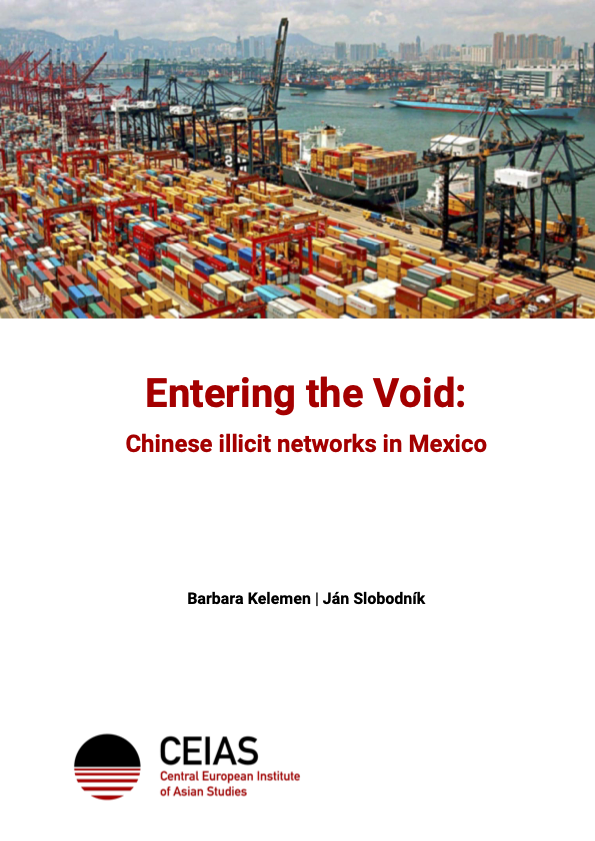
Entering the Void: Chinese illicit networks in Mexico 

By Barbara Kelemen | Ján Slobodník

Summary ▪ Mexico’s macroeconomic stability and abundant natural resources have made the country into an attractive destination for Chinese businesses. ▪ The country still suffers from a lack of internal security, most of it stemming from the Mexican Drug War, an ongoing multilateral lowintensity conflict between the Mexican government and a large number of criminal organizations. ▪ In some of Mexico’s states, pervasive violence and instability have resulted in a power vacuum. With the government being unable to guarantee security, non-state actors such as criminal organizations and/or civilian militias seize the opportunity to establish their own rule. ▪ When foreign companies operate in such troubled areas, they inevitably run into problems caused by Mexico’s security issues. ▪ Within this trend of foreign companies operating in Mexico, some level of tacit cooperation has been observed between Chinese businesses and non-state actors. This cooperation is often an outcome of localized security vacuums that are exploited by alternative security providers, such as criminal organizations, that can fill them and provide operational safety for local businesses. ▪ A growing body of research has identified the existence of Chinese illicit networks and their involvement in the trafficking of people, narcotics, and contraband goods, as well as money laundering and illegal arms trade in Mexico. ▪ Concealed under the guise of legal commercial activity, networks of Mexican criminal organizations and their Chinese business partners exploit the dire security situation in some areas of Mexico. ▪ Despite attempts by the Chinese and the Mexican governments to regulate certain sectors that contribute to the existence of the illicit networks in Mexico, there are still substantial opportunities that are ripe for exploitation by the criminal group-legitimate business partnerships.

Transnational Organized Crime in Mexico and the Government's Response

By Evan Ellis

The U.S. government threats of tariffs on the Mexican government if it did not do more to control illicit fentanyl ows into the United States have cast new attention on the growing problem of transnational organized crime that has wrought violence and corruption at all levels in Mexico. This work, based on the authors research in interviews with senior Mexican security ofcials in Mexico City in March 2025, examines the evolution of transnational organized crime in the country, and the Mexican government’s response, with the support of the United States and other partners.The principal drivers of transnational organized crime dynamics in Mexico are ows of cocaine through the country, largely destined for European and Asian markets, as well as the production of fentanyl there from Chinese and other precursors, mostly oriented toward export to the United States. In addition, other illicit activities including petroleum theft (huachicol), smuggling and exploitation of migrants transiting the country, extortion and kidnapping, illegal mining and money laundering, have also fueled Mexico’s evolving illicit economy. With respect to murders and other violence in Mexico, arms, including long arms imported from the United States, arms obtained on the black market from Central American and other global wars, drones and other military products principally from the People’s Republic of China (PRC), as well as a large, welldeveloped illicit domestic industry for military vehicles and supplies all contribute to the lethality of multiple ongoing conict within the country.The organized crime dynamics in Mexico, the domestic and international groups involved, in the pattern of violence has evolved signicantly in the almost two decades since 2006 when Mexican president Felipe Calderon declared war on the drug cartels for their escalating violence and deployed federal troops into Michoacan to respond. This work analyzes of those dynamics, their evolution, and the response of the Mexican government, in conjunction with the US and other partners.


Organized Criminal Syndicates and Governance in Mexico and Central America

By Omar García-Ponce 

Organized criminal groups (OCGs), ranging from local gangs to powerful drug cartels that operate across national boundaries, represent the single most important security threat in Mexico and Central America. A growing body of research in political science and other disciplines has examined the political and socioeconomic roots of these organizations, as well as the mechanisms underlying the production of organized criminal violence. The unprecedented wave of organized criminal violence that has been affecting the region in recent years can be traced back to political transformations and policy changes that disrupted the social and political order at the local level, redefining the organization of illicit markets, and undermining the rule of law. On these issues there is a particularly rich literature that focuses on understanding the outbreak of violence and criminal rivalry in Mexico. Several studies have emphasized the role of state-criminal group relationships as a key factor to understand the challenges that organized crime poses in terms of peacebuilding and democratic rule. Within this framework, the existing literature has identified various forms of criminal governance prevalent in Mexico and Central America, and shed light on how communities respond to crime and violence in contexts of low state capacity. Some of these responses include social mobilization, vigilantism, and support for extralegal violence. The use of violence by OCGs in electoral contexts has also received particular attention in the literature, since they often target candidates or intimidate voters, affecting political preferences and patterns of political participation. Finally, a series of studies has rigorously investigated the impact of organized criminal violence on a number of outcomes, including political attitudes and behavior, trust in institutions, and health and education, among others.

An Obscured Conflict: The role of the Mexican Armed Forces in the Fight Against Organised Crime (2001-2016

By Jan Slobodník

This study examines the militarised approach of the Mexican government in its struggle against organised crime between 2001 and 2016, focusing on the deployment of the armed forces and the implementation of the so-called kingpin strategy. It argues that the removal of cartel leaders, rather than weakening criminal networks, produced fragmentation, diversification, and militarisation within Mexico’s underworld—a process defined here as zetafication. The thesis uses the rise and evolution of Los Zetas as a case study to analyse how a criminal organisation born from army deserters introduced military tactics, hierarchical discipline, and extreme violence into organised crime, transforming the conflict’s character and the state’s response. Drawing on government reports, interviews with Mexican military officers and civilians, and contemporary scholarship, the study situates this phenomenon within Mexico’s political, legal, and socio-economic context, including the influence of U.S. security policy. It concludes that the use of the military as a policing tool produces short-term tactical gains but undermines long-term state stability, erodes public trust, and perpetuates cycles of violence.