Open Access Publisher and Free Library
CRIME+CRIMINOLOGY.jpeg

CRIME

Violent-Non-Violent-Cyber-Global-Organized-Environmental-Policing-Crime Prevention-Victimization

Posts in Drug Trafficking
The Evolution of Mara Salvatrucha 13 and Barrio 18: Violence, Extortion, and Drug Trafficking in the Northern Triangle of Central America"

By Pamela Ruiz

The Mara Salvatrucha 13 (mara) and Barrio 18 (pandilla) gangs have become a major concern for the governments of the Northern Triangle of Central America (Guatemala, El Salvador, and Honduras) and the United States. In recent years, government officials have attributed violence and the exodus of Central Americans to the developing capacities of gangs. The Mara Salvatrucha 13(MS-13) and Barrio 18 have been identified to strategically implement violence and extortion rackets which have led to transformations in their organizational structures and increased participation in drug trafficking. Furthermore, officials insinuate that gangs have developed capacities to confront security forces that enter gang territory with an increase in confrontations. This has resulted with Northern Triangle governments reclassifying gangs as organized crime and/or terrorist organizations; but, do these gangs meet the requirements to be classified as such? The overall purpose of this study is to examine the evolution of MS-13 and Barrio 18 in the Northern Triangle of Central America using mixed methods. Crime pattern theory provided the framework to understand the crime opportunity structures to explain the concentration of violence (homicides, extortion, and confrontations). Organized crime and gang concepts were used to evaluate gangs’ evolution with regards to their use of violence, extortion rackets,transformations in organizational structures, and roles in drug trafficking with a focus on their alliances with Los Zetas and the Sinaloa cartel (Mexican DTOs). Phase I of this study used official quantitative data to map the spatial concentration of homicides, extortions, and confrontations (gang-related crimes) at the municipality level for each country from 2007-2017. Phase II gathered qualitative data through purposive, semi-structured interviews with subject matter experts (academics, law enforcement, and NGO personnel) to obtain a more comprehensive understanding of the concentration of violence and whether gangs had evolved to organized crime organizations. Triangulation of the study data provided a more concise display of where these crimes concentrate and contributing factors to the gangs’ evolution. This study concludes illicit political economic networks between corrupt officials, narcotrafficking groups, and gangs contribute to violence and impunity in the Northern Triangle of Central America. The concentration of homicides in border municipalities was often associated with drug trafficking, homicides in urban areas were often associated with gangs, and homicides in rural areas were attributed to vengeance murders. Extortion concentrated in urban centers and was described as a crime of opportunity with various “imitators” involved. Confrontations between law enforcement personnel and gangs have led to formal accusations of extrajudicial executions. Moreover, the politicization of gangs has limited attention to address criminal activities and violence that are not associated with gangs. Therefore, this study’s findings indicate violence in the Northern Triangle of Central America can be attributed tointer-and-intra gang violence, 2) inter-and-intra narcotrafficking violence, 3) state violence and 4) non-gang related violence. Lastly, it is unquestionable MS-13 and Barrio 18 have evolved, while it is premature to classify these gangs as an organized crime group; this study puts forth categorizing gangs as “organized delinquency” to best describe their capacities.

CONTRABAND TOBACCO: SYSTEMATIC PROFILING OF CIGARETTE PACKS FOR FORENSIC INTELLIGENCE

By Laurie Caron, Frank Crispino and Cyril Muehlethaler

Tobacco smuggling remains a widespread illegal activity in Canada, associated with important social and economic impacts, and often linked to organized crime. This study explores the application of forensic profiling as an intelligence tool to support the analysis of contraband cigarette production and distribution. Physical and chemical manufacturing characteristics of seized contraband cigarette packs, provided by the Canada Border Services Agency (CBSA), were observed and coded using macroscopic, microscopic, and spectroscopic techniques. Multivariate statistical analyses were then conducted to compare manufacturing characteristics between packs and identify potential links. The analyses highlighted links between cigarette packs and seizures based on shared manufacturing characteristics. The results and the identified groups were also compared with seizure data provided by the CBSA. The results demonstrate the relevance of forensic profiling to formulate hypotheses regarding shared production processes or supply networks. These hypotheses provide information that contributes to understanding tobacco smuggling and aim to examine how forensic intelligence can support law enforcement and measures to prevent and disrupt this criminal activity. A preliminary optimal procedure for applying forensic profiling in operational contexts targeting contraband tobacco was finally proposed. Despite limitations in the dataset creation that were beyond our control, this study represents a starting point for applying this scientific approach to tobacco smuggling

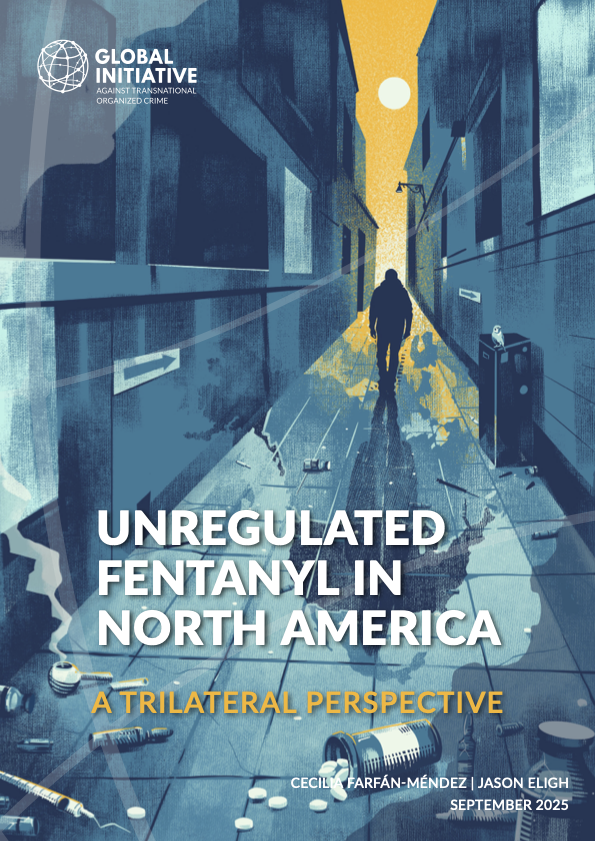
Unregulated Fentanyl in North America

By CECILIA FARFÁN-MÉNDEZ | JASON ELIGH 

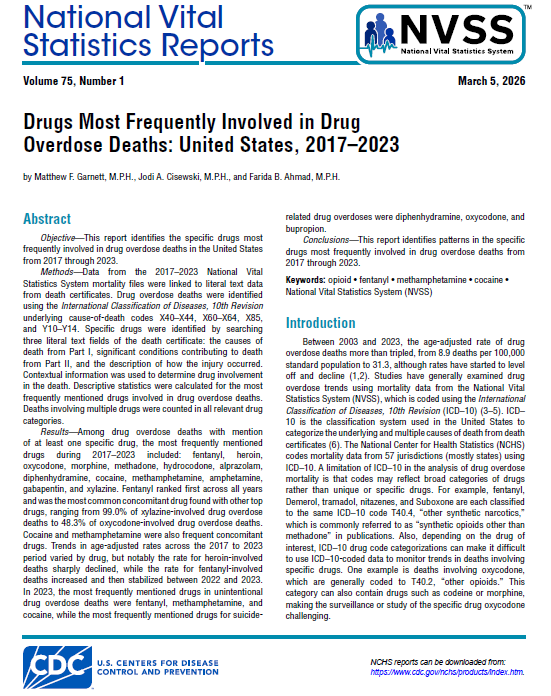
More than 1.1 million people in the United States have died from opioid overdoses since 2000. In Canada, over 50,000 lives have been lost to opioid-related overdoses since 2016. Meanwhile, in Mexico, homicide—mostly committed with illegally trafficked firearms—is the leading cause of death among men aged 15 to 44. These overlapping crises reveal that the harms associated with synthetic opioids are not confined to one country but span all of North America.

This policy brief sheds light on how illicitly manufactured fentanyl (IMF) is produced and distributed within and across Mexico, the US, and Canada. The report reveals a complex and highly integrated system of production, tablet pressing, trafficking, and consumption. Far from being a product trafficked into North America, IMF is increasingly produced on its soil.nized Crime trilateral perspective

Building Barriers and Bridges. The Need for International Cooperation to Counter the Caribbean–Europe Drug Trade

By Christopher Hernandez-Roy and Rubi Bledsoe 

Drug trafficking, especially cocaine trafficking, from source countries in South America to Europe has produced alarming and lasting effects on both sides of the Atlantic. While various trafficking routes to Europe exist, transshipment through the Caribbean, including through the European territories in the region, is of growing concern. In Europe, the expanding cocaine market has brought a rise in homicides, kidnappings, and intimidation. In the city of Antwerp, for example, there were around 200 drug-related violent incidents in the past five years as competing gangs fought over control of territory. In the Caribbean, drug trafficking by organized crime has been associated with record homicide levels, corruption, democratic backsliding, and money laundering, among other pernicious effects. It has also prompted wars between gangs over the control of criminal economies, expanded illegal firearms trafficking, and exacerbated human trafficking both within the region and beyond. Shedding light on the complexity of the issue—while providing policy recommendations for increased cooperation between the United States, Europe, and Caribbean countries—is necessary as both continents seek regional and extra-regional security.

Washington, DC: CSIS, 2023. 11p.

The New Transatlantic Bonanza: Cocaine on Highway 10.

By Antonio L. Mazzitelli


The 10th Parallel marine and aerial routes linking South America and West Africa harbor a long history of trade between the two continents. More recently, these routes have become one of the preferred routes used by Latin American traffickers for shipping multi-tons of cocaine destined for the growing European market. The Parallel‘s growing importance in cocaine trafficking has made it known as cocaine ―Highway 10‖ among law enforcement. Latin American cocaine trafficking organizations, particularly the Colombian ones, have established stable bases in West Africa, controlling and developing the route. West African facilitators, Nigerians as well as an increasing number of nationals from all countries where shipments are stocked, have developed a stronger capacity for taking over a more ambitious and lucrative role in the business as transporters, partners, and final buyers. In one case (Guinea), the West African partner had already started developing his own trafficking and manufacturing capacity, reproducing the patterns that made Colombia the business model of the drug industry. In this reshaped context, of particular concern is the role played by the Colombian FARC (Fuerzas Armadas Revolucionarias de Colombia) as provider of cocaine shipments to West African cocaine entrepreneurs, as well as the impact of drug trafficking money on the financing of terrorist and rebel groups operating in the Sahel-Saharan belt. 

Miami:  Western Hemisphere Security Analysis Center. 2011. 22p.