Open Access Free Library
CRIME+CRIMINOLOGY.jpeg

CRIME

Violent-Non-Violent-Cyber-Global-Organized-Environmental-Policing-Crime Prevention-Victimization

Posts tagged Crime prevention strategies
An Overview of the Impact of Special Anti-Robbery Squad (SARS) in Nigeria

Ogbette, Afamefuna Samuel

This study examined the impact of Special Anti-Robbery Squad (SARS) in Nigeria. It solely depended on the secondary source for information. SARS is one of the Nigeria Police Force units that is saddled with the responsibility of fighting crime in the society; specifically, robbery and kidnapping. The impact was examined in two ways: Positive and Negative impact. From the positive point of view, SARS has been able to reduce robbery and kidnapping to an extent but unfortunately, people now use them as bodyguards to intimidate, suppress, and harass other people. From our findings, SARS tortures people mercilessly, extort, beat, kill and jail people who are not forthcoming with their demands

International Journal of Human Resource Studies ISSN 2162-3058 2018, Vol. 8, No. 4

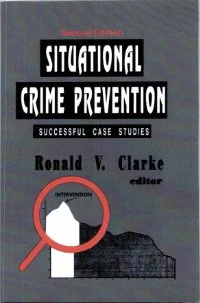
Situational Crime Prevention : Successful Case Studies. Second Edition

Ronald V.Clarke

Situational Crime Prevention: Successful Case Studies is a landmark collection that demonstrates how crime can be reduced by changing environments, opportunities, and systems rather than attempting to change offenders themselves. Edited by criminologist Ronald V. Clarke, this influential second edition presents 23 real-world case studies from around the world that show how practical, evidence-based interventions have successfully prevented crimes ranging from burglary and vehicle theft to fraud, robbery, vandalism, and public disorder.

The book introduces the theory of situational crime prevention, explaining how crime opportunities arise and how they can be systematically reduced through environmental design, management practices, surveillance, access control, target hardening, and other preventive strategies. Clarke outlines sixteen opportunity-reducing techniques and illustrates them through detailed case studies involving improved street lighting, CCTV systems, steering-column locks, property marking, public transport security, retail theft prevention, fraud reduction, and community safety initiatives.

Drawing on rigorous evaluations from the United States, the United Kingdom, the Netherlands, Sweden, Australia, and Canada, the volume challenges traditional assumptions about crime control, including the belief that offenders inevitably displace their activities elsewhere. Many of the featured projects demonstrate significant and measurable reductions in crime, often producing wider community benefits beyond their original targets.

Widely regarded as a foundational text in criminology, policing, security management, and crime prevention, this book remains essential reading for scholars, practitioners, law enforcement professionals, policymakers, and students interested in understanding how carefully designed environments and strategic interventions can make crime more difficult, risky, and unrewarding.

Ciminal Justice Press. 1997. 367p.

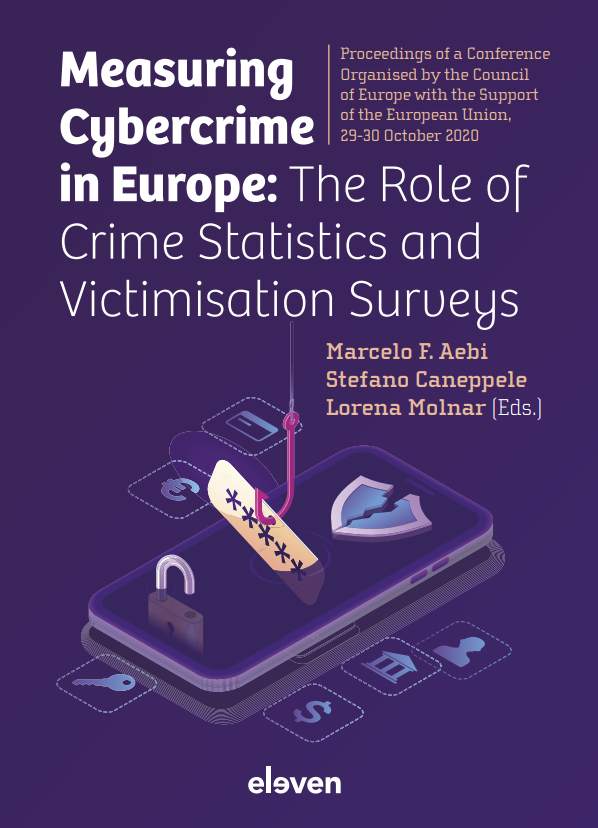
Measuring cybercrime in Europe

By Marcelo F. Aebi Stefano Caneppele Lorena Molnar (Eds.)

  Cybercrime has become part of everyday life. We live in hybrid societies, fl uctuating between the material and the virtual world, and we are hence confronted with online, offl ine and hybrid offences. However, the few victimisation surveys conducted in Europe reveal that victims of online crimes seldom report them to the police. Consequently, cybercrimes – which according to the best estimates represent between one third and more than half of all attempted and completed crimes in Europe – seldom appear in national criminal statistics. The State seems powerless to prevent them and private security companies fl ourish. During two days, experts from all over the continent gathered together in the framework of a virtual conference organized by the Council of Europe and the European Union to discuss what we know, what we do not know, and what we could do to improve our knowledge of crime in our contemporary hybrid societies, develop evidence-based criminal policies, provide assistance to crime victims, and implement realistic programs in the fi eld of crime prevention and offender treatment. This book presents their experiences, refl exions, and proposals  

The Hague: Eleven Publishing, 2022. 150p.