Open Access Free Library
CRIME+CRIMINOLOGY.jpeg

CRIME

Violent-Non-Violent-Cyber-Global-Organized-Environmental-Policing-Crime Prevention-Victimization

Posts in Crime and Disorder
Assessing a dysphoric arousal model of acute stress disorder symptoms in a clinical sample of rape and bank robbery victims

Maj Hansen*, Cherie Armour and Ask Elklit

Background: Since the introduction of Acute Stress Disorder (ASD) into the 4th edition of the Diagnostic and Statistical Manual of Mental Disorders (DSM-IV) research has focused on the ability of ASD to predict PTSD rather than focusing on addressing ASD’s underlying latent structure. The few existing confirmatory factor analytic (CFA) studies of ASD have failed to reach a clear consensus regarding ASD’s underlying dimensionality. Although, the discrepancy in the results may be due to varying ASD prevalence rates, it remains possible that the model capturing the latent structure of ASD has not yet been put forward. One such model may be a replication of a new five-factor model of PTSD, which separates the arousal symptom cluster into Dysphoric and Anxious Arousal. Given the pending DSM-5, uncovering ASD’s latent structure is more pertinent than ever.

Objective: Using CFA, four different models of the latent structure of ASD were specified and tested: the proposed DSM-5 model, the DSM-IV model, a three factor model, and a five factor model separating the arousal symptom cluster.

Method: The analyses were based on a combined sample of rape and bank robbery victims, who all met the diagnostic criteria for ASD (N404) using the Acute Stress Disorder Scale.

Results: The results showed that the five factor model provided the best fit to the data.

Conclusions: The results of the present study suggest that the dimensionality of ASD may be best characterized as a five factor structure which separates dysphoric and anxious arousal items into two separate factors, akin to recent research on PTSD’s latent structure. Thus, the current study adds to the debate about how ASD should be conceptualized in the pending DSM-5.

European Journal of Psychotraumatology. 2012.

An Overview of the Impact of Special Anti-Robbery Squad (SARS) in Nigeria

Ogbette, Afamefuna Samuel

This study examined the impact of Special Anti-Robbery Squad (SARS) in Nigeria. It solely depended on the secondary source for information. SARS is one of the Nigeria Police Force units that is saddled with the responsibility of fighting crime in the society; specifically, robbery and kidnapping. The impact was examined in two ways: Positive and Negative impact. From the positive point of view, SARS has been able to reduce robbery and kidnapping to an extent but unfortunately, people now use them as bodyguards to intimidate, suppress, and harass other people. From our findings, SARS tortures people mercilessly, extort, beat, kill and jail people who are not forthcoming with their demands

International Journal of Human Resource Studies ISSN 2162-3058 2018, Vol. 8, No. 4

Alcohol and Drug Use Among Robbery-Related Homicide Victims in Trinidad and Tobago

Rachel K. Pierce and Joseph B. Kuhns

This study explores the link between alcohol and drugs and robbery-based homicide victimization within the context of routine activities theory. Using 2001-2005 homicide and toxicology data from Trinidad and Tobago, the study considers the general context of robbery-related homicides by identifying common place, victim, offender, and time characteristics. Next, the study examines whether victims of robbery-based homicides were more or less likely to be using alcohol and/or drugs at the time of death than victims of domestic and “street” homicides. The results indicate that robbery-related homicide victims were less likely to test positive for alcohol or be intoxicated and were significantly less likely to test positive for marijuana and cocaine than victims of street homicides. Nevertheless, when considered within a broader context, Trinidad and Tobago robbery-based homicide victims test positive at higher rates for marijuana (13.6%), compared with homicide victims in other locations (6%). The results of this study suggest a firm link between victim substance use and homicide victimization in Trinidad and Tobago, which could help explain escalating violence levels in the country.

Criminal Justice Policy Review XX(X) 1–20.

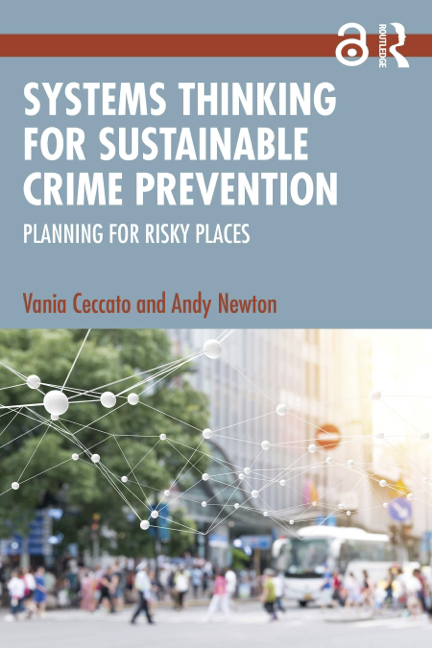
Systems Thinking for Sustainable Crime Prevention: Planning for Risky Places

By Vania Ceccato, Andy Newton

This book offers a comprehensive overview of areas with elevated levels of crime, which we consider ‘risky places.’ These can be facilities, nodes, or paths and can be found everywhere, from small towns to megacities. Crime and fear are examined from the perspective of those who use these places, based on examples from the US, the UK, Sweden, Nigeria, Brazil, China, Australia, and more. Advocating for a systems thinking approach, the book shows what can be learned from risky places and identifies ways to address their inherent problems. The book also assesses current barriers to applying systems thinking and identifies ways to foster interconnected long-term crime prevention strategies that meet the diverse needs of multiple stakeholders. Aimed at academics, students, and professionals in urban planning, criminology, geography, and related fields, this book is a vital resource for those dedicated to creating safer, more inclusive, and sustainable environments.