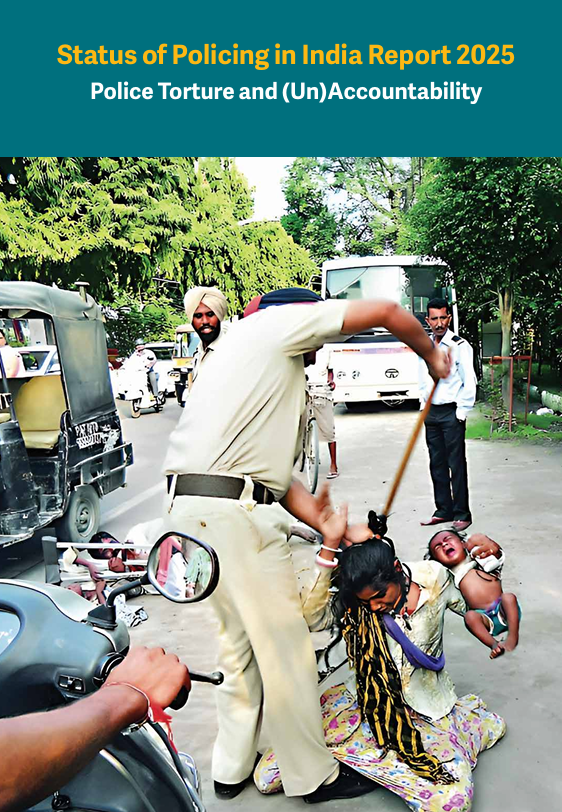
By Lokniti in collaboration with Common Cause.Despite the prohibition of torture being a provision of the Indian Constitution, custodial torture by the police remains widespread and under-reported. A strong societal belief in the utility of torture as a response to crime normalises its use by the police. Cases of police brutality are generally brushed away and only come to light when they result in death. Fewer still result in inquiries or punitive actions against perpetrators. This SPIR study aims to address the normalisation of police violence by establishing reliable and accurate data on public perception of police violence. Unlike previous SPIR reports, the 2025 study does not account for the views of the common citizens but rather directly explores the perceptions of those in authority- police personnel. The study explores the patterns and practices of routine policing that eventually contribute to the use of violence by the police in their day-to-day operations, such as detention, investigation, arrest and interrogation. The study is designed to be utilised for policy and advocacy. It offers key insights into personnel’s belief in the rule of law and level of legal training.The study investigates the nature and contexts of custodial torture and police brutality in India. Furthermore, it examines the trends of official denial. To understand the enmeshment of law enforcement and society that creates propensities to violence, the survey data assesses police opinions on various parameters, such as frequent crimes and arrests, crime control measures, moral policing and mob violence. Police perceptions of the criminal justice system and its functioning, trials and justice-seekers are also assessed. The study engages with personnel’s views on justifications for custodial violence and torture during arrests, engagements with witnesses, interrogations, etc. In the same vein, the survey also probes into police personnel’s views of judicial scrutiny and accountability of custodial deaths, brutality and “encounters”. Views of other stakeholders involved in the process, such as lawyers, doctors, and judges, on police and magisterial accountability are recounted in the scope of the SPIR, too. Finally, the report evaluates the quality and status of official records on police torture and violence.The survey was conducted in 17 Indian states with a sample of 8,276 police personnel across rural areas, capital cities and urban areas. Of the respondents, 85 per cent were male respondents and the rest were female. 59 per cent of respondent personnel were of constabulary rank, forty per cent of upper subordinate rank and one per cent of IPS level ranks.
New Delhi: Common Cause and Lokniti - Centre for the Study of Developing Societies (CSDS) , 2025. 218p.