Open Access Publisher and Free Library
CRIME+CRIMINOLOGY.jpeg

CRIME

Violent-Non-Violent-Cyber-Global-Organized-Environmental-Policing-Crime Prevention-Victimization

Posts in Social Sciences
La Familia Drug Cartel: Implications for U.S.-Mexican Security

By George W. Grayson

La Familia Michoacana burst onto the national stage on September 6, 2006, when ruffians crashed into the seedy Sol y Sombra nightclub in Uruapan, Michoacán, and fired shots into the air. They screamed at the revelers to lie down, ripped open a plastic bag, and lobbed five human heads onto the beer-stained black and white dance floor. The day before these macabre pyrotechnics, the killers seized their prey from a mechanic’s shop and hacked off their heads with bowie knives while the men writhed in pain. “You don’t do something like that unless you want to send a big message,” said a U.S. law-enforcement official, speaking on condition of anonymity about an act of human depravity that would “cast a pall over the darkest nooks of hell.” The desperados left behind a note hailing their act as “divine justice,” adding that: "The Family doesn't kill for money; it doesn't kill women; it doesn't kill innocent people; only those who deserve to die, die. Everyone should know . . . this is divine justice.” While claiming to do the “Lord’s work,” the ruthless leaders of this syndicate have emerged as the dominant exporter of methamphetamines to the United States, even as they control scores of municipalities in Michoacán and neighboring states.

Carlisle, PA: U.S. Army War College Press, 2010. 128p.

download
Understanding Violence: Classic reprint edition

By Graeme R. Newman.

This vintage text, first published in 1978, on the causes, consequences and distribution of violence is as relevant today as it was over 4 decades ago.. Though limited to research of the 1970s, the explanations, exposition and reviews of data and theories of violence are staggeringly similar to the research of the 21st century. The organization of the material is unequaled, and will help any student of violence, or anyone who seeks answers and understanding, with its well organized exposition and clear, down-to-earth style. The new preface by the author identifies what he would add if he were doing a new edition, and why in the end he chose not to write one.

NY. Harrow and Heston Classic Reprint. 2021.

download
A Walk in the Park

By Robin Clarke.

Join Robin Clarke, world class naturalist, on his dramatic venture in Bolivia, to establish the Amboró national park along with his friend and Bolivian zoologist Noel Kempff Mercado, who was eventually murdered by a drug cartel. Clarke battled for decades to save the beautiful rain forests, terminate the trafficking in endangered species, and grappled with the Californian mafia’s drug cartel. And he risked his life to save hikers lost in the wilds of the Bolivian mountains. Though this book is essentially a very personal memoir, it reads like a suspense story.

New York. Harrow and Heston, A Read-Me.Org Imprint. 2022. 391p.

download
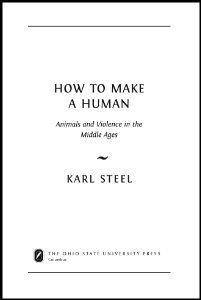
How to Make A Human: Animals and Violence in the Middle Ages

By Karl Steel.

How to Make a Human: Animals and Violence in the Middle Ages tracks human attempts to cordon humans off from other life through a wide range of medieval texts and practices, including encyclopedias, dietary guides, resurrection doctrine, cannibal narrative, butchery law, boar-hunting, and teratology. Karl Steel argues that the human subjugation of animals played an essential role in the medieval concept of the human. In their works and habits, humans tried to distinguish themselves from other animals by claiming that humans alone among worldly creatures possess language, reason, culture, and, above all, an immortal soul and resurrectable body. Humans convinced themselves of this difference by observing that animals routinely suffer degradation at the hands of humans. Since the categories of human and animal were both a retroactive and relative effect of domination, no human could forgo his human privileges without abandoning himself.Medieval arguments for both human particularity and the unique sanctity of human life have persisted into the modern age despite the insights of Darwin. How to Make a Human joins with other works in critical animal theory to unsettle human pretensions in the hopes of training humans to cease to project, and to defend, their human selves against other animals.

Columbus, OH: Ohio State University Press, 2011. 292p.

download
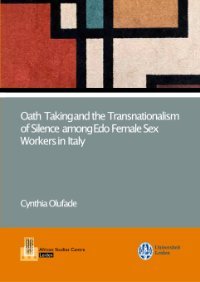
Oath taking and the transnationalism of silence among Edo female sex workers in Italy

By Cynthia A. Olufade.

This book is based on Cynthia A. Olufade’s Master’s thesis ‘Oath taking and the transnationalism of silence among Edo female sex workers in Italy’, winner of the African Studies Centre, Leiden’s 2018 Africa Thesis Award. This annual award for Master’s students encourages student research and writing on Africa and promotes the study of African cultures and societies. This study aimed to interrogate the oath taking phenomena among Edo female sex workers in Italy. In a bid to understand how the oaths taken in Edo State, translates into an intangible aspect of the trafficking process. To achieve the aims of the study, the research utilised the qualitative method of data collection, it involved the use of in-depth interviews and observations. The study reveals that the transnational silence exhibited by different categories of actors in the Edo sex work network sustains the industry. The research also highlights that the oaths form only a part, albeit important of the construction of debt and bondage in the context of Edo transnational sex work. In light of its findings, the study concludes that the idea of transnationalism of silence is as effective as the oaths taken.

Leiden: Leiden University, 2020. 118p.

download
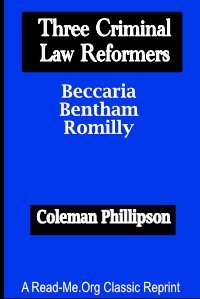
Three Criminal Law Reformers: Beccaria, Bentham, Romilly

By Coleman Phillipson.

THE following three essays are not intended to be considered as separate, independent studies; they are meant to be taken together as supplementing each other, and as constituting one whole. With this intention in view, the author has been able to avoid a good deal of overlapping and repetition, which would otherwise have been inevitable. Though three men and their works are here discussed, we are concerned with but one epoch, one movement, one phase in legal evolution, which represents in many respects a turning-point in European history, and is of the utmost importance in the development of our modern civilisation. Beccaria, Bentham and Romilly are among the greatest law reformers of modern times. In their assault on the folly, injustice and cruelty of the then existing criminal jurisprudence, in their trenchant criticism of outworn codes, obscurantist traditions, blind superstitions, dogmatic technicalities, oppressive fictions, and useless relics of the past, in their proposal of rational substitutes, in their pointing the way to the light, they were intimately united. Their resemblances, like their differences, are as striking in their work as they are in their personal characteristics. In the case of Beccaria—a diffident Italian youth, shrinking from the struggles _ of men, whose small work was almost forcibly extracted from . him by his friends, and whose guarded oracular utterances soon arrested the attention of the world—we shall see vital conceptions and principles of penology in the process of germination and crystallisation; we shall see them in their triumphant conflict with the prevailing régime of sanguinary laws and barbarous methods of procedure. In the case of Bentham—that myriad-minded man, the dauntless explorer of institutions, the arch-legislator ever ready, in his jealously guarded “‘hermitage,”’ to make laws for all the nations of the earth—we shall see a prodigious multitude of ideas, schemes and systems, lavishly given to the world from a rich mine that could, surely, never be exhausted; we shall see this prolific progenitor scattering them broadcast, infusing new life into many barren places…

London: J.M. Dent, 1923. 344p.

download
A Book of Remarkable Criminals

By H. B. Irving.

“Do not let us, in all the pomp and circumstance of stately history, blind ourselves to the fact that the crimes of Frederick, or Napoleon, or their successors, are in essence no different from those of Sheppard or Peace. We must not imagine that the bad man who happens to offend against those particular laws which constitute the criminal code belongs to a peculiar or atavistic type, that he is a man set apart from the rest of his fellow-men by mental or physical peculiarities.”

Harrow and Heston Classic Reprint. (1918) 297 pages.

download
Criminal Sociology

By Enrico Ferri.

In this great Italian classic in criminology, its famed author Enrico Ferri describes it as “a work of propaganda and an elementary guide for anyone who intends to dedicate himself to the scientific study of offenders and of the means of prevention and social defense against them.” Published in 1892 and in English in 1896. The book emphasizes the link between crime causation and social justice, setting him apart from his criminal anthropologist forebears.

Harrow and Heston Classic Reprint. 1896.

download
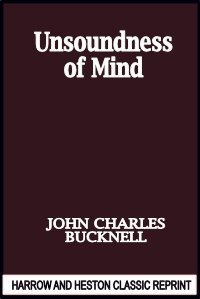
Unsoundness of Mind

By John Charles Bucknill.

In Relation to Criminal Acts. “Your Lordship, having held successively the Gkeat Seal in England and in Ireland, has been the legal guardian of all insane persons in this Kingdom. Your Lordship has also effected an extensive revision of the statutes, regulating the care and treatment of the insane and the protection of their property.”

London. Samuel Highly (1854) 156 pages.

Learn more
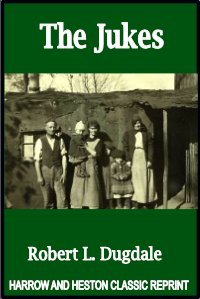
The Jukes

By Robert L. Dugdale.

A study in crime, pauperism, disease and heredity. “‘The Jukes’ has long been known as one of those important books that exert an influence out of all proportion to their bulk. It is doubtful if any concrete study of moral forces is more widely known, or has provoked more discussion, or has incited a larger number of students to examine for themselves the immensely difficult problems presented by the interaction of ‘heredity’ with ‘environment.’“

London Putnam (1910) 137 pages.

download
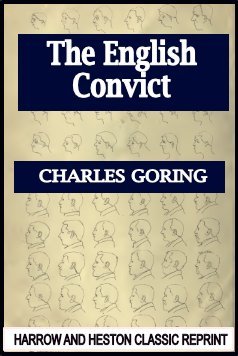
The English Convict

By Charles Goring.

Classic statistical study published in 1913 measuring nearly 100 physical and mental characteristics of English convicts to determine their deviation from the normal. Notable features of the author's research methodology were the use of the newly-developed Pearson product moment correlation coefficient and the method of comparing groups of both criminals and non-criminals for the same characteristics. The author's analysis of the data rejects the view that there are specific physical and mental characteristics identifying the criminal. He further concludes that the influence of heredity and the presence of mental defectiveness are far more significant factors than parental influence in the development of criminal behavior.

HMSO (1913) 450 pages.

download part 1
download part 2
Child of Circumstance

By pages

The Mystery of the Unborn, by pages. “Dr. Wilson believed that criminals are born unfinished. The die is cast at birth. The lack of finish at birth explains the incompetent, the born tired, the unemployed. Then what is the use? Why not painless extinction of those who commit great crimes, and the sterilization of the feebleminded….” Albert Wilson.

John Bale et al., (1928) 477.

download
Criminals of Chicago

By Prince Emmanuel of Jerusalem.

“ History shows that hanging did not prevent petit larceny. So we have abandoned the policy of frightfulness in punishment and cannot revert to it even though it still has some few supporters. And yet we feel that the theory of punishment being deterrent is philosophically sound. …The first news from the Laboratory revealed the prevalence of feeble-mindedness among delinquents. “

Rosburgh Publishing (1921) 247 pages.

download