Open Access Publisher and Free Library
CRIME+CRIMINOLOGY.jpeg

CRIME

Violent-Non-Violent-Cyber-Global-Organized-Environmental-Policing-Crime Prevention-Victimization

Posts in social sciences
Cryptocurrencies: Tracing the Evolution of Criminal Finances

By EUROPOL

The use of cryptocurrency as part of criminal schemes is increasing and the uptake of this payment medium accelerating. However, the overall number and value of cryptocurrency transactions related to criminal activities still represents only a limited share of the criminal economy when compared to cash and other forms of transactions. A range of constraints are related to the use of cryptocurrencies, with high volatility likely a major factor in criminals’ reluctance to use cryptocurrencies for long term investments. Recent years have seen cryptocurrency increasingly used as part of criminal activities and to launder criminal proceeds. Criminals have also become more sophisticated in their use of cryptocurrencies. In addition to using cryptocurrencies to obfuscate money flows as part of increasingly complex money laundering schemes, cryptocurrencies are increasingly used by criminals as a means of payment or as an investment fraud currency. The number of cases involving cryptocurrencies for the financing of terrorism remains limited. The criminal use of cryptocurrency is no longer primarily confined to cybercrime activities, but now relates to all types of crime that require the transmission of monetary value. However, the scale and share of the illicit use of cryptocurrencies as part of criminal activities is difficult to estimate. Criminals and criminal networks involved in serious and organised crime also continue to rely on traditional fiat money and transactions to a large degree, in addition to emerging value transfer opportunities.    

The Hague: EUROPOL, 2022. 20p.

download
Child Protection in England, 1960-2000: Expertise, Experience, and Emotion

By Jennifer Crane

This open access book explores how children, parents, and survivors reshaped the politics of child protection in late twentieth-century England. Activism by these groups, often manifested in small voluntary organisations, drew upon and constructed an expertise grounded in experience and emotion that supported, challenged, and subverted medical, social work, legal, and political authority. New forms of experiential and emotional expertise were manifested in politics – through consultation, voting, and lobbying – but also in the reshaping of everyday life, and in new partnerships formed between voluntary spokespeople and media. While becoming subjects of, and agents in, child protection politics over the late twentieth century, children, parents, and survivors also faced barriers to enacting change, and the book traces how long-standing structural hierarchies, particularly around gender and age, mediated and inhibited the realisation of experiential and emotional expertise.

Cham: Palgrave Macmillan, 2018. 218p.

download
Our City, Our Safety: A Comprehensive Plan to Reduce Violence in Chicago

By The City of Chicago

We know a great deal about the nature of violence in Chicago. An overwhelming number of homicides in the city are gun-related and victims are disproportionately African American and Latinx males. Most shootings and homicides happen outdoors in public spaces. In 2019, the median age of homicide victims was 271, and 50 percent of the city’s shooting victimizations occurred within 10 community areas that comprise 15 percent of the city’s population. These neighborhoods are located on the South and West sides of Chicago where poverty, low educational attainment, and poor health outcomes including shorter life expectancy are concentrated. While Chicago’s homicide and shooting numbers have ebbed and flowed in recent years, since 2016, which was the year of the recent peak in Chicago homicides, they have consistently exceeded those of New York City and Los Angeles, two cities larger and more populous. Since January 1, 2016 through August 16, 2020, 2,978 people have been killed and there have been 12,387 non-fatal shooting victims, with 11 percent of them being young people under the age of 18. Although most of Chicago’s shootings and homicides happen in public places, domestic violence is also pervasive. In the United States, 25 percent of women will experience severe physical violence by an intimate partner during their lifetime and at least 35 percent of female homicides are perpetrated by intimate partners. Gun violence and domestic violence, while often treated as distinct, are very much related. Not only are some domestic violence incidents gun

  • violence and vice versa, but we also know that many communities and families experience both. Thus, the approaches to reducing gun violence and domestic violence must be coordinated to maximize impact.

Chicago: City of Chicago, 2020. 108p.

download
Crime and Murder in 2018: A Preliminary Analysis

By Ames C. Grawert, Adureh Onyekwere, and Cameron Kimble

This report analyzes available crime data from police departments in the 30 largest U.S. cities. It finds that across the cities where data is available, the overall murder and crime rates are projected to decline in 2018, continuing similar decreases from the previous year.

New York: Brennan Center for Justice, 2019. 10p. 

download
The Legacy of Violence: Building or Destroying Trust? Evidence from Colombia's La Violencia

By María Alejandra and Chávez Báez

This paper examines how trust in institutions and organizations are shaped according to age and exposure to violence during La Violencia. It also evaluates how people's actual trust on different groups (out-group trust) changes in municipalities that were exposed to violence in comparison to municipalities that were not exposed. From 1950's to the mid 1960's, Colombia experienced a period of intense civil wars and conflicts between social classes known as La Violencia. Using evidence on the index of violence built by Guzman et al. (2006) during this period and the Political Culture Survey of 2019, the main objective of this paper is to find whether people trust on State's institutions and people from different groups in municipalities that were mostly affected by violence. To complement the analysis, I analyzed press articles and news by the newspaper El Tiempo from 1950 to 1990 to find how is the perception of the State's legitimacy. After gathering information on 13,413 interviewees, I found that people who live during La Violencia trust less on government institutions and more on certain groups of people (neighbours). Moreover, people over 84 years-old living in municipalities that were exposed to La Violencia trust less on strangers and immigrants than younger people living in the same municipalities. These findings are supported in two mechanisms: deficient government-citizens relationship over time and risk aversion. That is, people who live in municipalities affected by violence during the bipartisan conflict are more risk averse and therefore show less trust on different groups of people.

  • The revision of press articles suggest that there is a tendency of mistrust on State's actions, at least among highly educated individuals.

Bogotá: Universidad de los Andes, 2021. 53p.

download
Rockford Focused Deterrence Initiative Research Report: Examining Key Program Processes, Services Provided and Outcomes of the Rockford, Illinois Focused Deterrence Initiative

By Amanda Ward, Christopher Donner, David Olson, Alexandre Tham and Kaitlyn Faust

To address escalating street and gun-violence in Rockford, Illinois, Winnebago County’s Criminal Justice Coordinating Council piloted the Focused Deterrence Intervention (FDI) between January of 2018 and November of 2019. The intervention utilized a “focused deterrence” or “pulling-levers” framework to identify and deter members of the community who are at a heightened risk of committing future acts of street and gun violence. Loyola University Chicago’s Center for Criminal Justice Research, Policy and Practice collaborated with Winnebago County’s Criminal Justice Coordinating Council to support the development, implementation and evaluation of the Focused Deterrence Intervention. The present report reviews FDI’s pilot years, with a focus on evaluating FDI processes key to the program design.

Chicago: Center for Criminal Justice Research, Policy & Practice, Loyola University Chicago, 2020. 50p.

download
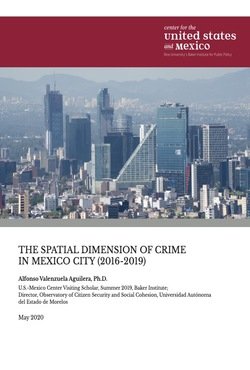
The Spatial Dimension of Crime in Mexico City (2016-2019)

By Alfonso Valenzuela Aguilera

Crime exhibits specific geographical and chronological patterns in Latin American cities, and data on criminal activity allows scholars to trace spatial and chronological patterns down to specific neighborhoods and certain hours of the day in these cities. Over the last three decades, numerous studies have explored the relationship between crime, space, and time, and some studies have even established strong correlations between different patterns of land use and specific types of crimes. Few of these studies, however, have focused on the spatial configurations of criminal activity in cities and the conditions that elicit criminal activity in certain locations. Using recent crime data for Mexico City, this study employs a methodology based on crime location quotients to establish correlations that spatially characterize crime. This information can substantially improve public safety policies applied to urban contexts.

Houston, TX: Rice University’s Baker Institute for Public Policy, 2020. 25p.

download
Media Resistance: Protest, Dislike, Abstention

By Trine Syvertsen

‘Trine Syvertsen takes us on a historical journey through the underexplored history of how people and societies have been resisting media, from protesting and criticizing to outright rejecting them. The book is well-researched, insightful and, most of all, refreshing as it inspires readers to look and think beyond the more obvious and well-trodden paths when studying media.’

Cham: Springer International Publishing, 2017. 154p.

download
Crime and Punishment in Early Modern Russia

By Nancy Kollmann

This is a magisterial new account of the day-to-day practice of Russian criminal justice in the seventeenth and early eighteenth centuries. Nancy Kollmann contrasts Russian written law with its pragmatic application by local judges, arguing that this combination of formal law and legal institutions with informal, flexible practice contributed to the country's social and political stability. She also places Russian developments in the broader context of early modern European state-building strategies of governance and legal practice. She compares Russia's rituals of execution to the 'spectacles of suffering' of contemporary European capital punishment and uncovers the dramatic ways in which even the tsar himself, complying with Moscow's ideologies of legitimacy, bent to the moral economy of the crowd in moments of uprising. Throughout, the book assesses how criminal legal practice used violence strategically, administering horrific punishments in some cases and in others accommodating with local communities and popular concepts of justice.

Cambridge, UK; New York: Cambridge University Press, 2012. 506p.

download
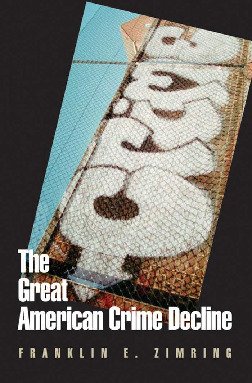
The Great American Crime Decline

By Franklin E. Zimring

Many theories--from the routine to the bizarre--have been offered up to explain the crime decline of the 1990s. Was it record levels of imprisonment? An abatement of the crack cocaine epidemic? More police using better tactics? Or even the effects of legalized abortion? And what can we expect from crime rates in the future? Franklin E. Zimring here takes on the experts, and counters with the first in-depth portrait of the decline and its true significance. The major lesson from the 1990s is that relatively superficial changes in the character of urban life can be associated with up to 75% drops in the crime rate. Crime can drop even if there is no major change in the population, the economy or the schools. Offering the most reliable data available, Zimring documents the decline as the longest and largest since World War II. It ranges across both violent and non-violent offenses, all regions, and every demographic. All Americans, whether they live in cities or suburbs, whether rich or poor, are safer today.

  • Casting a critical and unerring eye on current explanations, this book demonstrates that both long-standing theories of crime prevention and recently generated theories fall far short of explaining the 1990s drop. A careful study of Canadian crime trends reveals that imprisonment and economic factors may not have played the role in the U.S. crime drop that many have suggested. There was no magic bullet but instead a combination of factors working in concert rather than a single cause that produced the decline. Further--and happily for future progress, it is clear that declines in the crime rate do not require fundamental social or structural changes. Smaller shifts in policy can make large differences. The significant reductions in crime rates, especially in New York, where crime dropped <em>twice the national average, suggests that there is room for other cities to repeat this astounding success. In this definitive look at the great American crime decline, Franklin E. Zimring finds no pat answers but evidence that even lower crime rates might be in store.

New York; Oxford, UK: Oxford University Press, 2007. 258p..

download
rends in and Characteristics of Drug Overdose Deaths Involving Illicitly Manufactured Fentanyl - United States, 2019-2020

By Julie O’Donnell, Lauren J. Tanz, R. Matt Gladden, Nicole L. Davis, Jessica Bitting

During May 2020–April 2021, the estimated number of drug overdose deaths in the United States exceeded 100,000 over a 12-month period for the first time, with 64.0% of deaths involving synthetic opioids other than methadone (mainly illicitly manufactured fentanyls [IMFs], which include both fentanyl and illicit fentanyl analogs).* Introduced primarily as adulterants in or replacements for white powder heroin east of the Mississippi River (1), IMFs are now widespread in white powder heroin markets, increasingly pressed into counterfeit pills resembling oxycodone, alprazolam, or other prescription drugs, and are expanding into new markets, including in the western United States† (2). This report describes trends in overdose deaths involving IMFs (IMF-involved deaths) during July 2019–December 2020 (29 states and the District of Columbia [DC]), and characteristics of IMF-involved deaths during 2020 (39 states and DC) using data from CDC’s State Unintentional Drug Overdose Reporting System (SUDORS).

  • During July 2019–December 2020, IMF-involved deaths increased sharply in midwestern (33.1%), southern (64.7%), and western (93.9%) jurisdictions participating in SUDORS. Approximately four in 10 IMF-involved deaths also involved a stimulant. Highlighting the need for timely overdose response, 56.1% of decedents had no pulse when first responders arrived. Injection drug use was the most frequently reported individual route of drug use (24.5%), but evidence of snorting, smoking, or ingestion, but not injection drug use was found among 27.1% of decedents. Adapting and expanding overdose prevention, harm reduction, and response efforts is urgently needed to address the high potency (3), and various routes of use for IMFs. Enhanced treatment for substance use disorders is also needed to address the increased risk for overdose (4) and treatment complications (5) associated with using IMFs with stimulants.

MMWR Morb Mortal Wkly Rep 2021;70:1740-1746.

download
Changing Lives: The Drug Deaths Taskforce Final Report

By The Scottish Drug Deaths Taskforce

This, the final report of the Scottish Drug Deaths Taskforce, sets out a suite of evidence-based recommendations and actions that will reduce drug-related deaths and harms and improve and save the lives of people who use drugs. Our final report has four substantive chapters. 1. Context: explores where we are now, gives an overview of the work of the Taskforce to date and discusses the legal context in which Scotland operates. 2. Culture: sets out what the ethos of the system should be and the changes that are needed to achieve this. It calls for broad culture change from stigma, discrimination, politicisation and punishment towards care, compassion and human rights. 3. Care: investigates what is needed to deliver an effective, consistent, personcentred, whole-systems approach that delivers high-quality care. It builds on the principle that drug dependency should receive parity with any other health conditions, with people getting the care they need when they need it. 4. Co-ordination: sets out the foundations of the changes that are required, including targeted resource and decisive leadership. Twenty overarching recommendations are provided at the beginning of the report. Each chapter then includes evidence-based actions that are summarised in a table at the end of the report.

Edinburgh: The Scottish Drug Deaths Taskforce, 2022. 135p.

download
Crime in the City: A Political and Economic Analysis of Urban Crime

By Lesley Williams Reid

By exploring the political and economic histories of Atlanta, Boston, Detroit, and New Orleans, Reid documents how each city experienced the demise of the industrial, welfare-state political economy and the rise of the post-industrial, absentee-state political economy and how these transformations have affected urban crime rates. Crime rates increased as manufacturing employment decreased. By contrast, high-skill service-sector growth led to less crime in Boston, while low-skill service-sector growth led to more crime in Atlanta. In addition, those cities emphasizing criminal justice expenditures at the expense of social welfare expenditures have had more crime than those cities that did not. Political and economic conditions have influenced crime rates, in sometimes surprising ways, across the post-World War II urban landscape.

New York: LFB Scholarly Publishing, 2003. 269p.

download
Crime and Criminal Justice in Modern Germany

Edited by Richard F. Wetzell.

”There is a notable asymmetry between the early modern and modern German historiographies of crime and criminal justice. Whereas most early modern studies have focused on the criminals themselves, their socioeconomic situations, and the meanings of crime in a particular urban or rural milieu, late modern studies have tended to focus on penal institutions and the discourses of prison reformers, criminal law reformers, criminologists, and psychiatrists.”

Open Access Book (2018) 325p.

download
Organized Crime and Violence in Guanajuato

By Laura Y. Calderón

Mexico had the most violent year in its history in 2019, reporting 29,406 intentional homicide cases, resulting in 34,588 individual victims.1 However, violence remains a highly focalized phenomenon in Mexico, with 23% of all intentional homicide cases concentrated in five municipalities and three major clusters of violence with homicide rates over 100 per 100,000 inhabitants. Following the national trend, the state of Guanajuato also had its most violent year in 2019, with one of its largest cities featured in the country’s top five most violent municipalities. This paper will analyze the surge in violence in Guanajuato in 2019, comparing the number of intentional homicide cases with the increasing problem of fuel theft in the state, and describing some of the state and federal government measures to address both issues.

San Diego: Justice in Mexico, University of San Diego, 2020. 28p.

download
The Chinese Heroin Trade: Cross-border Drug Trafficking in Southeast Asia and Beyond

By Ko-lin Chin and Sheldon X. Zhang

n a country long associated with the trade in opiates, the Chinese government has for decades applied extreme measures to curtail the spread of illicit drugs, only to find that the problem has worsened. Burma is blamed as the major producer of illicit drugs and conduit for the entry of drugs into China. Which organizations are behind the heroin trade? What problems and prospects of drug control in the so-called “Golden Triangle” drug-trafficking region are faced by Chinese and Southeast Asian authorities?

In The Chinese Heroin Trade, noted criminologists Ko-Lin Chin and Sheldon Zhangexamine the social organization of the trafficking of heroin from the Golden Triangle to China and the wholesale and retail distribution of the drug in China. Based on face-to-face interviews with hundreds of incarcerated drug traffickers, street-level drug dealers, users, and authorities, paired with extensive fieldwork in the border areas of Burma and China and several major urban centers in China and Southeast Asia, this volume reveals how the drug trade has evolved in the Golden Triangle since the late 1980s. Chin and Zhang also explore the marked characteristics of heroin traffickers; the relationship between drug use and sales in China; and how China compares to other international drug markets. The Chinese Heroin Trade is a fascinating, nuanced account of the world of high-risk drug trafficking in a tightly-controlled society.

New York; London: New York University Press, 320p.

download
Drug Trafficking, Organized Crime, and Violence in the Americas Today

Edited by Bruce M. Bagley and Jonathan D. Rosen

In 1971, Richard Nixon declared a war on drugs. Despite foreign policy efforts and attempts to combat supply lines, the United States has been for decades, and remains today, the largest single consumer market for illicit drugs on the planet.

This volume argues that the war on drugs has been ineffective at best and, at worst, has been highly detrimental to many countries. Leading experts in the fields of public health, political science, and national security analyze how U.S. policies have affected the internal dynamics of Mexico, Colombia, Bolivia, Peru, Brazil, Argentina, Central America, and the Caribbean islands. Together, they present a comprehensive overview of the major trends in drug trafficking and organized crime in the early twenty-first century.

In addition, the editors and contributors identify emerging issues and propose several policy options to address them. This accessible and expansive volume provides a framework for understanding the limits and liabilities in the U.S.-championed war on drugs throughout the Americas.

Gainesville: University Press of Florida, 2015. 464p.

download
Illegal Drugs, Drug Trafficking and Violence in Latin America

By Marcelo Bergman

This book describes the main patterns and trends of drug trafficking in Latin America and analyzes its political, economic and social effects on several countries over the last twenty years. Its aim is to provide readers an introductory yet elaborate text on the illegal drug problem in the region. It first seeks to define and measure the problem, and then discusses some of the implications that the growth of production, trafficking, and consumption of illegal drugs had in the economies, in the social fabrics, and in the domestic and international policies of Latin American countries.

This book analyzes the illegal drugs problem from a Latin American perspective. Although there is a large literature and research on drug use and trade in the USA, Canada, Europe and the Far East, little is understood on the impact of narcotics in countries that have supplied a large share of the drugs used worldwide. This work explores how routes into Europe and the USA are developed, why the so-called drug cartels exist in the region, what level of profits illegal drugs generate, how such gains are distributed among producers, traffickers, and dealers and how much they make, why violence spread in certain places but not in others, and which alternative policies were taken to address the growing challenges posed by illegal drugs.

  • With a strong empirical foundation based on the best available data, Illegal Drugs, Drug Trafficking and Violence in Latin America explains how rackets in the region built highly profitable enterprises transshipping and smuggling drugs northbound and why the large circulation of drugs also produced the emergence of vibrant domestic markets, which doubled the number of drug users in the region the last 10 years. It presents the best available information for 18 countries, and the final two chapters analyze in depth two rather different case studies: Mexico and Argentina.

Cham: Springer International Publishing, 2018. 166p.

download
Technology-facilitated Drug Dealing via Social Media in the Nordic Countries

By Jakob Demant and Silje A. Bakken

Use of the internet has changed drug dealing over the past decade. While there is a growing understanding of the role of darknet drug markets, little is known about how drug dealing works on public online services such as social media. This study reports findings from a Nordic comparative study of social media drug dealing, which represents the first in-depth study of increasing levels of digitally mediated drug dealing outside cryptomarkets.

Lisbon, Portugal: European Monitoring Centre for Drugs and Drug Addiction (EMCDDA)m 2019. 22p.

download
Kingpin: How One Hacker Took Over the Billion-dollar Cybercrime Underground

By Kevin Poulsen

Former hacker Kevin Poulsen has, over the past decade, built a reputation as one of the top investigative reporters on the cybercrime beat. In Kingpin, he pours his unmatched access and expertise into book form for the first time, delivering a gripping cat-and-mouse narrative—and an unprecedented view into the twenty-first century’s signature form of organized crime. The word spread through the hacking underground like some unstoppable new virus: Someone—some brilliant, audacious crook—had just staged a hostile takeover of an online criminal network that siphoned billions of dollars from the US economy. The FBI rushed to launch an ambitious undercover operation aimed at tracking down this new kingpin; other agencies around the world deployed dozens of moles and double agents. Together, the cybercops lured numerous unsuspecting hackers into their clutches. . . . Yet at every turn, their main quarry displayed an uncanny ability to sniff out their snitches and see through their plots. The culprit they sought was the most unlikely of criminals: a brilliant programmer with a hippie ethic and a supervillain’s double identity. As prominent “white-hat” hacker Max “Vision” Butler, he was a celebrity throughout the programming world, even serving as a consultant to the FBI. But as the black-hat “Iceman,” he found in the world of data theft an irresistible opportunity to test his outsized abilities. He infiltrated thousands of computers around the country, sucking down millions of credit card numbers at will. He effortlessly hacked his fellow hackers, stealing their ill-gotten gains from under their noses.

  • . Together with a smooth-talking con artist, he ran a massive real-world crime ring. And for years, he did it all with seeming impunity, even as countless rivals ran afoul of police. Yet as he watched the fraudsters around him squabble, their ranks riddled with infiltrators, their methods inefficient, he began to see in their dysfunction the ultimate challenge: He would stage his coup and fix what was broken, run things as they should be run—even if it meant painting a bull’s-eye on his forehead. Through the story of this criminal’s remarkable rise, and of law enforcement’s quest to track him down, Kingpin lays bare the workings of a silent crime wave still affecting millions of Americans. In these pages, we are ushered into vast online-fraud supermarkets stocked with credit card numbers, counterfeit checks, hacked bank accounts, dead drops, and fake passports. We learn the workings of the numerous hacks—browser exploits, phishing attacks, Trojan horses, and much more—these fraudsters use to ply their trade, and trace the complex routes by which they turn stolen data into millions of dollars. And thanks to Poulsen’s remarkable access to both cops and criminals, we step inside the quiet, desperate arms race that law enforcement continues to fight with these scammers today. Ultimately, Kingpin is a journey into an underworld of startling scope and power, one in which ordinary American teenagers work hand in hand with murderous Russian mobsters and where a simple Wi-Fi connection can unleash a torrent of gold worth millions.Description text goes here

New York: Crown Publishing, 211. 288p.

download