Open Access Free Library
Fiction+Mediajpg.jpg

FICTION and MEDIA

CRIME AND MEDIA — TWO PEAS IN A POD

Posts in fiction
The Jungle Book

By Rudyard Kipling

PUBLISHER PREFACE: The book you are about to read is composed of stories written by Rudyard Kipling. Originally, these stories were in two volumes entitled "The Jungle Book." * and " The Second Jungle Book." The present volume combines all of the Mowgli Stories under one cover. In addition, "Rikki Tikki Tavi," "The Elephant Boy," * and "The Miracle of Purun Bhagat" have been included. Certain other stories that appeared in the original books have been omitted due to limitations of space. The stories that do appear in this book are unabridged, exactly as Kipling originally published them.

London. Classic Press and Ottenhelmer publishers. 1968, 1979. 225p. UNSED BOOK CONTAINS MARK-UP
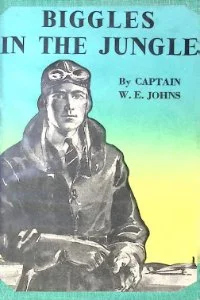
Biggles in the Jungle

By Captain W. E. Johns

FROM THE COVER: Wherever there is trouble brewing in this much-troubled world it is safe to predict that Biggles and his companions will sooner or later be on the spot. In this story they ar- rive, quite casually, in the capitalof British Honduras, to find Car- ruthers, the resident magistrate, in a very perturbed state on account of the activities of a so-called King of the Forest--a man who has established himself somewhere in the interior and is stirring up strife among the Indians; he is suspected, moreover, of collecting chickle-an important product of the colony-and smuggling it over the border and into the United States.

Melbourne. Geoffrey Cumberlege Oxford University Press. 1951. 196p. USED BOOK. CONTAINS MARK-UP.

Biggles Goes To War

By Captain W. E. Johns

From Chapter 2: “….taking photographs of our defences”

A frown creased Biggles's forehead. 'But that's a scandalous state ofaffairs,' he declared indignantly. 'Do you mean to say that you allow the air force of another power to fly over your country without permission?'

A sad smile crossed the old man's face. He raised his hands, palms outwards. 'Alow? Do you think that we should allow them to do that i f we could stop them? Now perhaps you understand why I've come to you.'

Melbourne. Oxford University Press. 1950. 257p. USED BOOK

Just So Stories For Little Children

By Rudyard Kipling

FROM THE COVER: "Once upon a Time O Best Beloved," and so begins one of the best loved and most respected collections of stories for children, Rudyard Kipling's Just So Stories. This edition includes the author's own unique illustrations. Kipling's bold linear fantasies, in the style of art nouveau, as well as his attention to realistic detail, create an intriguing and strikingly different interpretation. The first tale, "How the Whale Got Its Throat," a tall tale of a big whale, sets the tone for these wild "venturesome adventures," to use Kipling's words. One glance at the table of contents will reveal that the Just So Stories appeal most to inquisitive and fantasy-loving minds. These are stories which tell us of the Time of Very Beginnings;…”

London. Crown Publishers.. 1978. Originally published 1937. 211p. USED BOOK

"Oh, Scouting Is A Boy" (The Title has nothing whatsoever to do with the Book!)

By Ralph Reader

FROM THE COVER: It is said that all Scouts ear partly crazy. To show that it is at least true fo himself, R. R. has written a crazy book. But as with all he writes, again and again he will pull the reader up with a jerk and make him think about himself and his boys and the Movement generallv. Ralph lets off a lot of fireworks. but by their light we are enabled to see Scouting better.

London. The Boy Scouts Association. 1950. 135p. USED BOOK

Biggles Foreign Legionnaire

By Cape. W. E. Johns

Another in the Biggles series glorifying war and vilifying enemies. . “In which Air Detective-Inspector Bigglesworth takes leave from the Special Air Section Scotland Yard to join the Foreign Legion, and has an adventure involving an old friend, an even older enemy and a near fatal trip to the desolate Valley of the Tartars in Kurdistan.”

London. Hodder and Stoughton. 1954. 198p. USED BOOOK

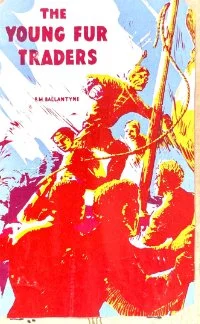
The Young Fur Traders

By R. M. Ballantyne

"The Young Fur Traders" is a children's adventure novel by Scottish author R. M. Ballantyne, first published in 1856. Set in the American Old West, this exciting tale is full of action and daring-do, making it ideal for children with an interest in the Wild West and American history. .

Melbourne. Australia. A Herald Classic. Colorgravure Publications. Originally published 1851. 1950. 223p

John Wentley Wins Through

By J. F. C. Westerman

FROM THE COVER: When JohnWentleyunder- took to fly a British Secret Service agent to a forbidden part he little imagined what would result from his escapade. How he foiled an attempt by a dangerous and un- scrupulous enemy to steal the plans of his recently invented aero engine, took part in two thrilling aerial ducls, and fought against terrific odds to regain the safety of the Swiss border--with secrets in his possession on which de-pended the very existence of the British Empireis excitingly told by one of the foremost writers of boys' adventure stories.

London. The Children's Press. 1930s. 211p. USED BOOK

The Hero Of Basil's

By C. Serjeant

A boys adventure book linking Christian life to war…FROM CHAPTER 1:

“"Yes, mother. And you remember what he said about being good soldiers of our Lord, don't you?"

"I'm afraid I didn't hear quiteall the sermon," she said, trying to speak lightly. "I wish," she added to herself, "that Jack would stop talking about such things. Especially in public. It would be frightfully embarrassing if he began to discuss religion in front of Lady Hardcastle or Mrs. Lyle-Gault. I'm not sure that they wouldn't think it a joke.'

"Well, mother,"Jack was saying, "that was what his sermon was about--being good soldiers-and somehow I felt I wanted to be one of them-and I am, mother."

London. Pickering & Inglis Ltd. 1932. 67p. USED BOOK

Derry & Co. Life Boys

K. M. Macleod

A boys book heralding the wonderful role of the Christian missionaries of imperialism.

FROM THE COVER: but what can the boys join:" A new school teacher, Miss Stanley, arrives, and has an unkind trick played on her by Derry. She, however, starts a company of Life Boys, under the Great Leader, Jesus Christ, and to Derry's surprise he is allowed to join. They soon christen Miss Stanley, "The Skipper," and the story abounds with Life Boy adventures, until a Mr. Wardic arrives from Central Africa, and falls in love with The Skipper. The Life Boys form the guard of honor at the wedding which folows, and the story ends with The Skipper leaving a s "Mrs. Wardic" to be a foreign missionary in Africa, and hoping to form a company of Life Boys there of little African boys.”

London. Pickering & Inglis Ltd. 1934. 69p. USED BOOK

The Bull Patrol

By Arthur Catherall

Classic how-to book for Boy Scouts conveying all the skills needed for leadership, survival and success in war. Inspired, of course, by the writings of Baden Powell who cut his war teething the Boer war. FROM THE COVER: “ They were an odd gang, Af,l Joe, Dick, and Gyp; but once they got the idea of Scouting they were the staunchest friends that anyone could ask for. Their Patrol Leader set a high standard of courage and endurance, and the others one by one played a loyal part in the many daring rescues and thrilling episodes that were to follow- adventures which will be the envy of every Scout.

London. Butterworth Press. 1949. 120p. USED BOOK

The Rescue Flight: A Biggles Story

By Captain W. E. Johns. Illustrated By Alfred Sindall

A boys’ book from the classic series heralding World War 2, and highlighting the excitement and attractiveness of war..

FROM CHAPTER 1: “ PETER FORTYMORE RECEIVES BAD NEWS. THERE was a pensive, almost wistful, expression on the face of the Honourable Peter Fortymore as, with his chin cupped in his hands, he sat at his study window and stared out across the deserted, moonlit playing-fields of Rundell School, where for five years he had been a pupil. The door be- hind him opened, but he did not turn, for he knew from the heavy, deliberate footsteps that the new- comer washis friend and room-mate, Dick Ripley, known throughout the upper school as Rip…”

London. Geoffrey Cumberlege Oxford University Press. 1950. 245p

Ficciones

By Jorge Luis Borges

From the cover: ". unquestionably the most brilliant South American writing today. . .one of the genuine prose talents of our pe- riod. Written with a classical economy of means and under the control of a mind of wide culture and deep sensitivity, his stories will continue echoing in the minds of his readers as do those of Franz Kafka." -Herald Tribune Books

NY. Grove Press. 1962. 164p. USED BOOK. CONTAINS MARK-UP.

The History Man

By Malcolm Bradbury

FROM THE COVER: Howard Kirk is the trendiest ofradical tutors at a fashionable campus university. Timid Vice- Chancellors pale before his threats of disruption; reactionary colleagues are crushed beneath his merciless Marxist logic; women are drawn by his progressive promiscuity. A self-appointed revolutionary hero, Howard always comes out on top. And Malcolm Bradbury dissects him in this savagely funny novel that has been universally acclaimed as a comic masterpiece. 'Malcolm Bradbury has come up with a novel that simply must be read' — THE TIMES.

London Arrow Books. 1975. 233p. USED BOOK. COMNGAINS MARK-UP

Labyrinths: Selected Stories And Other Writings

By Jorge Luis Borges. Edited by Donald A. Yates and James E. Irby

FROM THE PREFACE: Jorge Luis Borges is a great writer who has composed only little essays or short narratives. Yet they suffice for us to call him great because of their wonderful intelligence, their wealth of invention and their tight, almost mathematical, style. Argentine by birth and temperament, but nurtured on univer- sal literature, Borges has no spiritual homeland. He creates, outside time and space, imaginary and symbolic worlds. It is a sign of his importance that, in placing him, only strange and perfect works can be called to mind. He is akin to Kafka, Poe, sometimes to Henry James and Wells, always to Valéry by the abrupt projection of his paradoxes in what has been called 'his private metaphysics'.

London. Penguin. 1964. 276p. USED BOOK. CONTAINS MARK-UP

Moby Dick

By Herman Melville

From Wikipedia: Moby-Dick; or, The Whale is an 1851 novel by American writer Herman Melville. The book is the sailor Ishmael's narrative of the maniacal quest of Ahab, captain of the whaling ship Pequod, for vengeance against Moby Dick, the giant white sperm whalethat bit off his leg on the ship's previous voyage. A contribution to the literature of the American Renaissance, Moby-Dick was published to mixed reviews, was a commercial failure, and was out of print at the time of the author's death in 1891. Its reputation as a Great American Novel was established only in the 20th century, after the 1919 centennial of its author's birth. William Faulkner said he wished he had written the book himself,[1] and D. H. Lawrence called it "one of the strangest and most wonderful books in the world" and "the greatest book of the sea ever written".[2] Its opening sentence, "Call me Ishmael", is among world literature's most famous.[3]

London. Richard Bentley . 1851. 632p.

The Way We Live Now

By Anthony Trollope

From Wikipedia: The Way We Live Now is a satirical novel by Anthony Trollope, published in London in 1875 after first appearing in serialised form. It is one of the last significant Victorian novels to have been published in monthly parts. The novel is Trollope's longest, comprising 100 chapters, and is particularly rich in sub-plot. It was inspired by the financial scandals of the early 1870s; Trollope had just returned to England from abroad, and was appalled by the greed and dishonesty those scandals exposed. This novel was his rebuke. It dramatised how such greed and dishonesty pervaded the commercial, political, moral, and intellectual life of that era.

London Chapman and Hall. 1875. 1080p.

Prime Minister

By Anthony Trollope

From Wikipedia: When neither the Whigs nor the Tories are able to form a government on their own, a fragile compromise coalition government is formed, with Plantagenet Palliser, the wealthy and hard-working Duke of Omnium, installed as Prime Minister of the United Kingdom. The Duchess, formerly Lady Glencora Palliser, attempts to support her husband by hosting lavish parties at Gatherum Castle in Barsetshire, the family's largest country house, barely used until now. Palliser, initially unsure that he is fit to lead, grows to enjoy his high office, but becomes increasingly distressed when his government proves to be too weak and divided to accomplish anything. His own inflexible nature does not help.

London. Chapman & Hall. 1876. 807p.

Phineas Finn: The Irish Member

By Anthony Trollope

Fron Wikipedia: “Phineas Finn is a novel by Anthony Trollope and the name of its leading character. The novel was first published as a monthly serial from October 1867 to May 1868 in St Paul's Magazine.[1] It is the second of the "Palliser" series of novels. Its sequel, Phineas Redux, is the fourth novel in the series. The character of Phineas Finn is said to have been partly inspired by Sir John Pope Hennessy (grandfather of the museum director of the same name),[2] a Roman Catholic from Cork, who was elected as an "Irish Nationalist Conservative" Member of Parliament for King's County in 1859.[3] It deals with both British parliamentary politics of the 1860s, including voting reform (secret ballot and eliminating rotten boroughs and Irish tenant-right) and Finn's romances with women of fortune, which would secure his financial future.

London. George Virtue. 1869. 751p.