
Open Access Publisher and Free Library
Fiction+Mediajpg.jpg

FICTION and MEDIA

CRIME AND MEDIA — TWO PEAS IN A POD

Posts tagged Christianity
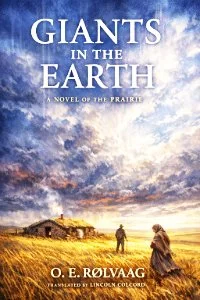
Giants in the Earth

O. E. Rølvaag, Preface by Colin Heston.

The struggle of the immigrant is often told through the lens of triumph—of cities built and fortunes made—but in O. E. Rølvaag’s Giants in the Earth, we are invited into a far more intimate and devastating arena: the psychological and spiritual cost of taming a wilderness. First published in Norwegian in 1924 as I de dage and later meticulously translated into English by Lincoln Colcord in collaboration with the author, this novel remains the definitive epic of the American prairie. It is not merely a story of farming; it is a saga of the human psyche stretched to its breaking point against an indifferent landscape.
At the heart of the narrative lies a profound dichotomy between the two protagonists, Per Hansa and Beret. Per Hansa embodies the archetype of the pioneer, fueled by a restless, creative energy that views the desolate plains of South Dakota not as a wasteland, but as a kingdom waiting to be claimed. To him, the "Giants" are physical obstacles to be conquered through grit and vision. Conversely, Beret represents the tragic reality of displacement. She is haunted by the Great Plain, a space so vast and empty that she feels God cannot find her there. For Beret, the "Giants" are the invisible, malevolent forces of the Earth itself, punishing those who dare to disturb its ancient, heavy silence.
The English version of Giants in the Earth is a rare literary achievement born of a unique partnership. Lincoln Colcord, a writer of the sea, found a common language with Rølvaag, a writer of the "sea of grass." Their collaboration ensured that the stark, rhythmic beauty of Rølvaag’s Norwegian—steeped in biblical cadence and Old World folklore—was preserved for an English-speaking audience. Colcord understood that the oceanic quality of the prairie was more than a metaphor; it was a physical reality where the winds howling across the Dakota territory carried the same weight and terror as a North Atlantic gale.
Rølvaag does not romanticize the pioneer experience. He documents the relentless succession of plagues—locusts, blizzards, and the suffocating loneliness of the sod house—forcing the reader to confront the sobering question of what is lost when a culture uproots itself. While Per Hansa builds the physical foundations of a new nation, Beret bears the burden of the cultural and emotional cost. Her descent into religious melancholy serves as a poignant reminder that while the land may be conquered, the soul is often the casualty of that conquest. She famously remarks that the Great Plain drinks the blood of Christian men and is never satisfied.
Nearly a century since its translation, Giants in the Earth stands as a pillar of American literature because it refuses to offer easy answers. It is a masterpiece of realism and a haunting work of the imagination that captures the birth of a modern identity forged in a crucible of isolation. As you turn these pages, you are witnessing a history that is as much about the internal landscape of the mind as it is about the external map of the frontier.

Read-Me.Org Inc. New York-Philadelphia-Australia. 2026. 373p.
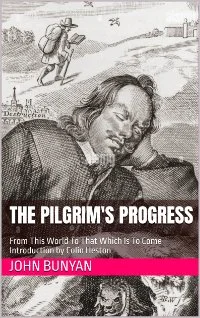
Pilgrim's Progress: From This World To That Which Is To Come

By John Bunyan. Introduction by Colin Heston Paperback

The Pilgrim’s Progress (1678) by John Bunyan is a Christian allegory that narrates the spiritual journey of a man named Christian as he seeks salvation. Leaving his home in the City of Destruction, he embarks on a perilous pilgrimage to the Celestial City, guided by faith and the teachings of the Bible. Along the way, he encounters various symbolic figures and places, such as Evangelist, who sets him on the right path; the Slough of Despond, representing despair; Vanity Fair, a place of worldly temptation; and Giant Despair, who imprisons him in Doubting Castle. The novel, written in accessible yet vivid prose, reflects Bunyan’s Puritan theology and explores themes of sin, redemption, and perseverance. Though primarily a religious work, it is also a compelling adventure story that has captivated readers for centuries. While some view its moral instruction as rigid, it remains one of the most influential and widely read books in English literature. This version contains an introduction by Colin Heston, who assesses its effect on subsequent modern-day authors, especially its religious significance, allegorical style, and theological critiques.

Read-Me.Org Inc. 2025. 133p.

Life And Death Of Mr Badman

By John Bunyan

This work of Christian fiction was published in 1680. It is structured as a dialogue between two characters, Mr. Wiseman and Mr. Attentive, who discuss Mr. Badman's sinful life and eventual death. The book serves as a moral tale, warning readers about the consequences of a wicked life and the importance of repentance and redemption.

The narrative provides a detailed account of Mr. Badman's life, from his early years of deceit and dishonesty to his ultimate demise. Through the dialogue, Bunyan explores themes of sin, morality, and the afterlife, using Mr. Badman's story as a cautionary example. The book is notable for its realistic portrayal of the consequences of immoral behavior and its emphasis on the need for spiritual awakening.

First Published: 1680 by Nathaniel Ponde. This edition Read-Me.Org Inc. 2025. 174p.

The Agony and the Ecstasy: A Biographical Novel of Michelangelo

USED BOOK. MAY CONTAIN MARK-UP

By Irving Stone

FROM THE COVER: “Set in the days of the deadly Borgias, the warring popes and the mighty Medicis, this is the truly great novel of Michelangelo, his lifelong friendships, his passionate loves and his unquenchable genius. ….

"Irving Stone has painted the portrait of a supreme craftsman, one of the most versatile artists of all time, and he has also laid before us a cyclorama of one of the world's most astounding ages." New York Times

NY. Fontana books. 1970. 786p.

The Hero Of Basil's

By C. Serjeant

A boys adventure book linking Christian life to war…FROM CHAPTER 1:

“"Yes, mother. And you remember what he said about being good soldiers of our Lord, don't you?"

"I'm afraid I didn't hear quiteall the sermon," she said, trying to speak lightly. "I wish," she added to herself, "that Jack would stop talking about such things. Especially in public. It would be frightfully embarrassing if he began to discuss religion in front of Lady Hardcastle or Mrs. Lyle-Gault. I'm not sure that they wouldn't think it a joke.'

"Well, mother,"Jack was saying, "that was what his sermon was about--being good soldiers-and somehow I felt I wanted to be one of them-and I am, mother."

London. Pickering & Inglis Ltd. 1932. 67p. USED BOOK