Open Access Publisher and Free Library
Fiction+Mediajpg.jpg

FICTION and MEDIA

CRIME AND MEDIA — TWO PEAS IN A POD

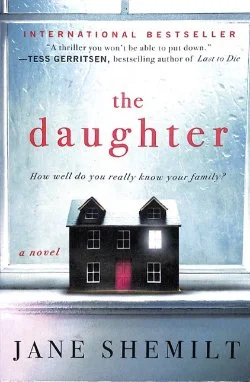
The Daughter

By Jane Shemilt

London. Penguin. 2014. 342p.


"The Daughter" is a novel by Australian author Jane Shemilt, first published in 2014. The book tells the story of a successful doctor named Jenny, whose daughter Naomi disappears one day without a trace. As Jenny searches for her daughter and tries to unravel the mystery of her disappearance, she must confront the painful secrets and hidden truths that have been simmering beneath the surface of her seemingly perfect family.

The novel is a gripping psychological thriller that explores themes of loss, grief, and the complexities of family relationships. Shemilt's skill as a writer is evident in her deft handling of the novel's multiple narrative threads, as well as her ability to create a sense of tension and unease that keeps the reader engaged from start to finish.

The Given Day

By Denis Lehane

London. Transworld Publishers. 2008. 702p.

"The Given Day" is a historical novel by American author Dennis Lehane, published in 2008. The book is set in Boston in the years following World War I, and tells the story of two families from different backgrounds whose lives become intertwined in the tumultuous years of the early 20th century.

The novel explores themes of race, class, and politics, and features a cast of characters that includes police officers, labor organizers, politicians, and ordinary citizens. At the heart of the story are two men, one black and one white, who find themselves drawn into the same struggle for justice and equality in a city that is deeply divided by race and class.

"The Given Day" is notable for its vivid and immersive depiction of Boston during a period of significant social and political change. Lehane's meticulous research and attention to historical detail help to bring the city to life, and his skill as a storyteller keeps the reader engaged throughout the book's sprawling narrative.

The Silent Girl

By Hjorth and Rosenfeldt. Trans. Marlaine Delargy.

London. Penguin Arrow Books. 2014. 458p.

"The Silent Girl" is actually a crime thriller novel by Swedish authors Michael Hjorth and Hans Rosenfeldt, originally published in Swedish in 2011 and translated into English by Marlaine Delargy.

The novel follows the investigation of a brutal murder in Stockholm, Sweden, and the subsequent discovery of a string of similar killings. The detective in charge of the case, Sebastian Bergman, is a troubled and emotionally complex character who is forced to confront his own demons as he races against time to catch the killer.

"The Silent Girl" is the fourth novel in Hjorth and Rosenfeldt's Sebastian Bergman series. The book has been praised for its well-crafted plot, nuanced characterization, and atmospheric setting. The authors' background in screenwriting is evident in the book's cinematic pacing and tension, which keep the reader engaged from start to finish.

Our Game

By John Le Carre

Sydney. Holder Headline. 1995. 405p.

"Our Game" is a novel by John le Carré, published in 1995. The book follows the story of a retired British spy named Tim Cranmer, who is pulled back into the world of espionage when his former lover, Emma, and his former colleague, Larry Pettifer, reemerge in his life.

The novel is set in the aftermath of the Cold War and explores the changing landscape of international politics and espionage. As Tim tries to navigate his relationships with Emma and Larry, he becomes embroiled in a web of conspiracy and betrayal that threatens to upend his life and career.

Through its intricate plot and nuanced characterization, "Our Game" offers a complex portrait of the world of espionage and the personal and political costs of the spy game. The novel also touches on themes of loyalty, trust, and the shifting alliances of the post-Cold War era.

The Pillars of the Earth

By Ken Follett

NY. Signet. 1990. 1,020p.

"The Pillars of the Earth" is a historical novel by British author Ken Follett, published in 1989. Set in 12th-century England, the novel follows the story of the building of a cathedral in the fictional town of Kingsbridge.

The novel weaves together the lives of several characters, including the master builder Tom, the noblewoman Aliena, and the monk Prior Philip, as they work to realize their vision of building a great cathedral. Along the way, they must confront numerous challenges, including political strife, personal vendettas, and the technical difficulties of constructing a building of such magnitude.

Through its sweeping scope and vivid characterization, "The Pillars of the Earth" offers a richly detailed portrait of medieval life and society. The novel explores themes of power, faith, and love, and it illuminates the complex interplay between religion, politics, and economics in medieval Europe.

Say Nothing

By Patrick Radden Keefe

London. Harper Collins. 2018. 521p.

Say Nothing: A True Story of Murder and Memory in Northern Ireland" is a nonfiction book by American journalist Patrick Radden Keefe, published in 2019. The book tells the story of the conflict in Northern Ireland, known as "The Troubles", through the lens of one particular crime – the disappearance of a young mother of 10 named Jean McConville.

Keefe uses McConville's disappearance as a focal point to explore the complex and violent history of Northern Ireland, the rise of the Provisional IRA, and the role of secret paramilitary groups like the Irish Republican Army and British Army's Military Reaction Force. He also examines the legacy of the conflict, including the ongoing search for McConville's remains and the Good Friday Agreement, which brought an end to much of the violence in Northern Ireland.

Through extensive research and interviews with those involved, Keefe creates a gripping and detailed narrative that delves into the lives of those caught up in the conflict, including McConville's family and the IRA operatives responsible for her disappearance. He also explores the ways in which memory and trauma continue to shape the lives of those affected by the conflict.

A Clockwork Orange

By Anthony Burgess

From the cover. A CLOCKWORK ORANGE_-Anthony Burgess' most famous novel-is a book of stunning force, the most cogent and terrifying vision of the future since George Orwell's 1984. Adrift in the impersonal, iron-gray society of the superstate, the novel's main character, 15-year-old Alex, leads his gang of teen-age rockers in all-night orgies of random violence and destruction. Told in a slang as electric as the events described, this is Alex's storyo f rapes and stompings and rumbles with the police, of prison life and the frightful "Ludovico Technique" by which Alex is "recon ditioned" into a model citizen, and of his subsequent adventures as a mindless pawn in the cynical hands of the authorities. "A brilliant novel . . . a tour de force in nastiness, an inventive primer in total violence, a savage satire o n t h edistortions o fthe single and collective minds."-New York Times.

NY. W.W. Norton. 1962. 184p.

The Shepherd's Hut

B y Tim Winton

Penguin Books. 2018. 266p.

"The Shepherd's Hut" is a novel by Australian author Tim Winton, published in 2018. The novel follows the story of Jaxie Clackton, a young Australian boy who flees his abusive father and sets out on foot into the Western Australian outback.

Jaxie's journey takes him through a harsh and unforgiving landscape, where he must fend for himself and face his own inner demons. Along the way, he encounters a mysterious old man named Fintan MacGillis, who lives alone in a remote shepherd's hut.

As Jaxie and Fintan form an unlikely bond, they both confront their pasts and grapple with questions of identity, belonging, and redemption. The novel explores themes of masculinity, violence, and the complex relationship between humans and the natural world.

Winton's prose is spare and poetic, capturing the beauty and brutality of the outback landscape and the emotional turmoil of his characters. The novel has been praised for its powerful storytelling, evocative language, and exploration of important contemporary issues.

The Luminaries

By Eleanor Catton

New York Little Brown. 2013. 834p.

The novel begins with the arrival of Walter Moody, a young Scottish lawyer, in Hokitika, where he stumbles upon a meeting of 12 local men. Each of these men has a different story to tell about a recent series of events involving theft, deception, and possible murder. As the novel progresses, their stories become increasingly entangled, and Moody finds himself drawn into the intricate web of secrets and lies that surround them.

Catton uses a range of narrative techniques, including astrology and multiple points of view, to create a complex and layered narrative. The novel also explores a range of themes, including class, race, gender, and the pursuit of wealth and power in a frontier society.

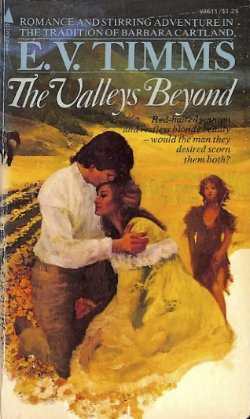
The Valleys Beyond

By E. V. Timms

NY. Pyramid. 1951. 315p

"The Valleys Beyond" is a novel by Australian author Peter Kocan, first published in 1995. The novel follows the lives of a group of working-class Australians living in the fictional town of Walgaree, New South Wales, in the 1950s and 1960s.

At the heart of the novel is the character of Brian Madden, a troubled young man who struggles with mental illness and a sense of alienation from the world around him. Madden's struggles are mirrored in the lives of the other characters, including his mother, who works as a cleaner, his father, a factory worker, and his girlfriend, an aspiring singer.

Kocan uses vivid and poetic language to capture the landscape and atmosphere of Walgaree and to explore the characters' inner lives and struggles. The novel also explores themes of class, identity, and the impact of social and economic change on working-class communities in Australia.

Pompeii

By Robert Harris

London. Hutchinson. 2003. 341p.

The novel is set against the backdrop of the impending eruption of Mount Vesuvius, which eventually destroys the city of Pompeii and leads to the death of thousands of its inhabitants. Harris uses meticulous historical research to bring the city and its inhabitants to life, and the novel provides a vivid and immersive portrayal of life in ancient Rome.

The novel also explores themes of greed, corruption, and political intrigue, as Attilius uncovers a conspiracy involving the corrupt aquarius in charge of Pompeii's water supply, as well as the wealthy and powerful Pompeian elite. The novel's suspenseful plot and vivid descriptions of the eruption of Mount Vesuvius create a gripping and immersive reading experience.

On Our Selection

By Steele Rudd

Sydneeele Ruddy. Angus and Robertson. 1899. 258p.

"On Our Selection" is a play and a collection of stories written by Australian author Steele Rudd (real name Arthur Hoey Davis) in the late 19th and early 20th centuries. The stories are based on Rudd's own experiences growing up in rural Queensland and revolve around the trials and tribulations of a farming family, the Rudds.

The character of Dad Rudd, the patriarch of the family, has become an iconic figure in Australian literature and is known for his wit, wisdom, and resilience in the face of adversity. The stories offer a humorous and affectionate portrayal of rural life in Australia at the turn of the century, and explore the themes of family, community, and the struggle for survival in a harsh and unforgiving environment.

"On Our Selection" was first published in 1899 and became an instant success, both in Australia and overseas. The stories have been adapted into several films, plays, and television series over the years, and continue to be celebrated as a classic example of Australian literature.

German Classics of the 19th and 20th Centuries: Masterpieces of German Literature. Vol. XVIII

Editor-in-Chief, Kuno Francke

NY. The German Publication Society. 1914.

The collection includes works by famous authors such as Johann Wolfgang von Goethe, Friedrich Schiller, Thomas Mann, and Franz Kafka. It also includes lesser-known works by writers such as Adalbert Stifter, Gottfried Keller, and Gerhart Hauptmann.

Each work in the collection offers a unique perspective on the cultural, social, and political issues of its time, and reflects the distinctive style and voice of its author. The works in the collection range from romantic poetry and lyrical prose to philosophical essays and modernist fiction.

The Healing Party

By Michelene Lee

Melbourne, Australia.Black Publishing. 2016. 293p.

As Aunty Party's family and friends gather for a weekend of prayer and healing rituals, the novel explores themes of faith, family, and the complex relationships that exist within communities. It also delves into issues of culture, identity, and the impact of colonialism on indigenous communities in Australia.

Through the character of Aunty Party, the novel explores the role of faith and spirituality in providing comfort and guidance to individuals and communities facing difficult challenges. It also raises important questions about the intersection of traditional indigenous beliefs with Western religious practices, and the ongoing impact of colonization on the spiritual and cultural practices of indigenous Australians.

Dancehall

By Bernard Conners

NY. British American Publishing. 1983. 360p.

The novel explores the vibrant subculture of dancehall music and its influence on the lives of young black people in London during that time. It also delves into issues of identity, race, gender, and class, as Yvette navigates her way through a complex and sometimes hostile world.

As Yvette begins to explore her sexuality and her desire for independence, she confronts the challenges and contradictions of growing up as a young black woman in a society that often fails to recognize her worth and potential. Through her experiences, the novel explores the ways in which racism and sexism intersect, and the impact they have on the lives of marginalized individuals and communities.

Little Bee

By Chris Cleave

NY. Simon and Schuster. 2008. 298p.

The novel alternates between the perspectives of Little Bee and Sarah, a British woman whose life intersects with Little Bee's when they meet on a Nigerian beach two years before Little Bee's arrival in England. As the two women's stories unfold, the novel explores themes of identity, trauma, and the complexities of human relationships.

Through the character of Little Bee, the novel sheds light on the experiences of refugees and asylum seekers, and the challenges they face as they try to build new lives in unfamiliar and often hostile environments. It also explores issues of race, privilege, and the legacy of colonialism, as well as the impact of global economic and political forces on the lives of individuals and communities.

Silas Marner. The Lifted Veil. Brother Jacob.

By George Eliot III

Silas Marner is George Eliot's (1819-1880) short novel of 1861, in which the protagonist is obliged to leave his small religious community after being falsely accused of theft. He settles in Raveloe, where he works diligently as a weaver for 15 years and manages to accumulate and hoard a substantial amount of gold.
“The Lifted Veil” concerns themes of fate, extrasensory perception, the mystery of life and life after death. Eliot's interest in these themes stemmed partly from her own struggles with religious faith, as she was an extremely devout Christian as a child and young adult who later renounced Christianity completely. “Brother Jacob'“raises issues of perennial concern to George Eliot as an author who was also a woman. In particular, this fabular tale about a hapless confectioner and his imbecilic broth- er exposes the pitfalls in women's relationship(s) to cultural authority, 'the strange bright fruits of knowledge' (Woolf 160). As a fable whose hero is distinguished by fraudulence and guile, 'Brother Jacob' reflects its author's attitude towards plagiarists and other impostors with pre- tensions to authorship. Even as Marian Evans disguised herself as George Eliot, the 'silly lady novelist' of her day is disguised in the story's protagonist, David Faux.

London. Oxford University Press. 1861., 1859, 1860. 318p.

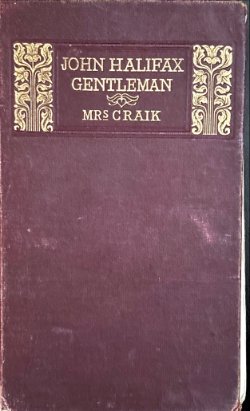
John Halifax, Gentleman

By Mrs. Craik.

The action is centred on the town of Tewkesbury, scarcely disguised by the fictional name Norton Bury, in Gloucestershire. The story is narrated by Phineas, a friend of the central character. John Halifax is an orphan, determined to make his way in the world through honest hard work. He is taken in by a tanner, Abel Fletcher, who is a Quaker, and thus meets Phineas, who is Abel's son. John eventually achieves success in business and love, and becomes a wealthy man. (Wikipedia)

London: Ward, Lock and Co. 1856. 449p.

Kangaroo

By D. H. Lawrence

Kangaroo is D. H. Lawrence's eighth novel, set in Australia. He wrote the first draft in just forty-five days while living south of Sydney, in 1922, and revised it three months later in New Mexico. The descriptions of the country are vivid and sympathetic and the book fuses lightly disguised autobiography with an exploration of political ideas at an immensely personal level. Based on a collation of the manuscript, typescripts and first editions, this text of Kangaroo is closest to what Lawrence would have expected to see in print. There is a full textual apparatus of variants, a comprehensive introduction giving the background and history of composition and publication and a summary of contemporary reviewers' opinions. Explanatory notes elucidate the many geographical, political and literary allusions in the text; there are three maps and an appendix detailing Australian locations.

London. Thomas Seltzer Inc. 1923. 367p.

The Stranger

By Albert Camus

With the intrigue of a psychological thriller, The Stranger—Camus's masterpiece—gives us the story of an ordinary man unwittingly drawn into a senseless murder on an Algerian beach. With an Introduction by Peter Dunwoodie; translated by Matthew Ward.

Behind the subterfuge, Camus explores what he termed "the nakedness of man faced with the absurd" and describes the condition of reckless alienation and spiritual exhaustion that characterized so much of twentieth-century life. 

“The Stranger is a strikingly modern text and Matthew Ward’s translation will enable readers to appreciate why Camus’s stoical anti-hero and ­devious narrator remains one of the key expressions of a postwar Western malaise, and one of the cleverest exponents of a literature of ambiguity.” –from the Introduction by Peter Dunwoodie.

Through the story of an ordinary man unwittingly drawn into a senseless murder on an Algerian beach, Camus explored what he termed "the nakedness of man faced with the absurd." First published in English in 1946; now in a new translation by Matthew Ward.

London. Knopf. 1946. 77p.