Open Access Publisher and Free Library
Fiction+Mediajpg.jpg

FICTION and MEDIA

CRIME AND MEDIA — TWO PEAS IN A POD

Posts tagged Australian Fiction
Dr. NIKOLA - The Complete Saga: Volume 2


by Guy Boothby (Author), Graeme Newman (Editor), Colin Heston (Introduction)

. When the enigmatic Dr. Nikola first stepped onto the literary stage in 1895, clutching his sinister black cat Apollyon and weaving schemes that stretched from the back alleys of Shanghai to the hidden monasteries of Tibet, he didn't just capture the Victorian imagination—illegally or otherwise, he colonized it.
These volumes bring together, for the first time in a single definitive collection, the complete saga of Dr. Nikola: A Bid for Fortune, Dr. Nikola, The Lust of Hate, Dr. Nikola’s Experiment, and Farewell, Nikola. To read them in succession is to witness the birth of the modern "super-villain" and to appreciate the unique, rugged perspective Boothby brought to the crowded field of late-Victorian sensation fiction.
Born in Adelaide in 1867, Guy Newell Boothby was the son of a prominent South Australian parliamentarian. While he eventually found fame in the drawing rooms of London, his formative years were spent in the wide-open, often unforgiving landscapes of the Australian colonies.
In the 1890s, the literary world was reeling from "Sherlock-mania." While Sir Arthur Conan Doyle gave the world the ultimate champion of logic, Boothby gave it the ultimate agent of chaos. Dr. Nikola is not merely a criminal; he is a polymath, an occultist, and a man of immense physical and intellectual magnetism.
Across these five novels, we see Nikola evolve:
Volume 1:
A Bid for Fortune (1895): We are introduced to the Doctor through the eyes of Richard Hattasall. Here, Nikola is a vengeful shadow, a man whose "vendetta" drives a globe-trotting chase.
Dr. Nikola (1896): Arguably the centerpiece of the series, Boothby takes us into the forbidden heart of Tibet. It remains one of the finest examples of the "Lost World" genre, enriched by Stanley L. Wood’s iconic illustrations.
The Lust of Hate (1898): A darker, more psychological turn where Nikola manipulates a broken man’s desire for revenge.
Volume 2
Dr. Nikola’s Experiment (1899): Here, Boothby touches on the "mad scientist" tropes that would later define 20th-century sci-fi, as Nikola attempts to conquer death itself.
Farewell, Nikola (1901): The swan song of the character, providing a sense of closure to a man who lived his life in the liminal space between genius and madness.
Guy Boothby died tragically young at the age of 37, leaving behind a staggering 53 novels written in just over a decade. For years, his work languished in the shadows of more "academic" Victorian literature. However, as these works have entered the public domain, a new generation of readers—and editors—has rediscovered the sheer, unadulterated joy of his storytelling.
Boothby’s Dr. Nikola remains a vital link in the evolution of popular fiction. Without Nikola, would we have Sax Rohmer’s Fu Manchu? Would we have the sophisticated antagonists of James Bond? Probably not. By centering this edition on Boothby’s Australian roots, we acknowledge that the "King of Sensation" wasn't just a product of London’s Fleet Street, but a traveler of the world who brought the wild energy of the Antipodes to the heart of the Empire. This collection aims to preserve the thrill of the original serialization while providing the context necessary for a modern reader. As you follow the Doctor through the mist-shrouded streets of London and the sun-bleached ports of the Pacific, remember that you are in the hands of a master who knew those ports firsthand.
Welcome to the world of Dr. Nikola. Tread carefully—Apollyon is watching!

Read-Me.Org Inc. New York-Philadelphia-Australia. 2026. 292p.

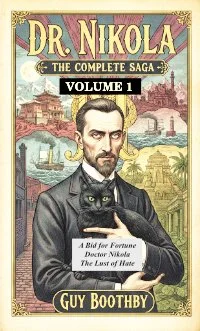
Dr. NIKOLA: The Complete Saga: Volume 1

by Guy Boothby (Author), Graeme Newman (Editor), Colin Heston (Introduction)

When the enigmatic Dr. Nikola first stepped onto the literary stage in 1895, clutching his sinister black cat Apollyon and weaving schemes that stretched from the back alleys of Shanghai to the hidden monasteries of Tibet, he didn't just capture the Victorian imagination—illegally or otherwise, he colonized it. Behind this towering figure of Gothic villainy was a prolific, whirlwind talent from the edge of the British Empire: the South Australian-born Guy Boothby.

These two volumes bring together, for the first time in a single definitive collection, the complete saga of Dr. Nikola: A Bid for Fortune, Dr. Nikola, The Lust of Hate, Dr. Nikola’s Experiment, and Farewell, Nikola. To read them in succession is to witness the birth of the modern "super-villain" and to appreciate the unique, rugged perspective Boothby brought to the crowded field of late-Victorian sensation fiction.

Born in Adelaide in 1867, Guy Newell Boothby was the son of a prominent South Australian parliamentarian. While he eventually found fame in the drawing rooms of London, his formative years were spent in the wide-open, often unforgiving landscapes of the Australian colonies. Unlike many of his contemporaries—who wrote of "The Orient" or the "South Seas" from the comfort of an English study—Boothby had the red dust of the Flinders Ranges and the salt of the Southern Ocean in his blood. In 1891, he and his brother famously crossed Australia from north to south, an arduous journey that informed the visceral, kinetic energy of his prose. This "Australian-ness" manifests in the Nikola series through a distinct lack of Victorian stuffiness; his heroes and villains alike are defined by their competence, their physical endurance, and a certain democratic grit that felt fresh to a British audience.

Guy Boothby died tragically young at the age of 37, leaving behind a staggering 53 novels written in just over a decade. For years, his work languished in the shadows of more "academic" Victorian literature. However, as these works have entered the public domain, a new generation of readers—and editors—has rediscovered the sheer, unadulterated joy of his storytelling. Boothby’s Dr. Nikola remains a vital link in the evolution of popular fiction. Without Nikola, would we have Sax Rohmer’s Fu Manchu? Would we have the sophisticated antagonists of James Bond? Probably not. By centering this edition on Boothby’s Australian roots, we acknowledge that the "King of Sensation" wasn't just a product of London’s Fleet Street, but a traveler of the world who brought the wild energy of the Antipodes to the heart of the Empire.

This collection published in two volumes aims to preserve the thrill of the original serialization while providing the context necessary for a modern reader. As you follow the Doctor through the mist-shrouded streets of London and the sun-bleached ports of the Pacific, remember that you are in the hands of a master who knew those ports firsthand.
Welcome to the world of Dr. Nikola. Tread carefully—Apollyon is watching!

Read-Me.Org Inc. New York-Philadelphia-Australia. 2026. 471p.

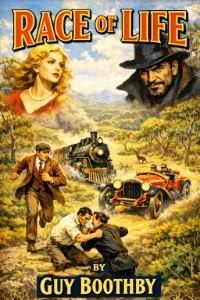
The Race of Life

By Guy Boothby. Introduction by Colin Heston.

In the unforgiving expanse of the Australian outback, where the line between fortune and ruin is as thin as a shadow on the sand, the race for survival is never-ending. Guy Boothby’s pulse-pounding tale follows the odyssey of a man driven by ambition and haunted by the specters of his past, thrust into a world where the elements are as treacherous as the men who inhabit them. From the sweat-soaked cattle runs of the bush to the high-stakes tension of the burgeoning colonial cities, this is a story of grit, reinvention, and the relentless pursuit of a legacy.

As the old world’s certainties crumble in the face of a wild, new frontier, the struggle for dominance becomes a trial of the soul. In a landscape that promises everything to the bold and nothing to the weak, can a man outrun his history, or will the "race of life" ultimately claim him? Boothby, the master of Edwardian adventure, delivers a visceral masterwork of high drama and rugged suspense that captures the raw, beating heart of a continent in the making.

Read-Me.Org Inc. New York-Philadelphia-Australia. 2026. 209p.

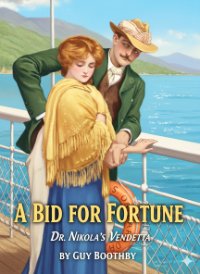
A Bid For Fortune: Dr. Nikola's Vendetta

by Guy Boothby (Author), Colin Heston (Introduction)

In the landscape of late-Victorian sensation fiction, few figures loom as large or as shadow-drenched as Dr. Nikola. Before the world had a definitive supervillain archetype, Guy Boothby introduced a mastermind who combined the cold intellect of Sherlock Holmes with the occult ambitions of a sorcerer. A Bid for Fortune, published in 1895 and often subtitled Dr. Nikola’s Vendetta, marks the debut of this iconic antagonist in a high-stakes adventure that spans the globe, moving restlessly from the dusty streets of Sydney to the high society of London and the secretive corners of the East.
The narrative follows Richard Hatteras, a rugged Australian sailor who finds himself accidentally entangled in a web of international intrigue. Hatteras is a man of action, yet he is fundamentally out of his depth when he crosses paths with the enigmatic Doctor. Nikola is not interested in mere petty theft or local power; he is obsessed with uncovering the ancient secrets of a mysterious Tibetan sect. To achieve his ends, he requires a specific Chinese stick—a relic of immense power—and he proves himself willing to manipulate, kidnap, and destroy anyone standing in his way.
Guy Boothby was a pioneer of the "Yellow Back" thrillers, and in Dr. Nikola, he created a character who fascinated readers as much as he terrified them. Accompanied by a massive, sinister black cat named Apollyon, Nikola is a master of science, hypnotism, and disguise, driven by a personal code that sits entirely outside conventional law. This work is more than a simple chase; it is a quintessential example of the "New Imperial" gothic style, blending the era's anxiety about the unknown with the thrill of global exploration.
Readers should prepare for a narrative that moves at a breakneck pace, as Boothby excels at building atmosphere through his descriptions of Nikola’s cat-like movements and calculated calm. As Hatteras attempts to protect the woman he loves while outmaneuvering a man who seems to see five steps ahead, the audience is invited into a world where the line between science and magic is dangerously thin. It is a story where the hero is constantly shadowed by a man who, as the text suggests, is just as dangerous to have as a friend as he is as an enemy.

Read-Me.Org Inc. New York-Philadelphia-Australia. 2026. 232p.

Plain Living: A Bush Idyll

By Rolf Boldrewood

Plain Living: A Bush Idyll is a captivating tale that delves into the simple yet profound world of rural life. Written in exquisite detail, the novel follows the journey of Sarah, a young woman who leaves the hustle and bustle of the city to seek solace in the peaceful countryside. As she immerses herself in the beauty of nature and the warmth of community, Sarah discovers a deeper connection to the land and its inhabitants.

Through lyrical prose and vivid descriptions, the author paints a rich portrait of life in the bush, intertwining themes of love, loss, and self-discovery. Plain Living invites readers to slow down, appreciate the small moments, and find joy in the quietude of rural living. A poignant and heartfelt narrative, this book is a celebration of simple pleasures and the enduring spirit of the human heart.

Macmillan, 1898, 316 pages

Old Melbourne Memories

By Rolf Boldrewood

"Old Melbourne Memories" delves into the rich history of one of Australia's most iconic cities. Through a collection of vivid photographs, personal anecdotes, and historical accounts, this book offers readers a glimpse into the past of Melbourne. From its humble beginnings to its transformation into a bustling metropolis, each page is a tribute to the city's remarkable journey. Whether you are a history enthusiast or simply curious about Melbourne's past, this book is a captivating exploration of a bygone era that will resonate with readers of all backgrounds.

Robertson, 1884, 182 pages

A Crooked Stick or Pollie's Probation

By Rolf Boldrewood

In A Crooked Stick or Pollie's Probation, readers are taken on a compelling journey through the trials and tribulations of Pollie as she navigates a crucial period of her life. Author X delves deep into Pollie's character, exploring her flaws, her strengths, and her transformation throughout the narrative.

Set against the backdrop of a quaint English countryside, the story follows Pollie as she grapples with personal demons, societal expectations, and the complexities of relationships. With vivid descriptions and insightful prose, Author X crafts a rich tapestry of emotions and experiences that will resonate with readers of all backgrounds.

Pollie's Probation is not just a tale of redemption and self-discovery; it is a poignant reflection on the human condition and the universal quest for belonging and purpose. As Pollie embarks on her journey of growth and introspection, readers are invited to ponder their own paths and choices, making this novel a truly thought-provoking and captivating read.

Macmillan and Company, 1895, 306 pages

A Sydney Side Saxon

By Rolf Boldrewood

"A Sydney Side Saxon" is a captivating tale that delves into the complexities of identity, heritage, and belonging. Set against the backdrop of multicultural Sydney, the story follows the protagonist as she navigates the challenges of straddling two worlds—the traditional expectations of her Anglo-Saxon lineage and the vibrant diversity of her Australian upbringing. As she learns to embrace her heritage while forging her own path, readers are taken on a poignant journey of self-discovery and acceptance. With richly drawn characters and evocative storytelling, this novel is a compelling exploration of cultural fusion and the universal quest for understanding one's place in the world.

Heinemann and Balestier, 1891, 96 pages

Nevermore

Nevermore By Rolf Boldrewood

Nevermore by Rolf Boldrewood is a captivating novel that weaves together elements of mystery, romance, and adventure. Set against the backdrop of the rugged Australian wilderness, the story follows the journey of a young explorer as he navigates through the challenges of the untamed landscape. Boldrewood's vivid descriptions transport readers to another time and place, immersing them in the rich tapestry of the Australian outback. With its intricate plot and compelling characters, Nevermore is a timeless classic that continues to enthrall readers with its blend of action and intrigue.

Macmillan, 1892, 324 pages

Robbery Under Arms

By Rolf Boldrewood

Robbery Under Arms was acclaimed as an Australian classic almost immediately after it appeared in book form in the late 1880s. It was praised for its excitement, romance and authentic picture of 1850s colonial life. As the first writer to attempt a long narrative in the voice of an uneducated Australian bushman, Rolf Boldrewood had created a story with enduring cultural resonance. Its continuing appeal and popularity have seen the tale frequently adapted for stage, radio, film and television. During all of this time the novel's text was not stable. It lost some material accidentally in its early typesettings, and these omissions were never repaired. It was later abridged by its author at the publisher's request, but the publisher botched his instructions. And, as with any much-reprinted work, thousands of small changes gradually crept into the text. This Academy Edition is the first full-scale critical edition of the novel. It presents the text as it originally appeared in instalments in the pages of the Sydney Mail in 1882-83. It allows readers to experience the first-person narration that Henry Lawson was inspired by, to appreciate how the special qualities of voice were partially flattened over time and to know exactly what material was omitted.

Univ. of Queensland Press, 2006, 479 pages

The Squatter's Dream

By Rolf Boldrewood

"The Squatter's Dream" is a thought-provoking novel that delves into the complexities of identity, belonging, and the pursuit of the Australian dream. Set against the backdrop of the harsh Australian outback, the story follows the journey of a young squatter named Jack as he grapples with his aspirations for the future and the harsh realities of his present circumstances. Through vivid storytelling and rich character development, this novel challenges readers to question the true meaning of success and the sacrifices one must make to achieve it. "The Squatter's Dream" is a poignant exploration of hope, resilience, and the enduring human spirit in the face of adversity.

Macmillan and Company, 1892, 319 pages

The Miner's Right

By Rolf Boldrewood

The Miner's Right, as 'A Tale of the Australian Goldfields', is the counterpart of Boldrewood's bushranging classic . Written out of the author's immediate experience as Goldfields Commissioner at Gulgong in the 1870s, it also casts back to the Chinese riots at Lambing Flat, to the robbery of the gold-escort at Eugowra, and to some aspects of the Eureka stockade. While these events are set in the romantic framework of the nineteenth-century novel, the democratic sentiment of the time is reflected to a greater degree than Boldrewood himself could have realised. The Miner's Right is both an example of the colonial romance, and an account 'from the life' of conditions on the Australian goldfields in a time of social and political change.

Macmillan, 1890, 397 pages

Ghost Camp

By Rolf Boldrewood

In "Ghost Camp" by Rolf Boldrewood, readers are transported to the rugged Australian outback, where the forces of nature and the human spirit collide in a gripping tale of survival and redemption. Set against the backdrop of the unforgiving wilderness, this novel follows a diverse group of characters as they navigate the challenges of the frontier.

Boldrewood's vivid descriptions bring to life the harsh beauty of the Australian landscape, from the scorching heat of the day to the eerie stillness of the night. As the characters face their demons and forge unlikely alliances, they discover the true meaning of courage and sacrifice.

"Ghost Camp" is a timeless classic that delves into themes of loyalty, resilience, and the unbreakable bond between humans and the natural world. Boldrewood's masterful storytelling and rich character development will captivate readers from start to finish, making this a must-read for fans of historical fiction and adventure tales.

Macmillan, 1902 - 409 pages

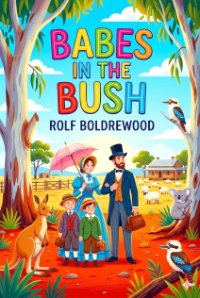
BABES IN THE BUSH

By Ronf Boldrewood

Imagine, if you will, the jarring transition of a family trading the velvet curtains and manicured gardens of an English manor for the sun-scorched, eucalyptus-scented vastness of the Australian interior. This is the heart of Rolf Boldrewood’s 1900 novel, Babes in the Bush, a sprawling narrative that serves as both a romantic adventure and a gritty survival manual for the Victorian era. While Boldrewood is often immortalized for the bushranging exploits of Captain Starlight in Robbery Under Arms, this particular work offers a more domestic, yet no less perilous, look at the "squatting" life—the high-stakes gamble of pastoral farming in the 19th-century colonies.

The story centers on the Effinghams, an aristocratic family whose financial foundation has crumbled beneath them in England. Facing the social death sentence of genteel poverty, they choose a path of radical reinvention: migrating to New South Wales to rebuild their dynasty. The title itself is a clever literary allusion to the old English folk tale "Babes in the Wood," but here, the "woods" are the unforgiving Australian scrub, and the "babes" are sophisticated adults and their children who are utterly illiterate in the language of the frontier. They are innocents abroad, armed with nothing but their British pluck and a very expensive, very impractical education.

What makes this introduction to colonial life so compelling is the man behind the pen. Rolf Boldrewood was the pseudonym for Thomas Alexander Browne, a man who didn't just write about the bush—he lived it. Having served as a police magistrate and a "squatter" (a settler who occupied large tracts of Crown land for grazing), Browne understood the soul-crushing weight of a three-year drought and the chaotic adrenaline of a cattle muster. His prose is thick with the authority of someone who has actually tasted the dust. When he describes the logistical nightmare of moving thousands of sheep across a dry plain or the specific architecture of a bark-roofed homestead, he isn't guessing; he’s reporting from the front lines of history.

However, it would be a disservice to the modern reader to ignore the specific "Victorian lens" through which this story is told. Boldrewood was a product of his time, and his writing is steeped in the ideology of Empire. The Australian landscape is frequently portrayed as a wild, "untamed" canvas waiting for the brush of British civilization to give it meaning. You will find a fascinating, if sometimes uncomfortable, tension between the family's desire to maintain English social hierarchies and the rugged, egalitarian reality of the Australian bush where a man’s worth is measured by his ability to track a stray bull rather than his family crest.

The novel also provides a window into the complex social ecosystem of the frontier. It isn't just the Effinghams vs. Nature; it is a world populated by "currency lads" (Australian-born whites), hardworking immigrants, and the Indigenous people whose land was being transformed. While Boldrewood’s depictions of Indigenous Australians are undeniably colonial and reflect the prejudices of the 1900s, they offer a stark, honest look at the mindset that drove the pastoral expansion. It is a story of resilience and adaptability, showing how the harshness of the Australian sun slowly bakes away the "Englishness" of the characters, leaving behind something harder, leaner, and distinctly Australian.

As you step into the world of the Effinghams, expect a narrative that moves with the slow, deliberate pace of a bullock team. It is a book of grand landscapes, sudden dangers, and the quiet triumph of building a home where none existed before. It remains a cornerstone of Australian colonial literature because it captures that pivotal moment when the Old World collided with the New, and the "Babes" either learned to walk the bush or were swallowed by it.

Read-Me.Org Inc. New York-Philadelphia-Australia. 2026. 353p.

WIMMERA: Small town, big secret

MAY CONTAIN MARKUP

By Mark Brandt

In the heart of the Australian outback lies the small town of Wimmera, where everyone knows everyone and secrets run deep. In Mark Brandi's gripping novel "WIMMERA," the tranquility of this close-knit community is shattered by a devastating event that exposes a dark truth hidden for years.

As childhood friends Ben and Fab struggle to come to terms with the haunting secret they share, the tight bonds holding Wimmera together begin to unravel. Brandi's masterful storytelling unravels the layers of mystery and trauma, drawing readers into a world where loyalty and betrayal go hand in hand.

"WIMMERA" is a compelling tale of friendship, survival, and the lengths to which people will go to protect those they love. With its vivid prose and atmospheric setting, this novel delves into the complexities of human nature and the chilling consequences of buried secrets resurfacing in a town where silence speaks louder than words.

Australia. Hatchette. 2017. 269p.

The Magic Pudding: Being the Adventures of Bunyip Bluegum and his friends Bill Barnacle a Sam Sawnoff

USED BOOK. MAY CONTAIN MARK-UP

By Norman Lindsay

FROM THE COVER. “This is a very funny book, about a very peculiar pudding. In spite of the word 'magic' in the title,there are no fairies or spells. Only a pudding. Sometimes it was a rich odoriferous steak-and-kidney pudding, sometimes it was boiled jam roll or apple dumpling. All you had to do was whistle twice, turn the pudding round, and you could have whatever you wanted! Indeed, the pudding was such a prize that there were 'professional puddin'-owners' and,alas, 'professional puddin'-thieves'. One of the owners was Sam Sawnoff, whose feet were sitting down while his body was standing (he was a penguin), although Bill was just an ordinary small man with a large hat. The pudding had his own views, and was apt to sing in a very gruff voice… For ages eight to eighty, allowing for brief blind periods now and again in between.”

Middlesex. Penguin. 1918.

The Dressmaker

By Rosalie Ham

Sydney. Duffy and Shellgrove. 2000. 302p.

"The Dressmaker" is a novel by Australian author Rosalie Ham, first published in 2000. The book tells the story of Tilly Dunnage, a talented dressmaker who returns to her hometown in rural Australia after years of living abroad. As she settles back into her old life, Tilly must confront the demons of her past and navigate the complex social dynamics of a small town that has never fully accepted her.

The novel is a darkly comic satire that skewers the hypocrisies and prejudices of small-town life. Ham's vivid descriptions of the characters and setting bring the town to life, and her use of irony and satire add a sharp edge to the story's humor. At its heart, though, "The Dressmaker" is a story about the power of self-expression and the importance of being true to oneself, even in the face of opposition from others.

On Our Selection

By Steele Rudd

Sydneeele Ruddy. Angus and Robertson. 1899. 258p.

"On Our Selection" is a play and a collection of stories written by Australian author Steele Rudd (real name Arthur Hoey Davis) in the late 19th and early 20th centuries. The stories are based on Rudd's own experiences growing up in rural Queensland and revolve around the trials and tribulations of a farming family, the Rudds.

The character of Dad Rudd, the patriarch of the family, has become an iconic figure in Australian literature and is known for his wit, wisdom, and resilience in the face of adversity. The stories offer a humorous and affectionate portrayal of rural life in Australia at the turn of the century, and explore the themes of family, community, and the struggle for survival in a harsh and unforgiving environment.

"On Our Selection" was first published in 1899 and became an instant success, both in Australia and overseas. The stories have been adapted into several films, plays, and television series over the years, and continue to be celebrated as a classic example of Australian literature.

Journey to the Stone Country

By Alex Miller

Following the sudden end of her marriage, Annabelle Beck returns from Melbourne to the sanctuary of her old family home in North Queensland. There, on an archaeological survey, she discovers that the aboriginal field officer, Bo Rennie, knows her from her childhood. Initially intrigued by his old-fashioned manners, she finds herself increasingly captivated by his modest assurance that he holds the key to her future. Eventually she sets out with him on a path of discovery that leads back to her childhood and to the uncovering of family secrets that have lain buried for a generation or more, secrets that will challenge their future together and force them to question whether their love can survive the terrible knowledge they have come to possess.

NSW. Aust. Allen and Unwin.2002. 327p.

Coonardoo

By Katharine Susannah Prichard

From the jacket: No writer has painted a more vivid picture of the tragic meeting of primi­tive and civilized humanity than Katharine Susannah Prichard in Coonardoo. First published in 1929, this remarkable novel has become an Australian classic, as moving in its deli­cate portraiture of an aboriginal girl as it is revealing in its authentic know­ledge of the outback scene in north­western Australia. The little black girl Coonardoo and the boy Hugh are childhood play­mates, and the relationship that gradually develops from their early bond is compelling and disastrous. Coonardoo has her tribal partner; Hugh, the station-owner, must marry. This drama is played out in the deserts and cattle country of the north­west, a cruel story redeemed by the poetic quality-of Coonardoo and her devotion to the man whose race dealt so harshly with hers.

Melbourne. Angus and Robertson. 1929.