By The
Greater Manchester Immigration Aid Unit
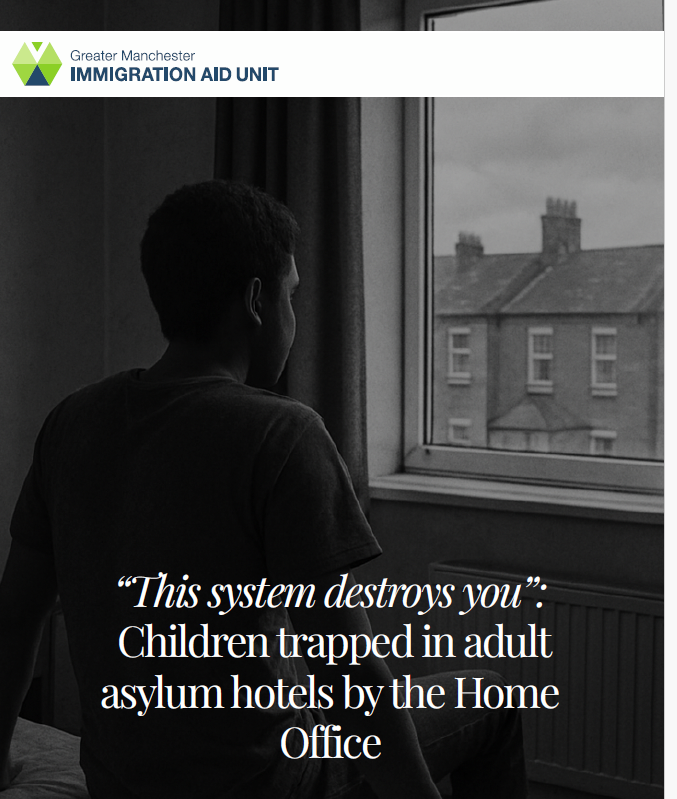
Over recent years, thousands of children have been wrongly treated as adults by the Home Office. These children are in the UK on their own seeking asylum. Following decisions made by UK border officials that they are “significantly over 18” they have been sent alone to adult asylum accommodation, usually hotels. This is a report about children housed in adult hotels after these decisions at the border, based on Greater Manchester Immigration Aid Unit’s legal and place-based expertise and experience, and on the experiences that the children we work with have shared. EXECUTIVE SUMMARY “You can’t stop feeling sad. You have to feel sad and angry when someone says you are a liar. It is in your heart.” Between January 2024 and February 2025, at least 296 children were wrongly sent to adult asylum accommodation, usually hotels, in the North West. This is a report about what children experience in asylum hotels, how theyare sentthere,andthe supportthey needtoget out. We are sounding the alarm – as others have done before us – that these children are being put at significant risk. Much harm has already been done, and must be acknowledged; and the government, local authorities andaccommodationprovidersmustact now topreventfurther harm. We are sounding the alarm – as others have done before us – that these children are being put at significant risk. Much harm has already been done, and must be acknowledged; and the government, local authorities and accommodation providers must act now to prevent further harm.
Our recommendations:
To the Home Office:
The Home Office must admit children are wrongly treated as adults at the border and suspend all “significantly over 18” decisions until investigated.
Repeal recent changes to age assessments introduced by the Nationality and Borders Act, and end the for-profit asylum housing model.
Meanwhile, the Home Office should notify local authorities when children are placed in hotels and publish clearer data on age disputes.
To accommodation providers:
Immediately refer to the local authority when staff become aware that a potential child is in adult asylum accommodation.
Take all possible measures to safeguard potential children.
Update training for hotel staff so they are aware of the high likelihood of children being treated as adults.
To local authorities:
Ensure social workers’ decisions and training include an understanding of the child’s experience in the UK, including being traumatised by Home Office age assessment practice.
Ensure that potential children are not held to higher thresholds in assessments when local authority capacity is stretched.
Do not refer children to the National Age Assessment Board (NAAB).
Manchester, UK: Greater Manchester Immigration Aid Unit,
2025. 49p.