Open Access Publisher and Free Library
HUMAN RIGHTS.jpeg

HUMAN RIGHTS

Human Rights-Migration-Trafficking-Slavery-History-Memoirs-Philosophy

Posts in criminal justice
Inside the Black Box: Tracing Interactions Between Stratified Reintegration Trajectories and Street‐Level Implementation of Reintegration Assistance

By Ruth Vollmer, Clara Schmitz-Pranghe


This article analyses the interactions between inequalities and reintegration assistance, looking at the examples of Serbia and Kosovo. It proposes an approach for examining the reintegration assistance practices of frontline providers by (a) viewing them through the lens of street-level bureaucracy acting mainly on behalf of the returning state and (b) as locally situated agents within the networks of their own distributive relations and embodying their own social positioning. Street-level implementers play an active role in shaping outreach, effectiveness, and sustainability of reintegration assistance, not always in the intended ways. This article traces their navigation of institutional, organisational, and relational contexts, internalised social norms, and perceptions of social divisions, as well as the micro-dynamics of asymmetrical interactions during service delivery. It finds that strategies applied by street-level assistance providers have ambivalent but rather minor effects on pre-existing inequalities. Even though they often naturalise prevalent social divisions, the interactions and allocation of assistance are determined more by their practical experiences, availability and type of support, as well as general programme design and working conditions. The inability to bridge the mismatch between available support and needs can even endorse inequality-normalising perceptions.

International MigrationVolume 63, Issue 4

August 2025
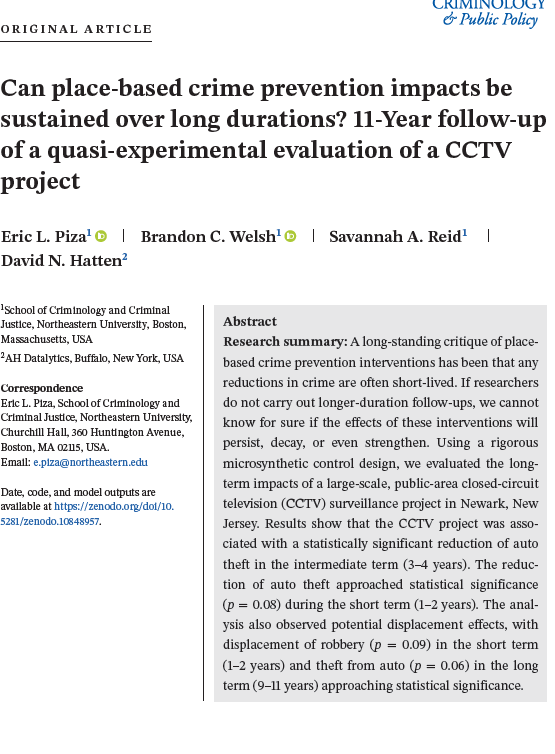
The Efficacy of Nutritional Interventions in Reducing Childhood/Youth Aggressive and Antisocial Behavior: A Mixed-Methods Systematic Review and Meta-Analysis

By Barna Konkolÿ Thege, Chaz Robitaille, Lujayn Mahmoud, Eden A. Kinzel, Rameen Qamar, Jamie Hartmann-Boyce, Olivia Choy

Aggressive/antisocial behaviors in children and youth may result in impairments in family, social, or academic functioning and lead to long‐term negative consequences for both the individual and society as a whole. The potential of healthy diet and nutritional supplements to reduce aggression and antisocial behavior is an active area of study in nutritional mental health sciences. The goal of this systematic review is to (1) investigate the effectiveness/efficacy of nutritional interventions(dietary manipulation, fortification or supplementation) in reducing excessive aggression, antisocial behaviors, and criminal offending in children/youth (systematic review and meta‐analysis); and (2) provide an overview of implementation barriers and facilitators regarding nutritional interventions in children/youth (qualitative/narrative synthesis). After consulting theCampbell Collaboration's methodological guidelines, a comprehensive search for published and unpublished papers on controlled intervention studies was performed (up to February 26, 2024) using both electronic databases (MEDLINE,Embase, Cochrane Library, APA PsycInfo, Scopus, and the Allied and Complementary Medicine Database) and other resources (e.g., Google Scholar, reference list of included studies and other reviews, websites of public health agencies). This study focuses on children and youth (up to the age of 24) presenting with an above‐average level of aggression/antisocial behavior. In terms of the intervention, we considered both dietary manipulation and nutritional supplementation with aduration long enough (minimum of 1 week) that a significant change in the individual's nutritional status could be expected.We included studies with a controlled design if, for outcomes, they reported on (1) behavioral‐level violence/aggression toward others in real‐life (non‐simulated) settings, (2) antisocial behaviors, or (3) criminal offending. Initial screening,checking for eligibility criteria, data extraction from, and risk of bias assessment for each eligible study were conducted independently by two reviewers. To perform the meta‐analysis, data from each original report were standardized(transformed into Hedges' g) so that results across studies could be meaningfully combined and interpreted. Data con-versions, computation of pooled effect sizes, and estimation of publication bias were conducted using the ComprehensiveMeta‐analysis software (Version 4). Altogether, 51 reports (describing 50 individual studies) met our inclusion criteria, and72 effect sizes were extracted from these reports. Nutritional interventions with a broad target (e.g., broad‐spectrummicronutrient supplementation or general improvement in diet quality) had the most consistent and largest intervention

Campbell Systematic ReviewsVolume 21, Issue 3Sep 2025

Tribal Youth Incarceration Tribal Youth Almost Four Times As Likely To Be Incarcerated As White Peers 

By Josh Rovner

  Incarceration disparities between Tribal and white youth have increased over the past decade. As of 2023, the most recent year for which data are available, Tribal youth were 3.8 times as likely to be placed in juvenile facilities (i.e., detained or committed) as their white peers. The disparity is now at an all-time high, based on data that starts in 1997. Juvenile facilities held 29,314 youth as of October 2023. This includes placement in one of our nation’s 1,277 detention centers, residential treatment centers, group homes, and youth prisons.2 These numbers do not include the 437 people under age 18 in adult prisons at year-end 2022 or the estimated ,000 people under 18 in adult jails at midyear 2023.3• Nationally, the youth placement rate was 87 per 100,000 youth. • Tribal youth were placed at a rate of 199 per 100,000, compared to the white youth rate of 52 per 100,000. Among the 17 states with a population of at least 5,000 Tribal youth between ages 10 and 17, a cutoff that allows for meaningful comparisons, Tribal youth were at least twice as likely to be in custody than white youth in 10 states.


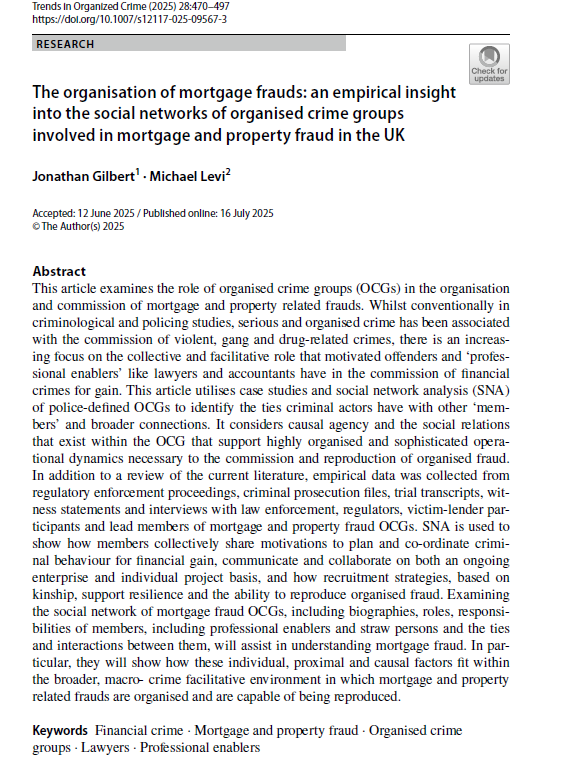
The organization of mortgage frauds

By Jonathan Gilbert  · Michael Levi

 This article examines the role of organised crime groups (OCGs) in the organisation and commission of mortgage and property related frauds. Whilst conventionally in criminological and policing studies, serious and organised crime has been associated with the commission of violent, gang and drug-related crimes, there is an increasing focus on the collective and facilitative role that motivated ofenders and ‘professional enablers’ like lawyers and accountants have in the commission of fnancial crimes for gain. This article utilises case studies and social network analysis (SNA) of police-defned OCGs to identify the ties criminal actors have with other ‘members’ and broader connections. It considers causal agency and the social relations that exist within the OCG that support highly organised and sophisticated operational dynamics necessary to the commission and reproduction of organised fraud. In addition to a review of the current literature, empirical data was collected from regulatory enforcement proceedings, criminal prosecution fles, trial transcripts, witness statements and interviews with law enforcement, regulators, victim-lender participants and lead members of mortgage and property fraud OCGs. SNA is used to show how members collectively share motivations to plan and co-ordinate criminal behaviour for fnancial gain, communicate and collaborate on both an ongoing enterprise and individual project basis, and how recruitment strategies, based on kinship, support resilience and the ability to reproduce organised fraud. Examining the social network of mortgage fraud OCGs, including biographies, roles, responsibilities of members, including professional enablers and straw persons and the ties and interactions between them, will assist in understanding mortgage fraud. In particular, they will show how these individual, proximal and causal factors ft within the broader, macro- crime facilitative environment in which mortgage and property related frauds are organised and are capable of being reproduced. 

Waste Crime and Trafficking Re-Punished for the Past: How Criminal Records Increase Prison Terms and Racial Injustice

By Nazgol Ghandnoosh, Bobby Boxerman and Celeste Barry
Prior criminal records account for a large share of already lengthy prison sentences, often adding years or even decades to sentences, without evidence of community safety benefits.

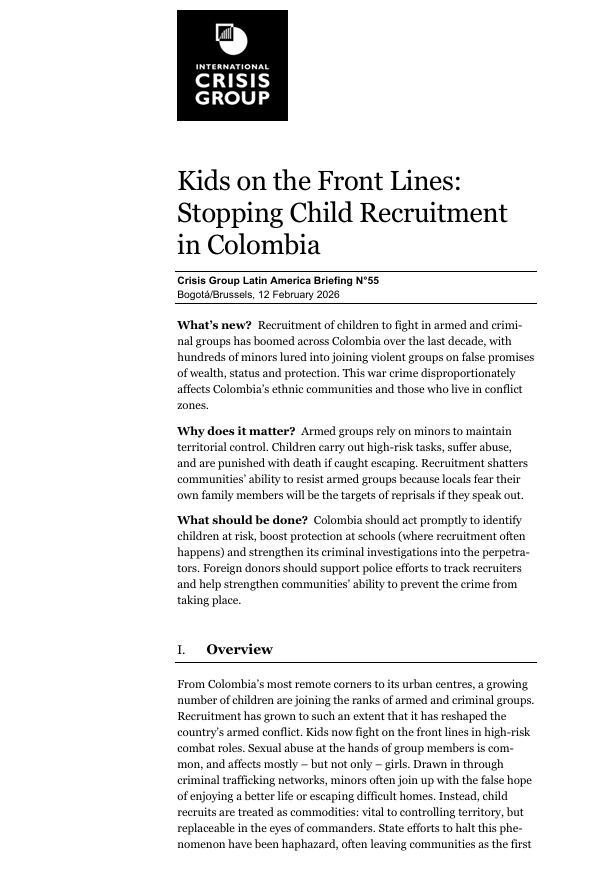
What’s new? Recruitment of children to fight in armed and criminal groups has boomed across Colombia over the last decade, with hundreds of minors lured into joining violent groups on false promises of wealth, status and protection. This war crime disproportionately affects Colombia’s ethnic communities and those who live in conflict zones.

Why does it matter? Armed groups rely on minors to maintain territorial control. Children carry out high-risk tasks, suffer abuse, and are punished with death if caught escaping. Recruitment shatters communities’ ability to resist armed groups because locals fear their own family members will be the targets of reprisals if they speak out.

What should be done? Colombia should act promptly to identify children at risk, boost protection at schools (where recruitment often happens) and strengthen its criminal investigations into the perpetrators. Foreign donors should support police efforts to track recruiters and help strengthen communities’ ability to prevent the crime from taking place.

International Crisis Group, 2026, 28p.

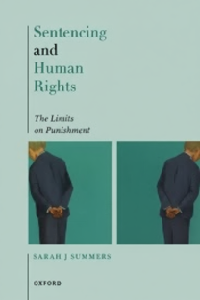
Sentencing and Human Rights: The Limits on Punishment

By Sarah J Summers.

From the introduction:

Sentencing law and theory is closely bound up with the justification of punishment. 1 It is thus unsurprising that sentencing theory is generally perceived as falling squarely within the domain of moral philosophy. 2 Much of the debate has focused on whether retribution or consequentialist notions of deterrence or rehabilitation should serve as the principal aim on which the sentencing system is based. There are numerous articles by proponents of the various theories explaining why their theory should provide the primary basis for the determination of the sentence. 3 The importance of the moral philosophical discussion transcends national boundaries. Despite considerable diversity in the legal cultures and traditions of the various legal systems, ‘[p]rinciples of uniformity and retributive proportionality are now recognised to some extent in almost all systems, but sentences in these systems are also designed to prevent crime by means of deterrence, incapacitation and rehabilitation’.4 Whereas broadly ‘correctionalist’ accounts of punishment underpinned the penal welfare model of punishment for much of the twentieth century, 5 the ‘just deserts’ movement 6 of the 1980s was in line with a transfer of focus away from the individualized treatment of offenders and towards a vision of punishment which not only favoured a more standardized approach to the treatment of offenders, but which also expressly legitimized retributivist penalties and practices…..

London Oxford. 2022. 280p.

The Autobiography of Malcolm X

By Malcolm X with the assistance of Alex Haley

“This is the absorbing personal story. of the man who rose from hoodlum, thief, dope peddler, and pimp to become the most dynamic leader of the Black Revolution. It is, too, a testament of great emotional power from which every American can learn much: But, above all, this book shows the Malcolm X that very few people knew, the man behind the stereotyped image of the hate-preacher-a sensitive, proud, highly intelligent man whose plan to move into the mainstream of the Negro Revoltition was cut short by a hail of assassins' bullets, a man who felt certain he would not live long enough to see this book…”

NY. Grobe Press. 1964. 482p.

The Life and History of Francisco Villa, the Mexican Bandit

By Capt. Kennedy.

A true and authentic life history of the most noted bandit that ever lived. A man who has overthrown the government of Mexico and defied the United States.

Baltimore, MD: I. and M. Ottenheimer, 1916. 145p.

Cesare Lombroso

By Hans Kurella.

A Modern Man of Science.. Translated from the German by M. Eden Paul. “Entirely new, however, is the attempt here made to demonstrate how high is the position of Lombroso’s brilliance may justly be said to have occupied in a epoch of positive study of the world, of mankind and society.”

New York, Reman Co. (1910) 199 pages.