Open Access Publisher and Free Library
HUMAN RIGHTS.jpeg

HUMAN RIGHTS

Human Rights-Migration-Trafficking-Slavery-History-Memoirs-Philosophy

Afghanistan Opium Survey 2025

By The Unitted Nations Office on Drugs and Crime, Research and Trend Analysis Branch

KEY FINDINGS

Sustained ban enforcement and drought conditions drive reductions in opium production in 2025 During the 2025 season, most farmers continued to adhere to the ban on opium poppy cultivation, which is in its third year of enforcement. The total area under opium poppy cultivation in 2025 was estimated at 10,200 hectares, 20% lower than in 2024 (12,800 hectares) and a fraction of the pre-ban levels recorded in 2022, when an estimated 232,000 hectares were cultivated nationwide. Potential opium production 2025 declined at a rate greater than that of cultivation, dropping by 32% compared to 2024, to an estimated 296 tons. The sharper decline in production is linked to reported crop failures and drought conditions that stressed the plants, particularly in Badakhshan, the main producing province. The estimated 296 tons of opium could be converted into approximately 22–34 tons of export-quality heroin. This is lower than the 32–50 tons produced in 2023, and significantly below the 350–580 tons estimated in 2022. The De facto Authorities of Afghanistan reported that over 4,000 hectares of opium poppy were eradicated in 2025, although UNODC could not technically verify this number. While lower than the 16,000 hectares reported in 2024, this still corresponds to about 40% of the estimated cultivation area. According to the data, 87% of eradication occurred before satellite imagery was acquired, meaning that UNODC’s 2025 estimates of opium poppy cultivation do not include these eradicated fields. Eradication efforts occasionally sparked violent resistance, particularly in the northeast, where protests led to unrest and casualties. Sharp decline in opium income by 48% deepens rural economic vulnerability Farmers’ income from opium sales to traders has dropped by 48% from US$260 million in 2024 to US$134 million in 2025. This decline results from falling production and falling prices. As a result, farmers who previously depended on opium poppy cultivation face severe economic challenges with three consecutive years of minimal or no income from illicit crops. Farmers largely replaced opium poppy with cereals and, to a lesser extent, summer crops. However, over 40% of available farmland remained fallow due to the lack of profitable alternatives, limited agricultural outputs and adverse climate conditions. Opium poppy continues to be far more profitable per hectare than wheat or cotton, deepening rural vulnerability. In 2025, declining opium prices and smaller yields meant that a hectare of opium generated about US$17,000 in Helmand (a 43% decline from the previous year) and around US$12,000 in Badakhshan (35% less than in 2024). Despite this drop, opium remained far more profitable than most licit crops. For comparison, staple crops such as wheat yielded only about US$800 per hectare, while a key cash crop like cotton provided roughly US$1,600 per hectare to farmers. Signs of expanding opium cultivation beyond AfghanistanThe sustained high prices might have triggered opium poppy cultivation in countries in the immediate region. For instance, eradication of opium poppy in two countries near Afghanistan increased from 5,868 hectares in 2022 to 13,200 in 2023 (latest official data available). Market indicators suggest supply from elsewhere, too, as opiates seizures and opium prices fell despite reduced opium production from Afghanistan and the fairly steady nature of demand for opiates. Such a shift could be an example of the so-called balloon effect, where enforcement in one country leads to the displacement of illegal activities to another – a phenomenon that hasbeen observed elsewhere. More information and close monitoring of the situation are needed to fully understand the extent to which cultivation may have shifted to countries in the region and far beyond than Afghanistan. Increasing methamphetamine seizures and falling prices suggest greater supply Trafficking in synthetic drugs, especially methamphetamine, seems to have increased since the ban, with seizure events in and around Afghanistan higher than before, indicating a growing risk of synthetic drug substitution as opiate production falls. Prices for methamphetamine in Afghanistan and neighbouring countries have also decreased in line with higher seizure volumes. UNODC’s systematic monitoring of methamphetamine prices in Afghanistan began in late 2022, and monthly kilogram prices initially fluctuated between US$600 and US$850. Beginning in late 2024, methamphetamine prices fell sharply, dropping below US$600 per kilogram. The price decline together with increasing seizures can reflect an increase in production capacity or greater availability stemming from inflows from other countries; at present, neither dynamic has been conclusively verified, and both remain plausible contributors to the observed shift. Intersecting pressures threaten counternarcotics gains and rural stability The economic loss from opiate production coincided with severe droughts that significantly reduced agricultural output and left large areas of farmland fallow. Simultaneously, the return of approximately 4 million Afghans from neighbouring countries has intensified competition for scarce jobs and resources, further straining rural communities already burdened by declining farm income, reductions in humanitarian aid, and the absence of viable legal economic opportunities. Rural livelihoods face increased pressures from reduced income opportunities, climatic shocks, and limited access to viable alternatives. Despite recent declines, opium prices remain five times higher than pre-ban averages, creating strong incentives to resume illicit production if enforcement weaken

Vienna:   
United Nations Office on Drugs and Crime; 2025 56p.
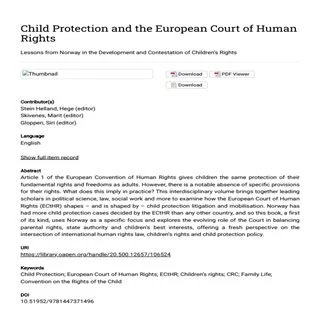
Child Protection and the European Court of Human Rights: Lessons from Norway in the Development and Contestation of Children’s Rights

Stein Helland, Hege (editor), Skivenes, Marit (editor), Gloppen, Siri (editor)

Article 1 of the European Convention of Human Rights gives children the same protection of their fundamental rights and freedoms as adults. However, there is a notable absence of specific provisions for their rights. What does this imply in practice? This interdisciplinary volume brings together leading scholars in political science, law, social work and more to examine how the European Court of Human Rights (ECtHR) shapes – and is shaped by – child protection litigation and mobilisation. Norway has had more child protection cases decided by the ECtHR than any other country, and so this book, a first of its kind, uses Norway as a specific focus and explores the evolving role of the Court in balancing parental rights, state authority and children’s best interests, offering a fresh perspective on the intersection of international human rights law, children’s rights and child protection policy.

Bristol, UK: Policy Press, 2025. 

A Sword and a Shield: An Antidiscrimination Analysis of Academic Freedom Protections

By Apratim Vidyarthi

Academic freedom is an essential principle undergirding education in the United States. Its purpose is to further the freedom of thought and inquiry in the academic profession by advancing knowledge and the search for truth. Academic freedom goes back more than a century, and is now intertwined with First Amendment doctrine. Yet today’s academic freedom doctrine suffers from serious problems, some of which perpetuate discrimination in the classroom and systemically in educational institutions. The definition of academic freedom in theory is misaligned with that in case law. Courts have done little to analyze what protections academic freedom provides, and case law generally provides too much protection in some cases, and too little in others. Worse, academic freedom for universities and professors has been hotly debated and thus well-defined and protected in case law, whereas students’ academic freedom has received less attention, making it a “second-tier” academic freedom. Often, protecting university and professors’ academic freedom comes at the expense of students’ academic freedom, though courts have never truly struggled with multistakeholder academic freedom questions or tried to create a clear process to determine whose academic freedom prevails when the two conflict. This results in academic freedom being used as a sword to promote discriminatory behavior, and as a shield to protect acts of discrimination from being punished. Existing constitutional and statutory antidiscrimination protections do not provide adequate support against discrimination, especially for students’ academic freedom. Constitutional protections for students’ academic freedom often take the back seat to free speech doctrine, and antidiscrimination protections are often parried by using academic freedom to protect problematic behavior. A few solutions abound: first, the definition of academic freedom is nearly a century old, and needs to be redefined to incorporate antidiscrimination principles to be relevant for the present. Second, students’ academic freedom rights need to be understood and defined more clearly. Third, courts must find a way to balance competing stakeholders’ academic freedom interests, ultimately looking to the purpose of academic freedom to advance knowledge. Finally, universities must play their part by creating systems and structures to ensure that discrimination is remedied as early as possible, and that university processes help clarify the extent of academic freedom definitions and support application of antidiscrimination law.

JOURNAL OF CONSTITUTIONAL LAW [Vol. 26:2, 2024. . 79p.

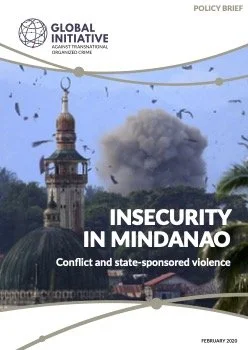
Insecurity in Mindanao: Conflict and State-Sponsored Violence

By Jason Eligh

This brief provides an overview of the challenges facing the various autonomous government authorities of Mindanao, in the southern Philippines, in transitioning the region from conflict to peacebuilding, and to assess the response of the Philippine state to these challenges. Mindanao has long been fractured by a toxic mixture of political violence, identity-based armed conflict, and ethnic and clan divisions, and has been beset by sustained rebel and terrorist violence. These divisive factors have militated against regional political unity and social coherence, exacerbated by the area’s socioeconomic and development challenges. This context has also provided fertile ground for non-state armed groups involved in criminal enterprises to develop. When strongman Rodrigo Duterte was elected mayor of Davao, the capital of Mindanao, before he became president of the country, his approach to regional insecurity took the form of a highly securitized crackdown involving state-sanctioned and extrajudicial violence meted out by death squads. The methodology is qualitative and presents a narrative grounded in both primary and secondary data sets. These are supplemented by publicly available resources from news, research and civil-society organizations. Key points ■ State-sponsored violence has been deployed in Mindanao, and the Philippines more broadly, as a national policy. ■ Extrajudicial killings have continued in the war on drugs across the Philippines, following the same pattern as the earlier violence under Duterte’s Davao Death Squad. ■ The government implemented martial law in the Mindanao region for two years – purportedly for security, but conveniently hindering investigations of human-rights abuses by the state

has also provided fertile ground for non-state armed groups involved in criminal enterprises to develop. When strongman Rodrigo Duterte was elected mayor of Davao, the capital of Mindanao, before he became president of the country, his approach to regional insecurity took the form of a highly securitized crackdown involving state-sanctioned and extrajudicial violence meted out by death squads. The methodology is qualitative and presents a narrative grounded in both primary and secondary data sets. These are supplemented by publicly available resources from news, research and civil-society organizations. Key points ■ State-sponsored violence has been deployed in Mindanao, and the Philippines more broadly, as a national policy. ■ Extrajudicial killings have continued in the war on drugs across the Philippines, following the same pattern as the earlier violence under Duterte’s Davao Death Squad. ■ The government implemented martial law in the Mindanao region for two years – purportedly for security, but conveniently hindering investigations of human-rights abuses by the state. ■ Mindanao has seen a disproportionately high number of killings of human-rights advocates and activists. ■ Extremist and rebel groups in Mindanao are involved in criminal economies, deriving financing from drug and arms trafficking, kidnapping and extortion. ■ There is evidence that political elites in the region are involved in illicit drug markets. ■ A fundamental factor in promoting regional security and stability will be the need to support Mindanao in its transition to a peaceful, resilient post-conflict future

Geneva: Global Initiative against Transnational Organized Crime, 2020. 25p.

Guide on Engaging the United States Government on Arbitrary or Wrongful Detention Cases

By Robert F. Kennedy Human Rights Center

Addressing arbitrary and wrongful detention through advocacy and litigation is an area of extensive expertise and experience for RFK Human Rights. In the last decade, we have worked with families of arbitrarily and wrongfully detained individuals, including US persons, to facilitate their release and return home. A central reflection from our engagements with other practitioners and family members of arbitrarily or wrongfully detained persons is that the policy and legal architecture for the United States Government (USG) response to arbitrary and wrongful detention is complex and convoluted. Despite the successes in reuniting detained individuals with family members and the positive posture of the government toward negotiations, many stakeholders believe that clarity about the role each office or agency plays in the government’s response and uniformity in the government’s engagement with the families could facilitate even more positive outcomes.

In 2023, RFK Human Rights started a project aimed at steering USG and Congress towards more decisive action to address arbitrary and wrongful detention around the world and enhancing awareness around the government’s response architecture. Through the generous support from Open Society Foundations – United States, the project included advocacy engagements with the USG, litigation before the United Nations Working Group on Arbitrary Detention (UNWGAD), and publication of the Guide for Engaging the United States Government on Arbitrary and Wrongful Detention Cases.

About the Guide

The Guide on Engaging the United States Government on Arbitrary and Wrongful Detention Cases provides clear and concise information regarding advocacy strategies and engagement with the United States Government on arbitrary and wrongful detention cases. While every case is unique, this Guide aims to ease the burden of the engagement and advocacy process by shedding light on ways that the USG can engage on these cases and offering a set of best practices for advocating before the USG to secure the victim’s release. The Guide is based on RFK Human Rights’ institutional knowledge and experience working on arbitrary and wrongful detention cases, desk research, and a large number of interviews with experts and victims of arbitrary detention.

Washington, DC; New York: Robert F. Kennedy Human Rights, 2025. 68p.

Compliance Theater: The NWDC’s Unenforced Contract

By The Center for Human Rights, The Henry M. Jackson School of International Studies, University of Washington

The University of Washington Center for Human Rights's newest report, “Compliance Theater: The NWDC’s Unenforced Contract," looks at ICE’s use of enforcement mechanisms in its $700 million contract with GEO Group, Inc., the private company that runs the Northwest Detention Center (NWDC) in Tacoma, Washington.

How does ICE enforce the contract to operate the NWDC, and what happens if GEO fails to meet contract standards? Report findings include:

The contract between ICE and GEO Group for operation of the Northwest ICE Processing Center/NWDC expires in September 2025; it is likely to be renewed.

The contract includes extensive enforcement mechanisms and references to ICE standards, which are cited by ICE in response to criticisms of conditions at the facility.

UWCHR has filed multiple FOIA requests for various categories of records mandated under the facility’s contract, but in many cases ICE has responded that the required records do not exist; Members of Congress have also been unable to obtain records required under the contract.

Despite documented failures to uphold contract standards, GEO Group has never been sanctioned by ICE under the terms of the contract.

Seattle: Center for Human Rights, The Henry M. Jackson School of International Studies, University of Washington, 2025

Technology, Globalisation and Migration: Interconnected Challenges for Inequality and Skills

Edited by Steven Dhondt, Ulrich Zierahn-Weilage, and Leire Aldaz Odriozola

This timely book examines three impactful changes to the labour market in recent decades: the rapid automation of production processes, surging international trade, and greater cross-border mobility and migration of workers. Expert authors assess how workers have benefited and suffered from these shifts and provide

Cheltenham, UK; Northampton, MA: Edward Elgar, 2025. 

The Human Right to Democracy in Multilevel Systems at a Time of Democratic Backsliding: Global, Regional and European Union Perspectives

By Thomas Giegerich

This open access book takes stock of the current situation of the human right to democracy in multilevel systems of government - at a time of renewed struggles with antidemocratic forces (democratic backsliding). It tries to answer three questions: (1) Is there a human right to democracy in contemporary global and regional international law as well as European Union law and what consequences does that have for the States’ governmental structure (top-down perspective on national democracy)? (2) Does the human right to democracy also extend to decision-making at the international and supranational level (bottom-up perspective on international/supranational democracy)? (3) What is the relation between national democracy and international democracy and the corresponding human entitlements (interdependence perspective)? The first part of an answer to these questions derives from the elements of democracy proclaimed by the United Nations as a universal value. The second part results from an investigation of the national and international democratic ingredients of the right of self-determination of peoples, whose recognition and codification is the mainstay of the human rights revolution since 1945. The third part is added by a survey and comparison of the various democratic rights included in the global and regional human rights treaties that constitute the subjective cornerstones of democracy. The fourth part is devoted to analysing the EU as exemplary but imperfect multilevel democracy. In all these parts, the enforcement of democratic entitlements are also discussed. In the fifth part, conclusions will be drawn. The book is addressed to international and EU law experts as well as political scientists.

Cham: Springer Nature, 2026.

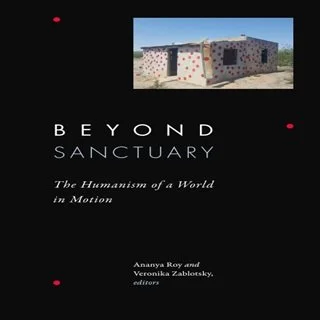
Beyond Sanctuary: The Humanism of a World in Motion

Edited by Roy, Ananya and Zablotsky, Veronika 

The contributors to Beyond Sanctuary examine how the liberal democracies of the West recognize and include racial others through technologies of state power that promise but rarely grant sanctuary and refuge.

Durham, NC: Duke University Press, 2025.

Policing Same-Sex Relations in Eighteenth-Century Paris: Archival Voices from 1785

Edited by Jeffrey Merrick

Police in Paris arrested thousands of men for sodomy or similar acts in the eighteenth century. In the mid-1780s, they recorded depositions in which prisoners recounted their own sexual histories. These remarkable documents, curated and translated into English by Jeffrey Merrick, allow us to hear the voices of men who desired men and to explore complex questions about sources, patterns, and meanings in the history of sexuality. This volume centers on two cartons of paperwork from commissaire Charles Convers Desormeaux. Dated from 1785, the cartons contain 221 dossiers of men arrested for sodomy or similar acts in Paris. Merrick translates and annotates the police interviews from these dossiers, revealing how the police and those they arrested understood sex between men at the time. Merrick discusses the implications of what the men said (and what they did not say), how they said it, and in what contexts it was said. The best-known works of clergy and jurists, of enemies and advocates of Enlightenment, and of novelists and satirists from the eighteenth century tell us nothing at all about the lived experience of men who desired men. In these police dossiers, Merrick allows them to speak in their own words. This primary text brings together a wealth of important information that will appeal to scholars, students, and general readers interested in the history of sexuality, sodomy, and sexual policing.

University Park, PA: Penn State University, 2024.

Governing Migration Through Paperwork: (Il)Legible Exchanges in Street-Level Bureaucracies

Editors: Andreetta, Sophie and Borrelli, Lisa Marie 

To better understand migration governance and the concrete, daily practices of civil servants tasked with enforcing state laws and policies, it is important to focus on documents, which are core artefacts of bureaucratic work. These can include certificates, letters, reports, case files, decisions, internal guidelines and judgements in both digital and paper form. Based on ethnographic studies in various geographical and bureaucratic contexts, this collection shows how civil servants produce statehood, restrict migrants’ movements and engage with migrants’ strategies to make themselves legible. It contributes to the study of the state as documentary practice and highlights the role of paperwork as a powerful practice of migration control.

Oxford, UK: New York: Berghahn Books, 2025.

Narrativity and Violence: Conceptual, Ethical and Methodological Challenges

Edited by Doris Reisinger, Christof Mandry, Sabine Andresen

Survivors' narratives are an invaluable source for the study of violence across academic fields. At the same time, they present several difficulties for academic research. Sources may be marked by the effects of trauma, the lasting impact of perpetrators' political power or blurred lines between reality and fiction. Ethical and legal problems, distances in time between a violent event and the moment of its narration, and the variation in linguistic phrasing chosen by survivors present additional problems. Based on several case studies, the contributors explore typical problems in the study of violence through survivors' narratives, and possible ways of dealing with them.

Bielefeld, Germany, transcript Verlag, 2024. 

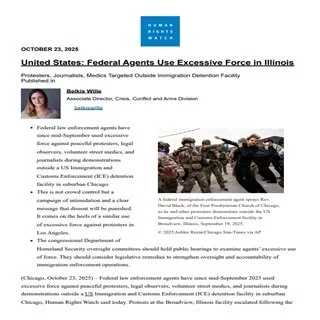
United States: Federal Agents Use Excessive Force in Illinois: Protesters, Journalists, Medics Targeted Outside Immigration Detention Facility

By Belkis Wille

Federal law enforcement agents have since mid-September 2025 used excessive force against peaceful protesters, legal observers, volunteer street medics, and journalists during demonstrations outside a US Immigration and Customs Enforcement (ICE) detention facility in suburban Chicago, Human Rights Watch said today. Protests at the Broadview, Illinois facility escalated following the start of ICE’s “Operation Midway Blitz” on September 8 and an increase in immigration raids and seizures throughout the Chicago area. 

Based on accounts by witnesses and videos that Human Rights Watch analyzed, Department of Homeland Security (DHS) agents—sometimes in the presence of state and local police, and other federal agents—repeatedly used excessive force against small groups of protesters who appeared to pose no threat to the agents or to public security, and against clearly identifiable journalists, legal observers, and volunteer street medics. They detained dozens of protesters, and at least one journalist and one volunteer street medic. The violent response comes on the heels of law enforcement’s use of excessive force against protesters opposing immigration raids in June in Los Angeles.

“This is not crowd control, but a campaign of intimidation,” said Belkis Wille, associate crisis and conflict director at Human Rights Watch. “Federal agents are using chemical irritants and firing projectiles at peaceful protesters, volunteer street medics, and journalists in broad daylight. The message is clear that dissent will be punished.”

Human Rights Watch interviewed 18 people who were present during the Broadview protests: 7 protesters, 4 journalists, 1 volunteer street medic, 2 immigration rights advocates, and a religious leader. Researchers also analyzed 17 videos recorded during the protests that were posted to social media or provided to researchers. On October 17, Human Rights Watch sent a letter to Homeland Security Secretary Kristi Noem summarizing these findings, posing questions, and offering the opportunity to comment, but has not received a response.

Witnesses and video confirm that DHS agents used tear gas and fired projectiles directly into groups of protesters, including from the detention facility roof, often without warning, and without protesters appearing to pose any risk to agents. Witnesses and verified footage show there were sometimes as few as 10 protesters and never more than 250. 

New York: Human Rights Watch, 2025.

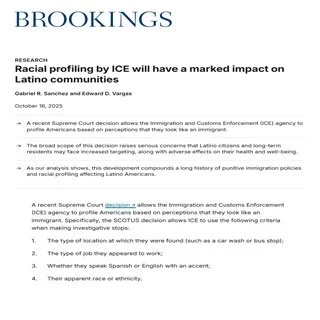
Racial Profiling by ICE Will Have a Marked Impact on Latino Communities

By Gabriel R. Sanchez and Edward D. Vargas

  • A recent Supreme Court decision allows the Immigration and Customs Enforcement (ICE) agency to profile Americans based on perceptions that they look like an immigrant.

  • The broad scope of this decision raises serious concerns that Latino citizens and long-term residents may face increased targeting, along with adverse effects on their health and well-being.

  • As our analysis shows, this development compounds a long history of punitive immigration policies and racial profiling affecting Latino Americans.

The broad parameters established for being susceptible to ICE investigations put a large number of Latino citizens in jeopardy of being targeted, despite not being undocumented. For example, with an estimated 75% of Latinos across the country reporting that they can speak Spanish pretty well or very well, a large number of Latino citizens are likely to be questioned due to their potential to be perceived as speaking with an accent. When we asked a national sample of Latino immigrants about the accents in their speech patterns, 22% of Latino naturalized citizens reported that they had been discriminated against in their daily activities for speaking with an accent. Clearly, the use of language as a profiling tactic will lead to Latino citizens being unduly questioned and detained. 

Similarly, although it is challenging to determine how race or ethnicity might be perceived as a marker for immigration status, our national survey of Latino immigrants strongly suggests that many Latino citizens will be vulnerable to these criteria. In fact, we asked respondents directly what a white border patrol agent whom they might encounter would assume their race to be, based on their skin color, hairstyle, or facial features. Nearly half (48%) of naturalized Latino citizens reported they would be defined as Latino/Hispanic, and 19% said they would be defined as Mexican. Furthermore, 60% of naturalized citizens reported that their skin color is “medium, dark, or very dark” in our self-reported measure of skin color. These Latino citizens would be highly likely to be targeted under the profiling criteria permitted by the Supreme Court’s ruling.  

As we discuss in this post, this decision will have a marked impact on Latino Americans—a community that has long been targeted by punitive immigration policies and, as prior research suggests, has already been harmed by racial profiling tied to immigration enforcement. 

We have studied the implications of profiling based on immigration status for some time, employing survey measures to better understand how external perceptions of being foreign-born impact Latino Americans.  

Washington, DC: Brookings Institution, 2025

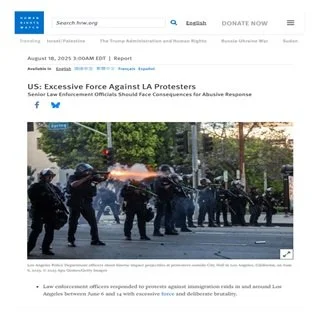
US: Excessive Force Against LA Protesters: Senior Law Enforcement Officials Should Face Consequences for Abusive Response

By Human Rights Watch

Law enforcement officers responded to protests against immigration raids in and around Los Angeles, California, between June 6 and 14, 2025, with excessive force and deliberate brutality, Human Rights Watch said today. 

Officers fired tear gas, pepper balls, hard foam rounds, and flash-bang grenades directly at protesters, journalists, and other observers, often at close range and often without sufficient warning or provocation. Scores of people suffered injuries, ranging from severe bruising and lacerations to broken bones, concussions, an amputated finger, and severe eye damage.

“Sweeping immigration raids have terrorized communities across Los Angeles and driven thousands of people to the streets in protest,” said Ida Sawyer, crisis, conflict and arms director at Human Rights Watch. “Local, state, and federal law enforcement’s aggressive response to these protests violently oppressed the public’s right to express outrage and the media’s right to report safely.” 

The protests were sparked by a dramatic escalation of immigration raids across Los Angeles and the surrounding area, following the Trump administration’s orders to the Immigration and Customs Enforcement (ICE) agency to increase daily arrests of undocumented immigrants. Heavily armed federal agents have stormed stores, warehouses, hotels, restaurants, farms, car washes, taco stands, and other workplaces and detained those they suspect of being undocumented with the aim of deporting them.

Human Rights Watch observed protests and visited locations of ICE raids in and around Los Angeles from June 10 to 14, and interviewed 39 people, including protesters, journalists, legal observers, volunteer street medics, immigration rights advocates and organizers, and others affected by the raids. Researchers analyzed lawsuits, documentation by the Los Angeles Press Club, media reports, and photos and videos recorded during the protests and posted on social media or shared directly with researchers. 

Human Rights Watch documented 65 cases in which law enforcement officers from various local, state, and federal agencies injured protesters, journalists, and other observers. The actual number is most likely much higher. In the three weeks following June 6, more than 280 people contacted the American Civil Liberties Union (ACLU) of Southern California, most reporting that they had been personally injured by law enforcement agents while engaged in protest activity.

New York: Human Rights Watch; 2025.

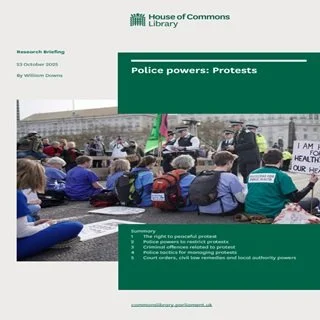
Police Powers: Protests. An Overview of Legislation, Guidance and Debates Related to the Policing of Protests

By William Downs

What are the current protest laws in the UK? An individual’s right to freedom of expression and assembly are protected by Articles 10 and 11 of the European Convention on Human Rights, which is enshrined in UK law. Together, the Articles safeguard the right to peaceful protest. However, these rights are not absolute, and the state can implement laws that restrict the right to protest to maintain public order or to protect the rights and freedoms of others. In the UK, several pieces of legislation provide a framework for the policing of protests. The Public Order Act 1986 provides the police with powers to place restrictions and conditions on protests. These powers were strengthened by part 3 of the Police, Crime, Sentencing and Courts Act 2022. The Public Order Act 2023 established several criminal offences in relation to protest, including causing serious disruption by locking on, being equipped to lock on, causing serious disruption by tunnelling underground, obstructing major transport works and interfering with key national infrastructure. There are several other criminal offences that could apply to a person’s conduct during a protest, despite not being offences that are specific to protests. These include wilful obstruction of a highway, public nuisance, and aggravated trespass. What other rules can apply to protests? There have been several examples of businesses and organisations applying for court orders against protesters to stop them from engaging in protest activity that affects their operations. The Public Order Act 2023 also gives the Home Secretary the power to request injunctions against protesters, though at the time of writing this provision has not been brought into force. Part 2 of the Public Order Act 2023 created Serious Disruption Prevention Orders (SDPOs). SDPOs are civil orders that enable courts to place conditions or restrictions on an adult (such as restrictions on where they can go and when) with the aim of preventing them from engaging in protest-related activity that could cause disruption. Breaching an SDPO is a criminal offence. How have protest laws changed? In recent years, the government has initiated major legislative reforms in response to concerns about peaceful but disruptive protests. The Public Order Act 2023 and the Police, Crime, Sentencing and Courts Act 2022 introduced new measures aimed at giving the police increased powers to respond to protests targeting major roads, transport networks, and other infrastructure. Taken as a whole, these reforms have increased the police’s power to intervene in disruptive protests, introduced a range of new protest-related criminal offences and increased penalties for people involved in organising and carrying out disruptive protests. This legislative agenda has been controversial and attracted strong opposition from campaigners who have questioned the compatibility of reforms with human rights legislation. For example, the Joint Committee on Human Rights said that the combined measures in the 2023 and 2022 acts would likely “have a chilling effect on the right to protest in England and Wales” (PDF). The government said that its legislation aimed to “protect the public and businesses from [the] unacceptable actions” of “a small minority of protestors”. It said that existing human rights legislation provides appropriate safeguards for the right to protest (PDF) and that the police and prosecutors will continue to be responsible for acting “compatibly with an individual’s Convention rights” when making any decisions about arrests and charges. What further changes are expected? If it becomes law, the Crime and Policing Bill 2024-25 will introduce further measures aimed at restricting certain behaviours at protests, including creating new offences of possessing pyrotechnics, climbing war memorials, and concealing identity. It would also allow the police to impose conditions on protests planned to pass sites of religious worship. In October 2025, the government announced it would introduce legislation that would allow the police to place conditions on protests that, due to their regularity, have a “cumulative impact” of disruption. This would replace legislation previously introduced via statutory instrument in June 2023 that was quashed following judicial review. The government said it would also review legislation “to ensure that powers are sufficient and being consistently applied.” 

London: House of Commons Library, 2025. 70p.

Criminalization of Immigration

By Emily Ryo, Jennifer M. Chacón, and Cecilia Menjívar

This article presents a critical analysis of social scientific research from the past fifteen years on the criminalization of immigration in the United States. Our review reveals three central themes. First, although immigration law is considered federal civil law, immigration enforcement has become substantially intertwined with criminal law enforcement in ways that have broad-ranging and radiating effects on immigrant communities of color. Second, race plays an important bidirectional role in the increasing criminalization of immigration. Specifically, criminalizing immigration results in the racialization of certain immigrant groups as dangerous outsiders, and such racialization has the effect of sustaining and promoting the policies and practices that target or have a disproportionate impact on certain immigrant groups. Third, given the increased externalization of US immigration enforcement programs, the effects of the criminalization of immigration are not limited to the United States. Each of these dynamics operates across multiple sites and in various components of the immigration enforcement system to disproportionately affect immigrants racialized as non-White in the United States. We discuss the important gaps in research and policy implications that follow from our review

RSF: The Russell Sage Foundation Journal of the Social Sciences 11(3): 282–343.

Is Drug-Related Violence Fueling Emigration from Central America?

By Leonardo Bonilla-Mejía, Jessica Bracco, Andres Ham Gonzalez, Leonardo Peñaloza-Pacheco:

We study how drug-related violence affects emigration from Central America, a region with rapidly rising migration to the United States. Using multiple data sources, we apply an instrumental variables strategy based on proximity to drug-trafficking routes and coca production in Colombia. We find that violence significantly increases intentions, plans, and preparations to emigrate—especially to the U.S.—with stronger effects among young and high-skilled individuals. Mediation analysis suggests this response is driven by declining economic activity and, more importantly, deteriorating labor market conditions caused by escalating violence.

IZA DP No. 18028 Bonn: ZA – Institute of Labor Economics, 2025. 74p.

Trafficking for Labour Exploitation in the EU 

By Iotr Bąkowski with Karina Basenko

To raise awareness of the many forms of trafficking in human beings and to boost efforts to address them, the European Union has set 18 October as EU Anti-trafficking Day. Marking the day is an opportunity to highlight the European Parliament's call to step up action against trafficking for the purpose of labour exploitation, which is now broadly recognised as a significant problem across the EU, affecting both EU and non-EU citizens. Background:  According to the most recent European Commission data, labour exploitation ranks second, after sexual exploitation, as the most common purpose of trafficking in the EU. Experts have long argued that labour exploitation is a pervasive issue, and this is increasingly reflected in statistics. While intended to enhance economic efficiency, deregulation and increased labour market flexibility have created conditions favourable to worker exploitation. Goods and services sell at prices that cannot possibly reflect production costs, and profits are increased by cutting wages and lowering working conditions. In countries with developed labour inspection, risks are passed on through difficult-to-monitor cascade subcontracting. Additionally, irregular migration contributes to the presence of a labour force in the EU that may face higher risks of exploitation due to their vulnerable status. Some sectors are particularly affected, including construction, agriculture, forestry, food processing, hospitality, cleaning services, and domestic work. In most sectors,the majority of identified victims are men, domestic work being a notable exception. Employers searching for seasonal staffing flexibility rely on recruitment agencies capable of providing a workforce at short notice. In the EU, such agencies are largely private and insufficiently regulated. Some operate on the margins of legality, or even participate in trafficking networks. COVID-19 exacerbated this issue, especially for seasonal agricultural workers. Victims are exploited in various ways, including by non-payment or deduction of wages, and charging the victims exorbitant prices for (often-imaginary) services provided by traffickers. While most victims are not physically confined to their workplace, the European Court of Human Rights does not consider restriction of their freedom of movement to be a prerequisite in cases of forced labour or trafficking in human beings. Debt bondage arrangements, retention of identity documents and the absence of a work permit are often reason enough for the victim to remain in the exploitative situation.

Brussels: EPRS | European Parliamentary Research Service, 2025. 2p.

EU-Wide Information Systems for Border Management and Security 

By Costica Dumbrava

The European Union (EU) has developed a complex architecture of information systems to support its policies on external borders, migration management and internal security. In response to recent migration and security challenges, the EU has sought to expand and upgrade its existing information systems on borders and security, and establish new systems and ensure their interconnection (interoperability). The underlying policy goal has been to 'close information gaps' on third-country nationals arriving or staying in the EU, to combat irregular migration and counter security threats more effectively. While the legislative work of updating and expanding EU-wide information systems for borders and security has been swift, the implementation of changes has been more challenging. Following the launch of the revised Schengen information system in March 2023, the new entry/exit system started operations on 12 October 2025. The European travel information and authorisation system (ETIAS) will follow at the end of 2026. This briefing provides an overview of EU-wide information systems for border management and security. It discusses recent developments and presents, where available, key figures on the operation of these systems.

Brussels: EPRS | European Parliamentary Research Service, 2025.. 12p.