Open Access Publisher and Free Library
TERRORISM.jpeg

TERRORISM

Terrorism-Domestic-International-Radicalization-War-Weapons-Trafficking-Crime-Mass Shootings

Posts tagged Great War
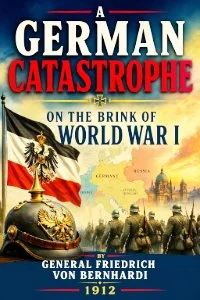
A German Catastrophe; On the Brink of World War One

by Friedrich Von Bernhardi (Author), Allen Powles (Translator), Graeme Newman (Introduction)

On the eve of global catastrophe, Friedrich von Bernhardi set down one of the most provocative and unsettling arguments of the modern age.A German Catastrophe: On the Brink of World War I previously publised as Germany and the Next War (1912) is not simply a study of military preparedness—it is a bold and uncompromising declaration that war is inevitable, necessary, and even morally justified.

Written in the tense years before World War I, this controversial work offers a rare window into the mindset of pre-war Europe. Bernhardi rejects the ideals of international peace and diplomacy, arguing instead that struggle between nations is the driving force of history. Drawing on the language of Social Darwinism, he presents war as the means by which stronger nations assert their destiny and shape the future.

For readers today, this book is both a historical document and a warning. It reveals the intellectual currents that helped propel Europe toward one of the deadliest conflicts in human history, while raising enduring questions about power, nationalism, and the ethics of war.

This Read-Me.Org edition, under its revised title, invites a reading that is at once critical and reflective. The new title—A German Catastrophe: On the Brink of World War I—captures the tragic irony of Bernhardi’s argument: a confident assertion of national destiny that, in retrospect, stands at the threshold of devastation. It encourages us to approach the text not as a guide, but as a warning.

In making this work accessible to a contemporary audience, Read-Me.Org reaffirms its commitment to presenting historically significant texts in a form that promotes careful engagement and informed interpretation. Bernhardi’s book endures not because it offers solutions, but because it compels us to confront enduring questions about power, morality, and the choices that shape the course of history.

Read-Me.Org Inc. New York-Philadelphia-Australia. 2026. p.217.
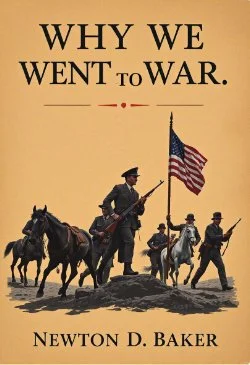
Why We Went To War

By Newton D. Baker, Edited by Ciolin Heston

Newton Diehl Baker’s Why We Went to War, published in 1921, is one of the most important contemporary American explanations of the nation’s entry into the First World War. Baker, who served as Secretary of War from 1916 to 1921 under President Woodrow Wilson, occupied a unique position at the very center of America’s wartime transformation. Once known as a progressive mayor of Cleveland and a disciple of Wilsonian reform, Baker became, almost overnight, the chief administrator responsible for raising, training, and mobilizing an army that grew from a modest peacetime force into one of the most formidable fighting powers of the modern age. His book represents both a justification and a reflection—part political defense, part historical testimony—on why the United States took the fateful step of joining a conflict from which it had long sought to remain apart.

For modern readers, Why We Went to War should be approached both as a primary document and as an act of persuasion. Baker was not an impartial historian; he was a participant and advocate, a defender of Wilsonian ideals at a moment when those ideals were under attack. His words reveal not only the official reasoning of the Wilson administration but also the mindset of a generation of progressives who believed that the United States, through sacrifice and leadership, could help reorder the world toward democracy and peace.

In the end, Baker’s book is as much about America’s identity as about the Great War. It reflects a moment when the nation stood at the crossroads between its traditional reluctance to become entangled in European affairs and its emerging role as a world power. To understand why the United States entered World War I is to understand not only the international provocations of the time but also the ideals, anxieties, and ambitions of a nation coming of age on the world stage.

Read-Me.Org Inc. New York-Philadelphia-Australia. 2025. p. 165.