Open Access Publisher and Free Library
TERRORISM.jpeg

TERRORISM

Terrorism-Domestic-International-Radicalization-War-Weapons-Trafficking-Crime-Mass Shootings

Posts tagged World War 1
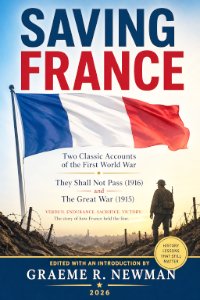
Saving France

By Graeme Newman (Author), Frank Simonds (Author)

What does it mean to “win” a war that consumes a generation?

Saving France brings together two of the most vivid contemporary accounts of the First World War—Frank H. Simonds’s They Shall Not Pass (1916) and The Great War (1915)—and reframes them through a powerful new introduction by Graeme R. Newman. Written in the shadow of Verdun, when the fate of France and the outcome of the war still hung in the balance, Simonds’s works capture the immediacy, uncertainty, and human cost of modern industrial conflict.

At the center of this volume stands the Battle of Verdun—one of the most brutal and निर्णative struggles in military history. Through eyewitness reporting and sharp geopolitical analysis, Simonds reveals not only how France held the line, but what that endurance required: the sacrifice of a nation’s youth, the transformation of war into machinery, and the emergence of total war as a defining feature of the modern age.

Newman’s penetrating introduction places these texts in a broader analytical frame, confronting the enduring questions of the war:
Who really won? Who saved France? Could the catastrophe have been avoided? And what lessons—if any—were learned?

This edition goes further, drawing connections between the First World War and the conflicts of the twenty-first century—where questions of war economics, alliance systems, national endurance, and civilian cost remain as urgent as ever.

Saving France is not simply a historical reprint. It is a critical re-examination of war itself—its causes, its consequences, and its troubling continuity into the present.

For readers of military history, international relations, and the sociology of war, this volume offers both a gripping contemporary narrative and a sobering reflection on the true price of “victory.”

Read-Me.Org Inc. New York-Philadelphia-Australia. 2026. p.218.

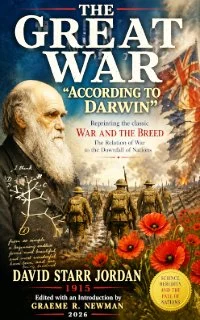
The Great War- "According to Darwin"

by Graeme Newman (Author), David Jordan (Author) Format: Kindle Edition

The Great War – “According to Darwin”
Reprinting War and the Breed by David Starr Jordan
Edited with a new introduction by Graeme R. Newman

What if the devastation of modern war could be understood—not just politically or morally—but biologically?

Written in the midst of the First World War, War and the Breed is a provocative and deeply controversial attempt to interpret global conflict through the lens of Charles Darwin’s theory of evolution. Jordan argues that war does not strengthen nations, as often claimed, but instead weakens them at their very roots—systematically eliminating the strongest and most capable individuals while leaving the least fit to shape future generations.

This Read-Me.Org edition, newly introduced by Graeme R. Newman, situates Jordan’s argument within both its historical moment and our own. The introduction critically examines Jordan’s interpretation of Darwin, the rise of eugenic thinking, and the troubling assumptions about race and heredity that underpin much early twentieth-century social science. It also draws powerful connections to modern warfare—where the technologies, actors, and consequences of conflict have changed, but its human costs remain enduring.

This volume invites readers to grapple with urgent and unsettling questions:
How have scientific ideas been used to justify—or critique—war?
What are the long-term human consequences of mass conflict?
And what does the Great War still teach us about violence, power, and the fate of nations today?

A compelling blend of historical text and contemporary analysis, The Great War – “According to Darwin” is essential reading for anyone interested in war studies, political thought, and the complex relationship between science and society.

Read-Me.Org Inc. New York-Philadelphia-Australia. 2026. p.185..

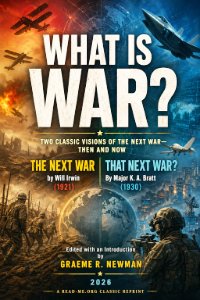
What is War?

by Graeme Newman (Author), Will Irwin (Author), K. A. Bratt (Author)

What is war? Is it a contest of armies, a failure of diplomacy, or something far more pervasive—a condition that engulfs entire societies, economies, and ways of life?

This provocative volume brings together two of the most penetrating early twentieth-century explorations of modern conflict: The Next War and That Next War?. Written in the aftermath of the First World War—when the scale and nature of warfare had changed irrevocably—these works confront a world struggling to understand what had just occurred, and what might come next.

In The Next War, Will Irwin delivers a gripping and urgent analysis of how industrialization, science, and total mobilization transformed war from a clash of armies into a devastating force directed at entire populations. His warnings about chemical weapons, aerial bombardment, and the erosion of moral restraint read today with startling clarity and foresight.

Nearly a decade later, Major K. A. Bratt’s That Next War? expands the inquiry, examining the strategic, and psychological dimensions of future conflict. Moving beyond immediate aftermath, Bratt explores the rise of air power, ideological struggle, global tensions, and the uneasy balance between democracy and militarism in a rapidly changing world.

Together, these two works form a powerful intellectual dialogue—one grounded in lived experience, the other in strategic foresight. Framed by a substantial new introduction by Graeme R. Newman, this edition situates both texts within the longer history of modern warfare and draws out their enduring relevance to the twenty-first century.

At a time when war continues to evolve—through technology, geopolitics, and new forms of power—this volume asks a question that remains as urgent as ever: not simply when the next war will come, but what war has become.

A Read-Me.Org Classic Reprint. Carefully prepared for contemporary readers, this edition preserves the original texts while offering new insight into their historical significance and modern implications.

Read-Me.Org Inc. New York-Philadelphia-Australia. 2026. p.237.

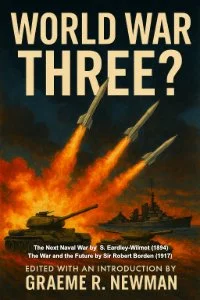
World War Three?

by Graeme Newman (Author), S. Eardley Wilmot (Author), Robert Borden (Author)

What if the next world war does not look like the last two?

At the turn of the twentieth century, military thinkers struggled to imagine the wars that were coming. On the eve of catastrophe, some warned that new technologies, global commerce, and fragile political systems were making large‑scale conflict more likely—and more devastating—than ever before. Few listened. Fewer understood.

World War Three? revisits those moments of foresight and failure to ask a question that now confronts the twenty‑first century: have we once again misunderstood the nature of the next war?

Drawing on two remarkable but often overlooked works—Captain S. Eardley‑Wilmot’s The Next Naval War (1894) and Sir Robert Borden’s The War and the Future (1917)—this volume examines how earlier generations anticipated, experienced, and struggled to comprehend the transformation of warfare. One book speculates before disaster strikes; the other reflects from within it. Together, they offer a framework for understanding modern conflict in an age of global interdependence, precision weapons, cyber operations, and contested sea lanes.

Edited and introduced by Graeme R. Newman, World War Three? places these historical perspectives in direct conversation with contemporary dilemmas:

  • Can a major war be fought—or even won—without large armies on the ground?

  • What happens when commerce, communications, energy supplies, and undersea infrastructure become primary battlefields?

  • Do missiles, drones, and digital networks change the meaning of “war,” or merely its appearance?

  • Are today’s geopolitical crises isolated events, or symptoms of a changing world order?

From maritime chokepoints and missile warfare to economic coercion and the limits of international institutions, this book offers guided speculation grounded in history. It does not predict dates or battlefields. Instead, it explores how wars begin, how they expand, and how societies repeatedly fail to recognize their early forms.

Written for readers interested in history, strategy, international relations, and contemporary global risk, World War Three? is both a warning and an invitation—to think more clearly about the conflicts of the past before they reappear, transformed, in the future.

Is the next world war inevitable—or has it already begun under other names?

Read-Me.Org Inc. New York-Philadelphia-Australia. 2026. p.152.

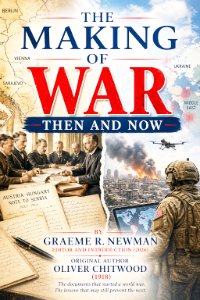
The Making of War - Then and Now

Edited and Introduced by Graeme R. Newman. The Immediate Causes of the Great War by Oliver Perry Chitwood

What if the real story of World War I is not the past—but the present?

This boldly reimagined edition places a powerful new introductory essay by Graeme R. Newman at the center of the book, transforming a classic documentary history into a searching inquiry into how wars are made—then and now. Drawing on Oliver Perry Chitwood’s original 1918 compilation of diplomatic correspondence, ultimatums, and state papers, this volume reconstructs the fatal chain of decisions that led Europe into catastrophe. But it does more: it asks what those decisions reveal about the world we inhabit today.

Newman’s extended introduction reframes the Great War not as a closed historical episode, but as a recurring pattern of international behavior. Nationalism, alliance systems, economic rivalry, and the language of “defensive” war are examined not only in their early twentieth-century form, but in their modern equivalents—from the conflict in Ukraine to instability in the Middle East, and the global role of the United States. The essay confronts a central paradox: that leaders who claim to preserve peace may, under pressure, construct the very conditions that make war inevitable.

At the heart of the book remains Chitwood’s original method—letting the documents speak. Here are the voices of statesmen, ambassadors, and governments as they justify, accuse, negotiate, and ultimately fail. Read in light of Newman’s analysis, these documents become more than historical artifacts; they are case studies in escalation, miscalculation, and the limits of diplomacy.

Making War – Then and Now is both a primary source reader and a contemporary critique. It reveals how quickly order can unravel, how fragile peace can be, and how familiar the pathways to conflict remain. For readers seeking not only to understand the origins of World War I but to grasp the enduring mechanics of war itself, this edition offers an unsettling and necessary perspective.

Read-Me.Org Inc. New York-Philadelphia-Australia. 2026. p.189.

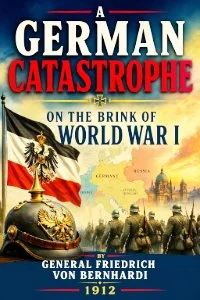
A German Catastrophe; On the Brink of World War One

by Friedrich Von Bernhardi (Author), Allen Powles (Translator), Graeme Newman (Introduction)

On the eve of global catastrophe, Friedrich von Bernhardi set down one of the most provocative and unsettling arguments of the modern age.A German Catastrophe: On the Brink of World War I previously publised as Germany and the Next War (1912) is not simply a study of military preparedness—it is a bold and uncompromising declaration that war is inevitable, necessary, and even morally justified.

Written in the tense years before World War I, this controversial work offers a rare window into the mindset of pre-war Europe. Bernhardi rejects the ideals of international peace and diplomacy, arguing instead that struggle between nations is the driving force of history. Drawing on the language of Social Darwinism, he presents war as the means by which stronger nations assert their destiny and shape the future.

For readers today, this book is both a historical document and a warning. It reveals the intellectual currents that helped propel Europe toward one of the deadliest conflicts in human history, while raising enduring questions about power, nationalism, and the ethics of war.

This Read-Me.Org edition, under its revised title, invites a reading that is at once critical and reflective. The new title—A German Catastrophe: On the Brink of World War I—captures the tragic irony of Bernhardi’s argument: a confident assertion of national destiny that, in retrospect, stands at the threshold of devastation. It encourages us to approach the text not as a guide, but as a warning.

In making this work accessible to a contemporary audience, Read-Me.Org reaffirms its commitment to presenting historically significant texts in a form that promotes careful engagement and informed interpretation. Bernhardi’s book endures not because it offers solutions, but because it compels us to confront enduring questions about power, morality, and the choices that shape the course of history.

Read-Me.Org Inc. New York-Philadelphia-Australia. 2026. p.217.

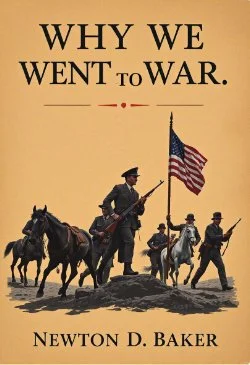
Why We Went To War

By Newton D. Baker, Edited by Ciolin Heston

Newton Diehl Baker’s Why We Went to War, published in 1921, is one of the most important contemporary American explanations of the nation’s entry into the First World War. Baker, who served as Secretary of War from 1916 to 1921 under President Woodrow Wilson, occupied a unique position at the very center of America’s wartime transformation. Once known as a progressive mayor of Cleveland and a disciple of Wilsonian reform, Baker became, almost overnight, the chief administrator responsible for raising, training, and mobilizing an army that grew from a modest peacetime force into one of the most formidable fighting powers of the modern age. His book represents both a justification and a reflection—part political defense, part historical testimony—on why the United States took the fateful step of joining a conflict from which it had long sought to remain apart.

For modern readers, Why We Went to War should be approached both as a primary document and as an act of persuasion. Baker was not an impartial historian; he was a participant and advocate, a defender of Wilsonian ideals at a moment when those ideals were under attack. His words reveal not only the official reasoning of the Wilson administration but also the mindset of a generation of progressives who believed that the United States, through sacrifice and leadership, could help reorder the world toward democracy and peace.

In the end, Baker’s book is as much about America’s identity as about the Great War. It reflects a moment when the nation stood at the crossroads between its traditional reluctance to become entangled in European affairs and its emerging role as a world power. To understand why the United States entered World War I is to understand not only the international provocations of the time but also the ideals, anxieties, and ambitions of a nation coming of age on the world stage.

Read-Me.Org Inc. New York-Philadelphia-Australia. 2025. p. 165.