Open Access Publisher and Free Library
CRIME+CRIMINOLOGY.jpeg

CRIME

Violent-Non-Violent-Cyber-Global-Organized-Environmental-Policing-Crime Prevention-Victimization

Posts in Convicted Felon
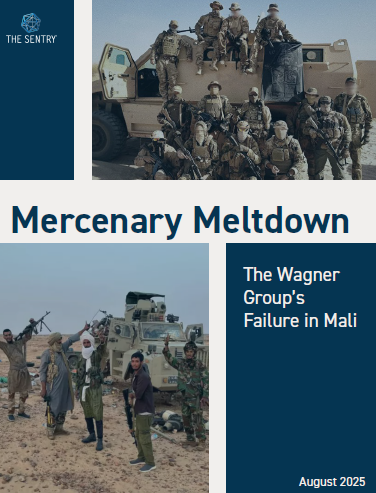
Mercenary Meltdown -The Wagner Group’s Failure in Mali

By The Sentry

The first Wagner Group fighters arrived in Bamako in January 2022 to assist the Malian military junta in its counterterrorism campaign.1 Three and a half years later, the group has announced its withdrawal from Mali to make space for Africa Corps with the statement “Mission accomplished.”2 But as the number of Wagner fighters in Mali will stay roughly the same, since many had already signed contracts with the Russian state prior to the announcement,3, 4 the group’s claim to success—and their overall strategy in Mali—merits scrutiny. Despite the Wagner Group possessing a reputation for being battle-ready and claiming occasional public triumphs in Mali, its strategy has been plagued by a series of failures.5 Wagner forces have been unable to take control of areas in the north and center of the country where armed terrorist and separatist groups are challenging the authority of the Malian state. There has been a significant increase in attacks on civilians and in civilian casualties since Wagner’s arrival in Mali, and this, in turn, has severely undermined relations between the Malian military and the Malian public. Faced with challenges such as insufficient air support, a lack of trust, and a lack of reliable information from informants, the Wagner Group has become more reactive and violent—allowing the very terrorist groups they were hired to neutralize to gain more control and increase recruitment in Mali. Wagner’s playbook in Mali has not only affected the civilian population; it has also helped perpetuate insecurity and has paved the way for the fragmentation of the Malian state. Wagner fighters have created chaos and fear within the Malian military hierarchy, forcing the Forces Armées Maliennes (Malian Armed Forces, or FAMA) to remain silent in cases of civilian abuse. In addition, the lack of order and communication within the chain of command has led to the progressive deterioration of the FAMA’s ranks. Abuses against the Malian armed forces by Wagner troops have increased, as have complaints from Malian soldiers. Within the Malian military junta itself, the varying degrees of partnership with Russian actors are contributing to a shift in power relations in Bamako, as Malian leaders regard one another with suspicion. Despite official discourse suggesting that Wagner and Russia are reliable partners in the Malian conflict, the Wagner command in Mali has demonstrated a reluctance to intervene militarily—even in cases where the capital is directly threatened—without first having assurances of financial compensation. At the outset of its Malian venture, Wagner was seeking to secure mining concessions that would likely replicate the group’s self-funding arrangements in other countries. However, the Malian junta appears unwilling to allow Wagner to control the mining sector, and Wagner’s forays into that sector have thus far been limited. Ultimately, the Wagner Group has failed in its task of eliminating terrorist groups in Mali. The Russian presence is instead creating upheaval amid the Malian military and causing rifts within the Malian junta. And as Wagner has seemingly gone unpaid for months and failed to obtain access to lucrative natural resources, its deployment in Mali has not been a worthwhile investment for any party involved. Wagner is not an infallible actor. If anything, the Malian example illustrates that the group can fail, and this should be a warning to other African clients who are considering hiring Wagner—or its more officialoffshoot, Africa Corps. At the same time, policymakers in the Global North should see Wagner’s failures as an opportunity for alternative policy approaches in the Sahel region. Key recommendations • The Office of the Prosecutor at the International Criminal Court (ICC) should open an investigation into war crimes perpetrated by Wagner troops in Mali and prosecute those responsible for human rights abuses. Alternatively, the United Nations Security Council should refer Wagner abuses in Mali to the Office of the Prosecutor at the ICC. • The government of Mali should take steps toward criminal accountability and reparations for the victims of massacres such as Moura, as well as for the abuses against and displacement of civilian populations following attacks by the Wagner Group in the north and west of the country. • The EU, the US, the UK, Canada, and Australia should investigate and, if appropriate, designate for sanctions the network of individuals and entities in Sadio Camara’s inner circle who enable, support, or benefit from Wagner’s presence in the country, as well as those involved in corruption and human rights abuses. They should coordinate sanctions to increase their impact. • International mining companies operating in Mali and foreign refineries processing Malian gold should conduct comprehensive audits of their operations to ensure that they are not conducting business with sanctioned Wagner Group entities or individuals, such as Ivan Maslov. • The Algerian government should facilitate renewed negotiations on a peace agreement between Bamako and the northern rebel groups. As the political and security landscape has changed since the 2015 agreement, which was facilitated by Algeria, including as a result of the withdrawal of the UN peacekeeping operation MINUSMA, new terms will need to be agreed.

The Sentry, 2025. 55p.
The Darkest Shade of Green: Climate Change, Terrorist Organizations, and the Battle for Environmental Legitimacy

By Ashton Kingdon


Based on the combination of online observation, content analysis, as well as comparative and statistical analysis, this paper discusses the scale and structure of al-Qaeda’s and Islamic State’s propaganda output on the surface web. It explores qualitative and quantitative trends detectable in their propaganda between July and December 2023. This paper shows that during this period, the Islamic State released almost twice as many propaganda items on the surface web compared to al-Qaeda. Collected data indicates that the IS’s media production capability improved compared to its online crisis experienced around 2018. The recovery is, however, limited and caused primarily by efforts of the pro-IS media operatives, who are engaged in mass translation and reproduction of official releases of this violent extremist organization (VEO). Among al-Qaeda branches active on the surface web in the second half of 2023, Harakat al-Shabaab al-Mujahidin and media offices that support al-Qaeda in the Indian Subcontinent demonstrated the most remarkable capabilities in strategic communication. This paper also proves that both al-Qaeda and the Islamic State manifested significant interest in the events taking place in Africa, Central Asia, and Palestine. However, they frequently adopted opposing ways of framing them.


Studies in Conflict & Terrorism 2025.

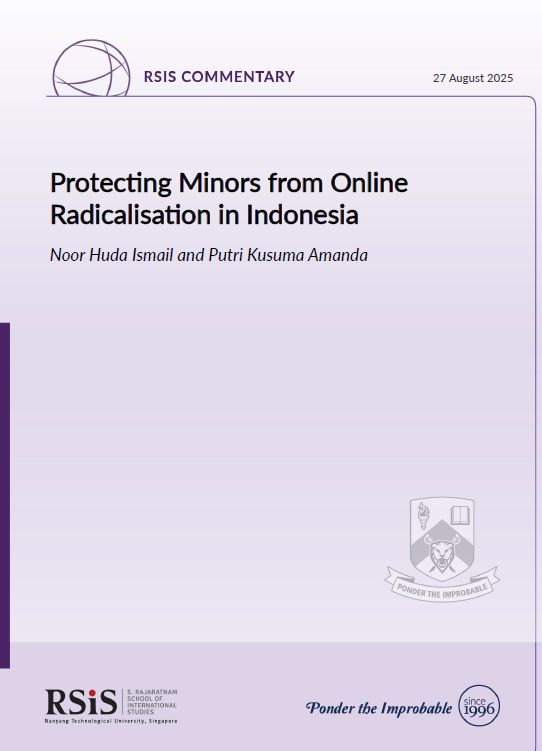
When Minors Become Targets of Violent Extremist Groups

By Noor Huda Ismail

SYNOPSIS

The increasing susceptibility of minors to recruitment by violent extremist groups via online platforms poses a clear and present danger. Cases in Singapore and Indonesia illustrate how radicalisation exploits factors such as identity crises, wounded masculinity, and digital isolation. Emphasis on rehabilitation as opposed to punishment is critical, necessitating the involvement of families, schools, and communities to safeguard children through fostering trust and empathy.

COMMENTARY

As a father of two teenage boys, aged 16 and 14, I cannot read the news of radicalised minors without feeling alarmed and deeply concerned. The recent case in Singapore, involving a 14-year-old student, is particularly striking.


Security officials reported that the boy was influenced by a “salad bar” of extremist beliefs, including ISIS propaganda, incel subculture and those on the far-right and far-left. He is not much older than my youngest child, who, like millions of teenagers, spends hours on gaming, social media, and online communities that quietly shape their identity, sense of belonging, and moral compass.


For the unfamiliar, incel stands for “involuntary celibate”. These are mostly young men, expressing deep resentment toward women and society for their sexual frustrations. From a gender perspective, incel ideology feeds on what scholars call wounded masculinity.


Many boys today struggle with identity in a world where traditional markers of male success – financial stability, social recognition, romantic relationships – are increasingly uncertain. Online platforms amplify these feelings, creating spaces where humiliation and anger are validated, sometimes evolving into misogyny or even violence.

Children, Digital Risk, and the Future of Terrorism Prevention in Indonesia

By Noor Huda Ismail


Indonesia is witnessing a disturbing rise in the online radicalisation of minors, with police confirming that 110 children aged 10-18 have been influenced or recruited by extremist networks in twenty-three provinces. The challenge in countering this trend lies in understanding why the phenomenon is intensifying and what it would demand from policymakers, particularly in involving the youth themselves in co-creating prevention strategies.

COMMENTARY

Recent disclosures from the Indonesian National Police underscore an unsettling shift in the country’s counter-terrorism landscape. Brigjen Polisi Trunoyudo Wisnu Andiko reported that 110 minors aged 10 to 18 have been exposed to radical ideology and recruited into terrorist networks, with the highest concentrations in Banten, DKI Jakarta, West Java, Central Java, and East Java.


The recruitment of these minors is a subtle, highly digitalised process, beginning on social media platforms such as Facebook and Instagram, and through online games, before moving to private channels like WhatsApp and Telegram. Extremists employ short videos, animations, memes, and music that resonate with adolescent culture, embedding ideology within content designed for entertainment and identity formation. This approach allows gradual indoctrination, exploiting both the cognitive vulnerabilities of youth and the emotional allure of belonging to a community.


S. Rajaratnam School of International Studies, NTU Singapore, 2025. 

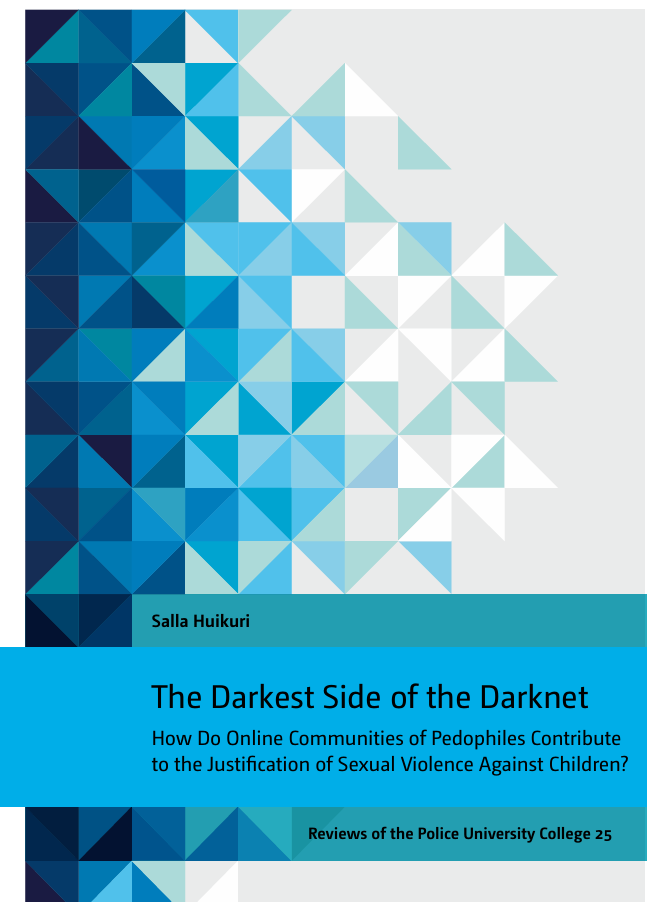
The darkest side of the darknet: How do online communities of pedophiles contribute to the justification of sexual violence against children? Reviews of the Police University College 25.

By Salla Huikuri

  Online communities of pedophiles in darknet facilitate sexual violence against children. They provide a criminogenic space for socially sidelined offenders to share and reinforce their sexual distortions. They accommodate illegal Child Sexual Abuse Material and enable its trading, sharing, and exchange. They offer advice on how to protect one’s online identity and how to physically proceed into sexual violence against children. This review deals with online child sexual offenders and their communities in darknet. It defines key terms dealing with online sexual offences against children and discusses different types of child sexual abuse offenders operating online. Moreover, it sheds light on the psychological side of offending – the justifications for sexual violence against children – and elaborates the underlying logics underpinning the respective trains of though in the online communities of pedophiles.  

Tampere: Police University College.   2022.

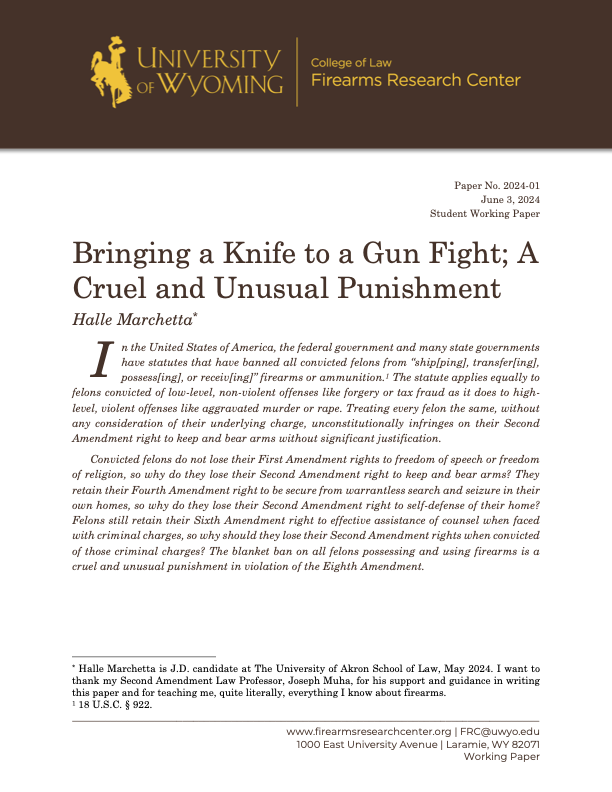
Bringing a Knife to a Gun Fight; A Cruel and Unusual Punishment

By Halle Marchetta

In the United States of America, the federal government and many state governments have statutes that have banned all convicted felons from “ship[ping], transfer[ing], possess[ing], or receiv[ing]” firearms or ammunition.1 The statute applies equally to felons convicted of low-level, non-violent offenses like forgery or tax fraud as it does to highlevel, violent offenses like aggravated murder or rape. Treating every felon the same, without any consideration of their underlying charge, unconstitutionally infringes on their Second Amendment right to keep and bear arms without significant justification. Convicted felons do not lose their First Amendment rights to freedom of speech or freedom of religion, so why do they lose their Second Amendment right to keep and bear arms? They retain their Fourth Amendment right to be secure from warrantless search and seizure in their own homes, so why do they lose their Second Amendment right to self-defense of their home? Felons still retain their Sixth Amendment right to effective assistance of counsel when faced with criminal charges, so why should they lose their Second Amendment rights when convicted of those criminal charges? The blanket ban on all felons possessing and using firearms is a cruel and unusual punishment in violation of the Eighth Amendment.